

International
Indian man sentenced to death for burning wife alive

Indian man sentenced to death for burning wife alive
A court in India has sentenced a man to d3ath and imposed a fine of Rs 50,000 for brutally murdering his wife by burning her alive.
According to Times of India, the accused, identified as Kishandas, was sentenced on Saturday by the Additional District and Sessions Court in Vallabhnagar, Udaipur district.
The man often taunted his wife, Laxmi for her skin complexion, by making her apply an inflammable chemical on herself on the pretext that it would make her fair and then setting her afire, with the judge calling it a heinous crime against humanity.
“Such a crime cannot even be imagined in a healthy and civilised society,” Judge Rahul Chaudhary said while delivering the verdict in the eight-year-old case.
The incident occurred in Navaniya village on June 24, 2017, when Kishandas, having a deep-seated bias against his wife’s appearance, deceived Laxmi into applying a chemical he claimed would make her skin fair, according to the prosecution.
The court said that despite the strange odour of the liquid, which Laxmi suspected to be acidic, she trusted her husband and applied it all over her body.
Kishandas then lit an incense stick, placed it near her stomach, and set her afire.
Laxmi, severely burned, screamed for help and managed to flee, but her husband had already closed the room from inside as part of a conspiracy and she was unable to escape.
READ ALSO:
- State police inevitable to tackle Nigeria’s insecurity – Tinubu
- Man rescued from high-tension power pole in Anambra
- Drones, 15 rifles, 4,841 rounds of ammunition seized in Ogun, Ondo
Her in-laws rushed her to the hospital, but Laxmi succumbed to her injuries a few days later.
In the order, the court condemned Kishanda’s actions as “extremely rare and shocking.”
It stated that his cruel behaviour went beyond a mere domestic crime, shaking the conscience of society.
“The extremely heart-wrenching and brutal act was not only a crime against his wife, the deceased Laxmi, but it causes such a shock to the consciousness of entire humanity that it cannot even be imagined in a healthy and civilised society,” the order said.
Public prosecutor Dinesh Paliwal said that he presented 14 witnesses and 36 documents to demonstrate that Kishandas had been repeatedly taunting Laxmi for her skin colour and physical appearance, which ultimately led to the gruesome act.
The court said that Kishanlal’s conduct, as depicted in his behaviour toward his wife, was reflective of deep-rooted societal prejudices related to skin colour and gender-based violence.
The judgment further pointed out that Laxmi’s dying declaration served as crucial evidence, confirming that she had been taunted by her husband for her physical appearance, which he claimed made her unworthy of him.
The court highlighted the fact that Kishanda’s cruelty was not only aimed at his wife but was also a direct attack on humanity itself.
The dying declaration provided by Laxmi corroborated her accounts of the abuse.
In her statement, Laxmi revealed how Kishandas locked her in a room, mocking her physical appearance, and ultimately carried out his plan to burn her alive.
The court referred to Kishanda’s actions as “reflecting a heinous mindset,” where he subjected Laxmi to humiliation and physical abuse.
The court stated that his behaviour was not just a failure as a husband but also a violation of the trust that is fundamental in any marriage.
Indian man sentenced to death for burning wife alive













International
Spain Train Crash: Death Toll Hits 68 as Two High-Speed Trains Collide

Spain Train Crash: Death Toll Hits 68 as Two High-Speed Trains Collide
At least 68 people have been killed and dozens injured after two high-speed trains collided in central Spain, triggering a major rescue operation and the suspension of rail services along one of the country’s busiest routes.
The crash occurred shortly before 9 a.m. on Wednesday, October 28, near Urda in Toledo province, about 130 kilometres south of Madrid. The trains, operated by state-owned Renfe and private railway company Iryo, were travelling towards Seville when the collision occurred.
According to preliminary reports, the Renfe train struck the rear of an Iryo train that had stopped on the tracks. The impact derailed several carriages, some of which plunged down an embankment, leaving twisted metal and wreckage scattered across the crash site.
Authorities said the two trains were carrying approximately 544 passengers, including an infant. Emergency workers, firefighters, police officers and medical teams were deployed to rescue survivors, recover victims and transport injured passengers to nearby hospitals.
Spain’s regional authorities confirmed that at least 68 people had died, while 58 others required hospital treatment. Rescue operations continued as emergency teams searched the wreckage for additional victims.
Spanish Transport Minister Óscar Puente said a signalling-system failure preceded the collision. According to his preliminary account, a communications problem affecting the railway’s traffic-control system caused several trains to stop automatically.
READ ALSO:
- Bauchi Police Rescue 18-Year-Old Woman From Mob After Stabbing Husband
- Bauchi Police Rescue 18-Year-Old Woman From Mob After Stabbing Husband
- Soldier Killed as Troops Repel Attack by Over 100 Bandits in Niger
The control centre subsequently authorised trains to resume their journeys, but the Renfe train was reportedly allowed to continue despite a stop signal remaining active. The minister questioned the decision to restart normal traffic and said investigators were examining the circumstances surrounding the instruction.
He cautioned against assigning responsibility before the investigation established the facts.
Spanish Prime Minister Pedro Sánchez visited the crash site and promised a thorough investigation into the disaster. He said authorities would determine whether negligence or safety-system failures contributed to the collision and take appropriate action if wrongdoing was established.
Sánchez also announced three days of national mourning, from October 29 to 31, in honour of the victims.
The tragedy has renewed concerns about railway safety in Spain, coming just nine months after another deadly collision near Adamuz in Córdoba province killed 46 people. That January disaster also involved trains operated by Renfe and Iryo.
The latest crash has prompted fresh scrutiny of railway infrastructure, signalling procedures and the management of train movements during technical failures.
Rail services between Madrid, Ciudad Real and Andalusia were suspended following the collision, disrupting travel along a major high-speed corridor.
Authorities said investigations would continue to establish the full circumstances of the crash and determine whether additional safety measures were required.
Spain Train Crash: Death Toll Hits 68 as Two High-Speed Trains Collide
International
US Extradites Nigerian Over Alleged $100m Tax Refund Fraud
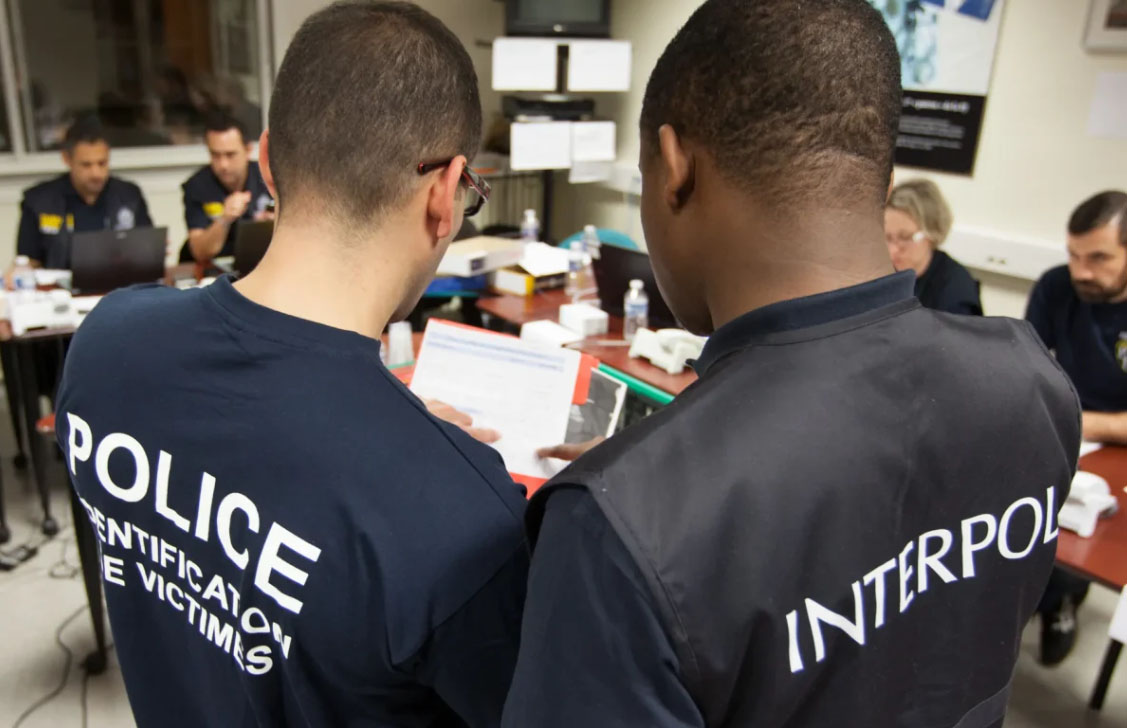
The United States has extradited a Nigerian man, Akinade Adedeji Raheem, from the Republic of Benin to face federal charges over an alleged $100 million tax refund fraud scheme involving stolen identities and more than 300 fraudulent tax returns.
Raheem, 43, was arraigned in a federal court in Atlanta, Georgia, on Monday, October 26, 2026, following his extradition to the United States. He was detained in the custody of the US Marshals Service pending further court proceedings.
According to US prosecutors, Raheem allegedly conspired with Abayomi Quadri Eletu and other accomplices between 2018 and 2023 to obtain fraudulent refunds from the Internal Revenue Service (IRS), the US tax authority, by using the identities of American taxpayers and tax professionals.
The alleged scheme involved more than 300 fraudulent tax returns seeking over $100 million in refunds. However, the amount represents the value of the claims allegedly submitted and does not necessarily mean the full sum was paid out.
Investigators alleged that the group obtained confidential personal information, including names, addresses and Social Security numbers, by creating online accounts with the IRS and requesting private taxpayer records.
The suspects allegedly used the stolen information to file false tax returns and direct refund payments to prepaid debit cards under their control. They also allegedly changed taxpayers’ registered addresses and arranged for mail to be forwarded to locations where they could intercept correspondence from the tax authority.
In some cases, prosecutors alleged, members of the group impersonated legitimate taxpayers to verify their identities and facilitate the release of refunds.
READ ALSO:
- Panic as Gunmen Storm Kaduna Estate at Midnight, Abduct Residents
- AutoFast By CFAO Assures Former Moove Drivers of Continued After-Sales Support, Free Diagnostics
- NSCDC Evidence Scandal: Tunji-Ojo Says Officers Tampered With Evidence in Miners’ Deaths
The alleged proceeds were subsequently moved through transactions designed to conceal their origins. Prosecutors said the suspects purchased money orders in amounts intended to avoid reporting thresholds and used them to buy used vehicles through auction platforms. Some of the vehicles were allegedly shipped to Nigeria, while other proceeds were spent on designer clothing and personal items.
US Attorney Theodore S. Hertzberg said the alleged scheme involved hundreds of stolen identities and affected individual taxpayers as well as the US Treasury.
The investigation was conducted by the IRS Criminal Investigation division and the Treasury Inspector General for Tax Administration, with assistance from other American and international law enforcement agencies.
Raheem’s extradition followed an international search. Federal agents reportedly attempted to arrest him at his residence in April 2026 but were unable to take him into custody.
Investigators later discovered that he had booked a flight from Mexico City to Benin. He arrived in Benin on April 15, 2026, and was arrested by local authorities pursuant to an INTERPOL Red Notice, an international request to locate and provisionally arrest a person pending extradition or similar legal proceedings.
Beninese authorities subsequently extradited him to the United States. US prosecutors described the transfer as the second extradition from Benin to the United States.
A federal grand jury in the Northern District of Georgia indicted Raheem on February 24, 2026, on charges including conspiracy to commit mail and wire fraud, conspiracy to commit money laundering, 14 counts of access device fraud and 14 counts of aggravated identity theft.
In plain language, the fraud conspiracy charge alleges that he worked with others to cheat victims through postal services or electronic communications. The money laundering charge alleges that the group agreed to conceal or disguise money believed to have come from criminal activity.
The access device fraud counts concern the alleged illegal use of payment cards or other devices and account details to obtain money or access funds. The aggravated identity theft counts allege the unauthorised use of other people’s identifying information in connection with certain serious crimes.
If convicted, Raheem faces substantial prison terms. The fraud conspiracy and money laundering charges each carry maximum penalties of up to 20 years, while the access device fraud charges carry up to 10 years. Each aggravated identity theft conviction carries a mandatory two-year prison term under applicable federal law, generally imposed consecutively to the sentence for the underlying offence. Actual sentences would depend on the convictions and applicable sentencing rules.
His alleged co-conspirator, Eletu, was separately indicted in the Western District of Texas on February 17, 2026. He was arrested in the United Kingdom, where extradition proceedings remain pending.
The case is being prosecuted by attorneys from the US Attorney’s Office for the Northern District of Georgia and the Justice Department’s Tax Section.
Raheem has not been convicted of the allegations. He is presumed innocent unless and until prosecutors prove his guilt beyond a reasonable doubt in court.
US Extradites Nigerian Over Alleged $100m Tax Refund Fraud
International
Operation Blackout: FBI Arrests Nine in Nigeria, Seizes 53 Devices

Operation Blackout: FBI Arrests Nine in Nigeria, Seizes 53 Devices
The United States Federal Bureau of Investigation (FBI) has arrested nine suspects in Nigeria and seized 53 electronic devices in an international operation targeting cybercrime networks accused of defrauding victims, particularly in the United States.
The operation, code-named Operation Blackout, also led to the identification of approximately $11 million in funds across multiple countries that could potentially be frozen, according to FBI Director Kash Patel.
Patel disclosed the development in a statement published on his official X account on Sunday, October 25, describing the operation as part of efforts to dismantle international criminal networks accused of stealing billions of dollars from unsuspecting victims.
“Operation Blackout is taking the fight directly to the international cybercriminal networks stealing billions from Americans,” Patel said.
He added that the networks operated across national borders, exploiting victims and depriving them of their life savings.
“These scam centres exploit innocent victims, steal life savings, and operate across international borders believing they are beyond the reach of law enforcement. They’re wrong,” the FBI director stated.
Patel commended Nigerian law enforcement agencies and their partners in London for their cooperation, warning that suspects operating from overseas would not escape prosecution simply because they were outside the United States.
READ ALSO:
- Osimhen Brace Sinks Fenerbahce as Galatasaray Win Istanbul Derby
- Certificate Scandal: UNN, NYSC Disown Uche Nnaji’s Certificates, ICPC Witness Tells Court
- Man, Teenage Girl Found Dead in Toyota Corolla as Police Begin Investigation
The FBI has not publicly identified the nine suspects arrested in Nigeria or disclosed the specific locations where they were apprehended. Details of the individual allegations against them have also not been made public.
The arrests formed part of a broader international law enforcement campaign targeting online fraud networks operating across West Africa.
According to the US Department of Justice, the coordinated enforcement exercise involved agencies from Nigeria, Ghana, the United States, the United Kingdom and other countries, alongside private-sector technology and financial companies.
The wider operation resulted in 28 arrests, comprising nine in Nigeria and 19 in Ghana. Authorities in Ghana also seized 303 electronic devices, while the Nigerian operation accounted for the 53 devices seized.
Investigators and participating companies additionally helped identify more than 3.7 million fraudulent online accounts, pages and groups, which were subsequently removed or disrupted.
The US Department of Justice said the targeted schemes included law enforcement impersonation scams, digital arrest extortion, cryptocurrency investment fraud, commonly known as “pig butchering”, and other online fraud operations targeting victims across different countries.
The operation also uncovered human trafficking linked to scam activities in Ghana. Authorities there identified 117 people described as victims of trafficking who were awaiting repatriation to Nigeria.
Officials also identified 89 fraud victims in Ghana who suffered estimated losses of approximately $8.3 million, according to the US Justice Department.
The trafficking victims and fraud victims were identified as separate groups in the department’s account of the operation.
Although the FBI director announced that $11 million in potentially freezable funds had been identified across several countries, authorities have not confirmed that the entire amount has been frozen, seized or returned to victims.
The distinction is important because identifying funds that may be frozen does not mean that the money has already been recovered.
The crackdown highlights growing international cooperation against cyber-enabled fraud, with investigators increasingly working with technology companies and financial institutions to identify suspicious accounts, trace funds and disrupt the digital infrastructure used by criminal networks.
Nigeria’s law enforcement agencies have participated in several international investigations involving alleged online fraud. The latest operation adds to efforts to pursue suspects accused of targeting victims across national borders.
The FBI has not disclosed when the nine suspects arrested in Nigeria will appear in court or whether formal charges have been filed against each of them.
The allegations against the suspects remain subject to investigation and due process.
Operation Blackout: FBI Arrests Nine in Nigeria, Seizes 53 Devices
-

 metro2 days ago
Cancelled Wedding: Man Sues Ex-Fiancée’s Father Over Unpaid ₦70,000 Dowry
-

 Auto2 days ago
Car of the Year, other top honours up for grabs as NAJA Awards race begins
-

 Sports2 days ago
KANE ENDS 25-YEAR WAIT! England Captain Wins 2026 Ballon d’Or After Stunning 73-Goal Season
-

 metro3 days ago
School Bus Driver Turns Kidnapper, Collects ₦503,000 Ransom, Rapes 14-Year-Old Delta Student
-

 metro2 days ago
IKEDC Blames National Grid for Two-Week Power Crisis in Ishaga, Oke-Ayo
-

 metro1 day ago
Nigerian Navy Recruitment 2026: October 31 Deadline, Full Requirements and How to Apply
-

 metro3 days ago
Massacre in Taraba: Death Toll Soars to 48 as Fleeing Villagers Drown in Desperate Escape
-

 News3 days ago
INEC Under Fire as Missing Voters’ Register Sparks 2027 Election Transparency Row