

Politics
INEC Declares ‘Eleyi’, Dapo Abiodun winner of Ogun Governorship Election

INEC Declares ‘Eleyi’, Dapo Abiodun winner of Ogun Governorship Election
The Independent National Electoral Commission has on Sunday declared the Governor of Ogun State, Dapo Abiodun, winner of the governorship poll that took place on Saturday.
While Abiodun scored 276,298 votes, his closest rival, Ladi Adebutu, scored 262,383 votes. Candidate of the African Democratic Congress, Biyi Otegbeye, also scored a total of 94,754.
Otegbeye had the backing of the former Governor of Ogun, Senator Ibikunle Amosun.
The announcement was made by the Chief Returning Officer, Prof Kayode Adebowale.






Politics
2027: Obasanjo’s Son Joins Tinubu’s Re-Election Movement, Reveals 12-Year APC Loyalty

2027: Obasanjo’s Son Joins Tinubu’s Re-Election Movement, Reveals 12-Year APC Loyalty
By Newstrends Political Desk
ABUJA — In a significant political development ahead of Nigeria’s 2027 presidential election, Hon. Olujuwon Obasanjo, son of former President Olusegun Obasanjo, has thrown his weight behind President Bola Ahmed Tinubu’s second-term ambition, joining a political mobilisation group campaigning for the President’s re-election.
The younger Obasanjo has been appointed Special Adviser on Political Affairs to the PBAT Door-to-Door Movement, an organisation established to mobilise grassroots support for Tinubu’s re-election bid.
His decision, which comes amid increasing political realignments ahead of the 2027 general elections, has attracted attention because of the political differences between his position and the widely reported opposition stance of his father towards the Tinubu administration.
Olujuwon announced his support for the President during a visit to the movement’s headquarters in Abuja on Wednesday, November 4, 2026, where he was received by the organisation’s National Coordinator, Comrade Sunday Adekanbi Asuku.
He was subsequently taken on a guided tour of the facility to familiarise himself with the movement’s organisational structure and operations.
Describing his appointment as an honour and privilege, the former president’s son commended the organisation for its grassroots mobilisation, community outreach programmes and efforts to promote the activities of the Tinubu administration.
He disclosed that he had been following the movement’s activities for some time and was impressed by its interventions across different communities.
According to him, he was prepared to contribute his experience and political knowledge towards advancing the organisation’s objectives and securing Tinubu’s re-election in 2027.
Explaining his decision to support the President, Olujuwon argued that Tinubu had started on a good note, insisting that Nigerians, particularly young people, should support the administration’s ongoing reforms to ensure continuity in governance.
He also identified salary payments, infrastructure development and investment opportunities as some of the areas where he believed the country had recorded progress.
He maintained that the achievements should be sustained, expressing confidence that continued support for Tinubu would enable the administration to consolidate its policies and deliver more dividends of democracy.
In another significant revelation, Olujuwon disclosed that he had been a member of the All Progressives Congress (APC) since 2014.
He also addressed the possibility of differing political interests within the Obasanjo family, explaining that members of his family were allowed to hold independent political views and pursue their political ambitions without hostility.
His declaration effectively underscored his decision to pursue a political path independent of his father’s political preferences.
Earlier, the National Coordinator of the PBAT Door-to-Door Movement, Sunday Adekanbi Asuku, welcomed Olujuwon into the organisation, describing him as an experienced political figure with a strong background in leadership and governance.
Asuku expressed optimism that the younger Obasanjo’s experience and understanding of political mobilisation would strengthen the movement and expand its activities across the country.
He said the organisation was delighted by Olujuwon’s decision to join, adding that his political experience would be valuable in advancing its objectives and strengthening its nationwide mobilisation efforts.
The development represents another political realignment ahead of the 2027 presidential contest, as supporters of Tinubu intensify efforts to build alliances and expand the President’s political support base.
With the former president’s son now openly backing Tinubu’s second-term ambition, attention is likely to focus on the political implications of his decision and what it signals about the growing diversity of political positions within prominent Nigerian political families.
2027: Obasanjo’s Son Joins Tinubu’s Re-Election Movement, Reveals 12-Year APC Loyalty
Politics
Appeal Court Upholds INEC’s Recognition of Wike-Backed PDP Leadership, Dismisses Turaki Faction’s Suit

Appeal Court Upholds INEC’s Recognition of Wike-Backed PDP Leadership, Dismisses Turaki Faction’s Suit
Abuja, Nigeria — The Court of Appeal in Abuja has delivered a significant judicial setback to the faction of the Peoples Democratic Party (PDP) led by Kabiru Tanimu Turaki, affirming the refusal of the Independent National Electoral Commission (INEC) to recognize the group’s Interim National Working Committee. In a unanimous judgment delivered on Wednesday, a three-member panel of the appellate court dismissed the appeal marked CA/ABJ/CV/1221/2026, which was filed by Senator Adolphus Wabara and seven others. The panel, presided over by Justice Ugochukwu Anthony Ogakwu, with Justices Laja Balogun and Ruquayat Oremei Ayoola, upheld the earlier decision of the Federal High Court in Abuja, which had declined to compel INEC to recognize the Turaki-led interim leadership.
The legal battle stems from the protracted leadership crisis that has rocked Nigeria’s main opposition party. The Turaki-led Interim National Working Committee was constituted following a National Executive Committee meeting held in the wake of a Supreme Court judgment on the party’s leadership dispute. However, the Wike-backed faction, which enjoys INEC’s recognition, has consistently challenged the legitimacy of the interim committee. The appellants had approached the appellate court seeking to set aside the Federal High Court judgment delivered by Justice Salim, which refused to compel INEC to recognize the interim committee. They argued that the party’s internal mechanisms had been exhausted and that the electoral body was bound to recognize the new leadership structure.
In its ruling on Wednesday, the Court of Appeal found no merit in the appeal, upholding the lower court’s decision in its entirety. The panel held that the appellants failed to establish a legal basis for compelling INEC to recognize a leadership structure that emerged outside the established constitutional framework of the party. The judgment reinforces the position of the Wike-backed leadership, which has maintained that only a leadership recognized by the courts and the electoral commission can lawfully run the affairs of the PDP.
Reacting to the judgment, the Turaki-led faction expressed disappointment but resolved to challenge the decision at the Supreme Court. In a statement issued on Wednesday by its National Publicity Secretary, Comrade Ini Ememobong, the group said it respected the court’s decision but remained committed to pursuing what it described as justice. “We are determined to take our quest for justice anchored on truth to the apex court in the land. It is our belief that no matter how deep the truth is buried, if those seeking it are persistent in digging, it will one day resurface,” the statement read. Ememobong disclosed that the group’s lawyers had been instructed to immediately commence the process of appealing the judgment before the Supreme Court. “We have instructed our lawyers to immediately file an appeal before the Supreme Court, in the hope that justice will eventually be done,” he added.
The faction also emphasized the importance of a strong opposition party to Nigeria’s democratic development, arguing that the PDP must remain an independent political force capable of holding the ruling party accountable. “The PDP, as the main opposition party, must provide a credible alternative to the ruling party and not become its appendage. Democracy survives only when the opposition is strong enough to effectively engage the government,” the statement added.
The latest ruling is another development in the prolonged leadership crisis rocking the PDP, which has been characterized by competing claims over the control of the party’s national leadership and structures. With the 2027 general elections approaching, the party’s ability to present a united front remains a critical challenge. The Turaki faction has urged party members to remain steadfast as the legal battle moves to the Supreme Court, expressing confidence that the eventual outcome would strengthen multiparty democracy in the country. As the case heads to the apex court, the PDP’s leadership tussle continues to test the resilience of Nigeria’s judicial system and the internal democratic processes of political parties.
Appeal Court Upholds INEC’s Recognition of Wike-Backed PDP Leadership, Dismisses Turaki Faction’s Suit
Politics
Rufai, Abati Clash Over Natasha’s Cash Empowerment Programme in Kogi

Rufai, Abati Clash Over Natasha’s Cash Empowerment Programme in Kogi
Popular Arise Television presenters, Rufai Oseni and Reuben Abati, have expressed differing views over the controversial cash empowerment programme organised by Senator Natasha Akpoti-Uduaghan for her constituents in Kogi State.
The disagreement followed the circulation of videos showing bundles of naira notes displayed during an empowerment programme organised by the senator representing Kogi Central Senatorial District.
The initiative, which has generated widespread reactions across social media, became a subject of discussion during Arise Television’s morning programme, where the two journalists offered contrasting perspectives on the lawmaker’s decision to distribute cash rather than business equipment.
While Rufai Oseni defended the senator’s approach, Reuben Abati reportedly raised concerns about the implications of distributing large sums of physical cash under constituency empowerment programmes.
The development has reignited public debate about the effectiveness, transparency and long-term benefits of political empowerment initiatives in Nigeria.
The programme was organised as part of activities marking Akpoti-Uduaghan’s third anniversary in the 10th National Assembly on November 2, 2026.
The lawmaker subsequently explained that her decision to provide direct financial assistance was informed by experiences from previous empowerment programmes, during which some beneficiaries allegedly sold the equipment given to them.
Defending the initiative, Akpoti-Uduaghan explained that distributing cash would give beneficiaries greater freedom to address their individual business needs rather than receiving equipment they might not necessarily require.
According to her, she had previously distributed sewing machines to beneficiaries but later discovered that some recipients sold the machines to raise money for other pressing needs, including business expansion and payment of rent.
She said the experience informed her decision to adopt direct cash assistance for those who requested financial support to establish businesses or increase their existing stock.
The senator also disclosed that some beneficiaries would receive as much as ₦5 million through bank transfers.
The empowerment programme reportedly covered small-scale entrepreneurs operating in different sectors, including agriculture, tailoring, content creation and manufacturing.
Beneficiaries received grants ranging from ₦100,000 to ₦5 million, depending on their business needs and the nature of their activities.
However, the public display of bundles of cash during the exercise attracted criticism, with some Nigerians questioning whether distributing money in such a manner represents an effective approach to constituency development.
Others argued that direct financial assistance could provide immediate relief and business capital for entrepreneurs struggling with the rising cost of operating small businesses.
The disagreement between Oseni and Abati has further brought the debate into the spotlight, particularly regarding whether lawmakers should prioritise direct cash grants or provide equipment, skills acquisition opportunities and other sustainable economic interventions.
The controversy has also raised broader questions about how constituency empowerment programmes should be structured to ensure accountability, measurable impact and lasting economic benefits for beneficiaries.
Rufai, Abati Clash Over Natasha’s Cash Empowerment Programme in Kogi
-

 Sports2 days ago
Super Falcons Receive $100,000 Each as Tinubu Finally Fulfils WAFCON Pledge
-
 Politics2 days ago
APC Dumps Adeleke’s Campaign Structure, Unveils Separate 168-Member Council in Osun
-

 metro2 days ago
Three Homeless Men Shot Dead in Midnight Attack at Lagos Bus Stop
-

 metro3 days ago
Court Orders 18-Year-Old Fraudster To Pay ₦1.2m Over $800 Lottery Scam
-

 metro3 days ago
Contempt: Court Orders Arrest, Remands Lagos NURTW Chairman Sego, Secretary in Kirikiri
-

 metro3 days ago
Gunmen Intercept Family Car, Abduct Woman, Two Children, Release Husband in Abuja
-
 News3 days ago
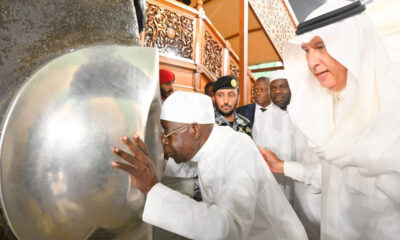
I Believe God Has Answered My Prayer, Says Tinubu After Entering Holy Ka’abah
-

 metro3 days ago
Dino Melaye Challenges Tinubu to Quranic Recitation Contest After Umrah Trip