
International
Iran Threatens to Shut Strait of Hormuz as US Ultimatum Escalates Regional Tensions
Iran Threatens to Shut Strait of Hormuz as US Ultimatum Escalates Regional Tensions
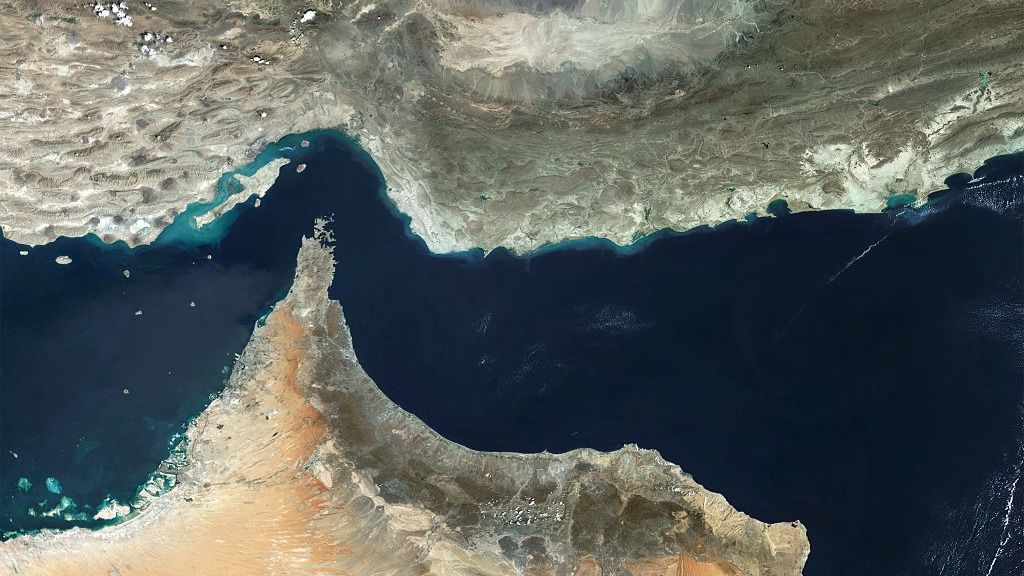
Tensions between Iran and the United States have intensified after Iranian military authorities warned that the country could shut down the strategic Strait of Hormuz if Washington proceeds with threats to target Iran’s power plants and critical infrastructure. The warning marks a significant escalation in an already volatile regional conflict.
Iran’s Khatam Al-Anbiya Central Military Headquarters issued the threat in a statement aired on state television, stating that any attack on Iran’s energy facilities would trigger the closure of the waterway. According to the statement, the Strait of Hormuz would remain closed until destroyed infrastructure is rebuilt, underscoring Tehran’s stance that it will respond firmly to perceived aggression.
The warning comes in the wake of a reported ultimatum issued by U.S. President Donald Trump, demanding that Iran reopen the vital maritime route within 48 hours. The strait has faced disruptions since the outbreak of hostilities on February 28, following U.S.-Israeli strikes on Iranian targets, further deepening the ongoing conflict.
The Strait of Hormuz, a narrow but globally critical shipping lane, serves as a key passage for a significant portion of the world’s crude oil and liquefied natural gas. Any disruption or closure could have immediate and far-reaching effects on global oil supply, energy prices, and international trade routes, making the situation a major concern for global markets.
READ ALSO:
- Baba Ijesha Speaks Out After Prison Release, Denies Sexual Assault Conviction
- Kurds: The Sepia Pawn on the Chessboard
- Police Arrest Suspected NSCDC Operative, Two Others Over Alleged Robbery
Beyond the threat of closing the strait, Iranian officials have also signaled broader retaliation if its infrastructure is attacked. Mohammad Bagher Ghalibaf, Speaker of Iran’s Parliament, warned that energy and critical infrastructure across the Middle East could become targets if Iran’s power plants are struck. His comments suggest that the scope of any escalation could extend beyond Iran’s borders.
The Islamic Revolutionary Guard Corps (IRGC) reinforced this position, stating that energy facilities in countries hosting U.S. military bases, as well as assets linked to American interests, could be considered legitimate targets in the event of an attack. The IRGC also indicated that Israel’s power plants, communications systems, and energy infrastructure could be included among potential targets in a broader conflict scenario.
Despite the heightened rhetoric, Iran maintains that the Strait of Hormuz remains open to global shipping, except for vessels it associates with adversarial nations. However, ongoing tensions have already contributed to instability in global energy markets, with analysts warning that prolonged uncertainty could trigger further volatility.
The conflict, now in its fourth week, has expanded across multiple parts of the Middle East, with reports of drone and missile exchanges involving Iran, Israel, and locations in Iraq, Jordan, and Gulf states. Iranian officials maintain that their operations are directed at military assets, though the strikes have resulted in infrastructure damage, casualties, and disruptions to aviation and trade.
Diplomatic efforts are ongoing to prevent further escalation. Regional and international actors, including Turkey and the European Union, have engaged in discussions with Iranian and U.S. officials in attempts to de-escalate tensions and explore potential avenues for peace. These efforts come amid growing concerns that continued confrontation could draw in additional parties and destabilize the wider region.
As the situation develops, the possibility of Iran restricting access to the Strait of Hormuz remains a key global concern. Any closure of the waterway could significantly disrupt global energy security, drive up fuel prices, and intensify economic pressure worldwide, making the standoff one of the most closely watched geopolitical flashpoints.
Iran Threatens to Shut Strait of Hormuz as US Ultimatum Escalates Regional Tensions






International
Trump Issues 48-Hour Ultimatum to Iran Over Strait of Hormuz Crisis

Trump Issues 48-Hour Ultimatum to Iran Over Strait of Hormuz Crisis
U.S. President Donald Trump has intensified pressure on Iran with a 48-hour ultimatum demanding the full reopening of the Strait of Hormuz to unrestricted commercial shipping, warning of targeted strikes on Iranian power infrastructure if compliance is not met.
In a post on his Truth Social platform, Trump reportedly warned that failure to reopen the strategic waterway would trigger “obliteration” of Iran’s major power facilities, signaling a potential escalation from economic and naval pressure to direct attacks on critical infrastructure. The message emphasized that the response would begin with the largest power plants.
The warning comes amid an ongoing multi-week conflict that began with a coordinated U.S.-Israeli military campaign, referred to as Operation Epic Fury, aimed at degrading Iran’s nuclear capabilities, ballistic missile systems, naval strength, and regional influence networks. The operation has significantly heightened tensions across the Middle East and raised global security concerns.
The Strait of Hormuz remains a central flashpoint. It is one of the world’s most important energy corridors, with a substantial portion of global seaborne oil shipments passing through it daily. Any disruption to traffic in the strait has immediate consequences for international energy markets, shipping insurance costs, and global supply chains.
READ ALSO:
- Silenced No More: A Survivor’s Story of Abuse by His Mother
- Rivers Police ‘Octopus Strike Force’ Accused of Extorting ₦150,000 From Lagos Traveller
- Trump: Winning the war, losing the world, by Dele Sobowale
Reports indicate that Iran, led by Supreme Leader Ali Khamenei, has maintained a firm stance in the face of escalating threats, asserting control over maritime movement in the area while framing its actions as defensive measures in response to external military pressure.
The situation has already contributed to volatility in global oil prices, with traders reacting to fears of prolonged disruption. Shipping companies have also begun rerouting vessels or increasing security measures when passing through the region, reflecting heightened risk perceptions.
Iranian officials have warned that any further strikes on its territory could trigger retaliation against U.S. interests and allied energy assets in the region, raising the possibility of a broader regional confrontation involving multiple actors.
Meanwhile, international diplomatic efforts appear limited at this stage, with no confirmed breakthrough in negotiations or de-escalation talks. Observers say the next 48 hours could be critical in determining whether the situation moves toward military confrontation or renewed diplomatic engagement.
Trump Issues 48-Hour Ultimatum to Iran Over Strait of Hormuz Crisis
International
US Approves Sale of Stranded Iranian Oil to Curb Rising Global Energy Prices

US Approves Sale of Stranded Iranian Oil to Curb Rising Global Energy Prices
The administration of Donald Trump has approved a temporary measure allowing the sale of Iranian oil stranded at sea, as part of efforts to ease soaring global energy prices triggered by escalating tensions in the Middle East.
The authorization, announced by U.S. Treasury Secretary Scott Bessent, permits the release of an estimated 140 million barrels of Iranian crude oil already in transit or held in floating storage.
Describing the move as a “narrowly tailored short-term authorisation,” Bessent stressed that it applies only to existing shipments and does not allow new oil purchases or increased production from Iran.
“The authorisation permits the sale of Iranian oil currently stranded at sea,” he said, adding that the strategy is designed to stabilise markets without weakening broader sanctions.
Global oil markets have been rattled by supply disruptions linked to the ongoing Middle East conflict, particularly around the Strait of Hormuz, a critical shipping route for global crude exports.
Benchmark Brent crude oil surged to about $112 per barrel, while fuel prices climbed sharply in major economies, increasing inflationary pressure and raising concerns about economic stability. By unlocking stranded Iranian crude, the U.S. aims to boost global oil supply and provide immediate relief to volatile energy markets.
READ ALSO:
- Netanyahu Clarifies Jesus Remarks, Denies Offending Christians Amid Backlash
- Delta Govt Condemns Ozoro Festival Assaults, Orders Police Investigation
- Trump Slams NATO Allies as ‘Cowards, Paper Tigers’ Over Iran War
Officials emphasised that U.S. sanctions on Iran remain fully in place, with measures designed to restrict Tehran’s ability to access proceeds from the oil sales. Bessent noted that Iran would face significant hurdles in accessing any revenue generated, reaffirming Washington’s commitment to maintaining maximum economic pressure. The policy has been framed as a strategic move to use available Iranian oil to counter price spikes without benefiting Iran financially.
White House spokeswoman Taylor Rogers said the administration carefully evaluated multiple options before acting to address short-term supply challenges. Energy analyst Neelesh Nerurkar described the disruption as one of the most severe in recent history, warning that the scale of lost supply may limit the effectiveness of current interventions.
“The shortfall is so large that the measures available are dwarfed by the amount of oil not reaching the market,” he said.
The move forms part of a broader U.S. strategy to stabilise global oil markets, including releases from the U.S. Strategic Petroleum Reserve, temporary easing of restrictions on select oil suppliers, and efforts to keep key maritime routes open.
While President Trump has expressed optimism that oil prices will decline once the conflict subsides, analysts warn that continued instability could sustain volatility in the near term.
The decision underscores the delicate balance between geopolitical strategy and economic necessity, as the U.S. navigates efforts to control inflation and maintain pressure on Iran. Experts caution that while the release of stranded oil may deliver short-term price relief, long-term stability will depend on resolving regional tensions and ensuring uninterrupted oil supply chains.
US Approves Sale of Stranded Iranian Oil to Curb Rising Global Energy Prices
International
Netanyahu Clarifies Jesus Remarks, Denies Offending Christians Amid Backlash
Netanyahu Clarifies Jesus Remarks, Denies Offending Christians Amid Backlash
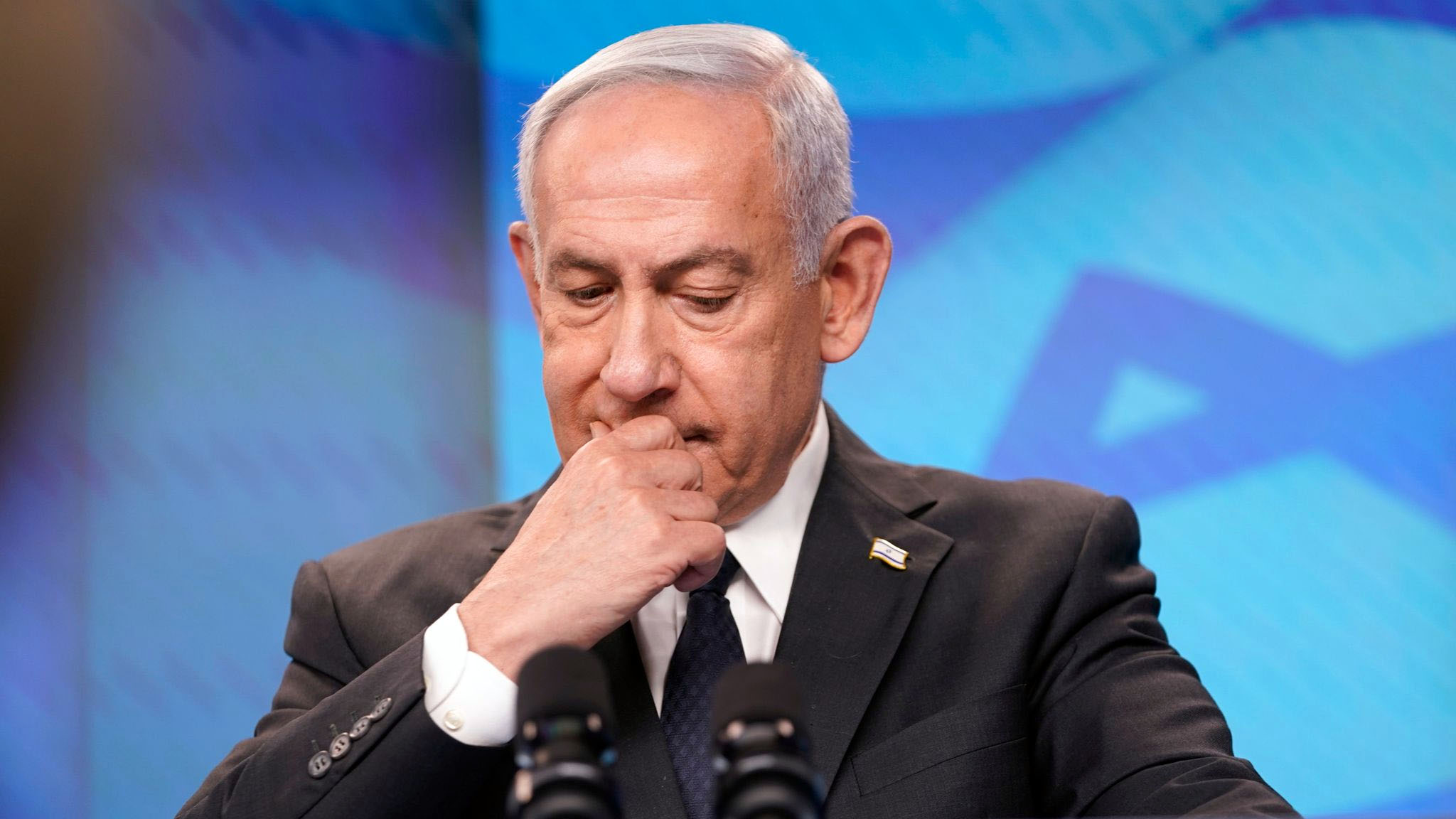
Israeli Prime Minister Benjamin Netanyahu has reiterated that his recent comments referencing Jesus Christ were not intended to offend Christians, following widespread criticism sparked by his remarks during a press briefing on the ongoing Middle East conflict involving Iran.
The controversy arose after Netanyahu, while addressing foreign media, cited a historical comparison attributed to American historian Will Durant, suggesting that moral superiority alone may not guarantee survival in a world shaped by power and conflict. His comments, which included a reference comparing Jesus Christ to Genghis Khan, triggered backlash from Christian communities and social media users who viewed the statement as insensitive.
In a follow-up clarification posted on X (formerly Twitter), Netanyahu dismissed the criticism as misinterpretation and “fake news,” insisting that he did not denigrate Jesus Christ in his remarks.
“More fake news about my attitude towards Christians, who are protected and flourish in Israel. Let me be clear: I did not denigrate Jesus Christ at my news conference,” he stated.
READ ALSO:
- Delta Govt Condemns Ozoro Festival Assaults, Orders Police Investigation
- Trump Slams NATO Allies as ‘Cowards, Paper Tigers’ Over Iran War
- Netanyahu Says Israel, US ‘Winning’ Iran War, Claims Tehran ‘Decimated’
Netanyahu explained that his comments were drawn from the writings of Will Durant, whom he described as an admirer of Jesus Christ. According to him, Durant’s historical analysis emphasised that morality alone is insufficient to ensure the survival of a society if it lacks the ability to defend itself.
“A morally superior civilization may still fall to a ruthless enemy if it does not have the power to defend itself. No offense was meant,” he added.
The initial remarks, made during a televised press conference, framed the argument that historical outcomes often favour strength and power over purely moral considerations. That framing, however, was widely interpreted as implying a comparison between religious teachings associated with Jesus and figures known for military conquest.
The reaction from Christian audiences was swift, with many expressing concern that the comparison diminished the religious and spiritual significance of Jesus Christ, who is regarded in Christianity as the “Prince of Peace” and central to the faith’s teachings.
Religious leaders and commentators also weighed in, urging greater sensitivity when discussing figures of deep religious importance, particularly in politically charged contexts. Among them, Munther Isaac, a Palestinian Lutheran pastor based in Bethlehem—traditionally regarded as the birthplace of Jesus—criticised the remarks as inappropriate and offensive, arguing that they could be seen as undermining Christian ethical teachings.
The debate has also highlighted broader tensions surrounding the interpretation of historical and religious references in political discourse, especially when delivered by global leaders addressing international audiences. Analysts note that such remarks can easily be taken out of context or amplified across social media, intensifying public reaction.
Despite the controversy, Netanyahu has maintained that Israel continues to uphold religious freedom and that Christian communities are protected within the country. His office has not indicated any plans to retract the statement further, maintaining that the remarks were part of a broader discussion on security, history, and geopolitical realities rather than a commentary on religious beliefs.
The episode underscores how remarks by political leaders can quickly generate global attention, particularly when they involve sensitive religious comparisons, and how clarifications are often required to manage diplomatic and public perception fallout.
Netanyahu Clarifies Jesus Remarks, Denies Offending Christians Amid Backlash

-

 metro2 days ago
Festival of Fertility: FG Orders Arrest, Promises Justice for Victims
-
metro13 hours ago
Ozoro Festival Controversy: 15 Suspects Arrested, Community Denies Rape Claims
-

 metro5 hours ago
Over 150 Bandits Reportedly Die in Sokoto Water Accident
-

 metro1 day ago
Nigerian Woman, Children Die in US Road Accident
-

 metro1 day ago
Shock as Governor Oborevwori’s Aide Collapses, Dies at Event
-

 News1 day ago
US Deploys MQ-9 Drones, 200 Troops to Support Nigeria’s Counterinsurgency Efforts
-

 International2 days ago
Netanyahu Clarifies Jesus Remarks, Denies Offending Christians Amid Backlash
-

 metro1 day ago
Gas Explosion Kills Two, Destroys Properties in Ajah Area of Lagos