

International
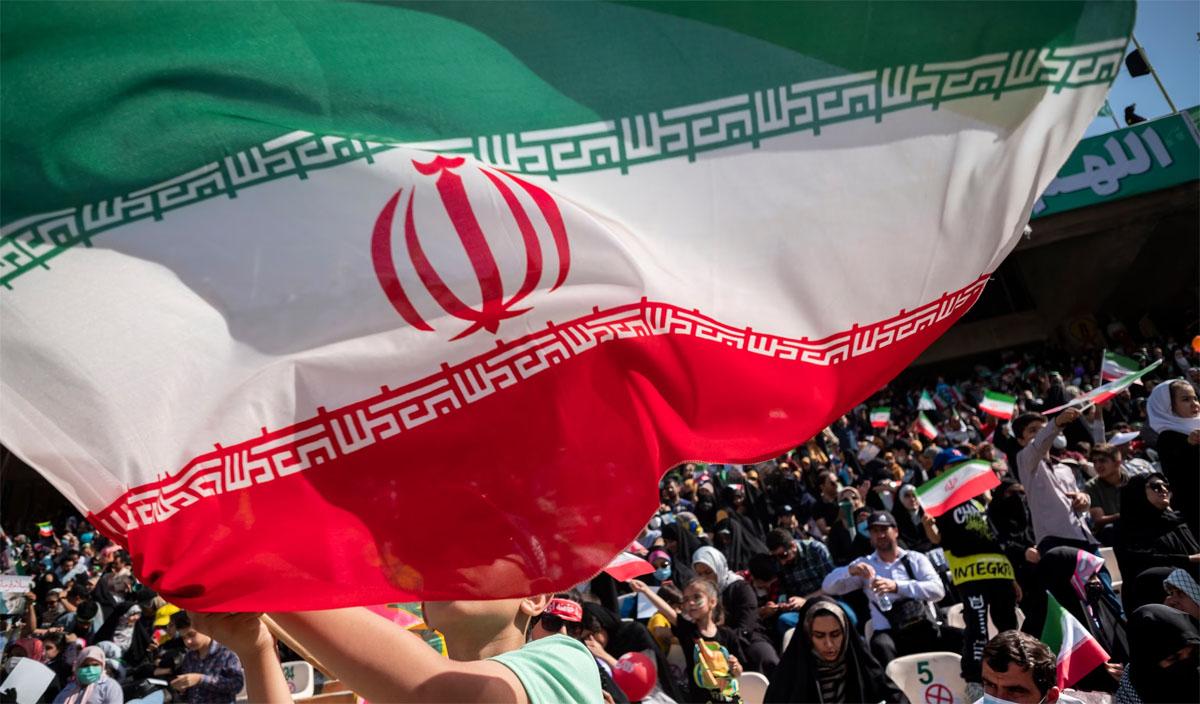
Iran Warns Countries Backing New US Sanctions, Threatens Strait of Hormuz Closure











International
FBI Investigates Apparent Hack of Criminal Database Containing Sensitive Law Enforcement Records

FBI Investigates Apparent Hack of Criminal Database Containing Sensitive Law Enforcement Records
The United States Federal Bureau of Investigation (FBI) is investigating an apparent cyberattack on its National Crime Information Center (NCIC), a nationwide database used by federal, state and local law enforcement agencies to share sensitive criminal justice information.
The suspected intrusion, reportedly discovered in recent days, has raised concerns about the security of confidential law enforcement records, including information relating to arrest warrants, criminal histories and background checks.
According to a report by CNN, citing two people briefed on the investigation, the FBI is examining the apparent breach of the database, which serves as a major information-sharing platform for law enforcement agencies across the United States.
The FBI had not publicly commented on the latest incident as of Friday, November 20, when the reports emerged.
The NCIC database plays a critical role in criminal investigations and routine police operations by enabling authorised law enforcement personnel to access information about wanted fugitives, outstanding warrants and other criminal justice records.
Its nationwide reach means that any unauthorised access could potentially have implications for multiple law enforcement agencies and their investigations.
However, investigators have not publicly established the identity of those responsible for the suspected intrusion or disclosed whether confidential information was stolen, altered or exposed.
The latest incident represents another cybersecurity challenge for the FBI, following a separate breach involving its recruitment website in September 2026.
READ ALSO:
- Nigerian Student Lures Canadian Teen on TikTok, Demands $2,000 Over Nude Photos
- UNIABUJA Used Just 12% of Land in 38 Years, Wike’s Aide Fires Back at Unions
- Tinubu’s Chicago University Row Deepens as Fresh Findings Cast Doubt on Pearse’s Lecturer Claims
That earlier attack was linked to a digital extortion group known as ShinyHunters, which reportedly accessed sensitive personal information belonging to current and former FBI employees.
A Canadian cybersecurity researcher and author was subsequently arrested and charged in connection with the September breach.
The latest suspected intrusion is also drawing attention because of the importance of the NCIC database to public safety and the administration of criminal justice across the country.
A former FBI official who led investigations into cybercriminal groups warned CNN that compromising the accuracy of information contained in the database could pose serious risks to law enforcement officers and members of the public.
The concern goes beyond the possible exposure of confidential records. Any unauthorised alteration of information about outstanding warrants, wanted individuals or criminal histories could potentially affect decisions made by officers during investigations and routine police checks.
The suspected breach comes amid growing concerns about cybersecurity vulnerabilities affecting critical American institutions and infrastructure.
Recent disruptions have affected several public and private sector systems, including banking services, air travel and national security infrastructure, although authorities have not established that all the incidents were connected to cyberattacks.
FBI Director Kash Patel appeared on Fox News on Thursday, where he discussed the bureau’s cybersecurity efforts and an initiative known as Operation Winter Shield, which encourages organisations to strengthen their digital security systems and prevent cyber intrusions.
Patel did not publicly address the suspected NCIC breach during the appearance.
The FBI’s investigation is expected to establish the extent of the suspected intrusion, the systems potentially affected and whether sensitive information was compromised.
The incident has renewed questions about the protection of government databases, particularly those containing information that could expose individuals, compromise investigations or undermine public confidence in law enforcement institutions.
FBI Investigates Apparent Hack of Criminal Database Containing Sensitive Law Enforcement Records

International
Saudi-Led Coalition Destroys 60 Houthi Targets in Yemen Airstrikes, 17 Killed

SANAA, Yemen – A Saudi-led military coalition has launched a major wave of airstrikes against Houthi rebel positions across Yemen, with at least 17 people reportedly killed and several others injured, according to the Houthi-run health ministry.
The airstrikes, launched on Tuesday, November 17, 2026, targeted areas controlled by the Iran-backed Houthi movement, including the capital, Sanaa, and the provinces of Amran, Saada and Hodeida.
The coalition said its forces destroyed 60 military targets during the operation, including underground tunnels leading to mountain warehouses containing ballistic missiles and facilities used to assemble and store drones.
Coalition spokesman, Major General Turki al-Malki, said the operation was designed to weaken the Houthis’ missile and drone capabilities.
The military action represents a major escalation in the conflict between the Saudi-led coalition and the Houthi movement, which controls significant parts of northern Yemen.
Anees al-Asbahi, a spokesman for the Houthi-run health ministry, said the attacks caused casualties in three locations, with the highest number of deaths recorded in Hodeida.
According to him, an airstrike hit a sponge factory in Hodeida, killing at least 15 people and injuring several others.
Another strike in the Kitaf district of Saada province reportedly killed two people and wounded four others.
In Sanaa, at least nine people were reportedly injured when an airstrike hit a shoe factory.
READ ALSO:
- Islam Set to Overtake Christianity as World’s Largest Religion by 2035
- 2027: Sowore Fires Back at Fashola, Promises Free Education, Vows to Scrap NELFUND
- ADC Crisis: INEC Explains Why Atiku’s Name Remains on 2027 Presidential Candidates’ List
The casualty figures were provided by Houthi authorities and have not been independently verified. The Saudi-led coalition has not released an official casualty assessment.
Following the airstrikes, the Houthis reportedly fired cruise missiles towards Riyadh, the Saudi Arabian capital.
Coalition spokesman Al-Malki said Saudi air defence systems intercepted and destroyed two missiles launched towards the city on Wednesday.
Saudi authorities also issued security alerts in three cities in the southern part of the country, close to the Yemeni border, although officials later said the immediate danger had passed.
The latest military escalation comes amid intensifying fighting in Yemen, where Saudi-backed government forces and the Houthi movement have been engaged in a prolonged conflict.
The situation has also heightened concerns over security around the Bab el-Mandeb Strait, a strategic maritime passage connecting the Red Sea to the Gulf of Aden and an important route for international commercial shipping.
The latest developments followed the withdrawal of Saudi-backed forces from areas around the strategic waterway, a move that reportedly strengthened the Houthis’ position in the surrounding region.
The conflict has continued to attract international attention because of Yemen’s strategic location, its proximity to major oil-producing countries and the potential consequences of further instability for global shipping and regional security.
The latest airstrikes and reported missile interceptions underscore the growing risk of further military confrontation between the Saudi-led coalition and the Houthis.
Saudi-Led Coalition Destroys 60 Houthi Targets in Yemen Airstrikes, 17 Killed
International
Islam Set to Overtake Christianity as World’s Largest Religion by 2035
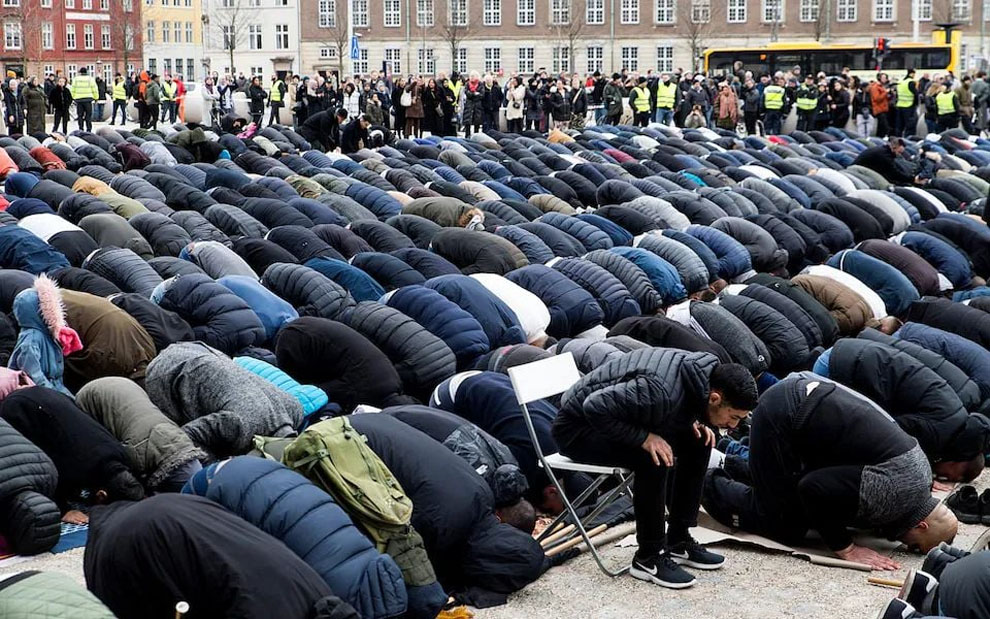
NEW YORK – Islam is projected to overtake Christianity as the world’s largest religion by 2035, with the global Muslim population expected to reach 2.57 billion, slightly exceeding the projected 2.52 billion Christians, according to a new report by the Pew Research Center.
The projection marks a significant shift in the global religious landscape, where Christianity has remained the world’s largest religious group for centuries.
Pew Research released the findings on Wednesday, November 18, 2026, in a comprehensive study titled The Future of World Religions: Population Growth Projections, 2020–2070.
The study examines how the populations of seven major religious groups are expected to change across 201 countries and territories, based on demographic trends, including fertility rates, age distribution, migration, mortality and religious switching.
According to the report, the world’s Muslim population stood at approximately 2.02 billion in 2020, compared with 2.27 billion Christians. However, the projected figures for 2035 show Muslims moving ahead with 2.57 billion adherents against 2.52 billion Christians.
The researchers stressed that both religions will continue to grow in absolute numbers, but the Muslim population is expected to expand at a faster rate.
A major factor behind the projected change is the difference in fertility rates between the two religious groups.
READ ALSO:
- 2027: Sowore Fires Back at Fashola, Promises Free Education, Vows to Scrap NELFUND
- ADC Crisis: INEC Explains Why Atiku’s Name Remains on 2027 Presidential Candidates’ List
- Adeleke Rejects Proposed Naming of Osogbo Stadium After Him, Orders Removal of Signpost
Pew estimated that Muslim women had an average of 3.1 children between 2020 and 2025, compared with 2.5 children among Christian women. Women belonging to other religious groups recorded an average of 1.6 children during the same period.
The younger age profile of Muslim populations also contributes to their faster growth, as a larger proportion of Muslims are entering their childbearing years.
The report explained that population growth, rather than mass conversion from Christianity to Islam, accounts for much of the projected difference.
The demographic trend is also expected to reshape the geographical distribution of religious communities, particularly in sub-Saharan Africa, which is projected to become increasingly influential in the future growth of both Christianity and Islam.
Pew estimates that the global Muslim population will reach approximately 3.64 billion by 2070, representing about 36 per cent of the world’s population. The Christian population is projected to rise to approximately 2.96 billion, accounting for about 29 per cent.
The report attributes the faster growth of Islam to its relatively young population and higher fertility rates. It also considers migration and religious switching, although these factors are not expected to account for as much of the projected increase as natural population growth.
For Christianity, the study projects a significant geographical shift towards Africa. By 2070, more than half of the world’s Christians are expected to live in sub-Saharan Africa, reflecting population growth in the region.
The Democratic Republic of Congo is also projected to overtake the United States as the country with the largest Christian population.
Nigeria features prominently in the projections for Islam. The country, which had an estimated 120 million Muslims in 2020, is expected to become the world’s third-largest Muslim-population country by 2070, behind Pakistan and India.
Pakistan is projected to overtake Indonesia as the country with the largest Muslim population, with an estimated 461 million Muslims by 2070. India is expected to rank second, with approximately 334 million.
The study also examined the projected growth of other religious groups. The global Hindu and Jewish populations are expected to increase in absolute numbers but decline as shares of the world’s population. Buddhism, meanwhile, is projected to decline in both population size and global share.
The proportion of people identifying as religiously unaffiliated is also projected to fall from 24 per cent in 2020 to 17 per cent by 2070.
Pew emphasised that the findings are demographic projections rather than guaranteed outcomes. They are based on existing trends in fertility, mortality, migration, age distribution and religious identification.
The researchers cautioned that unexpected developments, including wars, epidemics, natural disasters and changes in economic or social conditions, could alter the projected figures.
The findings provide fresh insight into how population changes could reshape the global religious landscape over the next five decades, with Islam projected to become the world’s largest religious group by 2035 while Christianity continues to expand in population.
Islam Set to Overtake Christianity as World’s Largest Religion by 2035
-

 metro2 days ago
FG’s ₦100,000 Family Grant: Eligibility, How to Apply and Payment Procedure Revealed
-

 Sports2 days ago
Ex-Super Eagles Captain Segun Odegbami Survives Death as Three Assailants Machete Him in Abeokuta Home
-

 metro2 days ago
Cleveland Girl, 11, Gets 7-Year Juvenile Sentence Over Rape, Attempted Murder of 5-Year-Old
-

 metro2 days ago
Hoodlums Descend on Tinubu’s Praise Singer Rarara at Abuja Mosque, Tear His Clothes
-

 metro2 days ago
Honesty Cost Lagos Taxi Driver His Job, Marriage After Returning ₦21,000 Passenger Left in His Cab
-

 metro2 days ago
Bandits Storm Rival Kidnappers’ Hideout, Free Abducted Victims in Shocking Video
-

 Politics2 days ago
Tinubu Personally Asked Me to Fight Governor’s Impeachment, Warned Democracy Could Collapse – Olanipekun
-

 Politics2 days ago
Just in: Court Sacks Ribadu, Orders INEC to Restore Suleiman as Adamawa ADC Candidate