

News
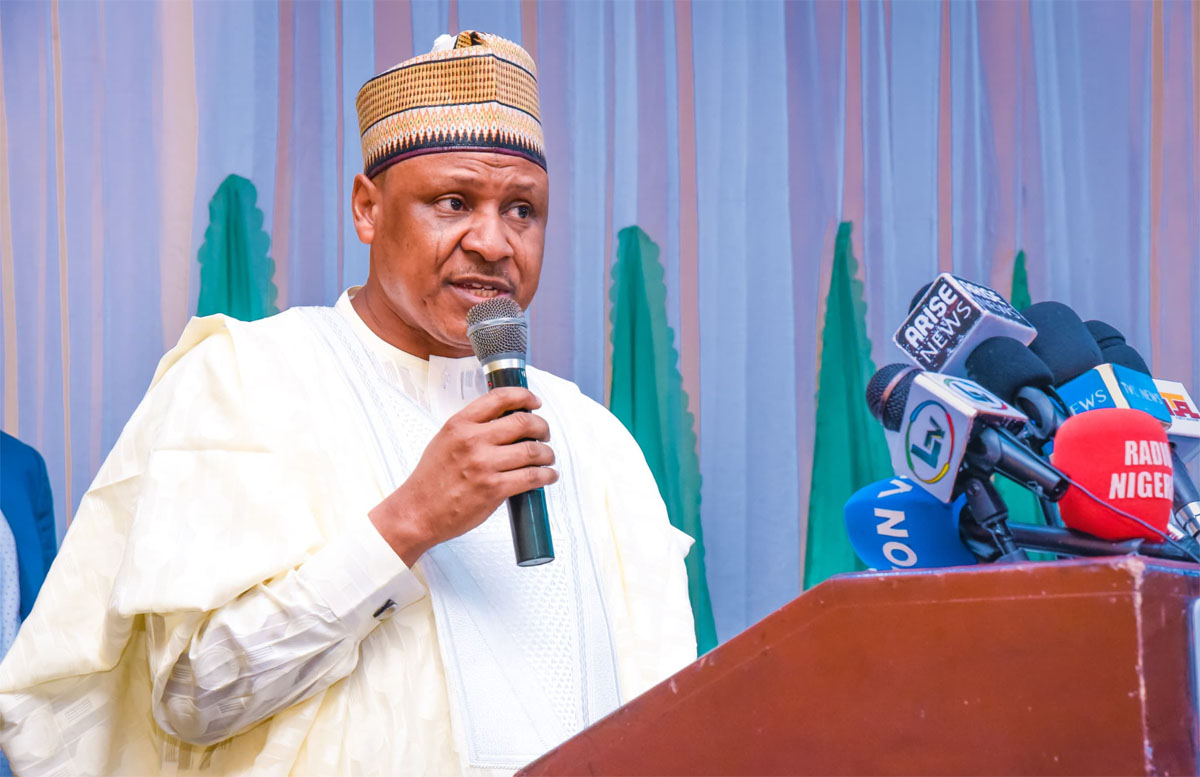
Subsidies or Student Loans? Minister Poses Tough Questions to Critics
Subsidies or Student Loans? Minister Poses Tough Questions to Critics
Information Minister Mohammed Idris cautions that restoring petrol subsidy would undermine fiscal progress, weaken investor confidence, and return Nigeria to the economic crisis of 2022, as the government highlights ₦6.47 trillion in infrastructure spending and over 10 million households reached with social transfers.
ABUJA, Nigeria – The Minister of Information and National Orientation, Mohammed Idris, has issued a firm warning against renewed calls to restore the petrol subsidy, declaring that such a move would reverse the economic gains recorded under President Bola Tinubu’s administration and plunge Nigeria back into the fiscal crisis that characterised the old subsidy regime. In an Op-Ed titled “Restoring Fuel Subsidy Will Reverse Nigeria’s Economic Gains,” published on Monday, August 24, 2026, in several national dailies, the minister outlined the fiscal benefits of subsidy removal, the economic risks averted, and the difficult trade-offs that would confront the country should petrol subsidy be reintroduced. According to a statement issued by his Media Aide, Rabiu Ibrahim, in Abuja, Idris argued that proponents of subsidy restoration must confront the real opportunity costs of such a decision, asking whether Nigerians are willing to sacrifice student loans, consumer credit, infrastructure funding, and social protection for the return of a policy that proved economically devastating.
“Restoring subsidy would almost instantly return Nigeria to the economic conditions of 2022, recreating the same fiscal pressures, distortions, scarcity and incentives for arbitrage that made the old system unsustainable,” Idris said. The minister recalled that in 2022, amid declining oil production and weak revenues, Nigeria spent about $10 billion on fuel subsidies, while the World Bank warned that the subsidy was consuming resources that could otherwise have supported education, healthcare, infrastructure and social protection. He noted that the legacy Ways and Means financing, which stood at about ₦30 trillion in May 2023 and has since been curtailed, would have doubled to ₦60 trillion or more without the reforms, while 27 states that were unable to reliably pay salaries would have seen their situations worsen considerably.
READ ALSO:
- Police vow to arrest killers of 10 officers slain in Kebbi gun battle
- Police vow to arrest killers of 10 officers slain in Kebbi gun battle
- Salah scores brace as Trabzonspor beat Basaksehir 2-1
Idris posed a series of pointed questions to those calling for subsidy restoration, challenging them to consider what would be sacrificed. “Do we restore petrol subsidy, or sustain student loans and consumer credit for young Nigerians? Do we restore subsidy, or preserve higher allocations to states and local governments? Do we restore subsidy, or continue funding roads, rail, power and security? Do we restore subsidy, or strengthen the fiscal capacity required to expand healthcare, education and social protection for vulnerable Nigerians?” he asked. The minister emphasised that these are not rhetorical questions but real policy choices that would confront the nation. He noted that the Organised Private Sector and the wider economic community have also cautioned against reversing the reform, recognising that Nigeria cannot build tomorrow’s economy by returning to yesterday’s unsustainable subsidy regime.
Citing the Federal Government’s recently presented “Nigeria’s Reform Scorecard: The Benefits, Costs and Harms Prevented,” Idris noted that the Minister of Finance and Coordinating Minister of the Economy, Dr. Taiwo Oyedele, disclosed that subsidy savings mobilised ₦15.8 trillion in resources for the Federation between June 2023 and December 2025. He explained that approximately ₦5.43 trillion accrued to the Federal Government, ₦6.52 trillion to states, and ₦3.88 trillion to local governments—clarifying that the ₦15.8 trillion was not a separate pool of cash but resources released within the Federation’s wider fiscal system. The minister noted that the increased fiscal space has strengthened the capacity of states and local governments to meet salary and pension obligations while enabling major federal investments in infrastructure, security, agriculture, and human capital. According to Idris, the Reform Scorecard recorded approximately ₦6.47 trillion in additional expenditure on strategic infrastructure, including major national corridors such as the Lagos-Calabar Coastal Highway, Sokoto-Badagry Superhighway, and the Trans-Sahara Superhighway.
Beyond infrastructure, the minister highlighted that more than ₦400 billion has been committed to major social investment initiatives, including the Nigeria Education Loan Fund (NELFUND) with ₦223.8 billion, the MOFI Real Estate Investment Fund (MREIF) with ₦150 billion, and the Nigerian Consumer Credit Corporation (CREDICORP) with ₦50 billion. He added that social transfers have reached more than 10 million Nigerian households, providing critical support to vulnerable families across the country. Idris also pointed to renewed investor confidence, noting that the Nigerian stock market is the world’s best-performing in 2026, external reserves are at their highest level in nearly 20 years, and oil production has exceeded its OPEC quota for the first time in years. These indicators, he said, reflect the positive trajectory of the economy under the current reform agenda.
READ ALSO:
- Seven killed, seven injured in Bida-Kutigi road crash
- Kwara Monarch, Baale’s Wife Abducted as Fresh Wave of Kidnappings Hits Communities
- KWAM 1 Breaks Down on Stage in Emotional Tribute to Late Nollywood Icon Ogogo
The minister further warned that Nigeria is already carrying a substantial electricity subsidy estimated at ₦3.14 trillion between June 2023 and December 2025. This subsidy helps bridge the gap between actual power production costs and the capped tariffs paid by most consumers. According to figures from the Ministry of Finance, electricity subsidy payments rose sharply from N177 billion in 2023 to N1.48 trillion in 2024—an increase of more than 740 percent—before declining marginally to N1.47 trillion in 2025. “Reintroducing a petrol consumption subsidy on top of this would deal a double blow to Nigeria’s fiscal position,” Idris warned, noting that the combined burden would severely constrain the government’s ability to invest in critical sectors and maintain fiscal stability.
The minister also detailed the economic harm that the reforms have helped Nigeria avert. Had the subsidy regime remained unaddressed, he said, petrol scarcity would have returned, pushing prices above ₦3,000 per litre on the black market. The legacy Ways and Means financing, which stood at about ₦30 trillion in May 2023 and has since been curtailed, would have doubled to ₦60 trillion or more. The Scorecard projects that, without the reforms, the inherited situation of 27 states unable to reliably pay salaries would undoubtedly have worsened. Idris noted that the Centre for the Promotion of Private Enterprise (CPPE) recently backed the Federal Government’s economic reform programme, saying the measures have produced measurable improvements in Nigeria’s fiscal and macroeconomic position, though it urged a shift from economic stability to productivity, investment, and improved living standards.
The minister acknowledged that Nigerians are facing difficulties arising from the reforms but maintained that reversing course is not the solution. “We are not claiming that the reforms have solved all of Nigeria’s economic challenges; there is indeed still much work to be done to translate improved fiscal capacity into better services, jobs, infrastructure and living standards,” he said. He urged citizens to view the reforms in the context of the country’s long-term economic stability and the need to build a stronger, more productive economy. “Nigeria cannot build tomorrow’s economy by returning to yesterday’s unsustainable subsidy regime. We have moved beyond that model,” Idris concluded.
Subsidies or Student Loans? Minister Poses Tough Questions to Critics








News
BREAKING: FG Announces 30-Day Petrol Discount, Gives NNPCL Fresh Directive

BREAKING: FG Announces 30-Day Petrol Discount, Gives NNPCL Fresh Directive
Public transporters to get priority as government moves to cushion impact of high fuel prices
The Federal Government has announced a 30-day discount on petrol sold through the Nigerian National Petroleum Company Limited (NNPCL), with public transport operators to receive priority under the arrangement.
The Minister of Finance and Coordinating Minister of the Economy, Taiwo Oyedele, announced the measure on Thursday, October 8, 2026, during a press briefing in Abuja on petrol prices and subsidy-related issues.
Oyedele said the intervention should not be interpreted as a return to petrol subsidy, explaining that the government would instead allow petrol to be sold at cost during the period.
“We are offering a discount on petrol dispensed by NNPC Limited for the next 30 days in the first instance with priority for public transporters nationwide.”
The minister added: “It’s not a subsidy; government is just saying we sell to you at cost.”
FG targets N1,350 petrol landing-cost ceiling
The announcement forms part of a broader package of measures being introduced by the Federal Government to moderate the impact of rising petrol and transportation costs.
Oyedele also disclosed that the government was negotiating a ₦1,350-per-litre ceiling on the ex-gantry or landing cost of petrol.
According to him, the proposed price-modulation arrangement is intended to prevent pump prices from immediately following every fluctuation in international crude oil prices and foreign exchange rates.
READ ALSO:
- Man Allegedly Caught Using Old Tyres to Scam POS Operator
- BREAKING: FG Unveils 10 Measures to Cushion Fuel Price, Inflation Pressures
- 2027: ADC Vows to Collate, Share Polling-Unit Results Despite INEC Warning
He said the ceiling would be reviewed monthly, with adjustments made when necessary.
Public transporters given priority
Under the 30-day arrangement, public transport operators nationwide are expected to receive priority in accessing the discounted petrol.
The measure is significant because fuel costs have a direct impact on transport fares and, consequently, the prices of food and other essential commodities.
The government is therefore seeking to provide immediate relief while working on longer-term measures aimed at reducing volatility in petrol prices.
No exact discount amount announced yet
However, the Federal Government has not, as of the announcement, disclosed the exact amount of the 30-day discount or stated a new uniform pump price that all NNPCL stations will charge.
Vanguard reported that NNPCL had separately announced a ₦66-per-litre discount for customers using the NNPC Fuel App at its stations nationwide.
The latest announcement appears to be a broader government intervention, but details of its implementation, including how eligible public transporters will access the discount, are still expected.
FG unveils wider relief measures
Oyedele also disclosed other measures aimed at easing the pressure of high fuel and transportation costs.
These include efforts to moderate taxes and levies that increase logistics costs, forward crude sales to domestic refiners, increased funding for cash transfers to vulnerable households and subsidised credit for small businesses and consumers.
The government is also working with state governments to accelerate the rollout of compressed natural gas (CNG) as an alternative fuel for transportation.
What Nigerians should know
The latest announcement does not amount to a formal restoration of the petrol subsidy, according to the Finance Minister.
Rather, the government says it intends to temporarily sell petrol through NNPCL at cost, with public transporters prioritised, while pursuing mechanisms to make fuel prices less vulnerable to sudden international market and exchange-rate movements.
The 30-day period is expected to provide some relief to transport operators and commuters, although the impact on pump prices and transport fares will depend on the details of the implementation.
Newstrends.ng will continue to monitor the Federal Government and NNPCL for the exact discount amount, effective pump prices and implementation guidelines.
BREAKING: FG Announces 30-Day Petrol Discount, Gives NNPCL Fresh Directive
News
World Bank Raises Nigeria Growth Forecast, Demands More Jobs, Poverty Reduction
World Bank Raises Nigeria Growth Forecast, Demands More Jobs, Poverty Reduction
The World Bank has upgraded its economic growth forecast for Nigeria, citing improving macroeconomic stability, stronger investor confidence and a gradual recovery in private investment under President Bola Ahmed Tinubu’s reforms.
In its latest Africa Economic Update, the bank raised Nigeria’s 2026 growth forecast to 4.3 per cent, up from an estimated 4.0 per cent growth in 2025.
It also projected that the Nigerian economy would expand by 4.4 per cent annually in 2027 and 2028, reflecting expectations of continued improvement in economic activity.
The World Bank said Nigeria was among nearly three-quarters of sub-Saharan African countries whose growth outlooks were upgraded, attributing the broader improvement to years of economic reforms and better macroeconomic management.
For Nigeria, the bank pointed to progress in restoring macroeconomic stability, stronger external balances, improved fiscal revenues, increased investor confidence and a gradual recovery in private investment.
Nigeria’s economy expanded by 4.43 per cent year-on-year in the second quarter of 2026, according to official data, with agriculture and services recording stronger performances.
However, the World Bank cautioned that faster economic growth alone would not be enough to significantly improve living standards.
READ ALSO:
- Flood Submerges Enugu Road, Strands School Children, Passengers
- US Proposes $70,000 OPT Fee for Nigerians, Other Foreign Students
- EFCC Re-Arraigns Two Over Alleged £110,000 Money Laundering, ₦500m Fraud
It said the country’s next major challenge was to translate economic growth into productive jobs, higher household incomes and lower poverty.
The bank estimates that about 3.5 million people enter Nigeria’s labour force every year, putting enormous pressure on the economy to generate sufficient and sustainable employment opportunities.
It warned that the significance of Nigeria’s improving growth outlook would increasingly depend on whether economic expansion results in increased investment, business growth, higher productivity and better-paying jobs.
The World Bank’s latest assessment also showed that poverty remains a major concern. It estimated that 69.6 per cent of Nigerians lived below the lower-middle-income poverty line of $4.20 a day in 2025, while about 123 million people, or 50.8 per cent of the population, lived in extreme poverty under the bank’s cited measure.
The lender said improving macroeconomic conditions had created an opportunity for Nigeria to move from economic stabilisation towards expanding productive capacity and improving living standards.
It, however, warned that rising government spending ahead of the 2027 elections could undermine the momentum of recent reforms if fiscal discipline weakens.
The bank also stressed the importance of greater private-sector investment, improved electricity supply, transport and logistics, digital infrastructure, access to finance, agricultural productivity and a better business environment.
It said investments in education, skills, healthcare and early-childhood development would also be critical to improving the productivity of Nigeria’s future workforce.
Beyond Nigeria, the World Bank raised its forecast for sub-Saharan Africa to 4.3 per cent growth in 2026, up from 4.1 per cent in 2025 and 0.3 percentage points above its April projection.
The bank said the region still faced significant risks from geopolitical tensions, climate shocks, tighter financial conditions, insecurity and declining development assistance.
It also urged African governments to invest in artificial intelligence and digital technologies, saying affordable AI applications in areas such as education, agriculture, healthcare, finance and small businesses could help boost productivity and create more jobs.
For Nigeria, the message is increasingly clear: maintaining macroeconomic stability is only the first stage of the recovery, while the bigger test will be whether the reforms deliver jobs, income growth and meaningful poverty reduction for households.
World Bank Raises Nigeria Growth Forecast, Demands More Jobs, Poverty Reduction
News
BREAKING: NLC Shuts Down Abuja Indefinitely Over FCT Teachers’ Promotion Dispute
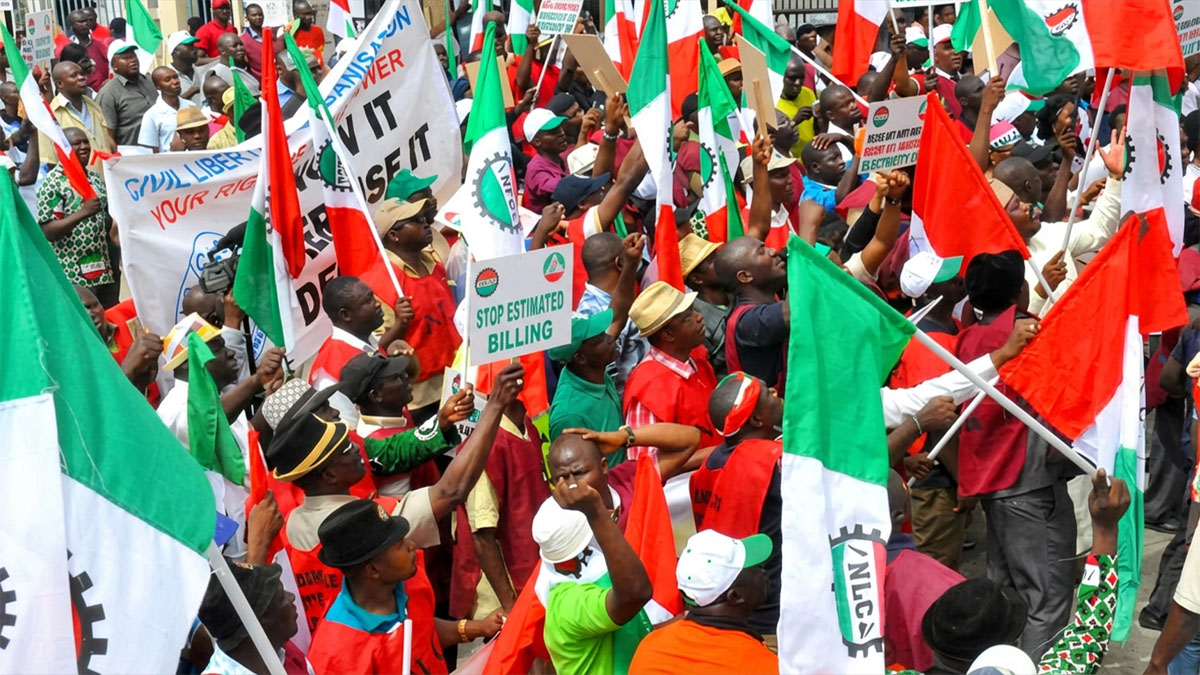
BREAKING: NLC Shuts Down Abuja Indefinitely Over FCT Teachers’ Promotion Dispute
The Federal Capital Territory was thrown into an indefinite industrial crisis on Wednesday as the Nigeria Labour Congress, NLC, ordered workers across Abuja to withdraw their services over unresolved disputes surrounding the promotion and career progression of teachers.
The strike, which took effect on Wednesday, October 7, 2026, followed the expiration of a seven-day ultimatum issued to the Federal Capital Territory Administration, FCTA, after months of disagreements over teachers’ welfare, promotion procedures and the treatment of senior education officials.
The NLC FCT Council said it was compelled to resort to industrial action after rejecting the response of the FCTA to its demands, describing the administration’s position as “ambiguous, dismissive and totally unacceptable.”
The directive, issued in a communique signed by the NLC FCT Council Chairman, Comrade Knabayi S. Adalo, directed the congress’s affiliate unions to mobilise their members for the indefinite action until the outstanding issues are resolved.
At the heart of the dispute is the controversial “vacancy clause”, which makes the promotion of teachers subject to the availability of vacant positions.
The labour movement argues that the condition has resulted in career stagnation for qualified teachers who have met the requirements for advancement but are unable to move to the next cadre because of the absence of vacancies.
The NLC maintains that teachers, recruited specifically to teach under the FCT Universal Basic Education Board and FCT Secondary Education Board, should not be subjected to a promotion arrangement designed for core civil servants or pool officers.
The dispute has been building for months. In September, the NLC gave the FCTA a seven-day ultimatum to resolve the grievances, following earlier protests by teachers over the vacancy requirement and concerns surrounding the 2025 promotion examination.
Among the union’s demands is the removal of the vacancy requirement from the promotion process for teachers. It is also demanding that teachers who were eligible for promotion in 2025 but were unable to take the examination be allowed to sit for the exercise before or alongside the 2026 candidates.
The NLC is further demanding the reversal of redeployment and demotion letters issued to some directors in the education sector, citing the Harmonised Retirement Age for Teachers in Nigeria Act, 2022.
The union has also called for changes involving the management of the FCT education agencies, including the FCT Universal Basic Education Board and FCT Secondary Education Board.
The FCTA, however, has previously defended its administrative decisions, saying its policies on promotion, redeployment and other personnel matters are guided by existing civil service regulations and ongoing reforms in the education sector.
An FCTA official also defended the redeployment of senior education administrators, citing relevant federal guidelines.
The labour dispute has also exposed divisions within the organised labour movement in the territory. The Academic Staff Union of Secondary Schools, ASUSS, FCT Chapter, an affiliate of the Trade Union Congress, has reportedly distanced itself from the strike, maintaining that the FCTA has the authority to deploy personnel and that promotion should take account of established vacancies and available resources.
With the NLC now declaring the action indefinite, the dispute threatens to disrupt schools, government offices and other public services across the nation’s capital.
The union has urged parents, residents, civil society organisations and other stakeholders to press the FCTA to resolve the issues, insisting that the industrial action will continue until its demands are satisfactorily addressed.
The NLC’s latest position is unequivocal: without a resolution of what it considers the fundamental grievances affecting teachers, the strike will continue indefinitely.
-

 metro3 days ago
Ondo Air Tragedy: Soldiers, Families Among 32 Killed In NAF Crash
-

 metro3 days ago
Gunmen Open Fire At Lagos Bus Stop, Kill NURTW Member, Injure Three
-

 metro3 days ago
Ogun Crash: Nine Die As Bus Collides With Truck On Ijebu-Ode-Ore Road
-
 metro2 days ago
Supreme Council For Sharia Secretary-General Nafiu Baba-Ahmed Dies
-

 metro2 days ago
UCH CMD: After Decades Without Muslim, Agunbiade Demands Fair Chance
-
![[UPDATED] 20 NYSC Prospective Corps Members Freed After Seven Days in Captivity](https://newstrends.ng/wp-content/uploads/2026/10/20-NYSC-Prospective-Corps-Members-Freed-After-Seven-Days-in-Captivity-400x240.jpg)
![[UPDATED] 20 NYSC Prospective Corps Members Freed After Seven Days in Captivity](https://newstrends.ng/wp-content/uploads/2026/10/20-NYSC-Prospective-Corps-Members-Freed-After-Seven-Days-in-Captivity-80x80.jpg) metro16 hours ago
metro16 hours ago[UPDATED] 20 NYSC Prospective Corps Members Freed After Seven Days in Captivity
-

 International3 days ago
Kemi Badenoch: I Don’t Want Migrants Turning UK Into Nation Of ‘Little Ghettos’
-
 metro3 days ago
Nigeria Climbs Africa Investment Ladder, Overtakes Four Nations