
International
Israel strikes Iran as payback for missile attack
Israel strikes Iran as payback for missile attack
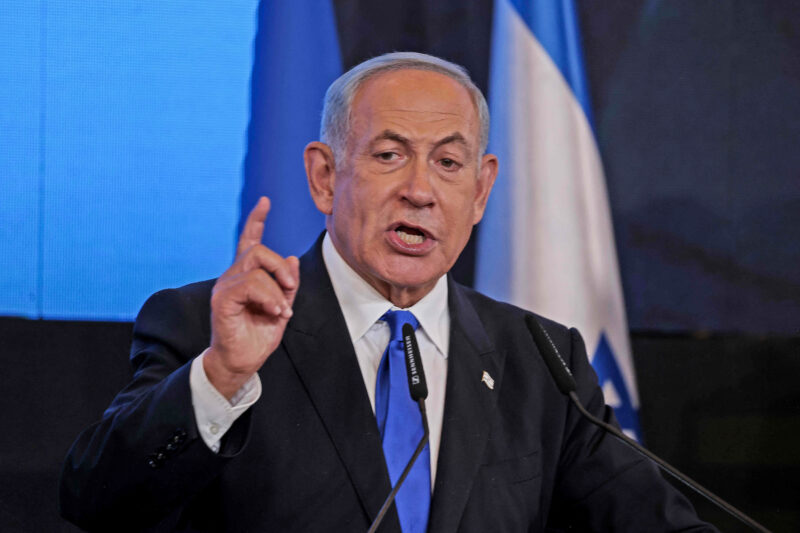
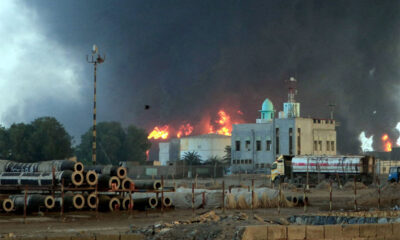
Israel launched a series of airstrikes against Iran early on Saturday, claiming the assaults were directed at military targets in revenge for the Islamic Republic’s volley of ballistic missiles against Israel earlier this month.
Although there was no immediate word on damage or injuries, explosions could be heard in Tehran, the capital of Iran.
At a time of escalating violence throughout the Middle East, where Iranian-backed militant groups, such as Hamas in Gaza and Hezbollah in Lebanon, are already at war with the Hebrew nation, the attack runs the risk of bringing the archenemies closer to full-scale conflict.
The Hebrew nation claimed to have carried out “precise strikes on military targets” on Saturday, but two Israeli officials stated the strikes were not directed at oil or nuclear installations. Since they were not authorised to speak to the media about the ongoing operation, the officials talked on condition of anonymity.
Israel Defence Forces (IDF) spokesperson Rear Adm. Daniel Hagari said in a prerecorded video speech early Saturday that “the regime in Iran and its proxies in the region have been relentlessly attacking Hebrew nation since Oct. 7… including direct attacks from Iranian soil.”
“The State of Israel has the right and the obligation to respond, just like any other sovereign nation in the world.”
At first, IDF reaction to Iran’s Oct. 1 attack was thought to target oil stations and nuclear facilities. However, in mid-October, the Biden administration thought it had secured guarantees from Israel that it would not strike these targets, which would constitute a more serious escalation.
Iran’s official media said that explosions were audible in Tehran and claimed that some of the noises were from the city’s air defence systems.
Iranian official television, however, provided no further information beyond a brief mention and even, in what appeared to be an effort to minimise the attack, started airing what it described as live footage of individuals loading trucks at a Tehran vegetable market.
The first wave of assaults shook the surrounding neighbourhood, with at least seven explosions audible, a Tehran resident told The Associated Press (AP). For fear of retaliation, the resident spoke on condition of anonymity.
People in Tehran could see what looked like tracer fire light up the sky as explosions sounded. Additional video captured what looked like the launch of surface-to-air missiles.
READ ALSO:
- Better days ahead for Nigeria’s economy, says Wale Edun
- El-Clasico: Vinicius to prove why he should win Ballon d’Or
- 13 die in Kaduna road accident
Early on Saturday, Iran closed its airspace, and according to AP’s analysis of flight-tracking data, commercial airlines largely departed the sky over Iran as well as over Iraq, Syria, and Lebanon.
President Joe Biden has been briefed and will continue to get updates, according to the White House.
Syria’s central and southern military installations were the target of missile fire, according to the state news agency SANA, which cited an unnamed military official.
It claimed that several of the missiles had been shot down by Syria’s air defences. Casualty information was not immediately available.
After two Iranian generals were killed in what seemed to be an IDF airstrike on an Iranian diplomatic facility in Syria last April, Iran launched a barrage of missiles and drones towards Israel.
Under pressure from Western nations to exercise restraint, Israel retaliated with a limited strike after the missiles and drones caused little damage.
However, Israel pledged a more forceful reaction following Iran’s missile launch in early October. Benjamin Netanyahu, the prime minister of Israel, declared right away that Iran had “made a big mistake.”
The United States, which has a sizable military presence in the Persian Gulf and has assisted Israel in defending itself against strikes by Iran and its allies, runs the possibility of becoming even more involved if Israel launches a strong attack on Iran.
On the evening of October 1, Iran fired at least 180 missiles into Israel, causing very minor damage and a few injuries while sending Israelis running into bomb shelters.
Iran claimed that the bombardment was punishment for attacks that killed Iranian military personnel, Hamas leaders, and Hezbollah commanders in previous months.
IDF had dealt Hezbollah a slew of severe blows before to Iran’s October attack. Hezbollah has been launching rockets into the Hebrew nation almost every day for more than a year, ever since the horrific Hamas attack on Israel that started the war in Gaza.
In September, two days of assaults reported to Israel resulted in the explosion of Hezbollah’s pagers and walkie-talkies, killing dozens and injuring thousands. The following week, Hassan Nasrallah, the long-time leader of Hezbollah, and several of his top commanders were murdered in a major Israeli attack outside of Beirut.
Israel then launched a ground invasion into southern Lebanon, increasing the strain on Hezbollah. The death toll has increased significantly as airstrikes continue to strike in and around Beirut, displacing over a million Lebanese. Until it is safe for Israeli citizens who have been forced from their homes near the Lebanon border to return, Israel has stated that it will keep attacking Hezbollah. Until there is a cease-fire in Gaza, Hezbollah has threatened to continue launching missiles into Israel.
READ ALSO:
- UK donates N1bn equipment to Nigerian military
- Naval official shoots colleague dead in Katsina
- Chinese hackers ‘break’ into Trump’s cellphone
Last October 7, Hamas and other militants assaulted the Hebrew nation, killing 1,200 people, primarily civilians, and capturing some 250 hostages in Gaza.
Netanyahu has promised to continue Israel’s catastrophic air and military offensive against Hamas until all of the captives are released.
There are about 100 left, and about one-third are thought to be dead. According to local health experts, well than half of the 42,000 Palestinians killed in Gaza are women and children. They do not distinguish between civilians and combatants.
As US Secretary of State Antony Blinken was returning to the United States from a Middle East tour, where he and other US officials had cautioned Israel to respond in a way that would not worsen the regional conflict, Israel launched its assault on Iran on Saturday.
The Hebrew nation contacted the US before of the strikes, according to two US officials. The US was not involved in the operation, they added. The officials discussed an ongoing operation while speaking on condition of anonymity.
Since the Islamic Revolution of 1979, the Hebrew nation and Iran have been fierce enemies. Given its leaders’ demands for Israel’s destruction, their backing of terrorist anti-Israel organisations, and its nuclear program, Israel views Iran as its worst threat.
The shadow war between Iran and Israel has lasted for years. Leading Iranian nuclear scientists have been slain in what is believed to be an Israeli assassination campaign.
In enigmatic attacks attributed to the Hebrew nation, Iranian nuclear installations have been compromised or damaged.
In the meantime, Iran has been held accountable for a slew of recent attacks on Middle Eastern ships, which escalated into attacks on shipping via the Red Sea corridor by Yemen’s Houthi rebels.
Since the October 7 strike by Hamas, the shadow war has become more visible. After two Iranian generals were killed in what seemed to be an IDF airstrike on an Iranian diplomatic facility in Syria last April, Iran launched a barrage of missiles and drones towards Israel.
Under pressure from Western nations to exercise restraint, the Hebrew nation retaliated with a limited strike after the missiles and drones caused little damage.
However, the Hebrew nation pledged a more forceful reaction following Iran’s missile launch in early October.
Israel strikes Iran as payback for missile attack








International
US Warns Iran Against Closing Strait of Hormuz, Cites “Severe Consequences”
US Warns Iran Against Closing Strait of Hormuz, Cites “Severe Consequences”
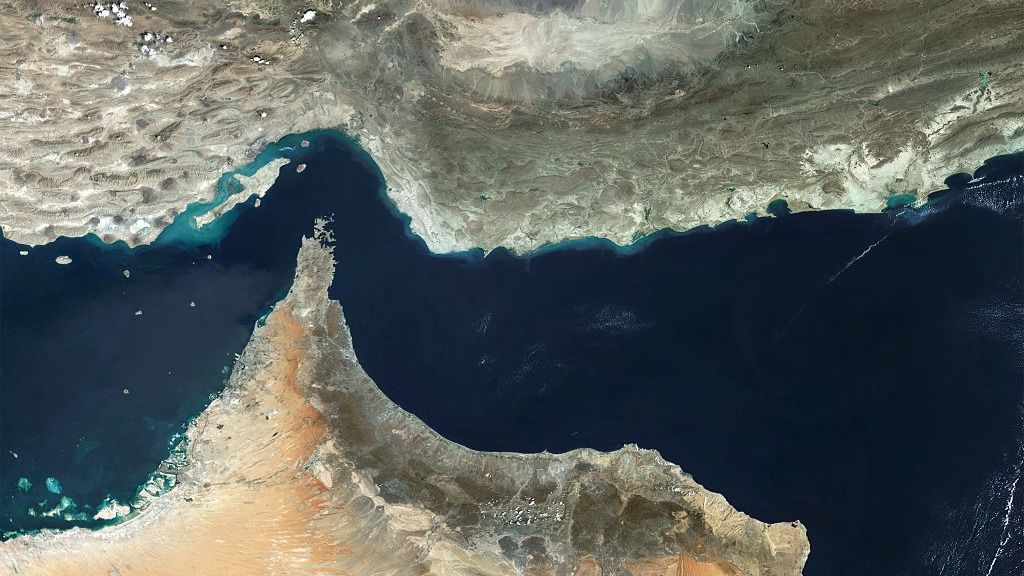
Washington, D.C. — The United States has issued a strong warning to Iran over any potential move to shut down the strategic Strait of Hormuz following ongoing military operations in the region, with Secretary of State Marco Rubio cautioning that such an action would attract “severe consequences.”
Rubio, speaking amid heightened tensions in the Middle East, stressed that the vital waterway must remain open to global shipping, describing any attempt by Iran to block access as unacceptable and destabilising.
“The Strait of Hormuz is an international waterway that must remain open,” Rubio said. “If Iran chooses to close it after military operations conclude, it will face serious consequences. The United States will ensure that freedom of navigation is maintained.”
The Strait of Hormuz is one of the world’s most critical oil transit routes, serving as a gateway for nearly a fifth of global petroleum supplies. Any disruption to its operations could send shockwaves through international energy markets and significantly impact global trade.
Tensions have escalated in recent days following military developments involving the United States and its regional allies, alongside growing concerns over Iran’s response. Analysts say Tehran has previously hinted at the possibility of leveraging the strait as a strategic pressure point during periods of conflict.
READ ALSO:
- China Thanks ‘Relevant Parties’ as Ships Cross Strait of Hormuz Amid Tensions
- Osimhen Among Highest-Paid African Footballers in 2026 — See Full List
- Lagos NURTW Chairman Sego Distributes Exotic Cars, Luxury Items to Cabinet Members (Video)
Security experts warn that a closure of the narrow waterway could trigger a broader regional crisis, potentially drawing in global powers and leading to military confrontations at sea. The U.S. Navy, which maintains a strong presence in the region, has historically conducted operations to safeguard commercial shipping routes.
While Iranian officials have not formally announced any decision to block the strait, past rhetoric from Tehran has included threats to disrupt maritime traffic if its national interests are threatened.
In response, U.S. officials reiterated their commitment to maintaining stability and ensuring the uninterrupted flow of commerce. Rubio emphasised that any move to interfere with international shipping lanes would not only affect the United States but also have far-reaching consequences for the global economy.
Observers note that the warning underscores the strategic importance of the Strait of Hormuz and highlights the fragile security situation in the Gulf region. With tensions still simmering, diplomatic efforts are expected to continue alongside military preparedness.
As the situation unfolds, the international community remains watchful, with many nations urging restraint to avoid further escalation in an already volatile region.
US Warns Iran Against Closing Strait of Hormuz, Cites “Severe Consequences”
International
China Thanks ‘Relevant Parties’ as Ships Cross Strait of Hormuz Amid Tensions

China Thanks ‘Relevant Parties’ as Ships Cross Strait of Hormuz Amid Tensions
The government of China has confirmed that three Chinese vessels successfully transited the Strait of Hormuz, expressing appreciation to “relevant parties” for facilitating their safe passage amid heightened geopolitical tensions in the Gulf region.
Speaking on Tuesday, Chinese Foreign Ministry spokesperson Mao Ning described the strait as a “vital corridor for global trade and energy supplies,” reiterating Beijing’s call for an immediate ceasefire and de-escalation of hostilities in the region.
“We express our gratitude to the relevant parties for the assistance provided,” Mao said, without identifying the actors involved, in what analysts interpret as a diplomatic acknowledgment of coordinated security efforts in the waterway.
Chinese Ships Navigate High-Risk Waters
Ship-tracking data confirmed that at least two container vessels operated by COSCO Shipping exited the Gulf on Monday, completing a second attempt after aborting an earlier departure days before due to security concerns. The vessels reportedly sailed in tight formation and at increased speeds, heading toward the Gulf of Oman — a sign of heightened caution amid ongoing threats.
According to maritime data analyst Rebecca Gerdes of Kpler, the ships are among the first non-Iranian container vessels to successfully leave the Persian Gulf since the escalation of conflict, highlighting a cautious reopening of one of the world’s most critical shipping lanes.
READ ALSO:
- Osimhen Among Highest-Paid African Footballers in 2026 — See Full List
- Lagos NURTW Chairman Sego Distributes Exotic Cars, Luxury Items to Cabinet Members (Video)
- Canada Raises Permanent Residence, Citizenship Fees for Nigerians, Others
COSCO had earlier announced on March 25 that it would resume container bookings for shipments between Asia and Gulf destinations, including the United Arab Emirates, Saudi Arabia, Qatar, Kuwait, and Iraq, signaling cautious confidence in maritime security conditions.
Strait of Hormuz Under Pressure
The Strait of Hormuz — through which nearly one-fifth of global oil supply typically flows — has faced significant disruption since the outbreak of hostilities involving Iran, the United States, and Israel beginning in late February.
Security threats, including missile strikes, naval incidents, floating mines, and drone activity, have forced many shipping companies to halt or delay operations, leaving hundreds of vessels stranded and disrupting exports such as Saudi crude oil and Qatari liquefied natural gas.
Despite the risks, some vessels have cautiously resumed transit. Reports indicate that a Greek-operated oil tanker carrying Saudi crude recently exited the Gulf, while Indian-flagged LPG carriers also navigated the route successfully.
To mitigate risks, shipping operators have adopted defensive navigation strategies, including sailing at night, increasing speed, and in some cases switching off tracking transponders to reduce visibility.
China Pushes for Stability
China’s acknowledgment of assistance reflects its broader diplomatic stance, as Beijing continues to advocate for dialogue, restraint, and stability in the Gulf. As one of the world’s largest energy importers, China has a strategic interest in keeping the Strait of Hormuz open and secure.
Analysts say the successful transit of Chinese vessels signals a fragile but important development in global shipping, suggesting that limited movement may resume if security conditions improve — though risks remain high.
China Thanks ‘Relevant Parties’ as Ships Cross Strait of Hormuz Amid Tensions
International
Canada Raises Permanent Residence, Citizenship Fees for Nigerians, Others
Canada Raises Permanent Residence, Citizenship Fees for Nigerians, Others
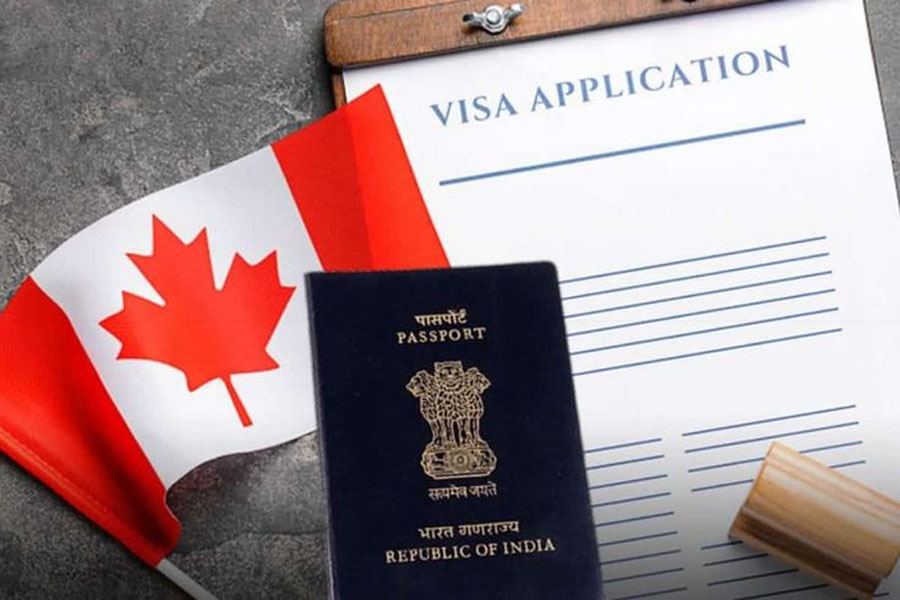
The Government of Canada has announced a significant increase in immigration fees, affecting Nigerians and other foreign nationals seeking permanent residence or Canadian citizenship. The fee hike will take effect on April 30, 2026, for permanent residence applications, while citizenship fees will rise slightly earlier, according to Immigration, Refugees and Citizenship Canada (IRCC).
The agency said the adjustments are part of a routine review to maintain efficient and timely immigration services, keep pace with inflation, and respond to growing demand. Applications received on or after the effective dates will be subject to the new fee structure.
Under the updated schedule, the Right of Permanent Residence Fee will increase from CA$575 to CA$600, while the Provincial Nominee Programme fee rises from CA$950 to CA$990. Business Class applications will see a jump of CA$85, moving from CA$1,810 to CA$1,895, and Family Class applications will increase from CA$545 to CA$570.
READ ALSO:
- Plateau Palm Sunday Massacre: US Lawmaker Warns Nigeria
- Cars Torched as South Africans Protest Alleged Nigerian ‘Igbo King’ Coronation
- AI Facial Recognition Error: Grandmother Wrongfully Jailed for Five Months
Other categories affected include Protected Persons and applications on Humanitarian and Compassionate Grounds or Public Policy Measures, each rising from CA$635 to CA$660. Permit Holders will pay CA$390, up from CA$375, and the Right of Citizenship Fee increases from CA$119.75 to CA$123, effective March 31, 2026.
The IRCC explained that under the Immigration and Refugee Protection Regulations, immigration fees are reviewed every two years to ensure they cover program costs and sustain service delivery standards. While the increases are modest in some categories, the cumulative impact may be substantial for families or applicants submitting multiple applications.
Canada continues to be a preferred destination for Nigerians and other global migrants seeking work, study, or permanent settlement. Experts advise prospective applicants to submit applications before the fee hike to avoid higher costs, particularly for permanent residence, business class, and family sponsorship applications.
Canada Raises Permanent Residence, Citizenship Fees for Nigerians, Others

-

 Entertainment1 day ago
Funke Akindele, Toyin Abraham Spark Reactions Over Alleged Snub at Iyabo Ojo’s Premiere
-

 metro1 day ago
Jos Attack: Plateau Govt Declares 48-Hour Curfew After Deadly Assault
-

 Entertainment3 days ago
Streamer Peller Escorted Out of Alake of Egbaland’s Palace in Abeokuta
-

 Education9 hours ago
WAEC Releases 2026 WASSCE Timetable for School Candidates
-

 metro3 days ago
ADC Chairman’s Daughter Joins Pro-Tinubu Campaign Organisation
-
 News1 day ago
UK Raises Visa Costs, Tightens Immigration Rules From April 8
-

 Auto5 hours ago
Lagos NURTW Chairman Sego Distributes Exotic Cars, Luxury Items to Cabinet Members (Video)
-
 International2 days ago
Iran Threatens US-Linked Universities in Middle East Amid Escalating Tensions