
International
Israeli attacks kill dozens in Gaza, Lebanon as ceasefire remains elusive
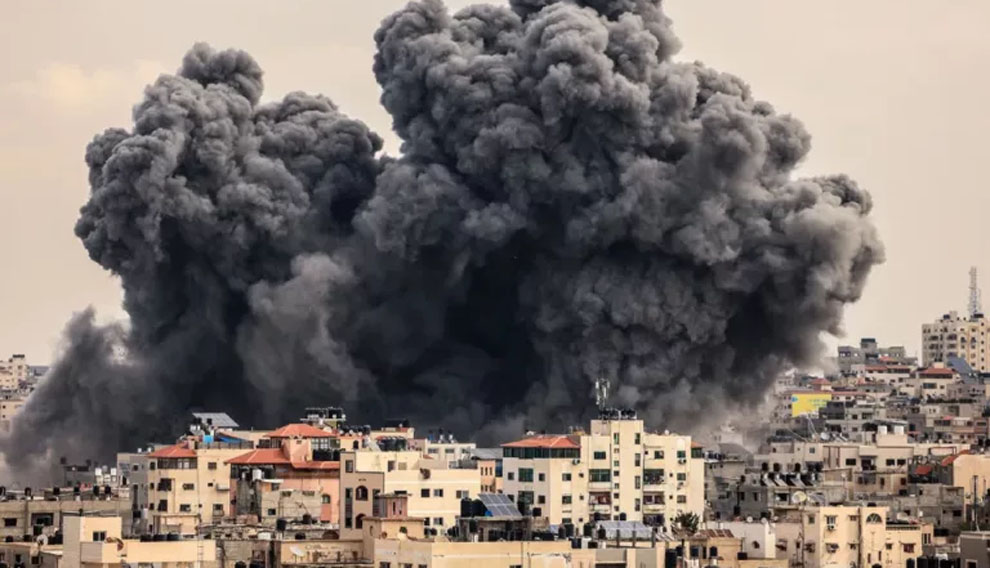
Israeli attacks kill dozens in Gaza, Lebanon as ceasefire remains elusive
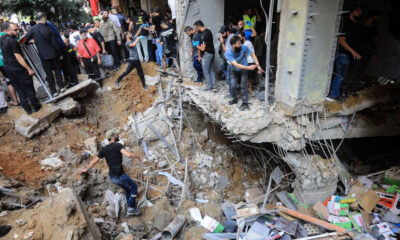
The Israeli military has killed dozens more people in the Gaza Strip and Lebanon as it expands its attacks while ceasefire talks appear to be going nowhere.
At least 55 people were killed across Gaza in the past 24 hours, according to the enclave’s Health Ministry. Fourteen of them were killed in a series of Israeli air strikes and shelling from warships in central Gaza’s Nuseirat refugee camp on Friday, medical officials at al-Awda Hospital said.
“People are arriving to the hospital in carts pulled by animals, because it’s quite hard for civil defence and front-line emergency workers to reach the area, as Israeli military drones are actively operating there,” Al Jazeera’s Tareq Abu Azzoum reported from Deir el-Balah as the bombs fell a few kilometres away.
One of the targets in Nuseirat was a school-turned-shelter for displaced Palestinians, bringing the total number of such centres hit since the start of the war to close to 200.
Abu Mohammed al-Taweel, a witness of the Israeli attacks on Nuseirat, said he saw many people killed after multiple family homes were targeted, with a five-month-old baby among the dead.
“The Israelis are eager to kill Palestinian children and women. There are no resistance fighters in the camp. They hit us without any prior warning,” he told Al Jazeera.
READ ALSO:
- INEC speaks on Rivers Assembly crisis, other bye-elections
- Peller on FBI watchlist for cybercrime – Kemi Olunloyo
- Imported petrol cheaper than Dangote product – IPMAN official
“We are here to die. We are ready to die. I was not killed today, but I will definitely be killed tomorrow. No safe places here in the Gaza Strip. Massacres are being committed everywhere.”
The Israeli onslaught on the enclave continued in other parts, with deadly strikes killing dozens more reported in Khan Younis in the south and Gaza City in the north.
The situation continues to be catastrophic in northern Gaza, where the Israeli military keeps up a siege as it blocks humanitarian aid and tries to force Palestinians to flee the area.
“The situation unfolding in North Gaza is apocalyptic,” the heads of major United Nations agencies said on Friday. “The entire Palestinian population in North Gaza is at imminent risk of dying from disease, famine and violence,” added the joint statement from heads of organisations that form the UN Inter-Agency Standing Committee.
On Thursday, Israeli forces targeted multiple areas of the Kamal Adwan Hospital in the north, including its stash of medicine delivered five days earlier by the World Health Organization and a water desalination plant.
At least two children died in the intensive care unit after the hospital’s generators stopped and the oxygen station was targeted, according to Gaza’s Health Ministry.
The Government Media Office in Gaza reported on Friday that the number of journalists killed by Israeli since the start of the war has risen to 183.
The official death toll in Gaza now stands at 43,259 people with 101,827 wounded, but the real number of casualties is believed to be much higher.
Israeli attacks kill dozens in Gaza, Lebanon as ceasefire remains elusive
Source: Al Jazeera







International
Israeli Fire Kills Three UN Peacekeepers in Southern Lebanon
Israeli Fire Kills Three UN Peacekeepers in Southern Lebanon
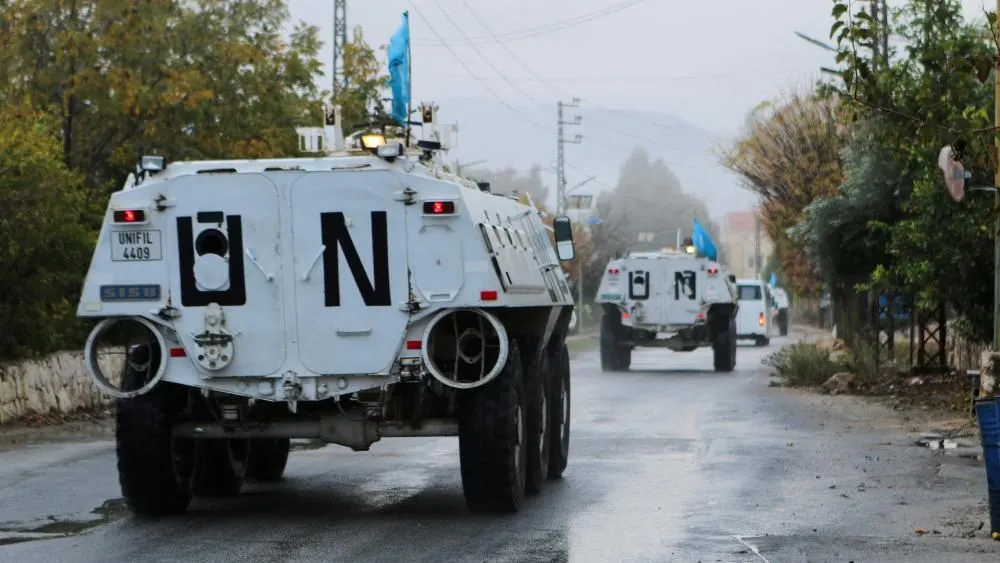
Three United Nations peacekeepers have been killed in southern Lebanon, with others seriously injured, as clashes between Israeli forces and Hezbollah militants intensify. The fatalities, all members of Indonesia’s UNIFIL contingent, mark one of the deadliest attacks on peacekeepers in recent years.
The first incident occurred on Sunday, March 29, when a projectile exploded near a UNIFIL position in Adchit al-Qusayr, killing one peacekeeper and seriously injuring another. Evidence suggests the projectile may have been fired from an Israeli tank, though investigations are ongoing. The following day, two more Indonesian peacekeepers were killed when a logistics convoy vehicle was destroyed by an explosion of unknown origin near Bani Hayyan, leaving additional personnel injured.
UN Secretary-General António Guterres condemned the killings, calling them “grave violations of international humanitarian law” and emphasizing that “no one should ever have to die while serving the cause of peace.” He extended condolences to the families of the deceased and wished a speedy recovery to the injured.
READ ALSO:
- Iyabo Ojo Quits Mediation Between Funke Akindele, Toyin Abraham
- 2027: Badagry elders rally Tinubu to back zone’s first Lagos governor
- Nigerian Man Gets 15-Year US Prison Term for $1.5M Romance Scam
The incidents have prompted the UN Security Council to convene an emergency session to address the attacks. Several European countries, including France, the United Kingdom, and Belgium, issued a joint statement urging all parties to ensure the safety of UNIFIL personnel in accordance with international law. South Korea and other nations also condemned the attacks, highlighting the critical need to protect peacekeepers in conflict zones.
The deaths come amid escalating hostilities between Israel and Hezbollah, which have involved airstrikes, rocket fire, and ground operations along the Israel-Lebanon border. Civilians in southern Lebanon have been severely affected, with thousands displaced and casualties mounting on both sides.
The Indonesian government has called for a transparent investigation into the deaths of its personnel and stressed the importance of accountability. Meanwhile, UNIFIL continues to operate along the Blue Line, though the recent attacks underscore the growing risks faced by peacekeepers in volatile regions.
Israeli Fire Kills Three UN Peacekeepers in Southern Lebanon
International
Nigerian Man Gets 15-Year US Prison Term for $1.5M Romance Scam

Nigerian Man Gets 15-Year US Prison Term for $1.5M Romance Scam
A U.S. federal court has sentenced Nigerian national Saheed Sunday Owolabi to 15 years in prison for orchestrating an international wire fraud and money laundering scheme that defrauded victims of over $1.5 million. The sentence follows his conviction for conspiracy to commit wire fraud and conspiracy to commit money laundering, highlighting the U.S. government’s crackdown on cross-border cybercrime.
According to the U.S. Department of Justice, Owolabi was a key figure in a sophisticated online scam in which he posed as a woman to build fake romantic relationships with U.S. victims—a tactic commonly known as a romance scam. Once trust was gained, the victims were persuaded to wire money into accounts controlled by Owolabi, who then laundered the funds to Nigeria.
READ ALSO:
- Céline Dion Announces Stage Comeback After Four-Year Health Battle
- Senate Passes ₦68.32trn 2026 Budget, Increases Tinubu’s Proposal
- FG Raises Gas Price to $2.18/MMBtu, Signals Fresh Economic Pressure for Nigerians
Investigations by the Federal Bureau of Investigation (FBI) revealed that Owolabi and his co-conspirators also used victim-provided accounts to launder money from other fraudulent operations. In one case, a single victim in the Eastern District of North Carolina lost more than $120,000, with many other victims nationwide affected by the scheme.
U.S. Attorney Ellis Boyle described Owolabi as a “cheat” and said the sentence underscores the FBI’s commitment to identifying, disrupting, and dismantling international fraud and money-laundering networks targeting American citizens.
The court proceedings, led by Assistant U.S. Attorney Brad DeVoe, highlighted Owolabi’s role as an organiser in the fraud, using complex money-laundering methods to conceal illicit proceeds. The case is part of broader U.S. enforcement efforts against online fraud, cybercrime, and cross-border financial crimes, particularly schemes leveraging digital platforms to exploit victims.
Authorities say the sentence serves as a strong deterrent to others involved in international scams and demonstrates that sophisticated internet fraud operations will be pursued rigorously, regardless of the perpetrators’ location.
Nigerian Man Gets 15-Year US Prison Term for $1.5M Romance Scam
International
US Warns Iran Against Closing Strait of Hormuz, Cites “Severe Consequences”
US Warns Iran Against Closing Strait of Hormuz, Cites “Severe Consequences”
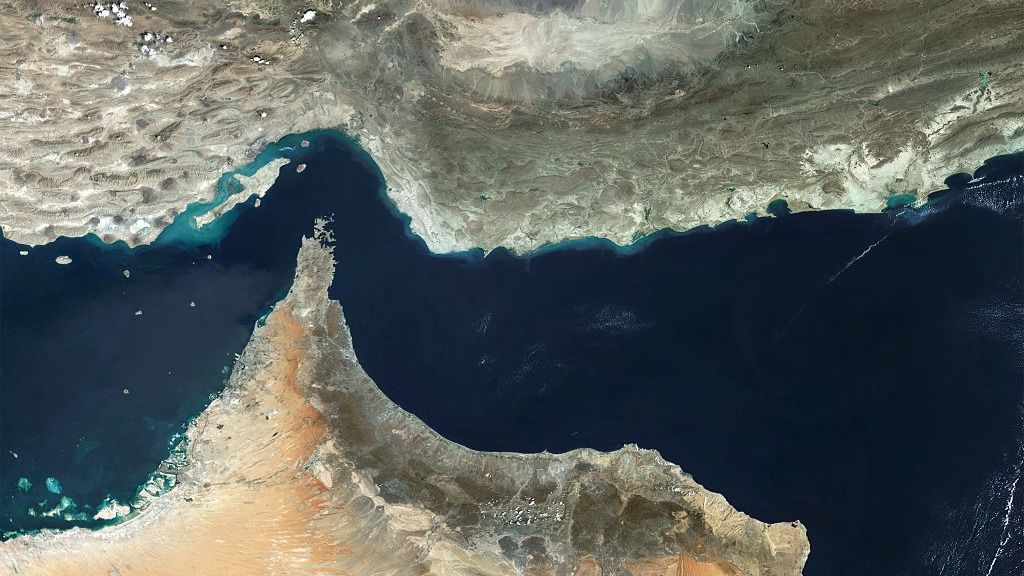
Washington, D.C. — The United States has issued a strong warning to Iran over any potential move to shut down the strategic Strait of Hormuz following ongoing military operations in the region, with Secretary of State Marco Rubio cautioning that such an action would attract “severe consequences.”
Rubio, speaking amid heightened tensions in the Middle East, stressed that the vital waterway must remain open to global shipping, describing any attempt by Iran to block access as unacceptable and destabilising.
“The Strait of Hormuz is an international waterway that must remain open,” Rubio said. “If Iran chooses to close it after military operations conclude, it will face serious consequences. The United States will ensure that freedom of navigation is maintained.”
The Strait of Hormuz is one of the world’s most critical oil transit routes, serving as a gateway for nearly a fifth of global petroleum supplies. Any disruption to its operations could send shockwaves through international energy markets and significantly impact global trade.
Tensions have escalated in recent days following military developments involving the United States and its regional allies, alongside growing concerns over Iran’s response. Analysts say Tehran has previously hinted at the possibility of leveraging the strait as a strategic pressure point during periods of conflict.
READ ALSO:
- China Thanks ‘Relevant Parties’ as Ships Cross Strait of Hormuz Amid Tensions
- Osimhen Among Highest-Paid African Footballers in 2026 — See Full List
- Lagos NURTW Chairman Sego Distributes Exotic Cars, Luxury Items to Cabinet Members (Video)
Security experts warn that a closure of the narrow waterway could trigger a broader regional crisis, potentially drawing in global powers and leading to military confrontations at sea. The U.S. Navy, which maintains a strong presence in the region, has historically conducted operations to safeguard commercial shipping routes.
While Iranian officials have not formally announced any decision to block the strait, past rhetoric from Tehran has included threats to disrupt maritime traffic if its national interests are threatened.
In response, U.S. officials reiterated their commitment to maintaining stability and ensuring the uninterrupted flow of commerce. Rubio emphasised that any move to interfere with international shipping lanes would not only affect the United States but also have far-reaching consequences for the global economy.
Observers note that the warning underscores the strategic importance of the Strait of Hormuz and highlights the fragile security situation in the Gulf region. With tensions still simmering, diplomatic efforts are expected to continue alongside military preparedness.
As the situation unfolds, the international community remains watchful, with many nations urging restraint to avoid further escalation in an already volatile region.
US Warns Iran Against Closing Strait of Hormuz, Cites “Severe Consequences”

-

 Entertainment2 days ago
Funke Akindele, Toyin Abraham Spark Reactions Over Alleged Snub at Iyabo Ojo’s Premiere
-

 metro3 days ago
Jos Attack: Plateau Govt Declares 48-Hour Curfew After Deadly Assault
-

 Education2 days ago
WAEC Releases 2026 WASSCE Timetable for School Candidates
-

 Auto2 days ago
Lagos NURTW Chairman Sego Distributes Exotic Cars, Luxury Items to Cabinet Members (Video)
-

 metro2 days ago
Cars Torched as South Africans Protest Alleged Nigerian ‘Igbo King’ Coronation
-

 News2 days ago
UK Raises Visa Costs, Tightens Immigration Rules From April 8
-

 Auto3 days ago
Motoring World marks 30 years, set to rally industry leaders in Lagos
-

 metro3 days ago
Debate as OPM Pastor Marries Autistic Man to Older Woman