
News
Jonathan briefs Tinubu on Guinea-Bissau crisis, describes post-election turmoil as ‘Ceremonial Coup’

Jonathan briefs Tinubu on Guinea-Bissau crisis, describes post-election turmoil as ‘Ceremonial Coup’
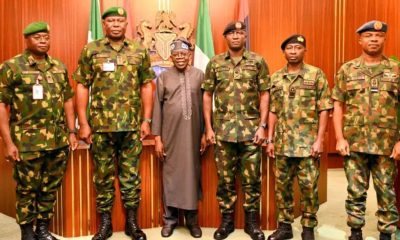
Former Nigerian President Goodluck Jonathan on Saturday met with President Bola Tinubu at the Presidential Villa, Abuja, to brief him on the political situation and post-election crisis in Guinea-Bissau.
Jonathan, who served as the ECOWAS special envoy during the elections, clarified that what many described as a coup in the West African nation was not a conventional military takeover but what he termed a “ceremonial coup” orchestrated by the Head of State.
Speaking with journalists after the closed-door meeting, the former President explained that the election results in Guinea-Bissau were already known and that the subsequent arrest of the opposition candidate was unjustified.
He said: “I came this evening to brief Mr. President on what happened. That is the tradition for former presidents. Whenever we handle regional or continental assignments, we must brief the sitting President so that he receives first-hand information ahead of the ECOWAS leaders’ meeting.”
READ ALSO:
- BREAKING: Kwara Monarch, Ojibara of Bayagan, Kidnapped by Armed Bandits on His Farm
- Three Immigration Officers Killed as Gunmen Attack NIS Checkpoint in Kebbi
- Dotun alleges U.S. Embassy helped ex-wife relocate children despite court order
Jonathan emphasized that the election had been concluded and collation nearly completed before the disruption occurred. He insisted that the winner of the Guinea-Bissau election must be announced without delay.
He stated: “The military cannot simply be pushed aside because of the implications, but the legitimate winner must be declared.”
Calling on the sub-regional body to intervene urgently, Jonathan urged ECOWAS to engage the country’s leadership, secure the release of the detained opposition candidate, and ensure respect for democratic processes.
“The opposition candidate committed no offense. He did not declare himself winner; if he had done that, one might argue treason. There is no justification for his arrest,” Jonathan said.
He added that the Head of State’s action did not qualify as a traditional or palace coup, describing it instead as a “ceremonial coup”—a term he coined to capture the unusual nature of the intervention.
“We are tired of negative stories in Africa. This was not a real coup or even a palace coup. I struggled to find the right descriptor, which is why I called it a ceremonial coup — it was carried out by the Head of State himself.”
Jonathan stressed that announcing the authentic election results and inaugurating the rightful winner is the only way to restore stability and democratic credibility in Guinea-Bissau.
Jonathan briefs Tinubu on Guinea-Bissau crisis, describes post-election turmoil as ‘Ceremonial Coup’








News
US Lawmakers Introduce Bill to Sanction Kwankwaso, Miyetti Allah
US Lawmakers Introduce Bill to Sanction Kwankwaso, Miyetti Allah
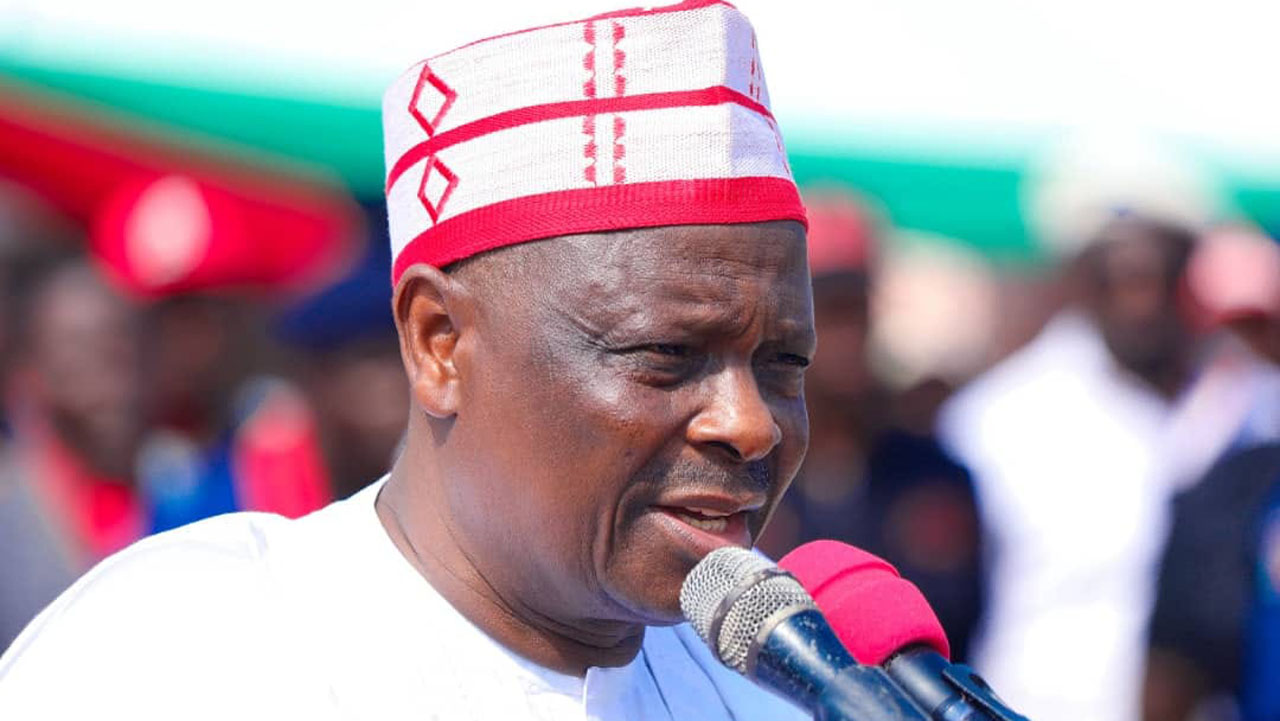
Five United States lawmakers have introduced a bill in the US Congress seeking to impose visa restrictions and asset freezes on former Kano State governor Rabiu Musa Kwankwaso, the Miyetti Allah Cattle Breeders Association of Nigeria (MACBAN), Miyetti Allah Kautal Hore, and other actors over alleged persecution of Christians and severe violations of religious freedom in Nigeria.
The proposed legislation, titled the Nigeria Religious Freedom and Accountability Act of 2026, was sponsored by Representatives Chris Smith, Riley Moore, Brian Mast, Mario Díaz-Balart, and Bill Huizenga. It directs the US Secretary of State to submit periodic reports to Congress assessing Nigeria’s compliance with international religious freedom obligations and the measures taken to protect vulnerable communities, particularly in the Middle Belt states.
Under the bill, the US government could impose targeted sanctions, including Global Magnitsky Human Rights sanctions, asset freezes, and visa bans on individuals or entities responsible for religious persecution. It also allows the Secretary of State to determine whether certain Fulani-ethnic militias qualify as Foreign Terrorist Organisations (FTOs), reflecting growing concern over violence affecting Christian populations.
READ ALSO:
- NAFDAC Clarifies: No Government Directive to Halt Sachet Alcohol Enforcement
- Suspected IED Explosion Rocks Bayelsa Secretariat, Police Arrest Suspect
- Regina Daniels Shares Emotional Message on Children’s Welfare Amid Custody Battle
Lawmakers cited estimates that between 2009 and 2025, between 50,000 and 125,000 Christians were killed in Nigeria, with more than 19,000 churches destroyed. They highlighted recent incidents, including attacks in Yelwata, the Christmas Eve massacres of 2023 and 2024, and Holy Week and Easter attacks of 2024 and 2025, which collectively left thousands dead and displaced over half a million people. According to Open Doors’ 2026 World Watch List, Nigeria accounted for 72 percent of Christians killed worldwide.
The bill also calls for the provision of humanitarian assistance, co-funded by the Nigerian government, through trusted civil society and faith-based organisations. It encourages collaboration with international partners, including France, Hungary, and the United Kingdom, to strengthen religious freedom, peace, and accountability.
Sponsors stressed that the future of US–Nigeria relations would depend on the Nigerian government’s response to these alleged atrocities, asserting that Nigeria could strengthen ties with Washington and play a stabilising role in the Sahel region if it takes concrete steps to protect vulnerable communities and combat religious violence.
The legislation follows prior US actions, including the redesignation of Nigeria as a “Country of Particular Concern” (CPC) under President Donald Trump, aimed at addressing ongoing religious freedom violations and promoting accountability for perpetrators of sectarian violence.
US Lawmakers Introduce Bill to Sanction Kwankwaso, Miyetti Allah
News
Trump Approves Deployment of 200 U.S. Soldiers to Support Nigeria’s Fight Against Terrorists
Trump Approves Deployment of 200 U.S. Soldiers to Support Nigeria’s Fight Against Terrorists
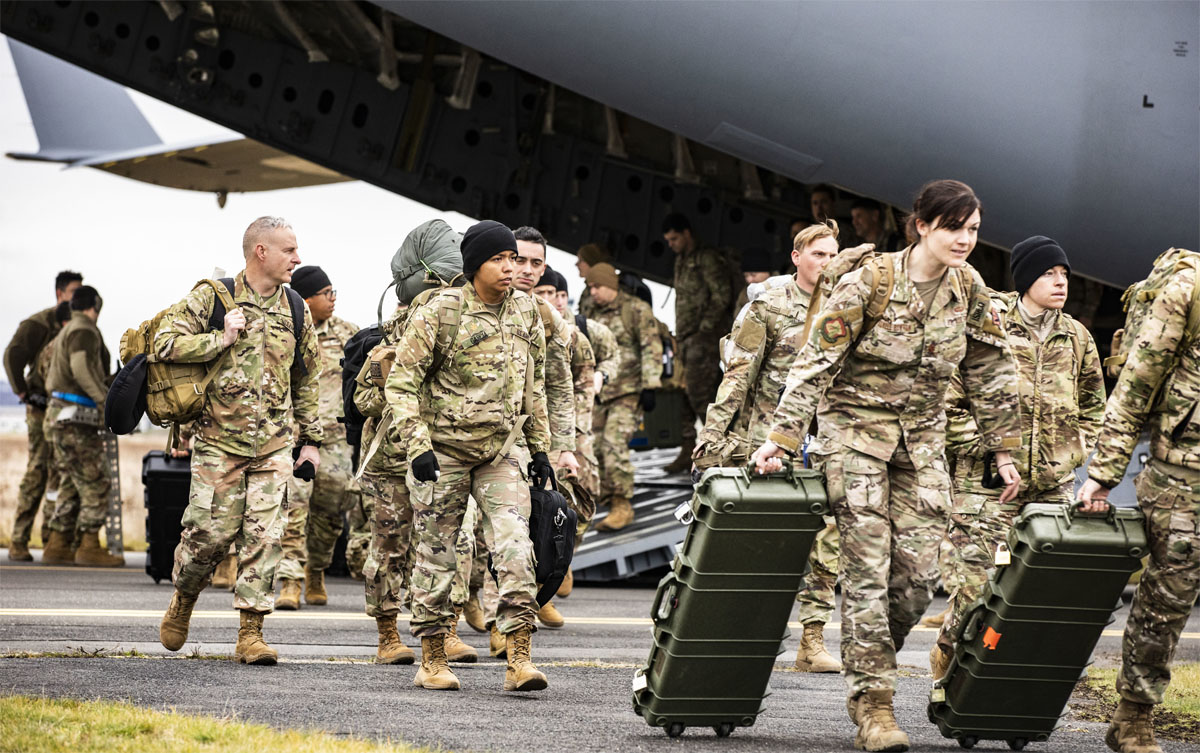
President Donald Trump has approved the deployment of 200 U.S. soldiers to Nigeria to assist the country in its ongoing fight against terrorist groups including Boko Haram and Islamic State West Africa Province (ISWAP).
The deployment follows U.S. airstrikes in Sokoto and comes at the request of President Bola Tinubu, reflecting a deepening security partnership between the United States and Nigeria. (gazettengr.com)
The American troops are scheduled to arrive in Nigeria in the coming weeks to provide training and technical guidance to Nigerian forces. The U.S. military will focus on air and infantry operations, intelligence gathering, and joint mission coordination to enhance the effectiveness of Nigeria’s counter-terrorism efforts.
Major-General Samaila Uba, spokesperson for the Nigerian Armed Forces, clarified that the U.S. troops will not engage in direct combat, but will work closely with Nigerian forces to improve strategic operations and rapid response capabilities.
A spokesperson for U.S. Africa Command (AFRICOM) stated, “The terrorist activity in West Africa—and Nigeria specifically—is something we’re incredibly concerned with. We want to partner with capable and willing partners to address these shared security concerns.” (newsmax.com)
READ ALSO:
- Atiku Rejects Mixed Result Transmission
- Two Siblings Arrested for Killing Elder Brother, Burying Him in Imo
- Canada Mass Shooting: Nine Dead in School, Residence Attack
This deployment complements Nigeria’s ongoing counter-terrorism operations, including Operation HADIN KAI (OPHK), which has recorded multiple successes in neutralising insurgents, rescuing kidnapped victims, and recovering weapons caches. (gazettengr.com)
The move comes amid heightened international attention on Nigeria’s security crisis, particularly in the North-East and North-West regions, where terrorist attacks and banditry continue to threaten civilian safety, disrupt communities, and hamper economic activities. (stripes.com)
Local officials and analysts say the U.S. deployment is expected to strengthen intelligence sharing, enhance operational coordination, and improve Nigeria’s military readiness in combating insurgents while maintaining national sovereignty.
The announcement underscores the growing bilateral security cooperation between Nigeria and the United States, highlighting both nations’ commitment to counter-terrorism, regional stability, and civilian protection.
Trump Approves Deployment of 200 U.S. Soldiers to Support Nigeria’s Fight Against Terrorists
News
Senate Bows to Pressure, Mandates Electronic Transmission of Election Results
Senate Bows to Pressure, Mandates Electronic Transmission of Election Results
The Nigerian Senate has officially approved the electronic transmission of INEC election results, amending the Electoral Act to modernize the voting process and strengthen election transparency ahead of the 2027 general elections.
The move comes after widespread protests, civil society advocacy, and pressure from political figures, including former presidential candidate Peter Obi, demanding real-time digital transmission of poll results to curb electoral fraud.
Under the amended Clause 60 of the Electoral Act, presiding officers are now required to digitally transmit election results from each polling unit directly to the INEC IReV portal immediately after the EC8A result form is signed and stamped. In situations where network connectivity fails, the signed paper EC8A forms will remain the official source for result collation and declaration.
READ ALSO:
- Iran Warns U.S. Against Israeli Pressure as Nuclear Talks Resume
- Lagos Announces Four-Week Partial Closure of Lagos-Abeokuta Expressway
- Ido-Ayegunle Killings: Monarch Confirms Arrest of Four Suspects
Experts describe the amendment as a major step toward digital voting transparency, though some critics caution that the manual fallback option could limit the full benefits of real-time election result transmission.
The bill will now be harmonized with the House of Representatives version before being sent to the President for assent, signaling a commitment to credible elections and improving public trust in Nigeria’s electoral process.
This legislative update is expected to play a key role in Nigeria 2027 elections, reducing vote manipulation and ensuring that INEC election results are transmitted securely, efficiently, and transparently across the country.
Senate Bows to Pressure, Mandates Electronic Transmission of Election Results

-
 News2 days ago
BREAKING: Tinubu Holds Reconciliation Meeting With Wike, Fubara, Rivers Leaders at Aso Rock
-

 Business2 days ago
BoI Gets CBN Approval to Launch Non‑Interest Banking Window in Nigeria
-

 metro1 day ago
Leadership Crisis at NAHCON as Chairman Abdullahi Saleh Usman Resigns
-

 metro3 days ago
Nnamdi Kanu Orders Permanent End to Monday Sit-at-Home in South-East
-
 News1 day ago
US Judge Orders FBI, DEA to Release Tinubu’s Criminal Records, Faults Delays
-

 News1 day ago
Oyo Muslims Reaffirm Loyalty to Sultan on Islamic Matters — Grand Chief Imam
-

 News2 days ago
OWN Calls for Immediate Resignation of INEC Chairman
-

 International1 day ago
US to Deport 18 More Nigerians on ‘Worst-of-the-Worst’ Criminal List (Full Names)