
metro
JUST IN: Fire Guts Section of Federal Secretariat in Abuja
JUST IN: Fire Guts Section of Federal Secretariat in Abuja
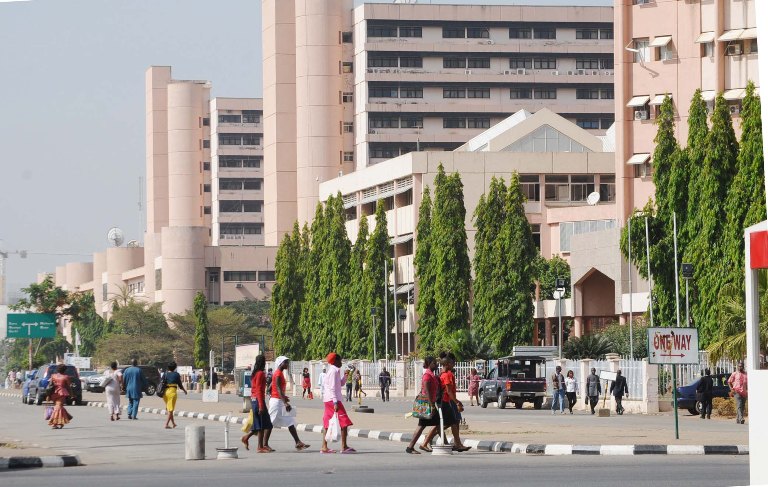
A fire outbreak at the Federal Secretariat Complex, Abuja triggered panic on Monday morning after a section of the Office of the Head of the Civil Service of the Federation was engulfed in thick smoke.
The incident occurred around 8:20 a.m. and affected Section C of the multi-storey building located within the federal government administrative complex in Abuja.
Eyewitnesses said heavy black smoke billowed from the affected floor, forcing workers and visitors to evacuate the building immediately as the situation escalated.
Videos circulating on social media showed plumes of smoke rising from the structure while staff members hurried out of the premises as security officials began clearing the area.
Officials from the media department of the Office of the Head of the Civil Service of the Federation later confirmed the incident, noting that the fire was restricted to Section C of the building.
READ ALSO:
- Beijing Warns Against Threats to Iran’s New Leader Mojtaba Khamenei
- Babayaro Salutes Lookman’s Parents for Raising Disciplined Super Eagles Star
- Appeal Court Dismisses Turaki-Led PDP Faction, Bars INEC from Recognising Ibadan Convention
“The fire outbreak is limited to Section C of the building and is currently being attended to by emergency officials,” the office said in a statement.
Personnel from the Federal Fire Service and other emergency agencies were quickly deployed to the scene to contain the blaze and prevent it from spreading to other parts of the complex.
Security personnel also cordoned off sections of the secretariat while firefighters battled the flames.
The incident reportedly disrupted normal activities around the complex, with workers temporarily stranded outside the building and vehicular movement around the area slowed as emergency vehicles gained access to the premises.
Authorities have not yet confirmed whether there were casualties or major structural damage, but officials said efforts were ongoing to fully extinguish the fire and secure the facility.
The cause of the fire had not been determined as of the time of filing this report, and investigations are expected to commence once the situation is brought under control.
JUST IN: Fire Guts Section of Federal Secretariat in Abuja










metro
Appeal Court Upholds Conviction of Ex-Army General, Orders ₦4bn Refund
Appeal Court Upholds Conviction of Ex-Army General, Orders ₦4bn Refund
The Court of Appeal of Nigeria has affirmed the conviction and prison sentence handed to former Major General Umar Mohammed over the diversion of billions of naira belonging to Nigerian Army Properties Limited (NAPL), the property and investment arm of the Nigerian Army.
In a judgment delivered by a three-member panel of justices, the appellate court upheld the earlier decision of a Special Court Martial which found the retired officer guilty of stealing and mismanaging funds belonging to the army-owned company during his tenure as its Group Managing Director.
The court also sustained the order directing him to refund more than ₦4 billion traced to the illegal transactions.
According to the Certified True Copy of the judgment, the justices dismissed Mohammed’s appeal challenging both the jurisdiction of the military tribunal and the outcome of the trial. The appellate court held that the court martial acted within the bounds of the law and relied on credible and admissible evidence to reach its verdict.
The panel—comprising Justice Abba Mohammed, Justice Okon Abang, and Justice Eberechi Nyesom‑Wike—ruled that the prosecution had successfully established the charges brought against the former general.
Mohammed was originally arraigned before the military tribunal on October 10, 2023, where he faced multiple counts of stealing, criminal misappropriation and financial misconduct involving funds belonging to the army property firm.
READ ALSO:
- JUST IN: Fire Guts Section of Federal Secretariat in Abuja
- Beijing Warns Against Threats to Iran’s New Leader Mojtaba Khamenei
- Babayaro Salutes Lookman’s Parents for Raising Disciplined Super Eagles Star
After the trial, the court martial dismissed him from military service and sentenced him to imprisonment. The tribunal also ordered him to refund $2,099,700 and ₦1.65 billion to the company as restitution for the diverted funds.
Dissatisfied with the ruling, Mohammed approached the appellate court in February 2025 through an appeal marked CA/ABJ/CR/383/2025, asking that the conviction be overturned on the grounds that the evidence used against him was weak and unreliable.
However, the appellate court disagreed.
The justices ruled that the defence presented by the former officer was riddled with contradictions and could not discredit the evidence already accepted by the court martial.
Part of the judgment highlighted inconsistencies in Mohammed’s testimony. During the proceedings, he had claimed that Nigerian Army Properties Limited did not operate berthing services, but the court noted that documentary records previously authored and signed by him indicated that the company was indeed involved in such operations.
The appellate court held that the conflicting statements weakened his credibility and strengthened the prosecution’s case.
Consequently, the court affirmed the conviction and sentence on most of the charges established by the tribunal, setting aside only the counts relating to alleged forgery.
Mohammed’s legal troubles extend beyond the criminal conviction.
In August 2025, the Federal High Court of Nigeria sitting in Lagos, presided over by Justice Dehinde Dipeolu, ordered the final forfeiture of shares worth more than ₦5 billion linked to the former general and businessman Kayode Filani.
The shares—totalling 245,568,137 units—were found to have been purchased with funds suspected to be proceeds of illegal activities during Mohammed’s leadership of the army-owned company.
The forfeiture followed an application filed by the Economic and Financial Crimes Commission (EFCC), which told the court that its investigations had established that the funds used for the investment were unlawfully obtained.
EFCC counsel Hanatu Kofanaisa informed the court that the Special Court Martial had earlier convicted the former general on 14 out of 18 counts relating to stealing and financial misconduct.
She also explained that the commission complied with all legal procedures for final forfeiture, including public notification through newspaper publications. No individual or organisation came forward to challenge the application.
Justice Dipeolu subsequently ruled that the anti-graft agency had proven its case and ordered the shares to be permanently forfeited to the Federal Government, in favour of Nigerian Army Properties Limited.
The forfeiture proceedings were brought under Section 44(2)(b) of the 1999 Constitution and Section 17 of the Advance Fee Fraud and Other Fraud Related Offences Act, 2006.
With the latest ruling by the Court of Appeal, Mohammed’s attempt to overturn his conviction has effectively failed, reinforcing the disciplinary action earlier taken by military authorities and marking a major judicial decision in Nigeria’s ongoing fight against corruption within public institutions.
Appeal Court Upholds Conviction of Ex-Army General, Orders ₦4bn Refund
metro
Osun Youths Storm IBEDC Office Over Prolonged Blackout, Issue 7‑Day Ultimatum
Osun Youths Storm IBEDC Office Over Prolonged Blackout, Issue 7‑Day Ultimatum
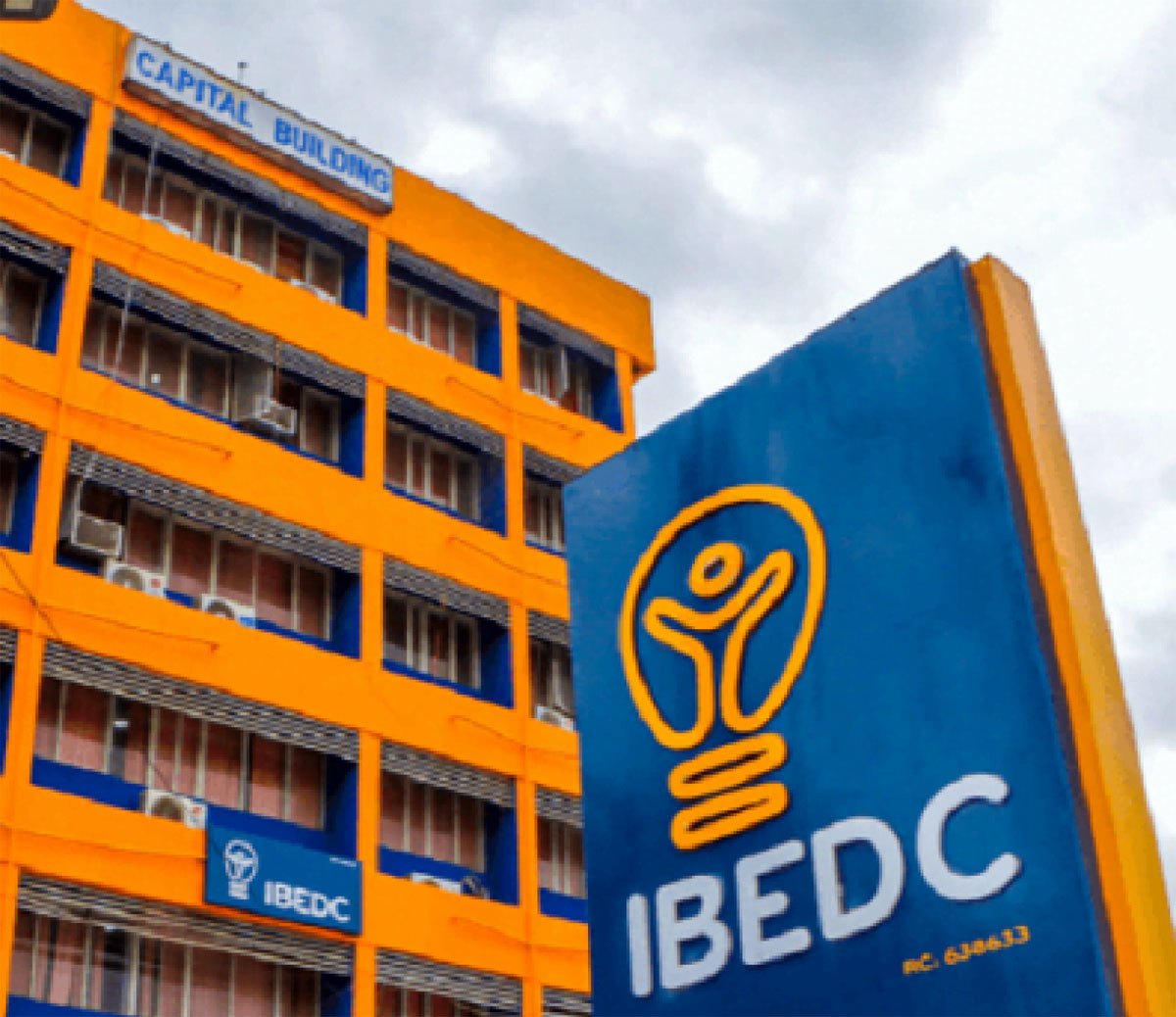
Residents and youths in Boripe Local Government Area, Osun State, have staged a protest at the Ibadan Electricity Distribution Company (IBEDC) office, demanding an immediate restoration of stable electricity supply. The demonstrators issued a seven‑day ultimatum for power to be reinstated, citing weeks of erratic supply and prolonged blackouts that have disrupted daily life, economic activities, and education in the area.
The protest was organised by members of the Nigerian Youth Congress, Boripe chapter, who described the blackout as a severe hardship for households, traders, artisans, and students preparing for exams. Group coordinator Hammed Oyetunji explained that many business owners have been forced to rely on generators and alternative energy sources, driving up operational costs and threatening livelihoods.
“The absence of electricity has disrupted economic activities and daily life for residents,” Oyetunji said. “For weeks, our communities have been subjected to prolonged blackout, causing serious hardship to residents, business owners, students, and artisans.” He added that electricity is essential for economic development and public safety, stressing that the blackout has slowed commercial activities and increased financial pressure on households.
READ ALSO:
- Senate Committee Rejects NNPCL’s Explanation of ₦210 Trillion Financial Discrepancy
- Viral Video Shows Man Disarming Robbers After Minna Bank Heist, ₦10m Stolen
- Iran Ready to Help Nigeria Combat Boko Haram, ISWAP — Envoy
During the protest at IBEDC’s Osogbo office, demonstrators chanted solidarity songs and presented the company with a seven‑day ultimatum to restore Band A electricity classification, which guarantees longer hours of daily supply. Security personnel were deployed to maintain order, but the youths maintained pressure on the company to act immediately.
In response, IBEDC said the blackout is largely due to constraints in the national electricity grid, including limited gas supply to power plants and unstable energy allocations from the Transmission Company of Nigeria (TCN). The company acknowledged increased electricity demand in its franchise areas, particularly after the expansion of Band A feeders, and apologised for the disruption.
“Gas supply shortages to electricity generation plants have significantly reduced generation capacity nationwide, forcing distribution companies to implement increased load shedding,” IBEDC said. The company assured residents that it is engaging stakeholders to stabilise supply and minimise disruptions to homes, businesses, and public services.
The protest in Osun reflects growing frustration across Nigeria over unreliable electricity supply and the fragility of the national grid, with residents calling for urgent reforms and more sustainable power distribution solutions.
Osun Youths Storm IBEDC Office Over Prolonged Blackout, Issue 7‑Day Ultimatum
metro
Senate Committee Rejects NNPCL’s Explanation of ₦210 Trillion Financial Discrepancy
Senate Committee Rejects NNPCL’s Explanation of ₦210 Trillion Financial Discrepancy
The Senate Committee on Public Accounts has expressed dissatisfaction with explanations provided by the leadership of the Nigerian National Petroleum Company Limited (NNPCL) over an alleged ₦210 trillion discrepancy in the company’s audited financial statements. The committee said the responses from Group CEO Bayo Ojulari and his team were inadequate and unsatisfactory.
Chairman of the committee, Senator Aliyu Wadada, revealed the concerns during an interview on Channels Television’s Sunday Politics. He noted that the discrepancies were identified during the review of NNPCL’s audited accounts from 2017 to 2023, with lawmakers flagging financial entries that lacked sufficient supporting documentation.
Among the disputed entries, ₦103 trillion was recorded as accrued expenses under liabilities, allegedly linked to Joint Venture cash calls, while ₦107 trillion appeared as sundry receivables, reportedly owed by banks and other entities but difficult to verify due to limited transparency. The committee described these figures as “mind‑boggling” and stressed that they were not adequately justified.
READ ALSO:
- Viral Video Shows Man Disarming Robbers After Minna Bank Heist, ₦10m Stolen
- Iran Ready to Help Nigeria Combat Boko Haram, ISWAP — Envoy
- Abduction of Corps Member Sparks Calls to Suspend NYSC
The committee has also summoned former top executives, including immediate past Group CEO Mele Kyari, to provide further explanations. Senator Wadada said that standard accounting practice requires all assets and liabilities to pass through profit and loss accounts before being recognised, a step the committee found insufficiently documented in NNPCL’s accounts.
Responding to earlier queries, NNPCL officials said the alleged discrepancies stemmed from accounting adjustments, timing differences, and technical classifications, promising to reconcile the figures and provide further documentation. The committee has given the company a strict timeline to submit reconciled records and prepare for a public hearing after the Eid holiday.
Lawmakers also questioned ₦5.9 billion spent on NNPCL’s rebranding, as well as costs related to subsidies and production. Senator Wadada emphasised that the investigation is focused on accountability and transparency, and is not politically motivated, although the committee may question any relevant government official, including the Minister of Petroleum Resources, if necessary.
Meanwhile, the federal government recently introduced Executive Order No. 9 of 2026, signed by President Bola Tinubu, to reform aspects of the fiscal framework of the Petroleum Industry Act 2021, including directing that revenues from Production Sharing Contracts go directly into the Federation Account and suspending certain deductions previously retained by NNPCL.
The probe continues to attract widespread public interest, highlighting concerns over financial governance and transparency in Nigeria’s oil and gas sector.
Senate Committee Rejects NNPCL’s Explanation of ₦210 Trillion Financial Discrepancy

-

 metro2 days ago
Daniel Bwala Faces Backlash After Al Jazeera Interview With Mehdi Hasan
-

 Entertainment3 days ago
Davido Loses Close Friend Denisi Amid ₦1bn Legal Dispute
-

 News3 days ago
BREAKING: Tinubu Posts Yakubu, Omokri, Fani-Kayode, 62 Other Ambassadors (Full List)
-
 News1 day ago
Tinubu Approves Salary, Allowance Increase for Nigerian Armed Forces
-

 Business17 hours ago
NNPCL, Marketers Increase Petrol Price Again Within 24 Hours After Dangote Refinery Hike
-

 International1 day ago
Top 10 Strongest Militaries in the World in 2026 – Full Ranking
-

 News3 days ago
US Releases Additional Epstein Files Containing Allegations Against Donald Trump
-
 metro21 hours ago
EFCC Intercepts Wife of Federal High Court Chief Judge With $160,000 Cash