
Railway
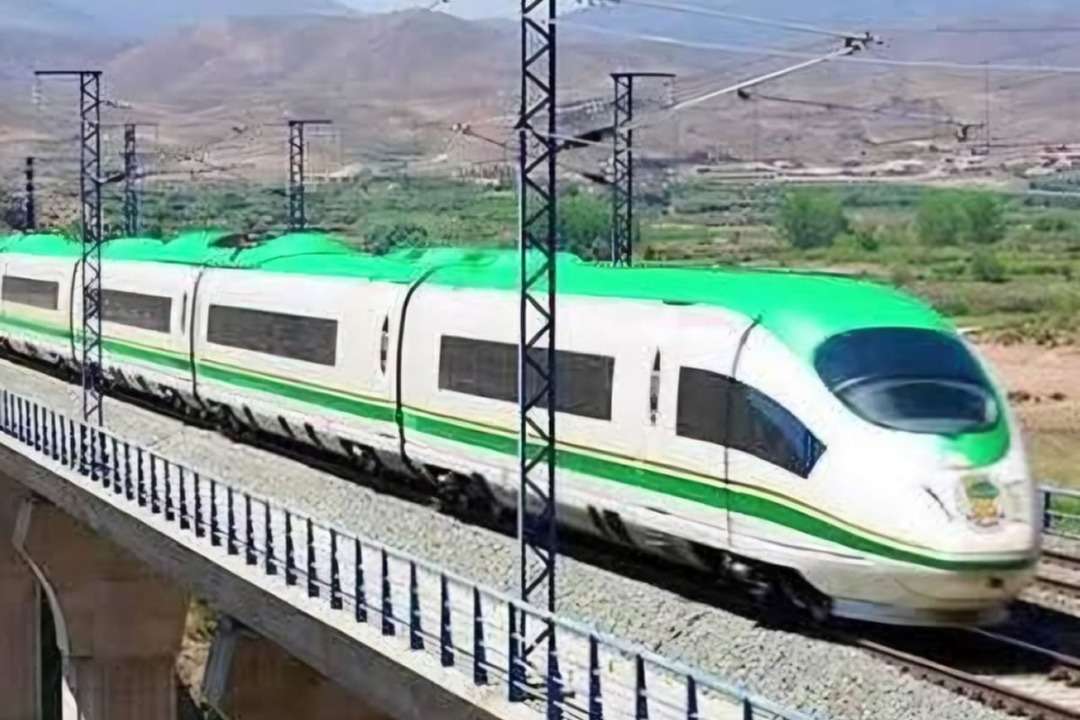
Kano-Kaduna railway project gets $254.76m China bank loan approval
Kano-Kaduna railway project gets $254.76m China bank loan approval
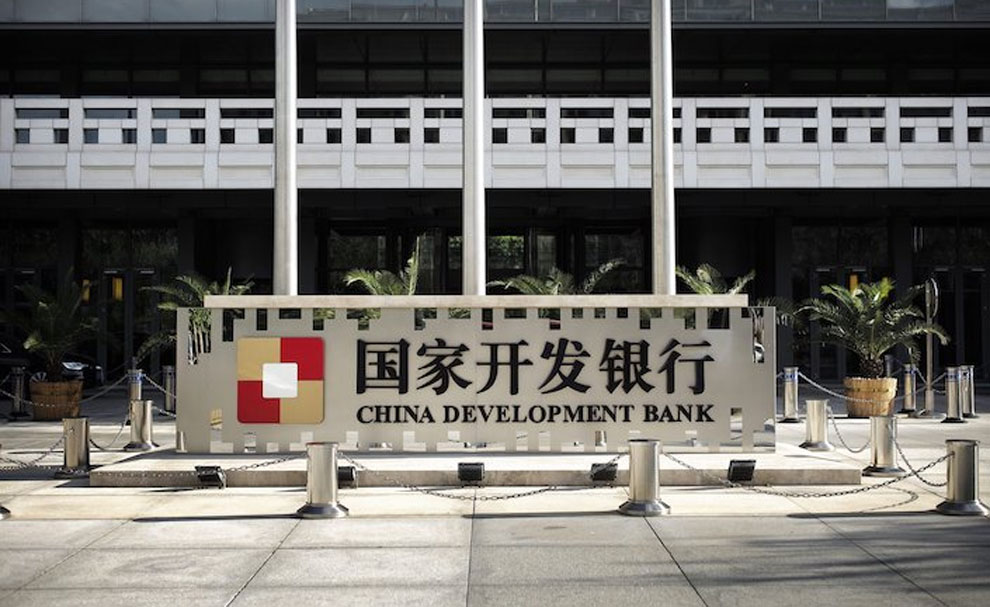
The China Development Bank (CDB) has approved a loan of $254.76 million (€245 million) for the Kano-Kaduna railway project in Nigeria.
According to information on the bank’s website, the funding is expected to provide crucial financial support for the ongoing development of the railway, ensuring the project proceeds without delays.
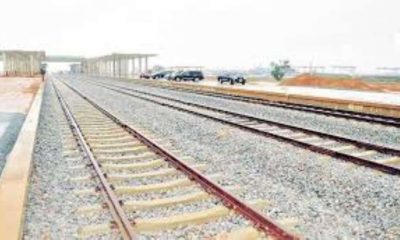
The Kano-Kaduna railway is a standard-gauge line spanning 203 kilometres, designed to connect Kano, a major commercial hub in northern Nigeria, to the nation’s capital, Abuja.
Once completed, the railway will offer residents a safe, efficient, and convenient transportation alternative, significantly enhancing regional connectivity.
READ ALSO:
- Tinubu cabals, most dangerous in Nigeria’s history, says ex-minister
- Fubara has missed opportunity to settle with Wike – Rivers APC chairman
- Naira exchanges for N1,650/$ in parallel market
Beyond improved mobility, the railway project is expected to stimulate economic activity along its route.
It is also designed to promote the growth of related industries and generate numerous job opportunities for Nigerians during both the construction and operational phases.
The project has been highlighted as a key initiative under the Third Belt and Road Forum for International Cooperation.
It is being executed by the China Civil Engineering Construction Corporation (CCECC), with financing provided by the CDB.
According to the bank, construction is progressing smoothly.
The CDB emphasised its commitment to continued collaboration with the Nigerian government to ensure the timely disbursement of funds and effective management of subsequent phases of the project.
The bank stated, “Going forward, it will closely coordinate with Nigerian partners to ensure the smooth disbursement of subsequent loans and effective post-loan management.”
Kano-Kaduna railway project gets $254.76m China bank loan approval






Railway
FG pushes high-speed train, expands rail links to seaports
FG pushes high-speed train, expands rail links to seaports
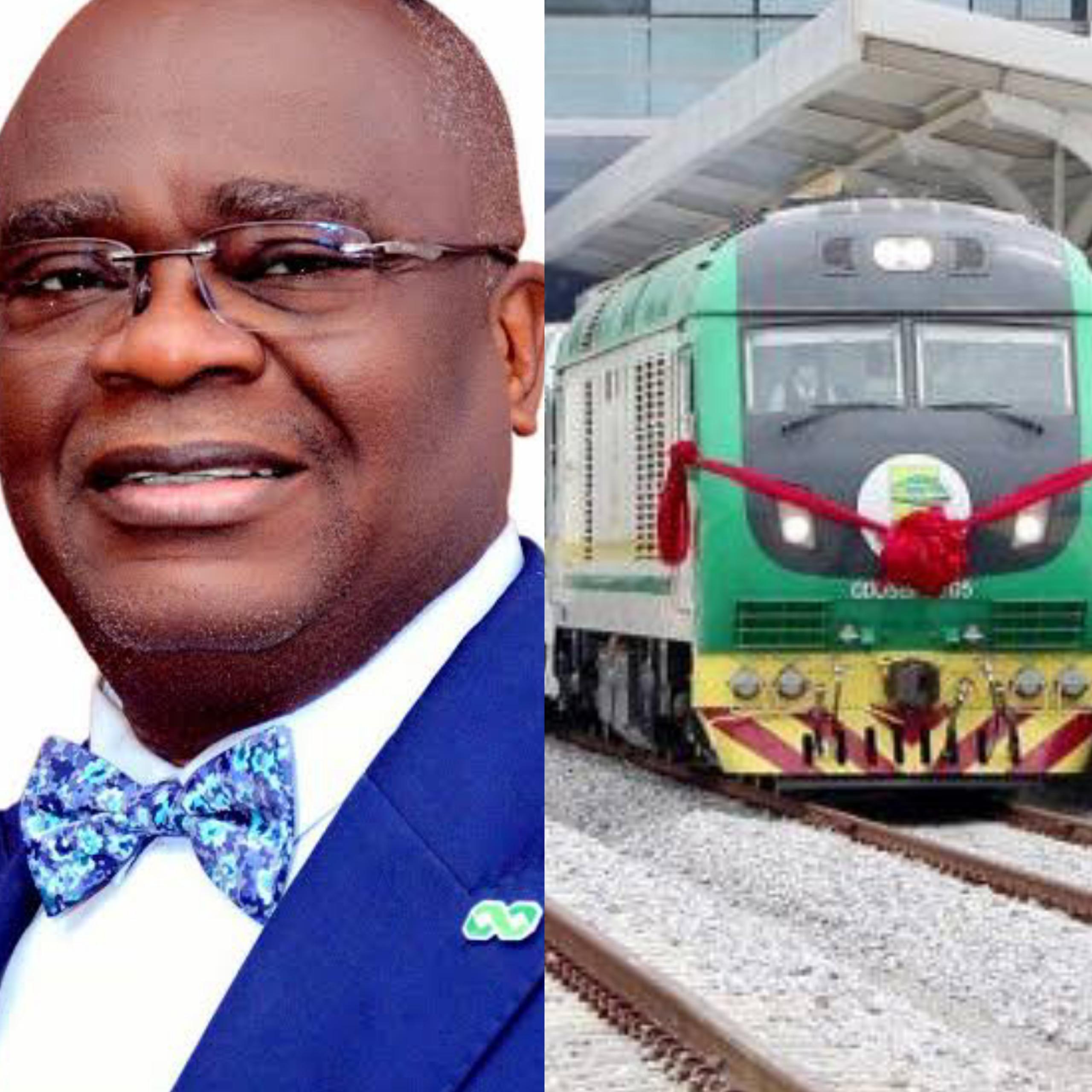
The Federal Government has intensified efforts to modernise Nigeria’s rail system, setting up a high-speed rail committee and approving the expansion of rail connections to key seaports to boost cargo movement and ease logistics bottlenecks.
Managing Director of the Nigerian Railway Corporation (NRC), Kayode Opeifa, disclosed this at the quarterly stakeholders’ engagement of the Nigerian Ports Consultative Council.
In a statement by the NRC’s Chief Public Relations Officer, Callistus Unyimadu, Opeifa said the Office of the Secretary to the Government of the Federation had constituted a committee on high-speed rail development to drive initiative.
He disclosed that the Federal Government was seeking private sector participation in this regard.
The NRC boss also emphasised that seamless rail-port integration remained critical to unlocking the full benefits of ongoing maritime reforms.
Opeifa warned that investments in port infrastructure, including deep seaports, would continue to yield limited returns without efficient rail connectivity to move cargo inland.
He noted that while collaboration between the corporation and port authorities had improved—particularly under the administration of Bola Ahmed Tinubu—significant gaps remain in cargo evacuation from ports, especially in Lagos and along the eastern corridor.
He identified persistent bottlenecks in rail freight operations and called for targeted interventions to improve efficiency, stressing that a shift towards rail-based cargo movement is essential for a more reliable and cost-effective logistics system.
Highlighting ongoing and planned projects, Opeifa said the Federal Government has approved the extension of the Lagos–Ibadan standard gauge rail line to Apapa and Tin Can Island ports. He added that the Warri–Itakpe line would be linked to Warri Port, while the eastern narrow gauge is set to connect the Port Harcourt Port at Onne.
He further disclosed plans to link the Lagos–Kano western line to Baro Port, as part of a broader strategy to integrate all major ports into the national rail network.
On project updates, the NRC boss said the Kaduna–Kano rail corridor is nearing completion, while efforts are underway to connect existing rail lines directly to ports to reduce congestion and improve cargo evacuation.
He also revealed plans for a new rail line to the Lekki Deep Sea Port, expected to pass through Ijebu-Ode and Sagamu to Kajola, where it will link with the Lagos–Ibadan line. The project, he said, is likely to commence this year.
Describing rail connectivity to ports as a key driver of economic growth, Opeifa urged stakeholders, including truck operators, to support the initiative, noting that road transport would continue to play a complementary role in last-mile delivery.
He also called for the expansion of freight yards across both narrow and standard gauge lines to enhance cargo handling capacity and overall efficiency.
The stakeholders’ meeting brought together key players in the maritime and rail sectors to align strategies and strengthen collaboration towards building a more integrated and efficient national transport system.
Railway
British Museum, Oxford experts visit NRC Legacy Museum, seek heritage partnership
British Museum, Oxford experts visit NRC Legacy Museum, seek heritage partnership
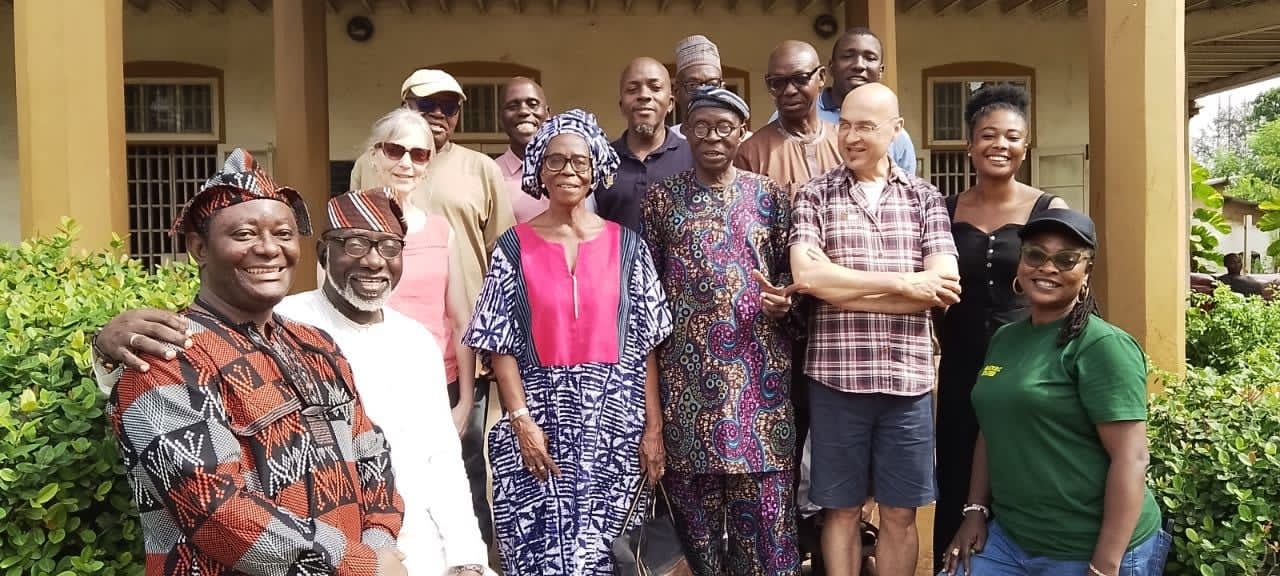
A delegation of experts from the British Museum and University of Oxford has visited the Nigerian Railway Corporation (NRC) Legacy Museum, opening discussions on potential international collaboration to preserve and revitalise Nigeria’s railway heritage.
The familiarisation tour was led by Paul Bagu, alongside Mrs. Julia Hudson, as the team assessed the museum’s historical assets and conservation needs.
During the visit, the delegation toured key sections of the facility, including the iconic Old Running Shed, home to ageing locomotives and vintage coaches that reflect Nigeria’s rail transport evolution.
The experts expressed strong interest in restoration efforts, stressing the urgency of preserving the artefacts through technical support and global partnerships.
Describing the museum as a critical archive of Nigeria’s industrial past, Bagu noted that it holds “immense cultural and historical value,” adding that collaboration in conservation, restoration, and knowledge exchange would be vital to safeguarding the assets for future generations.
A major highlight of the tour was the historic coach used by Queen Elizabeth II during her visit to Nigeria.
The delegation pointed to the shared railway history between Britain and Nigeria as a strong foundation for deeper institutional partnerships.
“The historical links between Britain and Nigeria’s railway development present a unique opportunity to build enduring collaborations that celebrate this shared heritage,” Bagu said.
Drawing parallels from West Africa, he referenced a successful railway heritage initiative in Freetown, where sustained efforts by local enthusiasts have helped revive a once-dormant museum.
He urged similar grassroots commitment in Nigeria to complement institutional support.
President of the Legacy Museum Railway Compound, Mr. Taye Olaniyi, welcomed the delegation, describing the visit as a validation of the museum’s growing relevance.
He also acknowledged the contributions of retired NRC director, Mr. Nate Adediron, to the development of the facility.
“We are honoured to host our distinguished guests. Their visit underscores the importance of global partnerships in advancing our vision of making the NRC Legacy Museum a leading railway heritage centre in Africa,” Olaniyi said.
Providing technical depth to the engagement, Engr. Dr. Quadri A.T., Assistant Director (Mechanical) at NRC, briefed the visitors on the operation and maintenance of both legacy and modern locomotives.
His presentation highlighted ongoing efforts to preserve historical assets while aligning with contemporary rail development standards.
The delegation also explored thematic exhibits covering railway administration, Nigeria’s political evolution, and transitional milestones in national development—elements that reinforce the museum’s educational value.
Commending the initiative, Bagu encouraged greater public engagement, particularly among young Nigerians, to ensure long-term sustainability of heritage preservation efforts.
The visit concluded with the presentation of certificates to key contributors and institutions, followed by a group photograph session.
The engagement marks a significant step toward international collaboration and strengthens efforts to position the NRC Legacy Museum as a premier railway heritage destination in Africa.
Railway
Easter train: NRC increases Lagos-Ibadan trips, offers free Osun holiday transit
Easter train: NRC increases Lagos-Ibadan trips, offers free Osun holiday transit
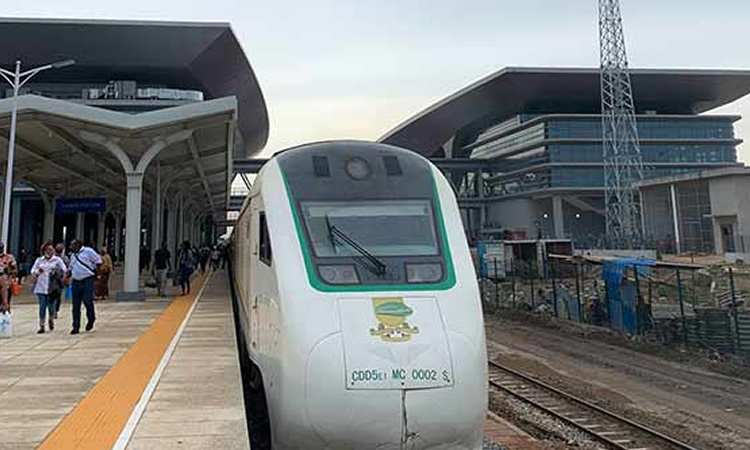
With the 2026 Easter celebrations just around the length of a rail track away, the Nigerian Railway Corporation (NRC) has moved to prevent holiday travel gridlock by significantly boosting its service capacity.
In a move to accommodate the seasonal influx of travellers, the corporation announced a strategic mix of increased trip frequencies and a unique government-backed free transit programme.
The centrepiece of this holiday rollout is the Lagos-Ibadan Train Service (LITS). Anticipating a massive exodus from the coastal hub on Thursday, April 2, the NRC has added a third daily trip to its schedule. Commuters departing from the Mobolaji Johnson Station in Ebute Metta can now choose between 7:45am, 1:40pm, and 4pm slots.
Those returning from the Obafemi Awolowo Station in Ibadan have similar flexibility, with departures staggered at 8:00 a.m., 10:50am, and 4:30pm.
Adding a layer of relief for budget-conscious travellers, the NRC is collaborating with the Osun State Government to provide a fully funded narrow gauge service. This initiative allows passengers to travel from Lagos to Osogbo at no cost.
According to the corporation, the “free train” is scheduled to leave Iddo Station on Friday, April 3, at 10am, with the return leg bringing holidaymakers back to Lagos on Monday, April 6, at the same hour.
It also noted that while the South-West corridors see these specific boosts, the rest of the national network remains steady, the Northern Corridor (Abuja–Kaduna service) will maintain its robust schedule, offering up to three daily trips over the weekend to keep the Idu and Rigasa link fluid.
The Delta-Kogi Link (Warri–Itakpe line) continues its daily operations, though it will pause this Thursday for its standard safety maintenance window.
Also, the Eastern Line (The Port Harcourt–Aba service) remains on its morning-departure and afternoon-return cycle.
NRC management stressed that while capacity has increased, security and ticketing protocols remain a top priority. They are urging the public to arrive at stations early and cooperate with security personnel to ensure the holiday remains peaceful.
As the corporation looks toward a busy weekend, they continue to pitch rail travel as the safest and most dependable alternative for Nigerians traversing the country this Easter.

-
 metro1 day ago
JUST IN: FG Publishes List of 48 Individuals, Groups Linked to Terrorism Financing in Nigeria
-

 metro1 day ago
42-Year-Old Married Woman Declared Missing Found in Hotel with Man
-
 Politics2 days ago
Did Faleke Just Reveal Lagos’ Next Governor? Party Moves Begin
-

 Education2 days ago
Germany Opens Fully Funded Scholarships for Nigerians, Africans
-

 Politics1 day ago
2027: Oyo APC Governorship Aspirant Saheed Oladele Resigns From Party
-
 metro1 day ago
ADC Threatens Civil Disobedience To Force INEC Chairman To Resign
-
 Business3 days ago
Nigeria May Face ₦2,000 Petrol Price Without Intervention, TUC Warns FG
-
 Business3 days ago
Naira Strengthens to ₦1,359.31/$ as CBN Data Shows Further Gain in Official Market