
Health
Kidney Failure: Experts Warn Nigerians to Drink Water, Exercise, Rest
Kidney Failure: Experts Warn Nigerians to Drink Water, Exercise, Rest
At 42, Chinedu never imagined that frequent soft drink consumption, lack of sleep, and untreated high blood pressure could threaten his life. By the time symptoms appeared, his kidneys were already failing, and the cost of treatment—running into nearly ₦1 million monthly for dialysis—was far beyond his reach.
Chinedu’s story reflects a growing health crisis in Nigeria, where dozens of patients arrive at hospitals daily unaware they are battling Chronic Kidney Disease (CKD). Experts warn that the disease often progresses silently, with symptoms only appearing at advanced stages when treatment becomes difficult, expensive, and emotionally draining.
According to Dr. Nmadu Danladi, Consultant Nephrologist at the Federal Medical Centre Ebute Metta, kidneys are “silent workers” that many people ignore until it is too late. He explained that unlike other organs, kidney problems rarely show early warning signs, which is why late presentation is common.
He described kidney failure as devastating on multiple levels—physically, emotionally, and financially—not just for patients but also for their families, who often bear the cost of long-term care.
Medical experts attribute the rising burden of kidney disease to lifestyle-related conditions such as Hypertension and Diabetes Mellitus, both of which are leading causes of kidney damage globally. Poor dietary habits, including excessive salt intake, high consumption of processed foods, and sugary drinks, are also major contributors.
READ ALSO:
- Nigeria Power Sector Crisis: DisCos Lose ₦2.3trn as Blackouts Intensify
- Iran Threatens to Shut Strait of Hormuz as US Ultimatum Escalates Regional Tensions
- Baba Ijesha Speaks Out After Prison Release, Denies Sexual Assault Conviction
To reduce the risk, nephrologists recommend five key lifestyle measures: drink plenty of water, get adequate rest, exercise regularly, reduce salt and red meat intake, and undergo routine medical check-ups. These simple habits, they say, can significantly lower the chances of developing kidney disease.
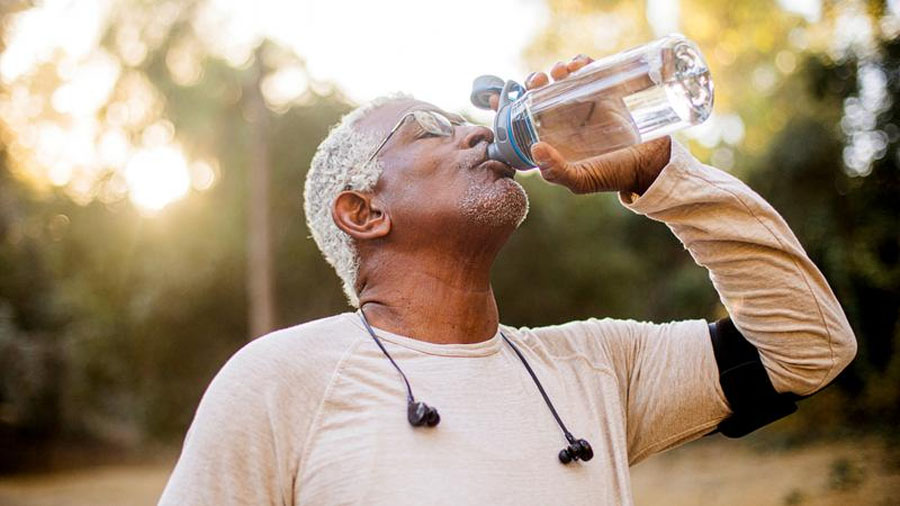
Hydration, in particular, plays a critical role in maintaining kidney function. Experts advise that men should consume about 2.7 litres of water daily and women about 2.5 litres, with higher intake recommended in hot weather conditions common across Nigeria—sometimes up to 3.5–4 litres daily.
They stress that early detection remains the most effective way to prevent irreversible damage. Kidney disease can often be managed in its early stages through medication and lifestyle adjustments, preventing progression to full kidney failure.
Globally, the World Health Organization (WHO) has consistently warned about the rising prevalence of kidney disease, particularly in low- and middle-income countries where access to treatment is limited and expensive.
In Nigeria, the cost of managing kidney failure remains a major challenge. Dialysis sessions typically cost between ₦40,000 and ₦50,000 per session, with patients requiring multiple sessions weekly to survive. This places treatment far beyond the reach of many households.
However, government interventions are beginning to offer some relief. At the Federal Medical Centre, Ebute Metta, dialysis has been subsidised to about ₦12,000 per session, significantly reducing the burden on patients.
Despite this, demand continues to rise. The hospital now conducts between 300 and 350 dialysis sessions monthly, averaging 20 to 25 sessions daily, while recording two to three new emergency kidney failure cases every day—a trend experts describe as alarming.
Health professionals also warn against the abuse of over-the-counter painkillers, which can damage the kidneys when used excessively, as well as untreated infections and herbal remedies of unknown composition.
They emphasise that World Kidney Day, observed every second Thursday in March, serves as a reminder of the importance of kidney health and early screening.
Ultimately, experts agree that prevention is far more affordable and effective than treatment. With kidney disease often progressing unnoticed, Nigerians are urged to prioritise their health through proper hydration, healthy living, and regular medical checks.
They warn that without urgent lifestyle changes and increased awareness, the burden of kidney disease will continue to rise—placing more families at risk of devastating financial and emotional strain.
Kidney Failure: Experts Warn Nigerians to Drink Water, Exercise, Rest






Health
Meningitis cases in UK rise, nightclub fingered
Meningitis cases in UK rise, nightclub fingered
A popular nightlife spot in southeast England has emerged as the focal point of a growing meningitis outbreak, prompting an urgent public health response that has seen thousands vaccinated and treated within days.
UK health authorities confirmed that cases tied to the outbreak have climbed to 34, including 23 laboratory-confirmed infections, with epidemiological links tracing back to a three-storey venue, Club Chemistry, in Canterbury.
The development has shifted attention to the risks associated with crowded social settings, particularly as officials race to contain further spread among young people.
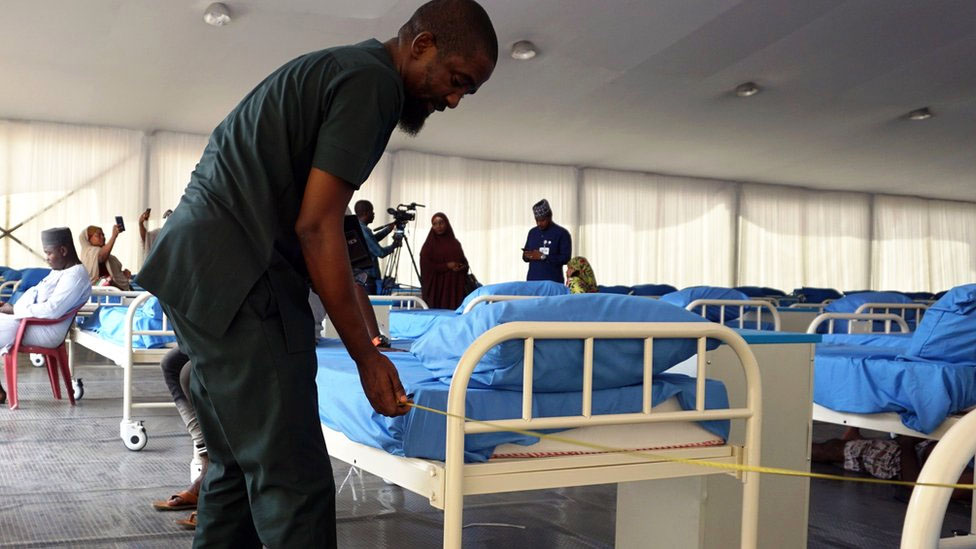
In response, a large-scale vaccination campaign has been rolled out at the University of Kent, where hundreds of students formed long queues over the weekend to receive the meningitis B vaccine. The surge in demand follows an earlier rush that left some unable to access doses.
So far, more than 5,700 vaccines have been administered, alongside the distribution of over 11,000 antibiotic doses across Kent, according to the UK Health Security Agency (UKHSA).
The outbreak, which began just over a week ago, has already claimed two lives — a university student and a schoolgirl — while several others remain hospitalised. Most confirmed cases involve meningococcal group B (MenB), a strain known for its severity.
Authorities are now urging individuals who visited Club Chemistry between March 5 and 7 to seek immediate medical advice and preventive treatment, as efforts intensify to break transmission chains linked to close-contact environments.
Public health officials have also raised concerns about the potential for isolated cases to surface beyond Kent, as students travel across the country. However, they maintain that such occurrences are likely to be limited and manageable.
The situation has already crossed borders, with France confirming a related case involving a University of Kent attendee who is currently in stable condition.
Meningitis, a serious infection affecting the brain and spinal cord membranes, can escalate rapidly if untreated. Early symptoms — including fever, headache, and neck stiffness — often resemble less severe illnesses, complicating early detection.
Health experts continue to stress vigilance, particularly among young adults, as the outbreak underscores how quickly infections can spread through close social interactions.
Health
NCDC Raises Alarm as 37 Health Workers Contract Lassa Fever in 2026

NCDC Raises Alarm as 37 Health Workers Contract Lassa Fever in 2026
The Nigeria Centre for Disease Control and Prevention (NCDC) has confirmed that six healthcare workers contracted Lassa fever within one week, raising renewed concerns about occupational exposure among frontline medical personnel as Nigeria continues to battle the viral disease.
The agency disclosed this in its Lassa Fever Situation Report for Epidemiological Week 9, covering February 23 to March 1, noting that the infections occurred while healthcare workers were involved in treating and managing patients across affected states.
According to the report, 37 healthcare workers have been infected with Lassa fever in 2026 so far, underscoring the risks faced by medical personnel working in treatment centres and hospitals handling suspected cases.
The NCDC said 65 confirmed Lassa fever cases were recorded during the week, representing a slight decline from the 77 cases reported in the previous week. The infections were reported in Benue, Ondo, Bauchi, Taraba, Edo, Plateau and Nasarawa states.
During the same period, 460 suspected cases were reported, while nine deaths occurred among confirmed cases, representing a Case Fatality Rate (CFR) of 13.9 per cent.
READ ALSO:
- AfDB Approves $5.52m Grant to Boost Tax Administration Across West Africa
- BREAKING: Several Passengers Injured as Abuja–Kaduna Train Derails After Collision
- Saudi Intercepts 63 Drones as Iran Denies Responsibility, Blames US, Israel
Cumulatively, the agency said Nigeria has recorded 2,446 suspected cases and 469 confirmed infections in 2026, with 109 deaths recorded so far.
This brings the overall case fatality rate to 23.2 per cent, which is significantly higher than the 18.7 per cent recorded during the same period in 2025, raising concerns among public health experts about the severity of the outbreak this year.
The NCDC noted that 18 states and 69 Local Government Areas have reported at least one confirmed case of the disease in 2026.
However, five states account for the majority of infections, with Bauchi, Ondo, Taraba, Benue and Edo responsible for 86 per cent of confirmed cases nationwide.
Public health authorities attributed the rising fatalities partly to late presentation of patients at health facilities, poor health-seeking behaviour, and low awareness levels in some high-burden communities.
In response, the NCDC said it has activated a multi-partner Incident Management System to coordinate nationwide response activities.
These include active case searches, contact tracing, risk communication campaigns, the distribution of personal protective equipment (PPE) to health facilities, and the deployment of rapid response teams to affected states.
The agency also urged healthcare workers to maintain a high index of suspicion for Lassa fever, especially in endemic areas, and to strictly follow infection prevention and control protocols to reduce hospital-based transmission.
Lassa fever is an acute viral haemorrhagic illness caused by the Lassa virus, first identified in 1969 in the town of Lassa in present-day Borno State.
According to the World Health Organization (WHO), the disease is endemic in Nigeria and several West African countries and is primarily spread by the multimammate rat (Mastomys natalensis).
Humans typically become infected through contact with rodent urine or droppings contaminating food, household items, or surfaces. Human-to-human transmission can also occur, particularly in healthcare settings where adequate infection prevention measures are not followed.
Health experts note that while many infections remain mild or asymptomatic, about 20 per cent of cases develop severe illness, which may include high fever, bleeding, respiratory distress, organ failure, and neurological complications.
Authorities continue to advise Nigerians to maintain proper food storage, improve sanitation, and avoid contact with rodents, while encouraging early medical attention for suspected symptoms in order to reduce fatalities.
NCDC Raises Alarm as 37 Health Workers Contract Lassa Fever in 2026
Health
Nigeria to Receive Breakthrough HIV Prevention Drug This Month – NACA
Nigeria to Receive Breakthrough HIV Prevention Drug This Month – NACA
Nigeria is set to receive Lenacapavir, a groundbreaking HIV prevention drug, in March 2026, the National Agency for the Control of AIDS (NACA) has announced.
The agency disclosed that regulatory approval has been granted by the National Agency for Food and Drug Administration and Control (NAFDAC), clearing the way for the drug’s introduction and nationwide rollout. The confirmation was contained in a statement issued on Monday by Toyin Aderibigbe, Head of Public Relations at NACA.
Lenacapavir, a long-acting injectable HIV prevention drug, has demonstrated 100 percent effectiveness in preventing HIV infection during advanced clinical trials. Unlike daily oral pre-exposure prophylaxis (PrEP) pills, the injectable medication is administered only twice a year, offering a more convenient and discreet prevention option.
NACA said the Federal Government has intensified preparations for the rollout of injectable PrEP in Nigeria, describing the initiative as a critical step toward reducing new HIV infections and strengthening national prevention strategies.
According to the agency, Lenacapavir will be made available at an affordable annual cost of about $40 per person, following voluntary licensing agreements with generic manufacturers. This pricing structure will apply across Nigeria and 119 other low- and middle-income countries, significantly expanding access to the drug.
READ ALSO:
- Iran Retaliates: Gulf States Allied With US Hit by Missiles, Drones
- Islamic Leader Warns Tinubu: State Police Could Be Used Against Opponents
- Daddy Freeze Warns Couples Over 40: ‘Avoid Moving Abroad, Especially US, UK’
“The Government of Nigeria is advancing preparations for the introduction and rollout of lenacapavir as pre-exposure prophylaxis (PrEP). This underscores our commitment to strengthen HIV prevention and accelerate progress toward epidemic control,” the statement said.
As part of readiness efforts, NACA revealed that landscape and preparedness assessments have been completed in 10 states — Akwa Ibom, Anambra, Benue, Cross River, Ebonyi, Gombe, Kano, Kwara, Lagos, and the Federal Capital Territory (FCT) — alongside regulatory clearance by NAFDAC.
Nigeria currently has an estimated 1.9 million people living with HIV, with a national prevalence rate of 1.3 percent among adults aged 15 to 49. In 2021, the country recorded 74,000 new HIV infections and 51,000 AIDS-related deaths, according to official data.
Women aged 15 to 49 are more than twice as likely as men to be living with HIV, while the South-South region bears the highest burden, with an HIV prevalence rate of 3.1 percent.
Health authorities say the arrival of Lenacapavir in Nigeria could mark a major turning point in HIV prevention, particularly for high-risk populations, as the country intensifies efforts to achieve long-term epidemic control.
Nigeria to Receive Breakthrough HIV Prevention Drug This Month – NACA

-

 metro2 days ago
Ozoro Festival Controversy: 15 Suspects Arrested, Community Denies Rape Claims
-

 Entertainment1 day ago
Baba Ijesha Speaks Out After Prison Release, Denies Sexual Assault Conviction
-

 metro1 day ago
Over 150 Bandits Reportedly Die in Sokoto Water Accident
-
metro3 days ago
Festival of Fertility: FG Orders Arrest, Promises Justice for Victims
-

 metro3 days ago
Nigerian Woman, Children Die in US Road Accident
-

 metro2 days ago
Shock as Governor Oborevwori’s Aide Collapses, Dies at Event
-

 News2 days ago
US Deploys MQ-9 Drones, 200 Troops to Support Nigeria’s Counterinsurgency Efforts
-

 Entertainment1 day ago
Abiodun Ayoyinka Rebrands as Bondu Alaska Amid Papa Ajasco Identity and Brand Dispute