

metro
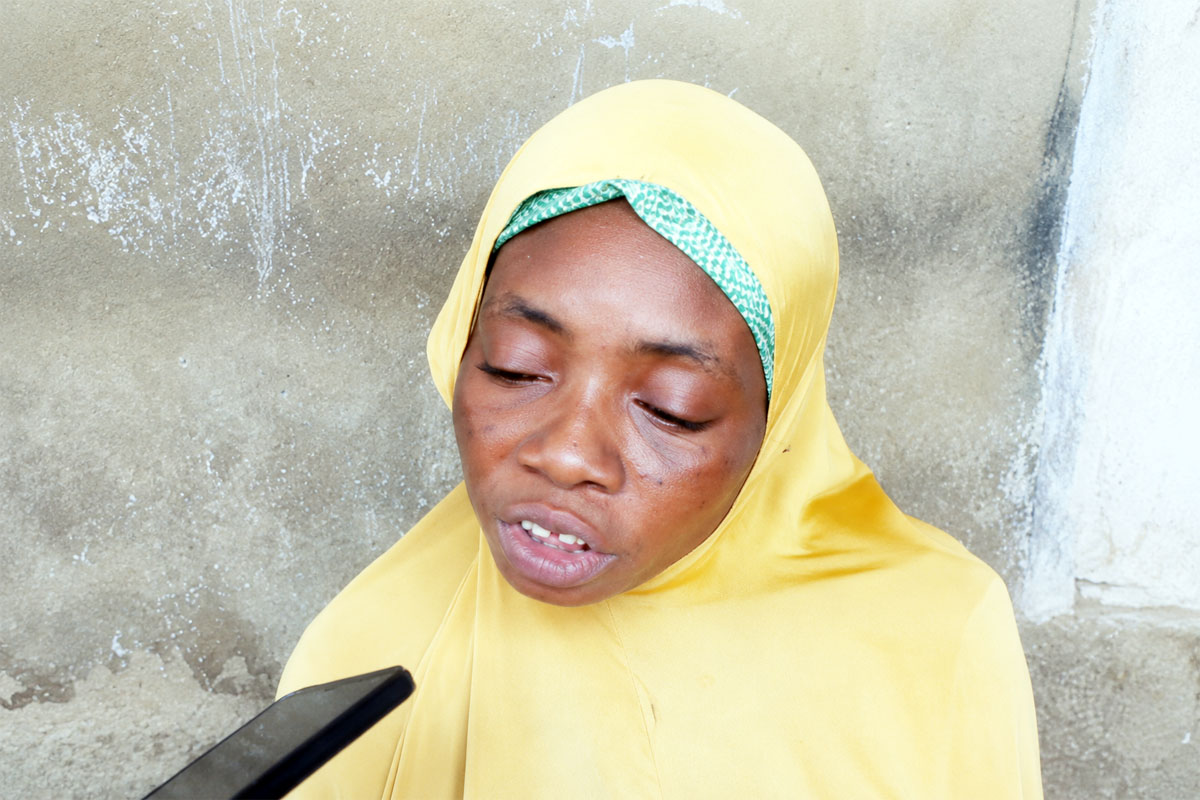
Kogi Amala Tragedy: Widow Loses Husband, Two Children as Death Toll Rises to Seven









metro
MURIC Urges FG to Suspend NYSC Scheme, Discharge 20 Freed Corps Members
MURIC Urges FG to Suspend NYSC Scheme, Discharge 20 Freed Corps Members
The Muslim Rights Concern (MURIC) has called on the Federal Government to suspend the National Youth Service Corps (NYSC) scheme until the country’s worsening insecurity is brought under control.
The Islamic human rights organisation also demanded the immediate discharge of 20 corps members recently released after spending a week in the custody of kidnappers in Imo State.
MURIC urged the government to issue the affected corps members their NYSC discharge certificates and pay them the allowances they would have received throughout the 2026/2027 service year as compensation for their ordeal.
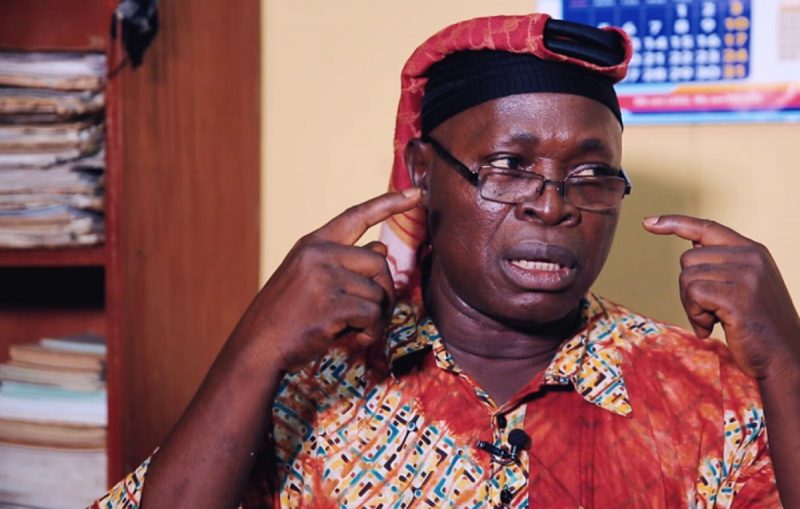
The group’s Founder and Executive Director, Professor Ishaq Akintola, made the demands in a press release issued on Friday, October 9, 2026.
Akintola said the abduction of the corps members had highlighted the security challenges facing participants in the national service scheme, arguing that young Nigerians should not be exposed to such risks while fulfilling their national obligations.
MURIC welcomed the release of the 20 corps members and expressed gratitude for their safe return, while congratulating their parents and families.
The organisation, however, said the traumatic experience of the freed corps members and others who had suffered similar ordeals warranted a review of the scheme’s operation amid persistent insecurity.
READ ALSO:
- ‘Mad People’: Presidency Fires Back at Amaechi Over Tinubu Re-Election Remarks
- ‘What Happens on Day 31?’ Atiku Slams Tinubu’s 30-Day Fuel Discount as Election-Laced Package
- Ronaldo Breaks Silence on Portugal Row as Pelé, Maradona Comparison Sparks Meme Frenzy
According to Akintola, insecurity has become the scheme’s greatest challenge, placing the Federal Government under an obligation to protect young Nigerians participating in national service.
He argued that the government had a responsibility, in its capacity as a guardian, to ensure the safety of corps members deployed to different parts of the country.
“However, in view of the apparent inability to do this, at least presently, we demand the suspension of the NYSC scheme until FG is able to take full control of the security situation in the country,” he said.
The group also insisted that the 20 freed corps members should not be required to continue their service after their reported week-long ordeal in captivity.
MURIC proposed that the affected individuals be formally discharged and compensated with the allowances they would otherwise have earned during the entire 2026/2027 service year.
The organisation said its demands were aimed at protecting young Nigerians from further exposure to kidnapping and other security threats associated with national service.
The call comes amid renewed concerns over the safety of corps members travelling to their places of deployment, particularly in areas affected by kidnapping and other security challenges.
The NYSC scheme, established in 1973, requires eligible Nigerian graduates to undertake a year of national service, including deployment to states other than their places of origin in many cases.
MURIC’s proposal would require a major policy decision by the Federal Government and the relevant authorities responsible for administering the scheme.
The government had yet to respond to the demands contained in the statement at the time of this report.
MURIC Urges FG to Suspend NYSC Scheme, Discharge 20 Freed Corps Members

metro
MTN Network Outage Hits Lagos, Abuja, Four Other Areas as NCC Reports Service Restoration
MTN Network Outage Hits Lagos, Abuja, Four Other Areas as NCC Reports Service Restoration
MTN Nigeria subscribers experienced service disruptions across parts of Lagos, Oyo, Rivers and Delta states, as well as the Federal Capital Territory (FCT), following a network outage that affected calls, internet access and other telecommunications services.
The disruption was reported on Thursday, October 8, prompting the telecommunications operator to alert customers that some services might be temporarily unavailable while its technical team worked to resolve the problem.
MTN announced the outage in a notice posted on its official X account, identifying the affected areas as parts of Oyo, Lagos, Rivers, the FCT and Delta states.
The company said its engineers were working to restore normal services as quickly as possible and appealed to customers for patience.
In a subsequent message, the operator apologised to subscribers experiencing difficulties and reiterated that its technical team was addressing the problem.
The disruption affected key telecommunications services, with the Nigerian Communications Commission (NCC) reporting interruptions to voice calls, text messages, data and short-code services.
According to an incident update published by the NCC, the outage was recorded at about 2:45 p.m. on Thursday, with the regulator initially classifying the disruption as a major outage.
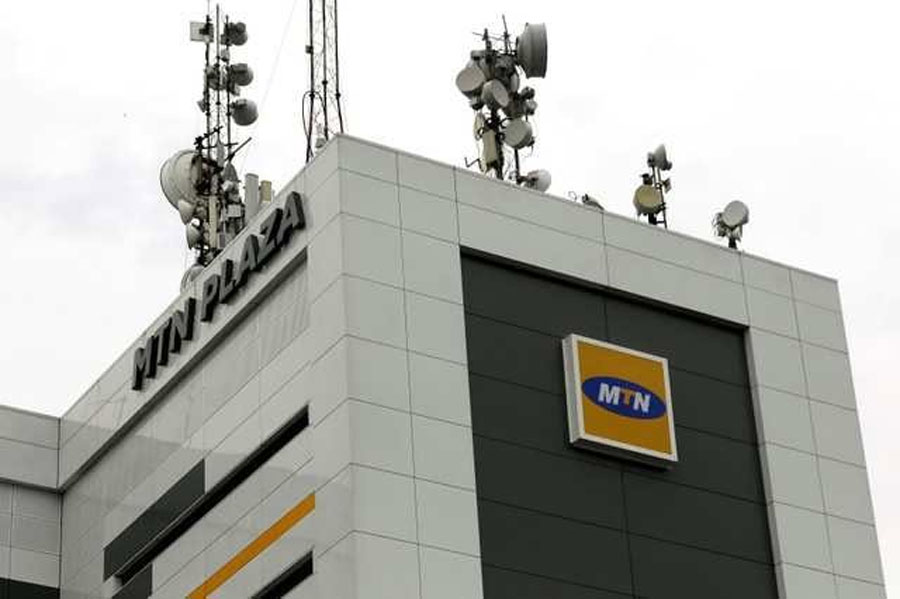
The NCC’s incident information attributed the problem to high temperatures at an MTN data centre. The regulator subsequently reported that data and fibre services were affected in Ibadan, Lagos, Port Harcourt, Abuja and Asaba.
However, neither MTN nor the regulator disclosed the number of subscribers affected by the disruption.
The outage raised concerns among customers who depend on mobile connectivity for business communications, online banking, digital payments, remote work and other everyday activities.
READ ALSO:
- Lagos Train Crash: Panic as Train Smashes Honda Car at PWD Crossing, Many Feared Dead
- How Parents Raised Millions to Free 20 Abducted NYSC Members
- Lasaco Assurance Retains A(NG) Rating as Revenue Rises 35.2% to N30.8bn
For businesses that rely on internet access and telephone services to communicate with customers, even temporary network interruptions can delay transactions and disrupt operations.
MTN did not initially provide a specific timeline for restoring all affected services, leaving subscribers waiting for further updates from the company.
However, the NCC subsequently marked the incident as resolved. In an update checked at about 6:29 a.m. on Friday, October 9, the regulator’s incident history stated that power had been restored and all services were back.
The restoration notice provided an indication that the disruption had been addressed, although the regulator did not disclose how many customers had been affected or provide a breakdown of the impact across the affected locations.
The outage also coincided with MTN’s ongoing airtime compensation exercise for eligible subscribers affected by poor network quality recorded between February and April 2026, following directives from telecommunications regulators.
The compensation exercise relates to earlier service failures and is separate from the October 8 outage. MTN had not announced whether subscribers affected by the latest incident would receive additional compensation.
The latest disruption has again drawn attention to the importance of reliable telecommunications infrastructure as Nigerians increasingly depend on mobile networks for communication, financial transactions, education and commercial activities.
MTN has said its engineers are working to resolve service problems as quickly as possible, while the NCC continues to monitor reported network incidents through its service-disruption platform.
Subscribers experiencing persistent difficulties despite the reported restoration may contact MTN customer care or monitor the company’s official channels for further updates.
MTN Network Outage Hits Lagos, Abuja, Four Other Areas as NCC Reports Service Restoration
metro
[UPDATED] Lagos Train Crash: 55-Year-Old Motorist Survives as Honda Car Is Wrecked at PWD Crossing
[UPDATED] Lagos Train Crash: 55-Year-Old Motorist Survives as Honda Car Is Wrecked at PWD Crossing
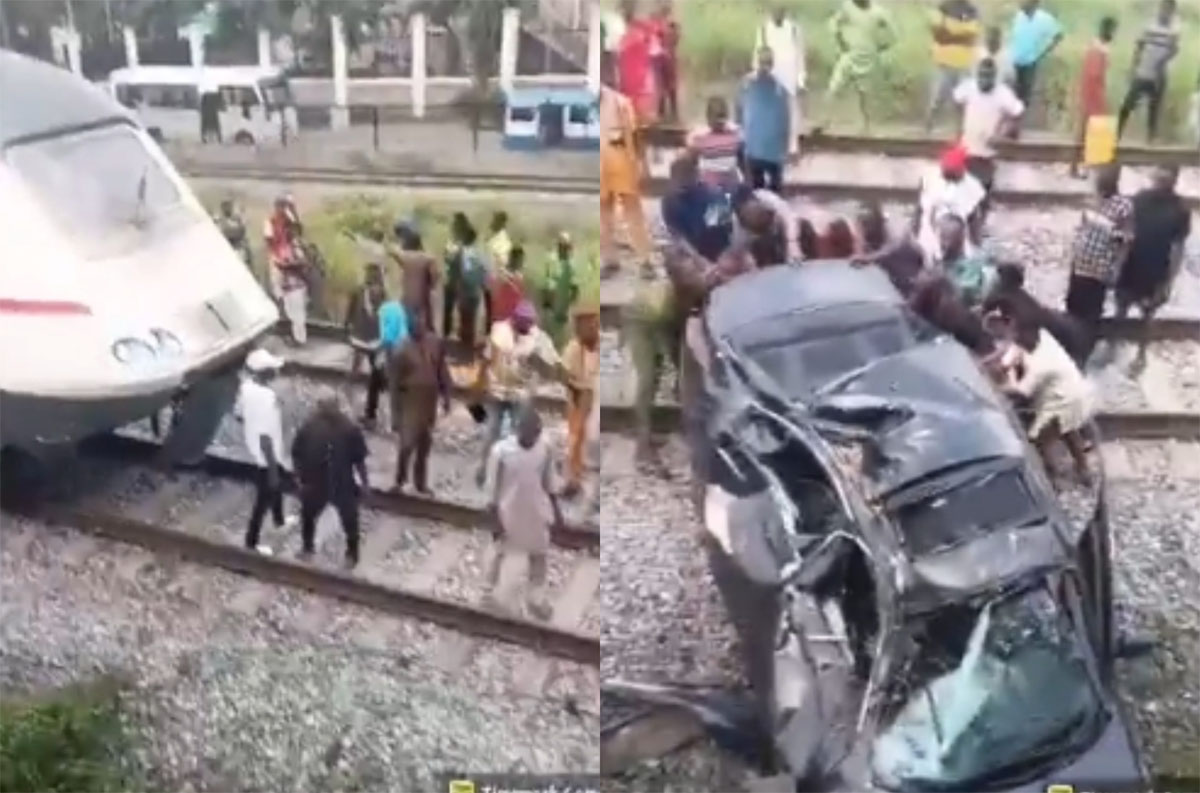
A 55-year-old motorist escaped unhurt after a moving train collided with his Honda car at the PWD railway crossing in Ikeja, Lagos, on Friday morning, October 9, 2026.
The collision occurred at about 6:54 a.m. along the Agege Motorway, involving a train travelling towards Agege and a Honda car with registration number EKY 902 JT.
The impact extensively damaged the car, leaving it virtually written off. However, the Lagos State Traffic Management Authority (LASTMA) confirmed that the driver survived without injuries and that no casualty was recorded at the scene.
LASTMA operatives and security personnel swiftly intervened after the collision, rescuing the motorist and removing the wrecked vehicle from the railway track.
Their coordinated response cleared the obstruction and allowed the train to continue its journey towards Agege.
Despite the removal of the vehicle, traffic congestion persisted around the PWD axis, disrupting movement along the affected corridor during the morning rush hour.
The wrecked Honda was subsequently handed over to security personnel for further investigation to establish the circumstances surrounding the collision.
The incident had initially raised fears of possible fatalities after reports emerged that a train had smashed into a car at the busy railway crossing. However, the latest information from LASTMA confirmed that the driver survived without injury.
READ ALSO:
- How Parents Raised Millions to Free 20 Abducted NYSC Members
- Lasaco Assurance Retains A(NG) Rating as Revenue Rises 35.2% to N30.8bn
- Man Allegedly Caught Using Old Tyres to Scam POS Operator
Reacting to the incident, LASTMA General Manager, Olalekan Bakare-Oki, commended the agency’s operatives and security personnel for their prompt and coordinated response.
He stressed the importance of cooperation among emergency responders in managing incidents involving railway operations and adjoining road infrastructure.
Bakare-Oki also urged motorists to exercise extreme caution when approaching railway crossings and designated train corridors, warning against attempting to cross the tracks when a train is approaching or already in motion.
He noted that disregarding railway safety regulations could result in devastating and irreversible consequences.
LASTMA appealed to motorists and other road users to obey traffic instructions, warning signs and railway safety regulations, emphasising that responsible driving and caution could prevent avoidable accidents.
The crash has renewed attention on safety at railway crossings in Lagos, particularly at busy intersections where road traffic and train operations share the same corridor.
The PWD railway crossing has witnessed fatal incidents in the past. In October 2025, a dispatch rider died after colliding with a moving train at the crossing in Ikeja. Preliminary findings at the time indicated that the rider attempted to cross the tracks while travelling at excessive speed.
Another major incident occurred in March 2023, when a train collided with a Lagos State Government staff bus, killing six people and injuring about 96 others.
Those incidents involved different circumstances from Friday’s collision, in which LASTMA confirmed that the motorist survived without injury.
Motorists are advised to approach railway crossings cautiously, obey warning signals and never attempt to cross when a train is approaching. Trains require considerable stopping distances and may be unable to avoid vehicles obstructing the tracks.
[UPDATED] Lagos Train Crash: 55-Year-Old Motorist Survives as Honda Car Is Wrecked at PWD Crossing
-

 metro3 days ago
UCH CMD: After Decades Without Muslim, Agunbiade Demands Fair Chance
-
 metro1 day ago
[UPDATED] 20 NYSC Prospective Corps Members Freed After Seven Days in Captivity
-
 News3 days ago
Iwo Son Becomes Yorubaland’s First Muslim Professor of Arabic Without Secondary School
-
 Politics2 days ago
‘No Decent Wages, No Credible Elections’ — Sowore Threatens 2027 Boycott
-
 metro2 days ago
Seven Years With Parkinson’s: Man Seeks N65m for Brain Surgery in Türkiye
-

 Politics3 days ago
Tompolo’s PBAT Movement Suspends Campaign Over Ondo Military Crash
-
 Politics2 days ago
2027: Obi Makes U-Turn, Vows to Restore Fuel Subsidy If Elected
-
 Politics2 days ago
2027: Galadima Alleges APC Offering N50m, N200m to Lawmakers to Step Aside