

News
Kukah partisan, too hard on Buhari, says Adesina
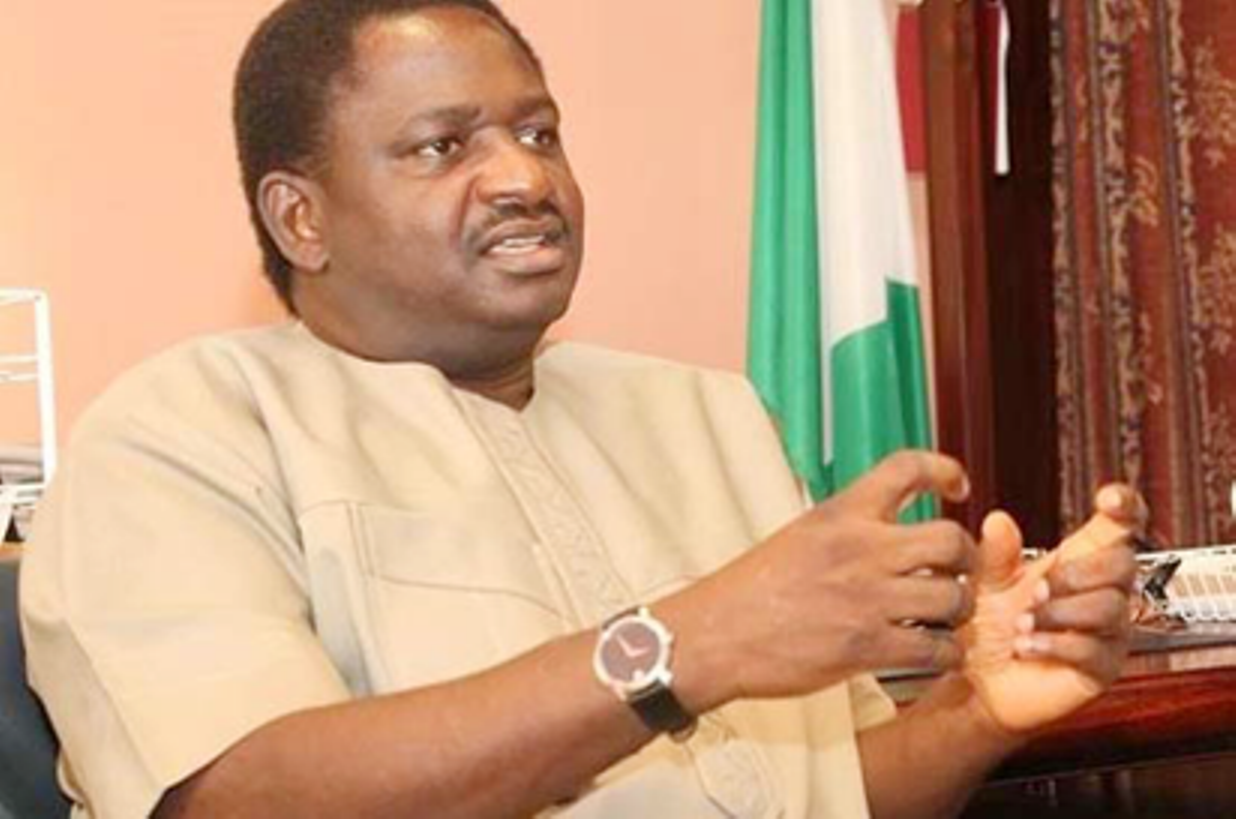
Kukah partisan, too hard on Buhari, says Adesina
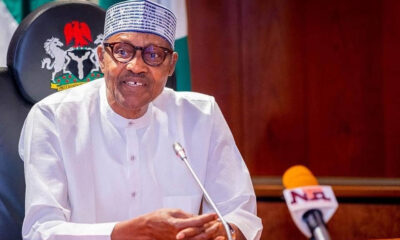
Femi Adesina, spokesman for President Muhammadu Buhari says Catholic Bishop of Sokoto, Matthew Kukah, was too partisan in his latest criticism of the President’s handling of the Nigeria’s affairs.
Adesina spoke on Monday in an interview with Channels Television, positing that the Buhari-led administration had tackled insurgency and banditry in the country more than the situation was in 2015.
“The figure has been coming down progressively over the years and it’s a fact of history. Nobody can change it,” Adesina said.
Kukah, in a statement on Sunday, asked President Muhammadu Buhari if he had fulfilled his “tall dreams of ending banditry and defeating corruption”.
“As you prepare to return to Daura or Kaduna, I do not know if you feel fulfilled or that you met the tall dreams and goals you set for yourself such as: ending banditry, defeating corruption, bringing back our girls, belonging to everybody and belonging to nobody, selling off our presidential fleet and traveling with us,” Kukah had said.
READ ALSO:
- BREAKING: Suspected ‘Yahoo boy’ crushes 3 to death in Ondo
- RCCG pastor calls Peter Obi ‘president’ during introduction + Video
- 22-yr old boy set ablaze for allegedly stealing android phone in Calabar
Reacting to Kukah’s comment, Adesina said Buhari did not promise to sell the presidential fleet during the 2015 presidential election campaign.
“Someone has said it is even better he (referring to Kukah) puts off his cassock and becomes a full-time politician,” he said.
“He is rather too partisan. He is someone we had always admired for his intellectual bent.
“But his opinion has been coloured by politics. He talked about selling the presidential fleet. Was that ever promised? In 2015, there were a rash of promises made that even the candidate then did not know about.
“The question is – are we where we were on the issue of banditry in 2015? The job is not fully done but are we where we were?
“If Kukah is true to himself and true to his calling as a cleric he will know that this country is nowhere like it was in terms of banditry as of 2015.”
Asked if the Buhari-led administration will be leaving Nigeria better than it met the country, Adesina said the administration is leaving Nigeria “far better”.
He said the administration knew the situation of the country in 2015, citing the activities of Boko Haram and other terrorist groups.
“In 2015, we knew where Nigeria was. A minimum of 17 LGAs in this country was under the control of insurgents,” he said.
“Talking about control, I mean they were sitting in emirs’ palaces and seats of LGA chairmen. NYSC could not do orientation and post people to those places. Is that what is happening today? No!
“Emirs are back in their palaces. LGA chairmen are back in their offices.
“NYSC orientations are happening in those states and corps members are being posted to those states.
“Are you now telling me there have been no improvements?”








News
Atiku to Tinubu: Cut Fuel Prices, Let Nigerians Breathe
Atiku to Tinubu: Cut Fuel Prices, Let Nigerians Breathe
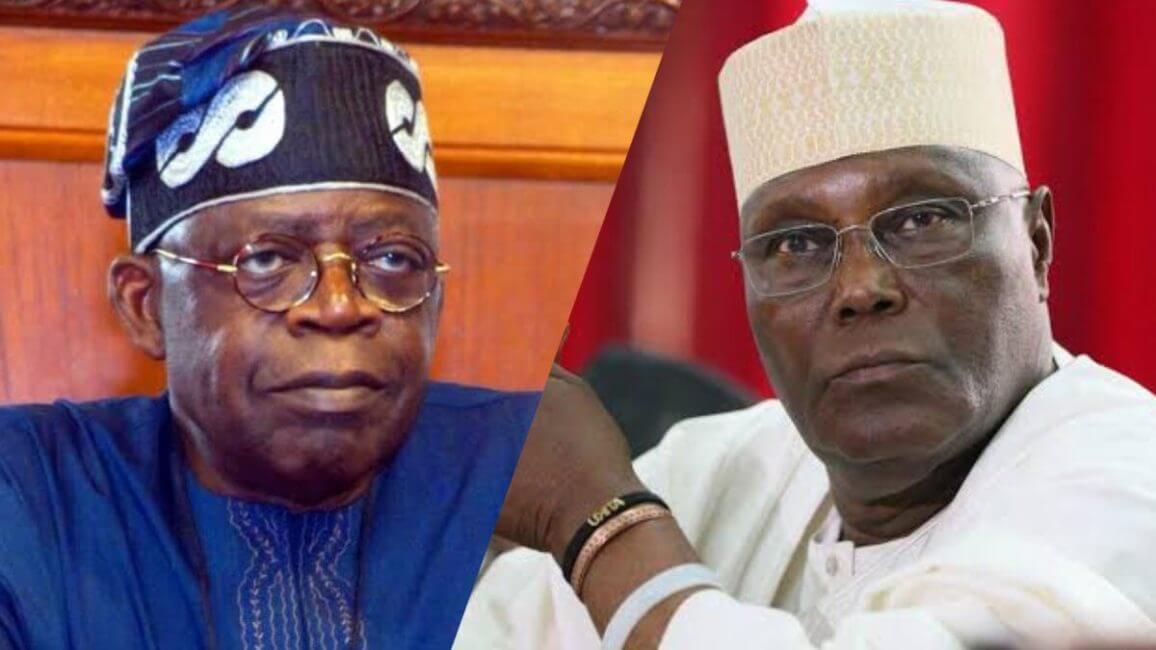
Former Vice-President and African Democratic Congress (ADC) presidential candidate Atiku Abubakar has urged President Bola Ahmed Tinubu to intervene in the petroleum sector and reduce petrol and diesel prices, saying rising energy costs are putting additional pressure on Nigerian households, workers, farmers and businesses.
Atiku made the call on Friday, September 18, 2026, during a press conference in Abuja, where he also criticised the Federal Government’s reliance on palliatives and raised concerns over plans to phase out electricity subsidies.
He asked President Tinubu to use the remaining months of the administration to implement measures capable of easing the cost-of-living crisis, arguing that Nigerians need policies that reduce the underlying cost of goods and services rather than temporary relief after prices have already risen.
According to Atiku, the impact of higher petrol prices has extended far beyond filling stations, affecting transportation, food distribution, farming, manufacturing, logistics and household budgets.
He argued that when petrol becomes more expensive, transport operators face higher costs, farmers spend more moving produce, traders pay more to move and stock goods, workers spend more commuting and businesses incur higher logistics and energy expenses.
Atiku said the resulting pressure ultimately reaches consumers through higher prices for food and other essential goods.
He also questioned the effectiveness of government palliatives, including food distribution and cash-transfer programmes, arguing that such interventions may provide temporary assistance but cannot replace policies that restore the purchasing power of Nigerians.
The ADC candidate said government should concentrate on lowering production and energy costs so that households and businesses can retain more of their income.
His comments came amid another round of increases in the domestic petrol price.
READ ALSO:
- Xenophobia: FG Brings 33 More Nigerians Home From South Africa
- Falconets Thrash England 3-0, Face Colombia in U-20 World Cup Quarter-Finals
- Replace Fuel Subsidy With Vehicle Credit to Drive Mobility, Jobs,LCCI, Ilekuba tell FG
The Dangote Petroleum Refinery increased its petrol gantry price from ₦1,265 to ₦1,350 per litre effective September 12, 2026. The increase represented an ₦85, or 6.7 per cent, rise and was the fourth upward adjustment in the refinery’s petrol price since August 21.
The successive adjustments have also been reflected at some filling stations, with petrol selling for as much as ₦1,395 per litre at some locations in Lagos, although prices have varied between stations and marketers.
Atiku said the government should not hesitate to adopt measures capable of lowering petrol prices simply because similar proposals originated from the opposition.
He said his concern was the effect of high energy costs on Nigerians and argued that the administration should act in the public interest.
A major part of Atiku’s argument is his proposal for a production subsidy for locally refined petroleum products.
The former vice-president has said his proposal is different from the former system of subsidising imported petrol. Under his plan, government support would be targeted at the crude feedstock supplied to qualifying refineries operating in Nigeria.
Atiku said the proposed mechanism would lower the cost of crude supplied to domestic refineries, with the reduction expected to translate into lower production costs and ultimately lower petrol prices for consumers.
He has proposed that the intervention should be transparent, capped and independently verified, with only crude refined in Nigeria qualifying for the support. Imported petroleum products, according to his proposal, would not benefit from the scheme.
Atiku has also said any such intervention should have a defined financial limit, be subject to National Assembly approval and undergo independent auditing.
He maintains that the policy would encourage domestic refining, protect investments in Nigeria’s refining industry and reduce the country’s dependence on imported petroleum products.
The proposal has generated debate because the Tinubu administration ended the long-standing petrol subsidy in May 2023, with the government arguing that the policy had become financially unsustainable and placed a heavy burden on public finances.
The subsequent removal of the subsidy resulted in a sharp increase in petrol prices and contributed to higher transportation and living costs, making fuel pricing one of the major economic issues in Nigeria.
The latest debate is taking place as Nigeria’s domestic refining capacity expands, particularly through the Dangote refinery.
The refinery has become a major supplier to the Nigerian market, but its prices continue to be influenced by factors including crude oil costs, exchange rates, refining expenses, logistics and international market conditions.
Atiku’s position is that government can intervene on the production side by lowering the cost of crude supplied to domestic refineries rather than returning to a system that subsidises imported petrol.
The former vice-president has also urged the government to reduce diesel prices, which remain important to manufacturers, transport operators, small businesses and other enterprises that depend on diesel-powered generators and equipment.
READ ALSO:
- Tinubu, Macron Hold Private Dinner in Paris, Reaffirm Nigeria-France Ties
- Federal Workers Urge Finance Ministry to Pay Delayed Allowances, Promotion Arrears
- Nigeria Wins $3.38bn Mambilla Arbitration Battle As ICC Rejects Sunrise Claims
He argued that lower energy costs would help reduce the cost of doing business and could eventually moderate prices paid by consumers.
Atiku also turned his attention to the electricity sector, where the Federal Government has announced plans to phase out electricity subsidies in 2027.
The government has said the reform is aimed at improving the financial sustainability of the power sector. The planned changes have nevertheless generated concerns over their possible impact on households and businesses already struggling with high operating costs.
Atiku warned that higher electricity costs could add to the burden already being carried by Nigerians.
He pointed to small enterprises such as barbers, tailors, welders and frozen-food sellers, as well as manufacturers that rely on a combination of public electricity, diesel and other alternative power sources.
He argued that government should avoid imposing additional energy costs before adequate measures are put in place to protect consumers.
The debate over fuel subsidy and electricity subsidy has therefore become part of a broader disagreement over the direction and social impact of Nigeria’s economic reforms.
Atiku has argued that the savings and additional revenues generated by subsidy reforms should translate into tangible improvements in Nigerians’ living standards.
The Federal Government, meanwhile, has maintained that the petrol subsidy removal was necessary to reduce the fiscal burden of the old system and allow resources to be redirected towards development and other government priorities.
The issue has gained renewed prominence as petrol prices rise again.
Organised labour and opposition groups have also increased pressure on the Federal Government for measures to cushion households from the impact of higher petrol prices, while calls have continued for greater support for domestic refiners.
The latest petrol price increases have revived questions about why pump prices remain high despite the availability of locally refined fuel and Nigeria’s status as a major crude oil producer.
Market participants have pointed to the cost of crude, global oil-market volatility, exchange-rate movements, distribution expenses and other factors affecting the final pump price.
Aliko Dangote has also raised concerns about differences between Nigerian petrol prices and prices in neighbouring countries, which can create incentives for cross-border fuel smuggling.
For Atiku, however, the immediate priority is to reduce the pressure on consumers.
He has urged President Tinubu to consider his proposed local refining production subsidy, lower petrol and diesel costs, address electricity affordability and adopt broader economic policies aimed at restoring Nigerians’ purchasing power.
The intervention also comes against the backdrop of the 2027 presidential election, in which Atiku is the ADC presidential candidate.
His criticism of the Tinubu administration’s economic policies is therefore part of the wider political debate over the consequences of subsidy removal, the cost of living, domestic refining and the management of Nigeria’s energy sector.
The central policy disagreement is whether government intervention should return in some form to reduce consumer prices or whether Nigeria should continue moving towards a market-driven energy pricing system while using targeted measures to protect vulnerable households.
As petrol prices remain elevated and electricity reforms continue, the debate is likely to remain a major issue for Nigerian households, businesses and policymakers.
Atiku to Tinubu: Cut Fuel Prices, Let Nigerians Breathe
News
Tinubu, Macron Hold Private Dinner in Paris, Reaffirm Nigeria-France Ties
Tinubu, Macron Hold Private Dinner in Paris, Reaffirm Nigeria-France Ties
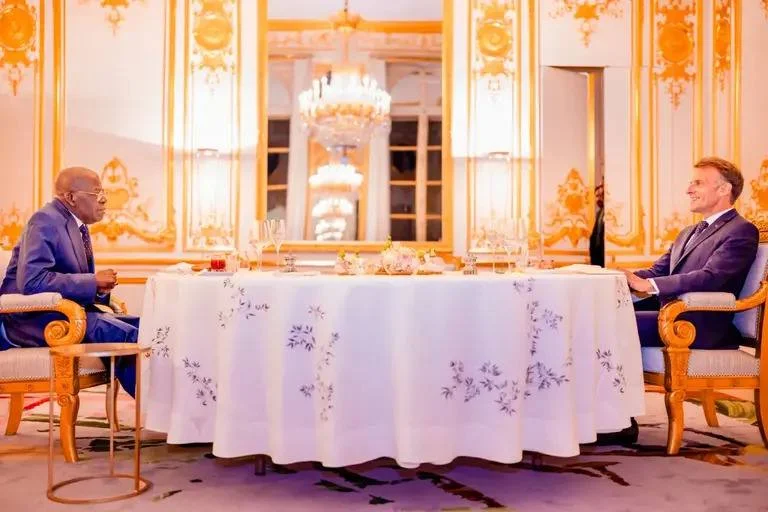
President Bola Ahmed Tinubu has held a private dinner with French President Emmanuel Macron at the Élysée Palace in Paris, with both leaders reaffirming the longstanding relationship between Nigeria and France and their commitment to strengthening bilateral cooperation.
The meeting took place on Thursday, September 17, 2026, during Tinubu’s ongoing three-week annual leave in Europe.
The Presidency disclosed the engagement on Friday, saying Macron received Tinubu at the Élysée Palace for the private dinner as the two countries continued efforts to deepen their diplomatic and economic relationship.
Special Adviser to the President on Information and Strategy, Bayo Onanuga, said the engagement reflected the enduring ties between Nigeria and France and the shared commitment of both countries to expanding cooperation.
Tinubu also confirmed the meeting in a message shared on his official social media platform, describing the dinner with Macron as a pleasure.
The Nigerian President said his conversation with the French leader reaffirmed the strong friendship between Nigeria and France, as well as their determination to deepen cooperation and build a mutually beneficial partnership.
Photographs released from the meeting showed Tinubu and Macron at the French presidential palace, while another image featured Tinubu alongside Macron and France’s First Lady, Brigitte Macron.
The Presidency did not disclose the specific issues discussed during the private dinner or announce any new agreement arising directly from the meeting.
READ ALSO:
- Federal Workers Urge Finance Ministry to Pay Delayed Allowances, Promotion Arrears
- Nigeria Wins $3.38bn Mambilla Arbitration Battle As ICC Rejects Sunrise Claims
- 2027: Tinubu May Mediate Wike-APC Governors Rift In France
The engagement nevertheless comes against the backdrop of expanding Nigeria-France relations, with both countries maintaining cooperation in areas including trade, investment, energy, security, education, infrastructure, innovation, culture and the creative economy.
The latest meeting also adds to a series of high-level engagements between Tinubu and Macron since the Nigerian President assumed office in 2023.
In September 2025, Tinubu met Macron at the Élysée Palace for a private working lunch. Following that engagement, Tinubu said the discussions had covered key areas of cooperation and reflected the desire of both countries to deepen their partnership.
The relationship received another major boost during Tinubu’s state visit to France in November 2024, when the two countries expanded discussions around economic cooperation, investment, energy transition, defence, education, culture and innovation.
The 2024 visit was particularly significant because it was described by the French Presidency as the first state visit by a Nigerian president to France since 2000.
During the visit, Tinubu and Macron also witnessed efforts to strengthen private-sector links between the two countries, including engagements involving the Franco-Nigerian Business Council and representatives of businesses and economic institutions.
The two governments have continued to pursue stronger economic relations, particularly around French investment in Nigeria and opportunities for Nigerian businesses to access the French and wider European markets.
Security cooperation has also remained part of the broader Nigeria-France relationship, with France maintaining engagement with Nigeria on regional security and counter-terrorism issues.
The latest meeting, however, was not accompanied by a detailed communiqué setting out specific decisions or agreements.
Tinubu’s meeting with Macron came shortly after the Nigerian President arrived in France for the second phase of his European vacation.
He had earlier spent part of his annual leave in London before travelling to Paris. The Presidency had described the three-week absence as an annual leave and working vacation, with Tinubu expected to return to Nigeria after completing the trip.
The private dinner therefore provided another opportunity for the Nigerian and French leaders to maintain direct contact at the highest level, while publicly reaffirming the importance of the Nigeria-France partnership.
The meeting also underscores the continuing diplomatic engagement between Abuja and Paris as both countries seek to expand cooperation across economic, political, security and cultural areas.
For now, details of any specific outcomes from the private dinner remain undisclosed, with the Presidency’s public account centred on the friendship between the two countries and their shared commitment to stronger bilateral relations.
Tinubu, Macron Hold Private Dinner in Paris, Reaffirm Nigeria-France Ties
News
FG Plans 2027 Electricity Subsidy Phase-Out, Targets Power Sector Debt
FG Plans 2027 Electricity Subsidy Phase-Out, Targets Power Sector Debt
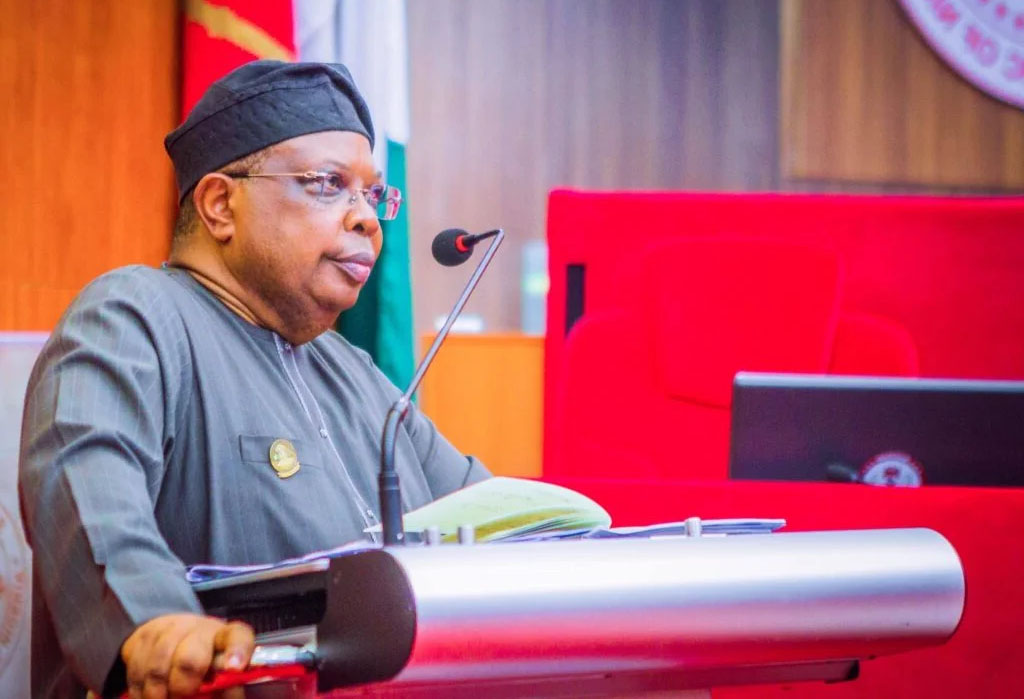
The Federal Government plans to begin phasing out electricity subsidies from 2027 as part of a wider effort to restore financial stability to Nigeria’s power sector, improve electricity supply and prevent the accumulation of fresh liabilities.
Minister of Power Joseph Tegbe disclosed the plan while outlining the government’s reform agenda, saying the administration of President Bola Ahmed Tinubu was working to clear legacy obligations in the electricity market and establish a more sustainable funding structure.
Tegbe said the planned withdrawal of the subsidy should not be interpreted as an immediate increase in electricity tariffs.
The minister has repeatedly stated that there is currently no government policy to increase electricity tariffs beyond their existing levels, stressing that the immediate priority is to improve service, expand access and ensure consumers pay for electricity actually supplied to them.
He also said the government was developing measures to protect vulnerable electricity consumers as the reform progresses.
The planned subsidy phase-out comes against the background of a major financial crisis in the Nigerian Electricity Supply Industry (NESI). The government has had to cover part of the difference between the cost of supplying electricity and the amount recovered through tariffs, while unpaid obligations have accumulated across the electricity value chain.
Recent figures cited by industry reports indicate that the Federal Government covered about ₦358.32 billion of electricity generation costs in the first quarter of 2026 alone.
Between April 2025 and April 2026, distribution companies reportedly issued electricity invoices worth about ₦3.16 trillion, with the government expected to cover about ₦1.86 trillion as subsidy for customers whose tariffs remained below cost-reflective levels.
The burden has added to the financial pressures facing generation companies, gas suppliers and other participants in the electricity market, limiting their ability to maintain equipment, settle obligations and invest in additional capacity.
The government has therefore made power-sector debt reduction a central part of its reform programme.
President Tinubu approved a plan to settle about ₦3.3 trillion in verified legacy electricity-sector debts accumulated between February 2015 and March 2025.
READ ALSO:
- Nigeria Wins $3.38bn Mambilla Arbitration Battle As ICC Rejects Sunrise Claims
- 2027: Tinubu May Mediate Wike-APC Governors Rift In France
- 2027: Sowore Says He’d Rather Die Than Travel Abroad For Medical Treatment
To support the programme, the Federal Government established a ₦4 trillion Power Sector Multi-Instrument Issuance Programme.
The government has so far raised hundreds of billions of naira through the initiative. The second series, valued at approximately ₦728.9 billion, was completed in September, bringing total funds raised under the programme to more than ₦1.1 trillion, according to government officials.
The second issuance comprised about ₦402 billion in cash bonds and ₦326.98 billion in non-cash bonds allocated to participating generation companies. Eleven GenCos took part in the second series, compared with eight in the first.
The debt settlement is intended to restore liquidity to the electricity market and improve the financial position of generation companies, which in turn should help them meet obligations to gas suppliers and invest in maintaining and expanding their plants.
The Federal Government has said resolving the historical debt problem is necessary if the electricity market is to become commercially sustainable and attract new private investment.
The subsidy reform is being pursued alongside measures aimed at improving the physical infrastructure needed to deliver electricity.
The Federal Ministry of Power has identified weaknesses in the national transmission network as one of the major constraints to reliable electricity supply and has established a Technical Working Committee on Grid Stabilisation.
The committee is expected to work with the Transmission Company of Nigeria and the Nigerian Independent System Operator to address transmission bottlenecks, ageing infrastructure and recurring system collapses.
The government’s plans include strengthening critical transmission corridors, expanding grid redundancy and modernising control and monitoring systems.
Tegbe has also outlined plans to improve metering, tackle electricity theft and reduce technical and commercial losses across the power value chain.
The government has linked the reforms to its wider objective of ensuring that consumers are billed more accurately and that electricity companies can recover the revenue required to maintain their operations.
The minister has also reported improvements in generation and electricity availability in some areas, but stressed that generation alone cannot resolve Nigeria’s power problems.
For electricity to reach consumers consistently, power must be generated, transmitted, distributed and properly paid for. Weaknesses in any part of that chain can undermine improvements elsewhere.
The government is therefore pursuing reforms across generation, transmission, distribution and metering, rather than relying solely on additional generation capacity.
The planned 2027 electricity subsidy phase-out will be a major test of those reforms. Government support has helped keep tariffs below the cost of supplying electricity for some categories of consumers, but the resulting financial burden has contributed to recurring liabilities in the sector.
The challenge for the government will be to reduce that burden without worsening the difficulties faced by households and businesses, particularly low-income consumers.
Tegbe has said vulnerable Nigerians will be protected and that the subsidy transition will be accompanied by efforts to improve electricity services.
For now, the Federal Government is combining the planned subsidy reform with debt settlement, grid investment, metering and measures to improve the commercial operation of the electricity market.
The success of the policy will ultimately depend on whether the government can translate those measures into more reliable electricity, improved service delivery and a financially sustainable power sector while limiting the impact of the transition on vulnerable consumers.
FG Plans 2027 Electricity Subsidy Phase-Out, Targets Power Sector Debt
-

 International3 days ago
Islamic Council Condemns Attempted Attack on Holy City of Mecca
-
 News3 days ago
Keep Politics Out of My Office — Ogbomoso Grand Chief Imam Warns Politicians, Bloggers
-
 metro2 days ago
Niger Mosque Abductions: Terrorists Execute 30 of 500 Captive Muslim Worshippers
-
 Business2 days ago
Fuel Prices Climb to ₦1,500 per Litre Across Nigeria, Sparking Calls for Urgent Action
-

 News3 days ago
Blue Line Rail, Hospitals Get Boost as Lagos Approves ₦200bn Bond and Budget Reordering
-

 Entertainment3 days ago
BREAKING: Olu Jacobs Dies at 84, Atiku Mourns Cultural Icon
-
 News2 days ago
OAU Investigates Death of Final-Year Student as Police Begin Probe
-
 News20 hours ago
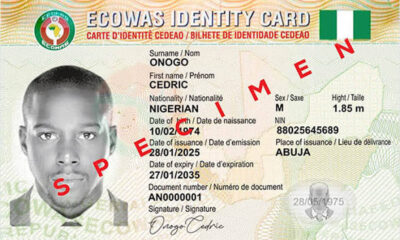
ECOWAS Biometric Card Expands as Seven Countries Begin Rollout