
News
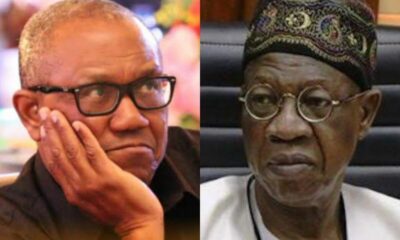
Lai Mohammed insists no proof protesters were killed at Lekki tollgate
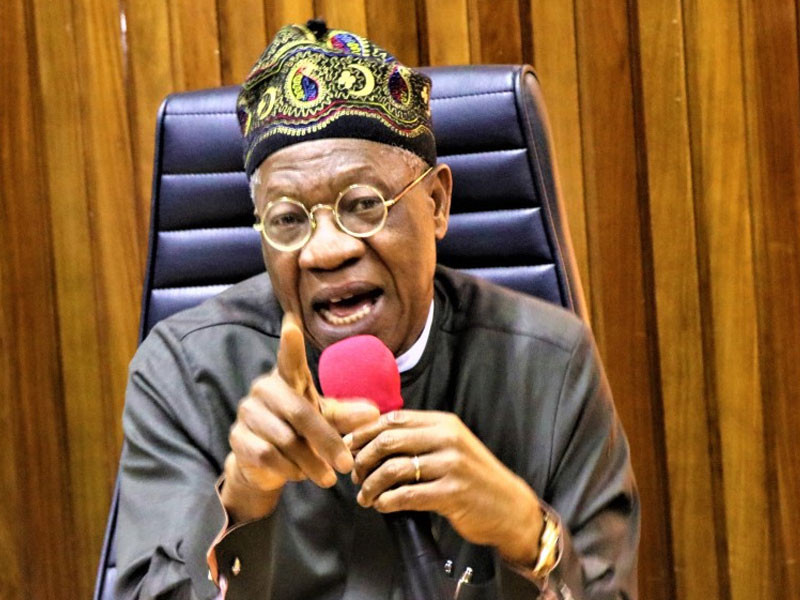
Minister of Information and Culture, Lai Mohammed, has said there is no proof that any protester was killed at the Lekki tollgate in Lagos in October 2020 during the #EndSARS protest.
Some soldiers on October 20, 2020 were said to have opened fire on protesters in an attempt to disperse them allegedly leading to the death of many.
Mohammed, who addressed a press conference in Abuja on Wednesday, described the 2020 event at the tollgate as a “phantom massacre”.
“Today marks the first anniversary of the phantom massacre at Lekki tollgate in Lagos, which was the culmination of an otherwise peaceful protest that was later hijacked by hoodlums,” the minister said.
The minister also said, “At earlier press conferences, I had called the reported massacre at the tollgate the first massacre in the world without blood or bodies.
“One year later, and despite ample opportunities for the families of those allegedly killed and those alleging a massacre to present evidence, there has been none: No bodies, no families, no convincing evidence, nothing. Where are the families of those who were reportedly killed at the toll gate? Did they show up at the Judicial Panel of Inquiry? If not, why?”







News
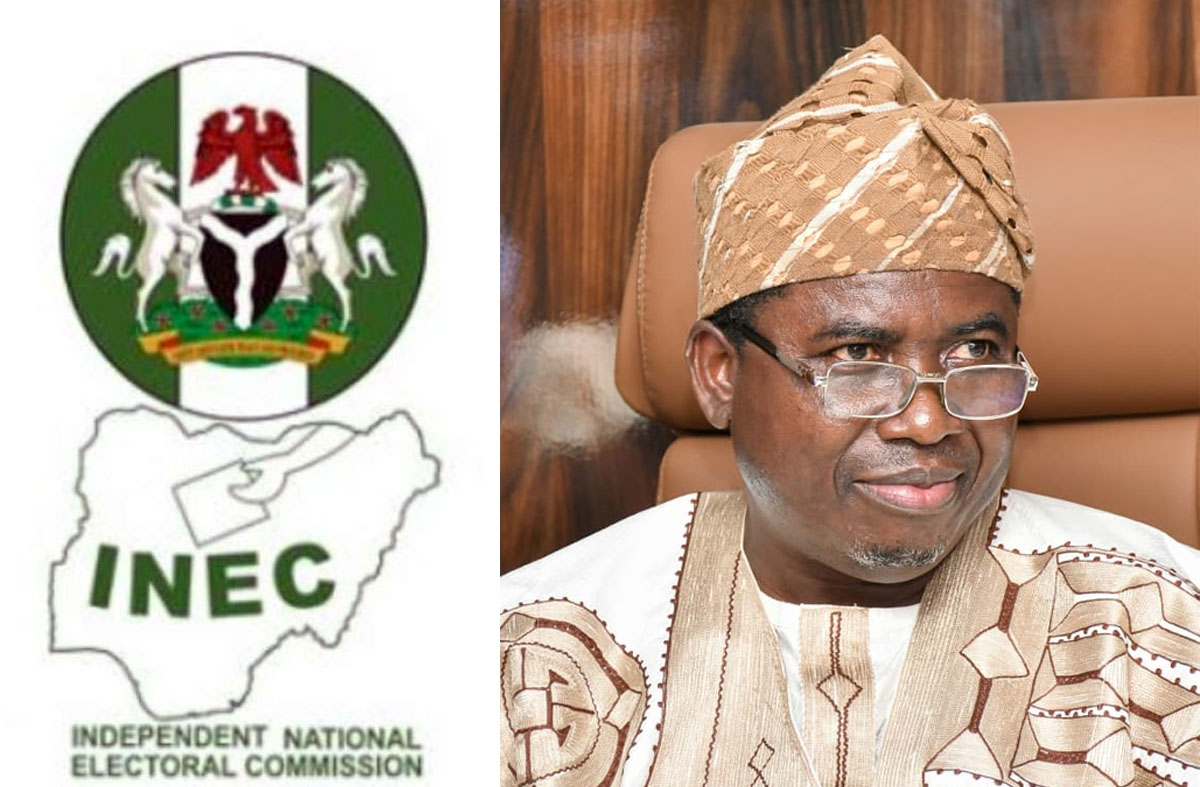
INEC Chairman Under Pressure Over Alleged Pro-Tinubu X Account Link
INEC Chairman Under Pressure Over Alleged Pro-Tinubu X Account Link
Pressure is mounting on the Chairman of the Independent National Electoral Commission (INEC), Prof. Joash Amupitan, following allegations linking him to a controversial social media account on X (formerly Twitter) accused of posting partisan content during the 2023 general elections.
The development has triggered renewed calls for resignation from opposition figures and civic groups, who argue that the controversy raises concerns about the neutrality of INEC, especially ahead of future elections.
The allegations gained traction following a report by Daily Trust, which examined an X account allegedly connected to the INEC chairman and its online activity during the 2023 electoral cycle.
According to the report, the account reportedly made posts interpreted as sympathetic to the All Progressives Congress (APC) and its presidential candidate, Bola Ahmed Tinubu, raising questions about possible political bias.
Some of the resurfaced posts include a March 17, 2023, comment describing supporters of Labour Party candidate Peter Obi as “evil in the 24th century,” as well as another post responding to APC National Youth Leader Dayo Israel with the phrase “Victory is sure.” A later post on April 25, 2023, reportedly used the word “Asiwaju” in reaction to Tinubu’s airport reception.
READ ALSO:
- 2027: Tinubu Knows Opposition Playbook, Always Ahead — Festus Keyamo
- Official, Black Market Rates Diverge as Naira Starts Week on Stable Note
- Kwankwaso Reveals Details of Kwankwasiyya’s ADC Power-Sharing Formula
The account is said to be linked to user ID 1567086242164101120, which investigators claim was created on September 6, 2022, and initially operated under the handle @joashamupitan before undergoing changes in display name and status in 2026.
Reports further indicate that the account was later renamed @Sundayvibe00, locked, and labeled a “parody account,” while a separate account with a similar handle later emerged—raising concerns about possible impersonation or identity duplication on the platform.
Digital analysts note that while usernames on X can be changed, user IDs remain permanent, allowing historical activity tracking. However, they caution that this does not automatically constitute proof of ownership or direct control.
Investigations also explored claims that the account may have been linked to a phone number allegedly associated with two-factor authentication tied to the INEC chairman. However, no publicly available forensic evidence has confirmed this link.
Reacting to the allegations, Prof. Amupitan, through his media aide, denied any connection to the account, insisting that he does not operate any social media account on X and has never engaged in partisan political commentary.
INEC also dismissed the claims, describing the account as fake and cautioning against misinformation capable of undermining public trust in the electoral process.
Despite these denials, the controversy has continued to generate public debate, with opposition parties—including the African Democratic Congress (ADC)—and civil society organisations calling for a transparent investigation and, in some cases, resignation.
Fact-check findings cited in reports suggest that while there is historical linkage between the account and the handle @joashamupitan, the absence of conclusive forensic proof makes the claims unverified. The report ultimately rated the allegation as “mostly true,” further fueling political tension.
Observers say the controversy highlights growing concerns over electoral integrity in Nigeria, the influence of digital footprints on public office holders, and rising scrutiny of the independence of electoral institutions ahead of future elections.
INEC Chairman Under Pressure Over Alleged Pro-Tinubu X Account Link
News
FG Boosts Power Generation to 4,300MW in Two Weeks — Adelabu

FG Boosts Power Generation to 4,300MW in Two Weeks — Adelabu
The Federal Government has said it is beginning to deliver on its promise to improve electricity supply, with power generation rising within a two-week period following recent disruptions in the sector.
Minister of Power, Adebayo Adelabu, had earlier assured Nigerians during a media parley in Abuja that urgent steps would be taken to address the drop in generation caused by gas shortages affecting thermal power plants.
In a statement issued by his Special Adviser on Strategic Communications and Media Relations, Bolaji Tunji, the government said electricity generation improved between March 28 and April 10, 2026, reflecting what it described as a gradual recovery in the sector.
According to the statement, generation increased from about 3,951 megawatts (MW) on March 28 to over 4,300MW by April 10, signalling a steady upward trend in output.
The improvement, Tunji noted, was largely driven by increased gas supply to power plants, which rose from approximately 605 million standard cubic feet per day (mmscfd) to over 704 mmscfd within the same period.
He explained that the gains align with Adelabu’s earlier pledge at the Power Sector Working Group meeting, where he assured stakeholders that electricity supply would improve within two weeks.
READ ALSO:
- Stop Blaming Tinubu, Focus on States, LGs — Lagos Lawmaker
- Zulum Defends NAF Airstrike, Says Jilli Market Closed Five Years Ago
- Dabiri-Erewa Warns Obidients Could Hurt Peter Obi’s 2027 Ambition
Further data showed that mechanical availability of power plants remained stable, peaking at over 7,796MW in early April, while operational availability rose from about 4,208MW to more than 4,694MW—an indication of improved efficiency in converting available gas into electricity.
“Despite minor fluctuations recorded on some days, the overall trajectory points to a gradual recovery in the power sector, driven largely by improved gas supply and better coordination among critical stakeholders,” the statement said.
The minister’s aide emphasised that the strong link between gas supply and electricity generation highlights the need for sustained reforms in Nigeria’s gas-to-power value chain, given the country’s heavy dependence on thermal generation.
To consolidate the gains, Adelabu recently inaugurated a Gas-to-Power Monitoring Committee tasked with improving coordination between gas producers and power generation companies, ensuring real-time monitoring, and addressing bottlenecks in gas delivery.
“The committee is expected to enhance synergy across the value chain and ultimately guarantee a more stable and reliable electricity supply,” Tunji said.
The Federal Government’s intervention comes amid persistent challenges in the power sector, including transmission constraints, ageing infrastructure, and liquidity issues in the electricity market, which have continued to affect the translation of generated power into stable supply for consumers.
Industry data indicates that while generation has improved modestly, Nigeria still struggles to consistently deliver more than 4,000MW to a population of over 200 million, underscoring the scale of the country’s electricity deficit.
Experts have also pointed out that improvements in generation must be matched by upgrades in transmission capacity—currently managed by the Transmission Company of Nigeria—and better distribution efficiency by electricity distribution companies (DisCos) to ensure consumers feel the impact.
Adelabu, however, maintained that the government remains committed to sustaining and improving the gains recorded so far.
“We are not there yet, but we will continue to ensure measurable improvements,” he said, adding that ongoing reforms would gradually stabilise Nigeria’s electricity supply industry.
FG Boosts Power Generation to 4,300MW in Two Weeks — Adelabu
News
World Bank Deletes Nigeria Development Update Report Days After Release
World Bank Deletes Nigeria Development Update Report Days After Release
The World Bank has removed its latest Nigeria Development Update (NDU) report from its official website, just three days after its publication, raising concerns over the reasons behind the sudden action.
The report, titled “Nigeria’s Tomorrow Must Start Today: The Case for Early Childhood Development,” was released on April 7, 2026, but the document link is no longer accessible, returning a “page not found” error when users attempt to download it.
Despite the removal, the accompanying press statement remains available, outlining key findings on Nigeria’s economic performance and policy outlook.
In the now-withdrawn report, the World Bank said Nigeria’s economy recorded 4 percent growth in 2025, with inflation dropping significantly to 15.1 percent in February 2026 from 26.3 percent recorded in the same period a year earlier. The improvement was attributed to tighter monetary policies and better food supply conditions.
The report also highlighted that Nigeria’s macroeconomic environment has strengthened following recent stabilisation reforms, noting improvements in key indicators and steady expansion across major sectors of the economy.
READ ALSO:
- US Revokes Green Cards of Iranian Family
- 16-Year-Old Alleges Repeated Rape by Pastor During ‘Deliverance’ in Anambra
- Zulum Donates N50m to Family of Slain Army Officer in Borno Attack
Early data for 2026, according to the report, suggested that growth momentum had been sustained, although global tensions posed a mild drag on economic activity.
A major focus of the publication was early childhood development, which the World Bank described as critical to Nigeria’s long-term growth. It stressed that stronger investment in human capital is essential for translating macroeconomic gains into job creation, poverty reduction, and improved living standards.
The report painted a worrying picture of child welfare in the country, revealing that more than 110 out of every 1,000 children die before the age of five, while many others fail to meet basic developmental milestones due to poor nutrition, limited access to healthcare, and inadequate early education.
It warned that without urgent intervention, Nigeria risks missing out on the demographic dividend expected from its young population.
In addition, the report reportedly addressed ongoing structural reforms, including exchange rate unification, fiscal adjustments, and subsidy removals, noting that while these measures have helped stabilise the economy, their full benefits will depend on sustained implementation and targeted social support for vulnerable households.
However, parts of the report—particularly policy recommendations around the downstream petroleum sector—have drawn attention. The World Bank was said to have advised that Nigeria may need to continue importing petrol (PMS) in the short term to ensure supply stability while transitioning to a fully liberalised and competitive market.
The recommendation comes amid ongoing reforms in Nigeria’s oil and gas sector and has been viewed by some analysts as sensitive, given the country’s push for domestic refining capacity.
In a subsequent clarification following reactions, the World Bank emphasised that its recommendations should be seen within the broader context of energy security, market stability, and global supply uncertainties, rather than as a fixed policy directive.
The NDU is a bi-annual flagship report that evaluates Nigeria’s economic and social developments and provides policy guidance for sustainable growth.
As of the time of filing this report, the World Bank has not issued an official explanation for the removal of the April 2026 edition, fuelling speculation that the document may be undergoing revisions or internal review.
Economists say the development highlights the sensitivity of reform-related recommendations in Nigeria’s current economic climate, particularly those touching on fuel policy and social welfare, as the country navigates a delicate recovery path.
World Bank Deletes Nigeria Development Update Report Days After Release

-
 metro2 days ago
JUST IN: FG Publishes List of 48 Individuals, Groups Linked to Terrorism Financing in Nigeria
-

 metro12 hours ago
BREAKING: Troops Arrest 15-Year-Old Linked to Killing of Gen Braimah in Borno
-

 metro2 days ago
42-Year-Old Married Woman Declared Missing Found in Hotel with Man
-
 Politics2 days ago
Did Faleke Just Reveal Lagos’ Next Governor? Party Moves Begin
-

 Education3 days ago
Germany Opens Fully Funded Scholarships for Nigerians, Africans
-

 Politics2 days ago
2027: Oyo APC Governorship Aspirant Saheed Oladele Resigns From Party
-
 metro2 days ago
ADC Threatens Civil Disobedience To Force INEC Chairman To Resign
-

 metro13 hours ago
Fayose Warns Makinde May Query Olubadan Over Absence at Ibadan Coronation Event