
News
Look Out For Ramadan Moon Friday, Sultan Tells Muslims

The Nigerian Supreme Council for Islamic Affairs (NSCIA), under the leadership of its President-General and Sultan of Sokoto, Alhaji Muhammad Sa’ad Abubakar III, has urged Muslims across the country to look out for this year’s Ramadan moon after sunset on Friday.
The Director of Administration of the council, Zubairu Haruna Usman-Ugwu, said this in a statement in Abuja.
“Consequent upon the advice of the National Moon Sighting Committee (NMSC), the President-General enjoins the Nigerian Muslim Ummah to search for the crescent of Ramadan 1443 AH immediately after sunset on Friday, April 1st, which is equivalent to 29th Sha’aban 1443 AH.
“If the crescent is sighted by Muslims of impeccable character on the said evening, then His Eminence would declare Saturday, 2nd April as the first day of Ramadan 1443 AH.
“If, however, the crescent is not sighted that day, then, Sunday, 3rd April, automatically becomes the first of Ramadan, 1443 AH,” the statement read.
The council prays that Allah spares the lives of every Muslim to participate in the ibaadah (worship) exercise and to maximize the benefits therein.
READ ALSO:
- Tens of Imams, Islamic scholars, youth leaders visit Osinbajo
- Teacher drove me to hotel, raped, threatened to kill me, says 15-year-old student
- 2023: Don’t Vote For Atiku, Saraki, Peter Obi, Obasanjo Tells Nigerians
It also urged Muslims to contact the established and traditional Islamic leaders in each locality, and also some members of the National Moon Sighting Committee (NMSC) to report a credible and positive sighting of the Crescent of Ramadan 1443 AH.
The council added that one of the special devotional activities in the month of Ramadan is Tafsir, which is meant to enlighten humanity, particularly Muslims, on the treasures and blessings of the Quranic messages.
The council enjoins all Muslims to be more prayerful unto Allah, especially in this month of (Ramadan), to help the country, the world in general and leaders in particular to overcome the current challenges confronting them.
“Furthermore, the council urges Muslims and non-Muslims alike to be vigilant and take extra security and health measures to protect ourselves, loved ones and neighbours.”
“Fasting brothers and sisters should ensure they have enough rest and consume sufficient fluid after each day’s fast,” the statement read.
He listed established and traditional Islamic leaders in each locality, members of the NMSC who can be contacted for information and clarification to include Sheikh Dahir Bauchi (08036121311), Sheikh Karibullah Kabara (08035537382), Mallam Simwal Usman Jibrin (08033140010), Sheikh Salihu Yaaqub (07032558231), Mal. Jafar Abubakar (08020878075), Alhaji Abdullahi Umar (08037020607), Prof. J.M. Kaura (08067050641), Dr. Bashir Aliyu Umar (08036509363), and Sheikh Abdur Rasheed Mayaleke (08035050804).
Others are Dr Ganiy I. Agbaje (08028327463), Gafar M. Kuforiji (08033545208), Prof. Usman El-Nafaty, (08062870892), Mallam Ibrahim Zubairu Salihu (08038522693), Prof. Z. I. Oboh Oseni (08033574431), Nurudeen Asunogie (08033533012), Sheikh Bala Lau (08037008805), Sheikh Sani Yahaya Jingir (08065687545), Sheikh AbdurRahman Ahmad (08023141752), Sheikh Sulaiman Gumi (08033139153), Alhaji Yusuf Nwoha (08030966956), Prof. Kamil K. Oloso (08023098661), and Malam Yahaya Boyi (08030413634), among others.
DAILY TRUST







News
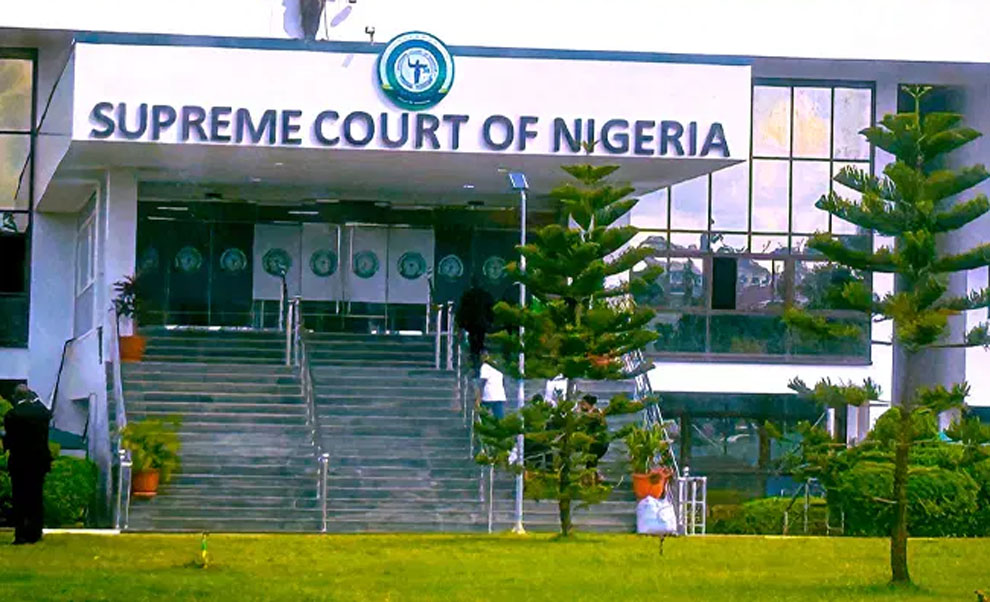
MPAC Hails Supreme Court Verdict Affirming Muslim Students’ Right to Worship at RSU
MPAC Hails Supreme Court Verdict Affirming Muslim Students’ Right to Worship at RSU
Lagos, February 12, 2026 — The Muslim Public Affairs Centre (MPAC), Nigeria, has welcomed the Supreme Court judgment affirming the constitutional right of Muslim students at Rivers State University (RSU) to worship freely on campus, describing the ruling as a landmark victory for justice and religious freedom.
In a statement issued on Wednesday, MPAC said the apex court’s decision, which dismissed RSU’s appeal, goes beyond a legal triumph for the affected students and represents “a victory for the Constitution, conscience, and justice.”
“For over a decade, Muslim students at Rivers State University were denied a right that should never have been contested — the right to pray,” the organisation said. “Rather than resort to disorder, the students chose the path of law, patience, and principled resistance.”
MPAC commended the students for pursuing redress through constitutional means and praised the judiciary at all levels for upholding fundamental rights guaranteed under Nigerian law. The group said the judgment sends a clear message that no institution or authority can override citizens’ constitutional freedoms.
READ ALSO:
- El-Rufai to Appear Before EFCC After Alleged Airport Arrest Attempt
- Four Sentenced to Death for Murder of Ahoada DPO in Rivers
- Nigerian Army Rescues Eight Kidnapped Wedding Guests in Kano
The organisation called on RSU authorities to comply fully and immediately with the Supreme Court ruling. It warned that any delay or refusal to implement the judgment would amount to contempt for the rule of law and an affront to constitutional order.
MPAC further urged the university to end what it described as “persecution, exclusion, and hostility” toward Muslim students, attributing such actions to institutional bias and Islamophobic attitudes.
“A university must be a sanctuary of knowledge, not a theatre of discrimination,” the statement read.
Beyond Rivers State, MPAC said the ruling carries wider implications for Muslim minority communities in the South-East and South-South regions, where it claimed some students and workers continue to face restrictions on their religious practices. The group expressed hope that the judgment would usher in a new era of respect for religious rights across the country.
“Religious freedom is not a concession or a favour. It is a constitutional right,” MPAC stated, adding that Nigeria cannot build unity or democracy while permitting discrimination based on faith.
The statement was signed by Disu Kamor, Executive Chairman of MPAC, who reaffirmed the organisation’s commitment to defending constitutional values and protecting the dignity of all Nigerians regardless of religion.
MPAC Hails Supreme Court Verdict Affirming Muslim Students’ Right to Worship at RSU
News
Nigerian Man Appeals for Repatriation After Alleged Forced Enlistment in Russian Military
Nigerian Man Appeals for Repatriation After Alleged Forced Enlistment in Russian Military
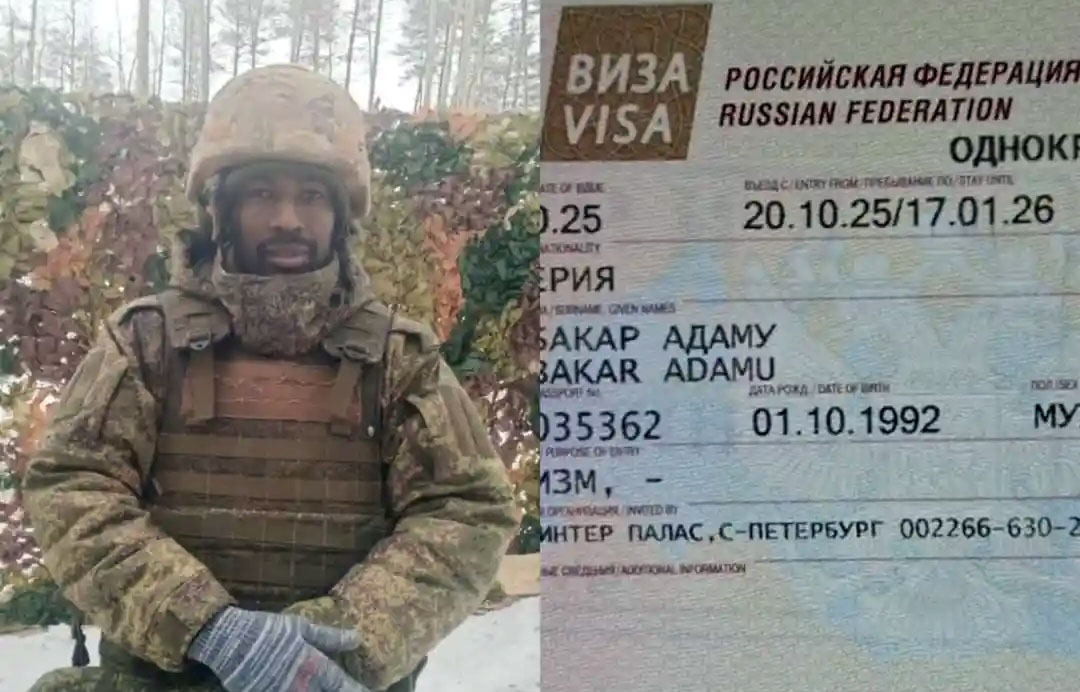
A Nigerian citizen, Abubakar Adamu, has appealed to the Federal Government of Nigeria for urgent repatriation after alleging that he was deceived into joining the Russian military following a trip to Moscow for what he believed was a civilian job opportunity.
According to his legal representatives, Adamu travelled to Russia on a tourist visa issued by the Russian Embassy in Abuja, after being promised employment as a civilian security guard. However, upon arrival in Moscow, his international passport and travel documents were allegedly confiscated, and he was reportedly compelled to sign enlistment documents written entirely in Russian without the assistance of an interpreter.
His lawyers stated that he later discovered the documents had effectively enrolled him into the Russian Armed Forces, despite having no intention of joining the military. In a formal petition submitted to Nigerian authorities, the legal team invoked the legal doctrine of Non Est Factum, arguing that Adamu did not understand the nature or implications of the contract he signed.
They further alleged fundamental misrepresentation, claiming he was misled into military service under false pretences. The petition also raised concerns about possible violations of international law, including forced conscription, coercion, and deprivation of personal liberty.
READ ALSO:
- El-Rufai to Appear Before EFCC After Alleged Airport Arrest Attempt
- Four Sentenced to Death for Murder of Ahoada DPO in Rivers
- Nigerian Army Rescues Eight Kidnapped Wedding Guests in Kano
Adamu is reportedly being held at a Russian military camp and has refused deployment to combat zones in Ukraine, where Russia has been engaged in ongoing military operations since 2022. His lawyers have demanded that Russian authorities immediately halt any deployment process, return his seized documents, and facilitate his safe return to Nigeria.
The case comes amid growing international reports that African nationals are being recruited into the Russian military under questionable circumstances. A previous investigative report by CNN revealed that citizens from Nigeria, Ghana, Kenya, Uganda, South Africa, and other African countries were allegedly lured with promises of high salaries, signing bonuses, and pathways to Russian citizenship.
According to the investigation, many recruits were reportedly given minimal training and deployed to combat zones in Ukraine, with allegations of coercion, racial abuse, and inhumane treatment emerging from multiple testimonies.
Last year, Ukraine’s Foreign Minister, Andrii Sybiha, disclosed that more than 1,400 citizens from 36 African countries were fighting for Russia in Ukraine, with some reportedly captured as prisoners of war. Similarly, Kenya’s Ministry of Foreign and Diaspora Affairs confirmed that over 200 Kenyan nationals might have been drawn into the conflict through deceptive online recruitment schemes.
The precise number of Nigerians involved or killed in the conflict remains unclear, and Russian authorities have not officially confirmed casualties among foreign recruits.
Responding to earlier allegations, Russian Ambassador to Nigeria, Andrey Podyelyshev, denied that the recruitment of Nigerians into the war effort was state-sponsored. He stated at a press conference in Abuja that there is no official government programme to recruit Nigerians to fight in Ukraine, adding that any illegal actors involved would be operating independently of the Russian state.
As of the time of filing this report, Nigeria’s Ministry of Foreign Affairs has yet to issue a formal statement on Adamu’s case. However, civil society organisations and family members are urging swift diplomatic engagement to secure the release and repatriation of Nigerians allegedly trapped in the Russia–Ukraine conflict.
Adamu’s case has reignited concerns about the vulnerability of African job seekers to international recruitment scams, particularly in regions affected by armed conflict.
Nigerian Man Appeals for Repatriation After Alleged Forced Enlistment in Russian Military
News
US Congress Seeks Cooperation With Nigeria to Stop Chinese Mining Funding Militias
US Congress Seeks Cooperation With Nigeria to Stop Chinese Mining Funding Militias
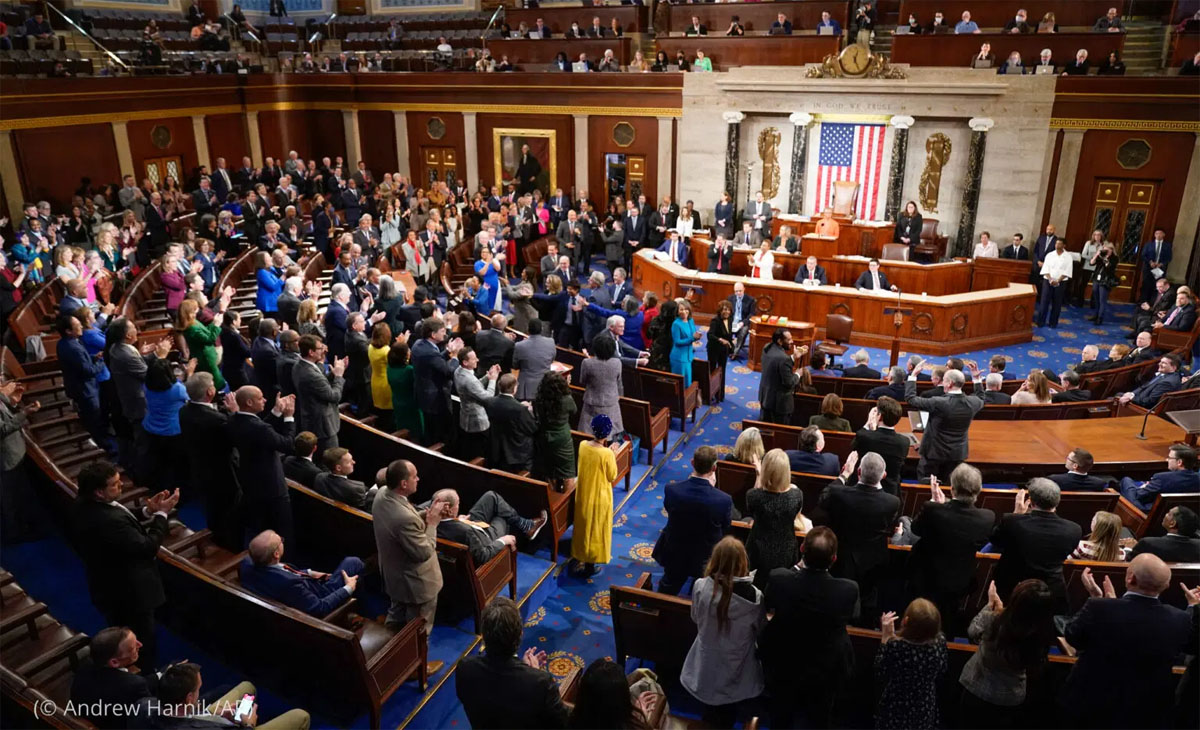
A new United States congressional bill has proposed measures to counter the alleged illegal Chinese mining operations in Nigeria and their role in financing Fulani militias, raising concerns over security, religious freedom, and regional stability. The legislation, titled the Nigeria Religious Freedom and Accountability Act of 2026, was introduced on Tuesday, February 10, 2026, by five Republican lawmakers: Riley Moore, Chris Smith, Brian Mast, Mario Diaz-Balart, and Bill Huizenga.
The bill directs the U.S. Secretary of State to work with the Nigerian government to address what lawmakers describe as the “hostile foreign exploitation of Chinese illegal mining operations” and their alleged payments of “protection money” to Fulani militias. It further recommends providing technical support, including disarmament programs and counter-terrorism cooperation, to reduce violence from armed groups in northern and northwest Nigeria.
READ ALSO:
- IKEDC Sets Feb 20 Deadline for Customers to Submit Valid IDs or Face Disconnection
- Trump Halts Minnesota Immigration Crackdown After Fatal Shootings, Protests
- Army University Professor Dies in Boko Haram Captivity After Nearly One Year
Clauses 10 and 11 of the proposed legislation specifically call for:
- Technical assistance to the Nigerian government to reduce and eliminate militia violence, targeting groups that could be designated as Foreign Terrorist Organizations (FTOs).
- Cooperation with Nigerian authorities to counter illegal mining activities that allegedly destabilize communities by funding armed Fulani militias.
The legislation also urges collaboration with international partners such as France, Hungary, and the United Kingdom to promote religious freedom, peace, and accountability in Nigeria. The Secretary of State is tasked with evaluating whether certain Fulani-ethnic militias meet the criteria to be listed as FTOs, a designation that could trigger sanctions, visa restrictions, and asset freezes.
Lawmakers cited a 2023 report by The Times, which alleged that some Chinese nationals operating in Nigeria’s mining sector provided financial support to militant networks in states such as Zamfara, often using bribery or informal transactions to access mineral reserves. The report warned that such activities could indirectly fuel militia violence and insecurity in Nigeria’s northwest region.
The bill is part of a broader U.S. focus on religious freedom, communal violence, and national security in Nigeria. It also includes provisions for annual reporting to Congress on U.S. efforts to curb foreign involvement in funding militias and promote accountability for extremist activities.
While supporters argue that the bill strengthens U.S.–Nigeria cooperation to promote peace, security, and accountability, critics caution that allegations of militia funding by Chinese mining operators must be carefully investigated and verified to avoid misrepresentation or diplomatic tension.
US Congress Seeks Cooperation With Nigeria to Stop Chinese Mining Funding Militias

-

 metro3 days ago
Leadership Crisis at NAHCON as Chairman Abdullahi Saleh Usman Resigns
-

 News3 days ago
Oyo Muslims Reaffirm Loyalty to Sultan on Islamic Matters — Grand Chief Imam
-
 News3 days ago
US Judge Orders FBI, DEA to Release Tinubu’s Criminal Records, Faults Delays
-

 International3 days ago
US to Deport 18 More Nigerians on ‘Worst-of-the-Worst’ Criminal List (Full Names)
-
metro2 days ago
Former NAHCON Chief Explains Why He Stepped Down, Denies Conflicts
-
 Education13 hours ago
Supreme Court Affirms Muslim Students’ Right to Worship at Rivers State University
-

 Business3 days ago
Naira Posts Strong Comeback, Breaking Two‑Year High Against Dollar
-

 metro13 hours ago
IKEDC Sets Feb 20 Deadline for Customers to Submit Valid IDs or Face Disconnection