
metro
Malami Battles EFCC in Court Over ₦15.5bn Assets, Files 40-Page Defence

Malami Battles EFCC in Court Over ₦15.5bn Assets, Files 40-Page Defence
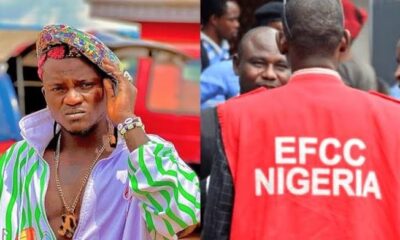
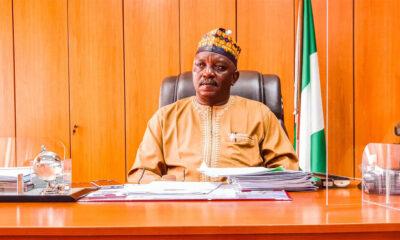
Former Attorney-General of the Federation (AGF) and Minister of Justice, Abubakar Malami (SAN), has filed a 40-page counter-affidavit before the Federal High Court in Abuja, opposing the Economic and Financial Crimes Commission’s (EFCC) move to permanently forfeit more than 50 properties allegedly linked to him, his family, and 14 companies.
The EFCC had earlier secured an interim forfeiture order on January 6, 2026, in Suit No. FHC/ABJ/CS/20/2026, granted by Justice Emeka Nwite, placing the assets under temporary control pending determination of the substantive case. The properties reportedly include houses, hotels, schools, factories, and landed assets across Abuja, Kano, and Kebbi States, which the EFCC described as “reasonably suspected to be proceeds of unlawful activities.”
Malami strongly rejected the allegation, insisting in his affidavit that there was no prima facie evidence linking the properties to any unlawful activity. He maintained that all assets were lawfully acquired, properly documented, and declared to the Code of Conduct Bureau (CCB) long before the EFCC began its investigation.
To support his defence, Malami presented a breakdown of what he described as ₦15.5 billion in lawful income between 2015 and 2023. According to him, the funds include ₦374.6 million earned as salary and allowances during his tenure as Attorney-General, ₦10.01 billion from business turnover, ₦3.52 billion in bank loans, ₦958 million received as wedding gifts, and ₦509.8 million from book launches.
He also listed several companies linked to his investments, including Rayhaan Hotels, Zeennoor Hotels, Meethaq Hotels, Rayhaan Bustan Agro Allied, Azbir Arena, and Rayhaan University. Malami further accused the EFCC of inflating asset valuations, claiming that a Maitama property valued at ₦5.95 billion by the commission was actually purchased for about ₦500 million. He also disputed the ₦56 billion valuation of Rayhaan University’s permanent site, insisting independent valuation reports supported much lower figures.
READ ALSO:
- Jet A1 Crisis: NAHCON Engages Presidency to Prevent Possible Increase in 2026 Hajj Fares
- Ogun East 2027: Gbenga Daniel Rejects APC Consensus Move, Rejoins Senate Race
- 2027: Shehu Sani Picks APC Senatorial Form, Joins Kaduna Central Race
In a more personal section of his affidavit, Malami alleged that EFCC operatives forcibly evicted his family from six Abuja properties on March 24, 2026, before any final forfeiture order was issued. He claimed his wives and children, including minors, were removed from the homes, while important documents were allegedly seized during a 25-day detention in December 2025.
He further alleged that the interim order has already affected his businesses, saying NEXIM Bank recalled a ₦1.122 billion loan linked to one of his companies, while Zenith Bank began imposing additional charges on related facilities following the court ruling.
Malami also argued that several of the disputed properties were acquired before his tenure as Attorney-General between 2006 and 2013, including assets linked to Rayhaan Hotel in Kano and the Malami Support Organisation Building. He added that some properties were tied to pre-existing legal and business arrangements, while others belonged to his late father’s estate and were held in trust for family members.
He referenced asset declaration forms submitted to the Code of Conduct Bureau in 2015, 2019, and 2023, insisting all contested properties were properly declared before the EFCC case began.
The case is also tied to an ongoing criminal matter marked FHC/CR/700/2025, in which Malami has pleaded not guilty. His legal team argues that since the allegations are still being contested in court, the EFCC’s forfeiture application is premature.
Malami’s counsel, J.B. Daudu (SAN), described the EFCC’s interim order as based on speculation rather than evidence, insisting that due process must be followed before any permanent seizure can be made.
The court has directed interested parties to show cause why the assets should not be permanently forfeited to the Federal Government. Justice Emeka Nwite is expected to fix a hearing date to determine whether the interim order will be lifted or made final.
For now, the properties remain under EFCC custody pending the court’s final decision, while both parties prepare for a major legal showdown. The EFCC has not issued any fresh public comment on Malami’s latest filing.
Malami Battles EFCC in Court Over ₦15.5bn Assets, Files 40-Page Defence








metro
Abdulsalami Opens Up on Secret Detention of MKO Abiola
Abdulsalami Opens Up on Secret Detention of MKO Abiola
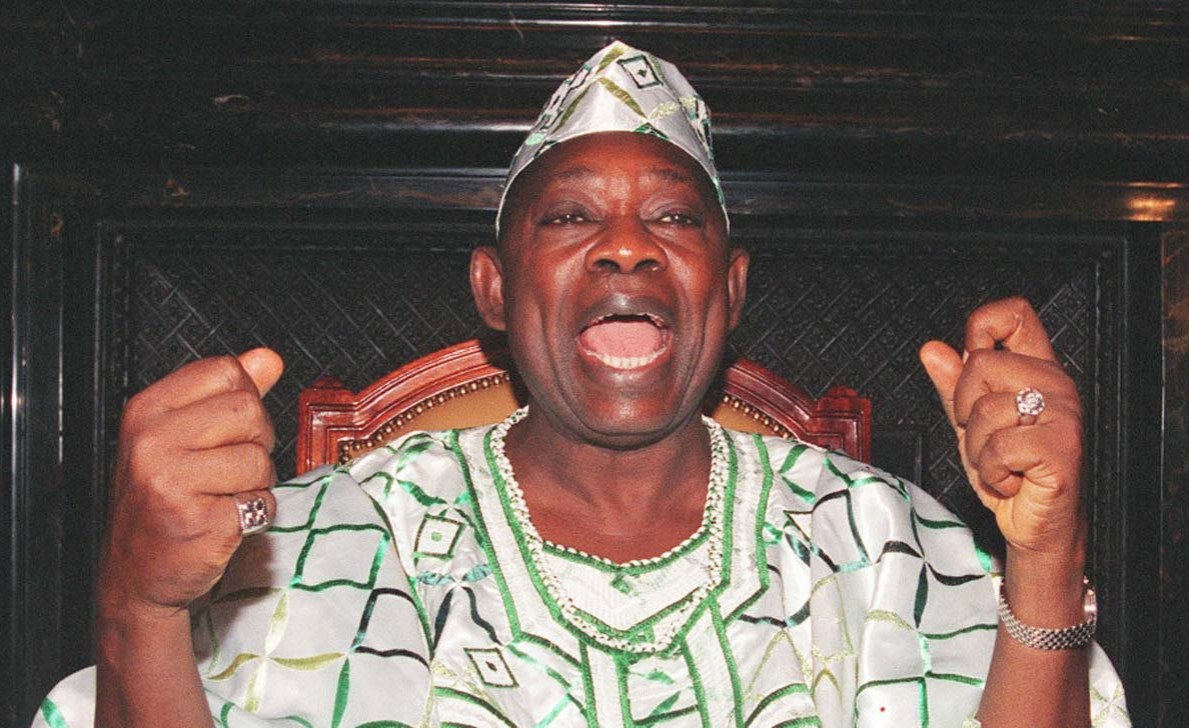
Nearly three decades after the death of Chief MKO Abiola, former military Head of State, Gen. Abdulsalami Abubakar (retd.), has revealed that neither he nor the late Chief of General Staff, Gen. Oladipo Diya, knew where the presumed winner of the June 12, 1993 presidential election was being held during the regime of late military ruler Gen. Sani Abacha.
Abdulsalami made the disclosure in his autobiography, Call of Duty: An Autobiography of Gen. Abdulsalami Alhaji Abubakar, launched in Abuja during events marking his 84th birthday.
According to the former Head of State, MKO Abiola’s detention was shrouded in secrecy, with the businessman and politician moved between different detention facilities throughout the four years he spent in custody.
“Before I became Head of State, I didn’t know where Abiola was being detained. Even General Diya, who was second-in-command to Abacha, had no idea where Abiola was being held. They kept moving him from one detention centre to another,” Abdulsalami wrote.
The revelation highlights the extent of secrecy within the Abacha administration and suggests that even senior members of the military government were excluded from critical decisions concerning Abiola’s detention.
Abiola, widely believed to have won the June 12, 1993 presidential election, was arrested in 1994 after declaring himself president following the annulment of the election by former military ruler Gen. Ibrahim Babangida. The election, regarded by many observers as Nigeria’s freest and fairest poll, triggered a prolonged political crisis that led to nationwide protests and international condemnation after its annulment.
Following Babangida’s exit from power in August 1993, an Interim National Government headed by Chief Ernest Shonekan was established. However, the administration lasted only three months before it was overthrown by Abacha. Abiola remained in detention throughout Abacha’s rule until the military leader’s sudden death on June 8, 1998.
In the memoir, Abdulsalami disclosed that he quietly worked behind the scenes to secure Abiola’s freedom despite the political risks involved. He said that shortly after Abiola’s arrest, he initiated contacts with leaders of the National Democratic Coalition (NADECO) in search of a political solution to the crisis created by the annulled election.
“At this point, I need to recount that after Abiola was arrested in 1994, I had, against the grain, made efforts to get him released at the risk of being deemed disloyal by Abacha,” he stated.
According to Abdulsalami, these efforts remained largely unknown to the public because any perceived support for Abiola could have been interpreted as opposition to the Abacha regime.
The former military leader also revealed that Abiola’s family was denied access to him for most of his detention. He noted that only Abiola’s personal physician, Dr. Ore Falomo, was permitted to see him regularly, underscoring the restrictive conditions under which the politician was held.
“His family never saw him. It was only his personal physician, Dr Ore Falomo, who had access to him,” Abdulsalami recalled.
He said one of his first actions after becoming Head of State following Abacha’s death was to ensure that Abiola’s family could finally visit him. According to him, the decision was resisted by some members of his administration who opposed changing the policy surrounding Abiola’s detention.
“When I became Head of State, I insisted that his family must be granted access to him, despite strong opposition from some members of my government,” he said.
Abdulsalami used the memoir to challenge the perception that becoming Head of State immediately gave him complete control of government and military structures. He explained that powerful interests remained embedded within the system and that he had to carefully navigate competing factions while consolidating authority.
“What many people outside government did not know was that even though I was now in power, there were still different interests in the military and in government. I was new in the office and needed to consolidate my hold on the system. I needed to be careful and calculated with my actions,” he wrote.
He further stated that despite his access to Abacha during his years in office, he was never part of the inner circle responsible for the regime’s most sensitive political and security decisions.
“Despite my access to Abacha when he was in power, I was still effectively an outsider in his government. Becoming Head of State did not mean I could dissolve the power centres or displace entrenched interests overnight,” he added.
Abdulsalami revealed that arrangements had been made for members of Abiola’s family to meet him shortly before his anticipated release. According to him, one group of relatives met Abiola on July 6, 1998, while another group was scheduled to visit him the following day.
However, the second meeting never took place.
“One group saw him on the first day, July 6, 1998. The other group was to see him the next day, July 7. However, that second meeting never took place. That was not to be,” he wrote.
Abiola died on July 7, 1998, barely a month after Abacha’s death, shocking Nigerians and ending hopes that he would eventually assume the presidency many believed he had won.
Abdulsalami has also maintained that Abiola was not poisoned, citing findings from an international autopsy involving Nigerian, American, British and Canadian pathologists, which concluded that the politician died from natural causes linked to existing health conditions.
The latest revelations provide fresh insight into the internal workings of the Abacha regime and the circumstances surrounding one of the most significant episodes in Nigeria’s democratic history.
Abdulsalami Opens Up on Secret Detention of MKO Abiola
metro
MURIC Accuses Adeleke of Evading Key Issues, Demands Apology to Muslims Ahead of 2026 Poll
MURIC Accuses Adeleke of Evading Key Issues, Demands Apology to Muslims Ahead of 2026 Poll
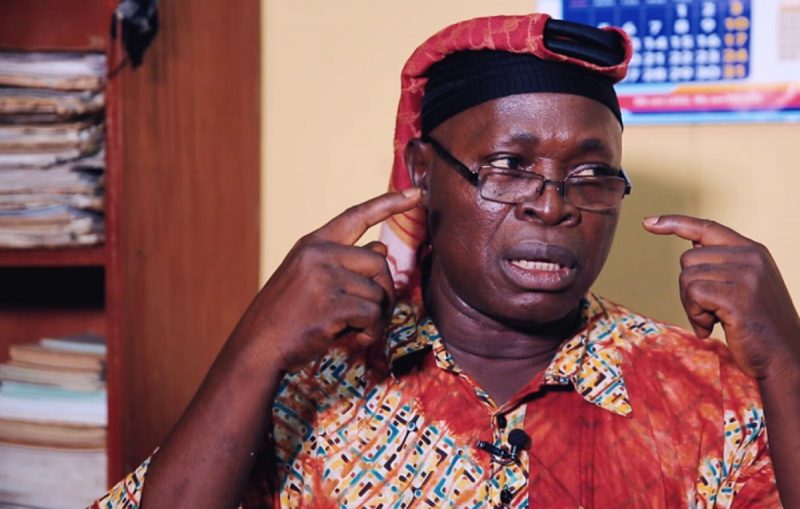
The Muslim Rights Concern (MURIC) has accused Osun State Governor, Ademola Adeleke, of avoiding critical issues raised by the Islamic advocacy group regarding alleged religious marginalization and what it described as the governor’s “double religious identity.”
In a statement issued on Monday by its Founder and Executive Director, Ishaq Akintola, the organization said the Osun State Government’s recent response to its allegations failed to address some of the most contentious concerns it had raised.
MURIC had earlier accused Governor Adeleke of sidelining Muslims in political appointments and allegedly portraying himself as belonging to two different faiths. The group also raised concerns over alleged financial impropriety within the administration.
Responding to the state government’s rebuttal, MURIC argued that the Commissioner for Information and Public Enlightenment, Kolapo Alimi, failed to provide specific figures regarding the religious composition of the governor’s cabinet.
According to the group, its allegation that the governor appointed 17 Christian commissioners compared to seven Muslim commissioners remains unanswered.
“The crux of the matter is that the government has not disclosed the exact number of Muslim and Christian commissioners. If our figures are incorrect, the administration should publish its own figures,” the statement said.
MURIC challenged Governor Adeleke to make public the full list of commissioners, board chairmen and heads of parastatals in the state to allow Nigerians assess the balance of appointments.
The organization further claimed that the state government deliberately ignored its allegation concerning the governor’s religious identity.
According to MURIC, the failure of the government to respond to the allegation amounted to an admission by silence.
The group also rejected claims that its criticism of the governor was politically motivated or linked to the opposition All Progressives Congress (APC), insisting that it has no affiliation with any political party.
“We have no connection with APC or any political party. We support qualified Muslim candidates irrespective of their political platform,” the statement added.
MURIC maintained that three major allegations were raised against the governor — alleged lopsided political appointments, double religious identity and financial impropriety — but argued that only one of them received a response from the government.
The group warned that religion remains a sensitive issue among Muslims and alleged that many adherents across the country were displeased with what it described as the governor’s handling of religious matters.
It urged Governor Adeleke to apologize to Muslims whom it claimed had been offended by his actions and statements.
MURIC concluded by declaring that the debate over the issues would remain active ahead of the 2026 Osun governorship election, insisting that the governor would continue to face public scrutiny over the allegations.
The Osun State Government had earlier dismissed MURIC’s claims as misinformation and defended the administration’s record on appointments and inclusiveness.
The controversy comes as political activities ahead of the 2026 governorship election in Osun State continue to gather momentum, with religious representation and governance emerging as key issues in public discourse.
MURIC Accuses Adeleke of Evading Key Issues, Demands Apology to Muslims Ahead of 2026 Poll
metro
Troops Neutralise 27 Terrorists, Rescue Hostages in Nationwide Operations
Troops Neutralise 27 Terrorists, Rescue Hostages in Nationwide Operations
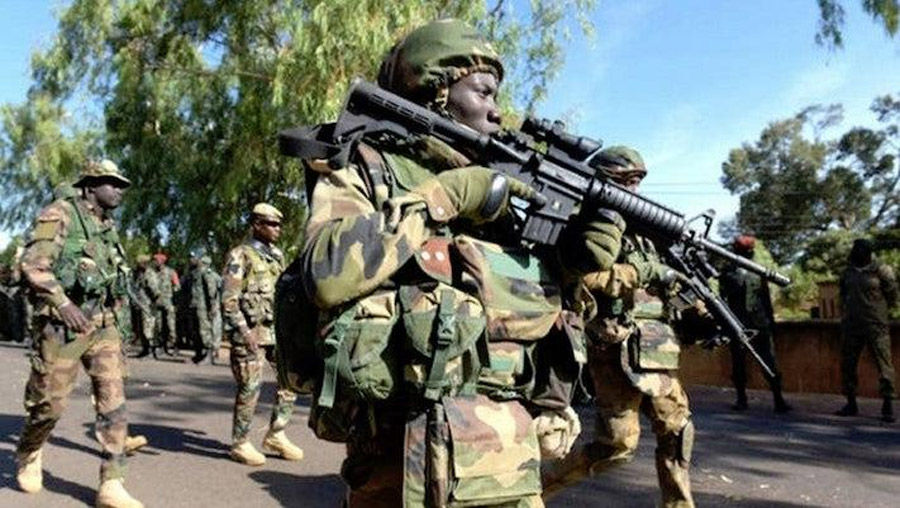
The Nigerian Army has recorded major operational successes across various parts of the country, neutralising 27 terrorists, arresting 10 suspected criminals, rescuing eight kidnapped victims and recovering weapons, ammunition, stolen vehicles and other logistics in coordinated operations conducted within the last 48 hours.
The military disclosed that the operations, driven by credible intelligence and executed through joint land and air efforts, were carried out in Borno, Plateau, Nasarawa and Akwa Ibom states, as well as the Federal Capital Territory (FCT).
According to the Army, the operations form part of ongoing efforts to dismantle terrorist networks, combat kidnapping and weaken the operational capabilities of criminal elements threatening national security.
In the North-East, the Air Component of Operation HADIN KAI conducted precision air strikes against terrorist enclaves in the Tumbuns area of Borno State. Battle damage assessments and intelligence reports confirmed that 27 insurgents were killed during the operations.
Military authorities said 12 terrorists were neutralised in an air strike on Dawoshe community in Kukawa Local Government Area, while another 15 were eliminated during a separate operation at Metele in Guzamala Local Government Area.
Ground troops operating in Borno State also arrested a suspected terrorist along the Mandara-Girau-Sabon Gari axis in Biu Local Government Area. Recovered from the suspect were food supplies, communication gadgets, blankets, herbicides and batteries believed to be intended for insurgent groups.
READ ALSO:
- Atiku Camp Rejects Court-Ordered ADC Deregistration, Alleges Plot to Cripple Opposition
- DHQ Launches Fresh Offensive in Katsina to Hunt Killers of Retired General Rabe
- Amad Diallo Fires Ivory Coast Past Ecuador, Sweden Run Riot in 5–1 Win
In a separate operation near Kareto, troops successfully foiled a kidnapping attempt and rescued six civilians, comprising three men and three women, without any injuries.
In Plateau State, troops of Operation ENDURING PEACE arrested a suspected kidnapper and cattle rustler during a raid in Bokkos Local Government Area. Items recovered from the suspect included ammunition, an AK-47 magazine, a laptop computer, a mobile phone and military-style clothing.
Security forces also apprehended four suspected criminals in Jos South Local Government Area. The suspects were reportedly found in possession of a locally fabricated pistol and ammunition.
In Nasarawa State, troops rescued two kidnapped victims after their captors fled upon sighting advancing security personnel. Subsequent operations, aided by intelligence obtained from an arrested suspect, led to the discovery of a criminal hideout.
Recovered items from the hideout included a locally fabricated pistol, live cartridges, communication devices, foreign and local currencies, as well as ₦1.8 million suspected to be proceeds of criminal activities.
Meanwhile, in the Federal Capital Territory, troops acting on actionable intelligence intercepted two suspected carjackers along the Abuja-Lokoja Highway and recovered a stolen Mercedes-Benz E350 vehicle.
Preliminary investigations indicated that the suspects had allegedly stolen the vehicle in Abuja and were attempting to transport it out of the city for sale.
In the South-South region, troops engaged in anti-crude oil theft operations recovered about 325 litres of suspected stolen Automotive Gas Oil (AGO) concealed in sacks in a bush within Ikot Abasi Local Government Area of Akwa Ibom State. The recovered products have since been handed over to relevant authorities.
The Nigerian Army said the achievements underscore the effectiveness of intelligence-driven and joint military operations in degrading terrorist and criminal networks across the country.
The military reaffirmed its commitment to sustaining offensive operations aimed at denying criminal elements freedom of movement and ensuring the safety of citizens.
It also urged members of the public to continue supporting security agencies with timely and credible information, describing intelligence provided by citizens as a critical force multiplier in the ongoing efforts to achieve lasting peace and national security.
Troops Neutralise 27 Terrorists, Rescue Hostages in Nationwide Operations
-
 metro3 days ago
Kidnapped Retired Major General Rabe Abubakar Dies in Bandits’ Captivity
-
 metro3 days ago
How Kidnap of Adelabu’s Sister, Twins Was Planned – Suspects Confess Insider Role
-

 Politics16 hours ago
BREAKING: Court Orders Deregistration of ADC, Four Other Political Parties
-
 Politics3 days ago
BREAKING: Atiku Picks Amaechi As Running Mate For 2027 Presidential Election
-

 Opinion2 days ago
Death of Retired General in Captivity Sparks Fresh Concerns Over Nigeria’s Security Crisis
-

 metro3 days ago
Terror on a Dark Night: How Security Guard Allegedly Rapes Teen at Gunpoint in Ogun
-
 Politics14 hours ago
BREAKING: Kenneth Okonkwo Withdraws Support for Atiku
-

 metro3 days ago
258 Nigerians Return Home, Share Disturbing Stories of Attacks in South Africa