
Africa
Mali cuts diplomatic ties with Ukraine over Wagner ambush claims

Mali cuts diplomatic ties with Ukraine over Wagner ambush claims
Mali says it has cut diplomatic relations with Ukraine, after a military official suggested Kyiv had played a role in deadly fighting near the Algerian border last month.
Dozens of Malian soldiers and mercenaries from Russia’s Wagner group were killed in days of clashes with Tuareg separatist rebels and fighters linked to al-Qaeda.
Andriy Yusov, a spokesman for Ukrainian military intelligence, said last week that the rebels had been given the “necessary information” to conduct the attacks.
A top Malian official, Colonel Abdoulaye Maiga, said his government was shocked to hear the claim and accused Ukraine of violating Mali’s sovereignty.
Yusov’s comments “admitted Ukraine’s involvement in a cowardly, treacherous and barbaric attack by armed terrorist groups” that had led to the deaths of Malian soldiers, Col Maiga’s statement said.
Mali has decided to break off relations “with immediate effect”, he said.
Last week, Mali’s army admitted it had suffered “significant” losses during several days of fighting earlier that erupted on 25 July.
The clashes took place in the desert near Tinzaouaten, a north-eastern town on the border with Algeria.
READ ALSO:
- Protest: Hoodlums attack Katsina church, vandalise property, loot items (Video)
- Atiku tauts Tinubu over leaked speech, failure
- 2024 Olympics: Nigeria’s D’Tigress qualify for Q/final, beat Canada
Reports say the Malian and Russian forcers were ambushed by Tuareg rebels and fighters from al-Qaeda affiliate Jamaat Nusrat al-Islam wal-Muslimin while waiting for reinforcements, after retreating from Tinzaouaten.
Neither Mali’s military nor Wagner – which has since morphed into a group called the Africa Corps – have given exact figures, but the estimated death toll for Wagner fighters ranges from 20 to 80.
The Russian mercenary outfit’s losses are thought to be the heaviest it has suffered in Mali since it began helping the military government fight the insurgents two years ago.
Wagner has acknowledged that one of its commanders was killed and a Russian helicopter was downed in “fierce fighting”, saying they had been attacked by around 1,000 fighters.
Tuareg-led separatists claimed on Thursday they had killed 84 Wagner mercenaries and 47 Malian soldiers.
More than a decade ago, Mali’s central government lost control of much of the north following a Tuareg rebellion, which was sparked by a demand for a separate state.
The country’s security was then further complicated by the involvement of Islamist militants in the conflict.
When seizing power in coups in 2020 and 2021, the military cited the government’s inability to tackle this unrest.
The new junta severed Mali’s long-running alliance with former colonial power France in favour of Russia, in a bid to quell the unrest.
Mali cuts diplomatic ties with Ukraine over Wagner ambush claims
BBC





Africa
Lawmaker Jailed for Mocking President in Facebook Post
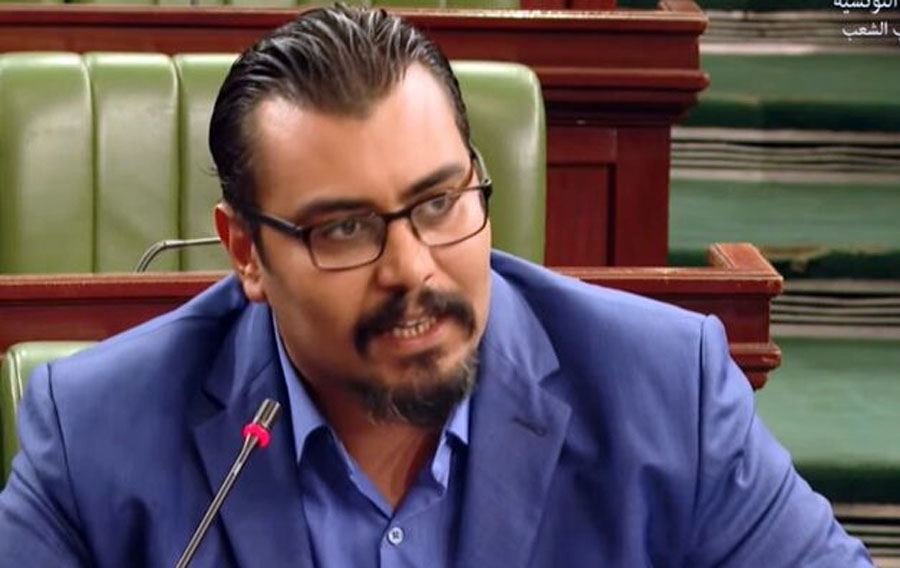
Lawmaker Jailed for Mocking President in Facebook Post
A Tunisian court has sentenced Ahmed Saidani, a sitting lawmaker, to eight months in prison for mocking President Kais Saied in a Facebook post linked to the president’s response to recent flood disasters in Tunisia.
The ruling was delivered on Thursday, deepening concerns over free speech, political repression, and shrinking civic space in the North African country.
Mr Saidani was arrested earlier this month after posting a sarcastic message reacting to Kais Saied’s visit to flood-hit communities. In the post, the lawmaker mocked the president’s public appearances, suggesting Saied had assumed the role of both national leader and sanitation official.
“It seems that the new title will be the Supreme Commander of sanitation and rainwater drainage,” Saidani wrote, adding that his comment was “not a mockery” of the president, but a reflection on governance priorities.
Prosecutors charged the lawmaker under Tunisia’s telecommunications law, which criminalises online insults and criticism made through digital platforms. The law allows for prison sentences of up to two years.
READ ALSO:
- Police to Arrest TikToker Mirabel After She Recants False Rape Claim
- Tinubu Reduces Reliance on U.S, Strengthens Defence Partnerships With Turkey, EU
- Again, Early Morning Blaze Destroys Dozens of Shops in Kano Market
Legal sources said the court found the post insulting to the head of state and ruled that it exceeded the bounds of protected political expression.
Political and Legal Context
The sentencing has sparked outrage among opposition figures, activists, and rights organisations, who argue that the case highlights an ongoing crackdown on dissent in Tunisia.
Mr Saidani was once a supporter of President Saied but later became a vocal critic, accusing the administration of centralising power, sidelining institutions, and suppressing opposing voices.
Since 2021, Tunisia has undergone sweeping political changes following President Saied’s decision to dissolve parliament and rule largely by decree. Critics say these moves have weakened democratic checks and emboldened the use of laws to silence critics, including lawmakers, journalists, and civil society actors.
Human rights advocates warn that the increasing use of criminal prosecutions for social media posts threatens political debate and accountability, particularly at a time when the country faces economic hardship, infrastructure failures, and climate-related disasters.
The government, however, maintains that all prosecutions are conducted within the law and insists that no one is above legal accountability.
Lawmaker Jailed for Mocking President in Facebook Post
Africa
Gabon Suspends Social Media Over False Information, Cyber Threats

Gabon Suspends Social Media Over False Information, Cyber Threats
The government of Gabon has ordered a nationwide suspension of social media platforms “until further notice,” citing the spread of false information, cyberbullying, and unauthorised sharing of personal data as threats to national security, social cohesion, and public order.
The announcement was made by the High Authority for Communication (HAC) in a televised address. HAC spokesperson Jean-Claude Mendome explained that the measure aims to curb the circulation of “inappropriate, defamatory, hateful, and insulting content”, which authorities believe have been fueling unrest and deepening social divisions.
While HAC did not specify which platforms would be immediately affected, widely used applications such as WhatsApp, Facebook, TikTok, and Instagram are expected to be included in the restrictions. By Wednesday, several users reported that Facebook and TikTok were already inaccessible, indicating the government may begin enforcement imminently.
READ ALSO:
- BREAKING: Academic Activities Halted as ASUU Resumes Strike
- Ramadan Health Tips: Six Ways to Stay Hydrated While Fasting
- Tinubu Urges Senate to Confirm Yusuf for NAHCON, Marafa for INEC
The suspension comes amid a sensitive political and social period in Gabon. The country has been undergoing a transition since the 2023 military coup led by President Brice Oligui Nguema, who later won the 2024 presidential election with over 90% of the vote, ending more than five decades of Bongo family rule. Since taking office, Nguema promised reforms and a break from past practices, including allowing independent media to observe election processes — a departure from the use of internet blackouts by previous administrations.
Despite these reforms, the government faces growing social and economic pressures. Teachers launched strikes in December 2025 over unpaid salaries and worsening working conditions, and unrest has since spread to healthcare workers, civil servants, and other public-sector employees. These protests have heightened concerns over public order and digital misinformation, prompting the government’s move to restrict social media access.
Civil society groups and analysts have raised concerns about the impact of the suspension on freedom of expression, economic activity, and digital communication, noting that approximately 850,000 Gabonese actively rely on social media for business, news, and personal communication. The government, however, insists the action is a temporary security measure to prevent further destabilisation.
Observers say Gabon’s decision reflects a broader challenge across Africa, where governments attempt to balance cybersecurity, misinformation control, and digital freedoms. The coming days will test both the government’s resolve and the resilience of the country’s digital economy.
Gabon Suspends Social Media Over False Information, Cyber Threats
Africa
Ghana Moves to Extradite Russian Man Over Secret Sex Video Scandal

Ghana Moves to Extradite Russian Man Over Secret Sex Video Scandal
The Government of Ghana has announced plans to seek the extradition of a Russian man accused of secretly recording sexual encounters with several women and sharing the footage online without consent, describing the alleged acts as serious violations of cybersecurity, privacy, and women’s rights.
African and Russian media identified the suspect as a self-styled “pick-up artist” and online blogger in his 30s who travelled to Ghana and allegedly filmed intimate encounters without the knowledge of the women involved. Some reports claim he used sunglasses fitted with a hidden camera to record the encounters and later circulated the videos on social media platforms. Ghanaian authorities, however, said investigations are ongoing and have not officially confirmed the recording method.
Speaking to journalists, Ghana’s Minister for Communication, Digital Technology and Innovation, Sam George, said he had invited the Russian ambassador in Accra for discussions, stressing that the alleged actions violate Ghana’s cyber-security laws and would not be taken lightly.
He said preliminary findings by the Ministry of Gender, Children and Social Protection suggest the suspect has likely left Ghana, but emphasised that his departure does not reduce the seriousness of the alleged conduct or the government’s obligation to ensure accountability.
READ ALSO:
- Residents Flee as Gunmen Launch Fresh Attack on Kwara Community
- DSS Probes El-Rufai’s Claim of Toxic Chemical Import by Ribadu
- Senate Explains Why Real-Time E-Transmission Cannot Be Mandatory in 2027 Elections
According to the minister, Ghana will activate international cooperation mechanisms, including Interpol, to trace the suspect and seek the cooperation of Russia.
“We will activate every resource at our disposal, working with Interpol and Russian law enforcement. We want the gentleman brought back to Ghana to face the rigours of our law,” George said, adding that the government would still formally request extradition despite Russia’s long-standing policy of rarely extraditing its citizens.
He noted that Ghana may consider trying the suspect in absentia if he refuses to return to face prosecution.
Local media reports also indicate that the same individual may have been involved in similar illegal recordings in Kenya, raising concerns about multiple victims across different countries and the possibility of a broader pattern of abuse.
Under Ghana’s Cybersecurity Act, 2020, the non-consensual recording or distribution of intimate images or videos is a serious criminal offence, carrying penalties of up to 25 years in prison. Authorities say the law was enacted to address rising cases of online sexual abuse, revenge pornography, and digital exploitation, particularly targeting women and children.
Ghana has intensified enforcement of these laws in recent years. In 2022, a court sentenced Solomon Doga, a 22-year-old phone repairer, to 14 years in prison after he pleaded guilty to sharing nude images without consent in a sexual extortion case.
Officials say the current case underscores Ghana’s determination to protect digital privacy, public trust, and the dignity of women, as investigations into the Russian suspect continue.
Ghana Moves to Extradite Russian Man Over Secret Sex Video Scandal

-
 International2 days ago
Iran Retaliates: Gulf States Allied With US Hit by Missiles, Drones
-
 International2 days ago
Saudi Arabia Denies Lobbying US to Strike Iran as Gulf States Respond to Escalation
-
 International2 days ago
Several U.S. Warplanes Crash in Kuwait Amid Ongoing Iranian Strikes
-

 metro2 days ago
Daddy Freeze Warns Couples Over 40: ‘Avoid Moving Abroad, Especially US, UK’
-
 metro3 days ago
Four Die in Katsina Stampede During Ramadan Alms Distribution
-

 Business3 days ago
Global Crude Hits $73 as Middle East Tensions Escalate
-
 International2 days ago
Israeli Airstrikes Kill 31 in Lebanon as Hezbollah Loses Senior Figures
-
 Politics2 days ago
Wike Blasts Kingibe Over FCT Council Election Remarks