
Education
MediaFuse-Dentsu donates computers to Lagos school

MediaFuse-Dentsu donates computers to Lagos school
MediaFuse-Dentsu has donated computers to Army Children Senior High School, Ikeja, in a bid to empower students with tools and resources needed to succeed in today’s tech-driven world.
“In today’s digital age, access to technology is no longer a luxury, but a necessity,” said Group Chief Executive Officer of MediaFuse-Dentsu, Emeka Okeke, who was represented by the Chief Operating Officer of D’Agyle, Marian Ogaziechi, during the donation.
Emeka explained that the donation would also enable the students to prepare adequately for their examinations, reiterating the company’s commitment to educational excellence and community development.
While advising the students to focus on their studies, he said, “We are committed to supporting the educational aspirations of all students, and we believe that this donation will make a significant impact on the lives of those at Army Children Senior High School, Ikeja.”
The advertising guru hinted that as the company celebrates its 10th anniversary, this year, more community service and engagement would be embarked upon, according to the Corporate Communications Manager of Dentsu Nigeria, Sodiq Oyeleke, on Wednesday.
The Financial Director of MediaFuse-Dentsu, Funmi Lawal, the computers were provided to the students as a gateway to a world of information and learning opportunities.
She emphasised MediaFuse-Dentsu’s commitment to educational excellence and community development extends beyond the donation of computers.
“We also plan to partner with schools and other organisations to provide technical support and training for instructors and students in the areas of Information Communication Technology, entrepreneurship and marketing communications,” she added.
The school’s principal, Mrs Agbona, B.L, expressed their gratitude for the donation, adding that the computers will be invaluable in helping students prepare for the future and reach their full potential.
Agbona, who was represented by the school’s computer tutor, Mrs Tosin Olusola, said, “This will enhance the students’ practice before and after examinations. It will also enable ICT students in Senior Secondary School Two and Senior Secondary School One to have practical knowledge along with theoretical knowledge.
“With the support of MediaFuse-Dentsu, we can provide our students with enhanced educational experiences and nurture their talents and passions to reach their full potential.”










Education
Check Your Name: UNILORIN Releases Updated NELFUND Refund List for 2024/2025 Students
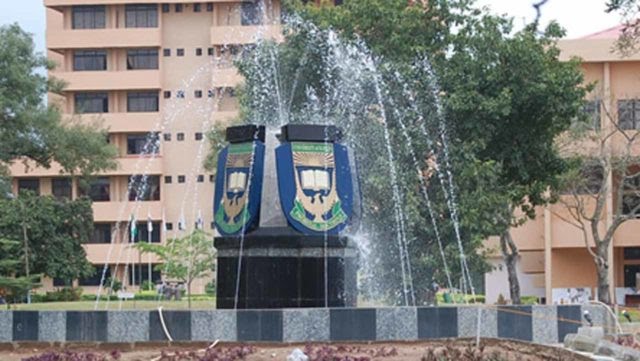
Check Your Name: UNILORIN Releases Updated NELFUND Refund List for 2024/2025 Students
The University of Ilorin (UNILORIN) has released a new list of students eligible to apply for the 2024/2025 NELFUND refund, according to the UNILORIN Students’ Union (SU). Students who paid school fees before NELFUND disbursed funds directly to the university are now required to check their names and submit refund requests through the proper channels.
The official refund eligibility list has been shared in an Excel spreadsheet format and contains verified student details, including full name, matriculation number, department, and eligibility status. Students can search the file using their name or matric number to confirm their eligibility.
Those whose names appear on the list are instructed to fill the official refund form and submit supporting documents, including fee receipts and bank account details, to the Student Affairs Unit (SAU) or their respective Dean’s Office. The refund disbursement is gradual and ongoing, depending on NELFUND fund release schedules.
READ ALSO:
- Argungu Festival 2026 Highlights Peace, Stability, Economic Growth — Tinubu
- US Military Boosts Support for Nigeria’s Fight Against Insurgency With Ammunition, Troop
- Afenifere Calls for Immediate Take-Off of State Police as Terror Threats Rise in Yorubaland
For students whose names are not on the current list, they are advised to check their NELFUND portal status at portal.nelf.gov.ng and ensure all records are correctly verified. UNILORIN and the Students’ Union have also clarified that this is not the final list, as additional batches of eligible students may be added as verification continues.
Students are urged to act promptly, as following the prescribed procedures will ensure timely refund of fees paid in advance.
How to Check Your Eligibility
Students can confirm their eligibility by viewing the official list published by the university. To streamline verification, a table of students in the Department of Accounting and select departments is presented below.
| S/N | Matric Number | Student Name | Programme | Level | Department |
|---|---|---|---|---|---|
| 1 | 20/66MA093 | Johnson Babatunde Ogunwunmiju | B.Sc. Accounting | 400 | Accounting |
| 2 | 21/66MA002 | Zainab Oreoluwa Abdulrahmon | B.Sc. Accounting | 400 | Accounting |
| 3 | 21/66MA021 | Shukurat Oluwapelumi Adetunji | B.Sc. Accounting | 400 | Accounting |
| 4 | 21/66MA038 | Josephine Oluwateniola Akoki | B.Sc. Accounting | 400 | Accounting |
| 5 | 21/66MA049 | Vivian Member Aun | B.Sc. Accounting | 400 | Accounting |
| 6 | 21/66MA054 | Yusuf Olamilekan Babatunde | B.Sc. Accounting | 400 | Accounting |
| 7 | 21/66MA065 | Precious John Elijah | B.Sc. Accounting | 400 | Accounting |
| 8 | 21/66MA083 | Mariam Omowunmi Issa | B.Sc. Accounting | 400 | Accounting |
| 9 | 21/66MA088 | Toyosi Kolade | B.Sc. Accounting | 400 | Accounting |
| 10 | 21/66MA091 | Ayanfe Olaoluwa Makanjuola | B.Sc. Accounting | 400 | Accounting |
Note: The above table shows a partial list for illustration. The full list includes hundreds of students across various faculties and levels.
UNILORIN NELFUND Refund List 2025/2026
Check Your Name: UNILORIN Releases Updated NELFUND Refund List for 2024/2025 Students
Education
NELFUND Refutes UniAbuja Loan Diversion Claims

NELFUND Refutes UniAbuja Loan Diversion Claims
The Nigerian Education Loan Fund (NELFUND) has strongly refuted recent claims that officials of the University of Abuja (UniAbuja), including the vice‑chancellor and senior administrators, diverted or misappropriated student loan funds intended for indigent students.
In a detailed statement, NELFUND clarified that no verified evidence exists to support allegations that UniAbuja unlawfully withheld or diverted loan disbursements. The Fund said the speculation circulating in some media reports — which implicated the university’s vice‑chancellor, the Dean of Students’ Affairs, and other officials in the alleged diversion of multibillion‑naira funds — is unfounded and misleading.
The reports also suggested that UniAbuja failed to reimburse residual balances to students whose actual tuition fees were lower than the amounts disbursed by NELFUND on their behalf. In response, NELFUND maintained that its structured disbursement and reconciliation framework ensures that funds released for student loans are properly applied in line with its statutory mandate.
READ ALSO:
- NRC, Entertainers Finalise Plans for 2026 Valentine Train Ride
- 2027 General Elections: INEC Announces February 20 for Presidential Poll
- EFCC Nabs Three in Borno Over Viral ₦500 Naira Mutilation Video
Mrs. Oseyemi Oluwatuyi, NELFUND’s Director of Strategic Communications, emphasised that the Fund’s operations are governed by formal verification, compliance, and reconciliation protocols. According to her, loan funds are released through established institutional channels, and strict accountability mechanisms are in place to safeguard both student and institutional interests.
The Fund acknowledged that discrepancies or timing issues sometimes arise in the process of crediting student or institutional accounts, but said these are typically resolved through direct engagement with the relevant institutions, in accordance with due administrative processes.
“Where concerns arise regarding timelines of crediting student accounts or institutional reconciliation processes, NELFUND engages directly with the relevant institution to clarify and resolve such matters administratively and in accordance with due process,” the statement read.
NELFUND reiterated its commitment to transparency, accountability, and rigorous audit procedures, which include reliance on verified documentation and formal reconciliation mechanisms when addressing any issue related to its student loan disbursements.
The Fund also reaffirmed its dedication to protecting the interests of eligible Nigerian students and ensuring that all disbursements are applied lawfully and effectively to support access to tertiary education.
NELFUND Refutes UniAbuja Loan Diversion Claims
Education
Supreme Court Affirms Muslim Students’ Right to Worship at Rivers State University

Supreme Court Affirms Muslim Students’ Right to Worship at Rivers State University
The Supreme Court of Nigeria has ruled in favor of Muslim students at Rivers State University (RSU), affirming their constitutional right to practice Islam and perform religious activities on campus. The landmark judgment, delivered on February 10, 2026, closes a legal battle that has lasted for over a decade.
The ruling reinforces Section 38 of the 1999 Constitution (as amended), which guarantees freedom of thought, conscience, and religion for all Nigerians.
The Muslim Students’ Society of Nigeria (MSSN), Rivers State Area Unit, hailed the judgment as a historic affirmation of constitutional rights and the rule of law.
READ ALSO:
- Malami’s EFCC Trials Face Procedural Delay as Judge Steps Aside
- Umahi Vows to Quit if Road Project Fails Independent Quality Test
- NUFBTE Workers Occupy NAFDAC Lagos Office Over Sachet Alcohol Ban
The case traces back to 2012, when a mosque on the university campus was demolished, leaving Muslim students without a dedicated place of worship. The matter passed through the Federal High Court in 2013 and the Court of Appeal in 2017, before finally reaching the Supreme Court.
In a statement, the MSSN emphasized that the ruling is not a victory for one religion over another but a triumph for constitutionalism, equity, and justice. The society commended Muslim students for their discipline, resilience, and peaceful conduct throughout the legal process and acknowledged the efforts of its legal team and community leaders.
The MSSN called on Rivers State University management and relevant authorities to implement the ruling promptly by providing a dedicated and befitting place of worship for Muslim students on campus. The organization also urged students to respond with gratitude and maturity, emphasizing peaceful coexistence and mutual respect within the university community.
Experts believe this decision will have far-reaching implications for religious accommodation and inclusivity in public tertiary institutions across Nigeria.
Supreme Court Affirms Muslim Students’ Right to Worship at Rivers State University

-
 Education2 days ago
Check Your Name: UNILORIN Releases Updated NELFUND Refund List for 2024/2025 Students
-

 News2 days ago
Osogbo Sons and Daughters Mark 5th Anniversary with Awards, Political Undertones
-

 metro3 days ago
Woman Arrested Over Murder of Nigerian E-Hailing Driver in South Africa
-

 metro1 day ago
US Freezes Assets of Eight Nigerians Over Boko Haram, ISIL, Cybercrime Links
-

 News2 days ago
Afenifere Calls for Immediate Take-Off of State Police as Terror Threats Rise in Yorubaland
-

 metro3 days ago
Boko Haram Terrorists Release Video of 176 Abducted Kwara Residents
-

 metro1 day ago
Terror in Lagos Traffic: Cutlass Gang Unleashes Mayhem on Mile 12–Ketu Road
-

 metro2 days ago
US Military Boosts Support for Nigeria’s Fight Against Insurgency With Ammunition, Troop