

metro
Missing Vanguard reporter found dead

Vanguard missing reporter, Tordue Henry Salem, has been found dead in Abuja.
Details of the circumstances surrounding the recovery of his remains were still sketchy as at 9.30 pm, Thursday.
Salem, who was covering the House of Representatives, was last seen on October 13, 2021. After the close of work that day, he was said to have alighted from a cab at Total filling station, close to the Force headquarters, and headed for B.J’s garden, in the company with a female relative.
Thereafter, he reportedly flagged down a cab for the lady who left before him, informing her that he was going to Area 8, Garki. But he was never seen until his remains were recovered on Thursday.
An alarm on his mysterious disappearance was raised the next day, from where the matter was directed to the Intelligence Response Team , IRT on October 16, 2021.
Some arrests were reportedly made. Among them was that of a man who was picked for attempting to extort Salem’s family.
The suspect identified as Prince Enyenihi, 25, contacted Mrs Salem on October 26, 2021, via a text message with a concealed number, requesting for N100 million ransom, to be paid as ransom for her husband’s release. Part of the text message read: “If you don’t pay, Tordue will be killed in seven days. For more information, call this number …. The text message also contained an account number the money should be paid into.
This was followed by a call with a concealed number to Salem’s wife the next day. Mrs Salem requested to speak with her husband, to ascertain he was alive before negotiation could begin. But the caller gave the phone to someone who tried to play along.
When she noticed that the voice did not sound like her husband’s, she asked the stranger to mention the name of their daughter and her birth date, a question that met dead silence at the other end.
Same evening, another call with a concealed number was received by Mrs Salem, requesting to know if her husband had been released. The confused woman was said to have requested why the caller had his number concealed.
On October 27, another text me came on a bulk text message platform, ordering the family to pay the N100 million ransom before the next day, failure of which they would kill Salem.
The police swung into action first, by de-encrypting the number that called and traced its owner to a lady in Port Harcourt, Rivers State.
However, during interrogation, the lady who owns Joy Skin Care denied culpability, stating rather that a particular number had been calling her line since October 26, 2021.
Security operatives discovered that the number was the same with that used to contact Mrs Salem, consequent upon which 25-year-old Enyenihi was arrested on November 5, 2021.
During preliminary investigation, it was discovered that he was next door neighbour to the beautician. During interrogation, he disclosed that he got the information of the Vanguard reporter’s disappearance on a flyer that went viral on the social media, which had the number of Mrs Salem as the contact person to report to if found.
The suspect further stated that he sent the text messages without the knowledge of his female neighbour, adding that he got his neighbour’s telephone number and account details from her Facebook page .
He said, “I knew the family wouldn’t pay the money. I used the owner of Joy beauty skin care’s account details in order to punish her for always talking to me anyhow.”
The police said the arrest was a distraction from what they were looking for.
Efforts to reach the Force Public Relations Officer, Frank Mba, were futile.



metro
Lawyers Sue Tinubu, AGF, Edo Gov Over Alleged Threat to Peter Obi’s Life

Lawyers Sue Tinubu, AGF, Edo Gov Over Alleged Threat to Peter Obi’s Life
Obident Lawyers Forum seeks court orders compelling security agencies to provide maximum protection for NDC presidential candidate and other 2027 candidates
Lawyers operating under the aegis of the Obident Lawyers Forum have filed a suit at the Federal High Court in Abuja seeking an order compelling President Bola Tinubu to direct security agencies to provide adequate protection for the presidential candidate of the Nigerian Democratic Congress (NDC), Mr Peter Obi, ahead of the 2027 general election. The legal practitioners informed the court that their appeal has become imperative so as not to make Peter Obi a victim of political assassination before and during the 2027 electioneering process. The request was contained in a suit marked FHC/ABJ/CS/1648/2026, instituted against President Tinubu, the Attorney General of the Federation (AGF), the Inspector-General of Police (IGP), the Director-General of the Department of State Services (DSS), and the Governor of Edo State as defendants. The plaintiffs, represented by Barristers Okere Kingdom Nnamdi and Joseph Enemona Ameh, instituted the fundamental rights suit on behalf of Peter Obi, in which they prayed the court to issue an order that Peter Obi has the fundamental right to freedom of movement without any hindrance.
The plaintiffs predicated their request on two key developments. First, a recent live podcast wherein the NDC’s presidential candidate had raised the alarm that he “may not be alive to contest next year’s presidential election”. Second, a statement credited to Edo State Governor Senator Monday Okpebholo to the effect that Obi’s life and security would not be guaranteed in Edo State if he enters the state without getting approval from the governor. In an affidavit deposed in support of the suit, the plaintiffs argued that the NDC presidential candidate has constitutionally guaranteed rights to life and to live, dwell, exist and carry out his lawful duties without any fear, discrimination, threat of assassination, intimidation or any form of harassment as guaranteed by the Constitution. They submitted that Obi has the fundamental rights to move across the 36 states of Nigeria and the Federal Capital Territory, “attend and host his political campaign rallies… without fear of assassination, threat to his life, bullying, harassment, assault, intimidation and victimization whatsoever”.
READ ALSO:
- No Sin in Politics: Wike Welcomes Fubara Back to Political Fold
- How Friends Beat Jos Model Ibrahim Mbaya to Death Over Missing iPhone 12
- Oyo Receives Two Surveillance Aircraft Worth ₦7.7 Billion to Strengthen Security Operations
The applicants lamented that “Mr Peter Gregory Obi has been subjected to serious psychological torture and trauma by the numerous threats to his life”, adding that this is detrimental to his constitutional rights. They further submitted that no person or authority or any arm of the Government of the Federal Republic of Nigeria, or any authority, person(s) individual or groups, agents/agencies of the Federal Government or Government of any sub-regional State, has the powers to restrict or refuse any citizen from entering and exiting any part of Nigeria to carry out his lawful activities as guaranteed in the 1999 Constitution of the Federal Republic of Nigeria. The deponent argued that “the threats by the Edo State Governor Senator Monday Okpebholo that Mr Peter Obi’s life and security are not guaranteed in Edo State, and that Mr Peter Obi should not step into Edo State without getting a clearance from him are empty not backed by law, anti-democratic, illegal, unlawful and tantamount to executive rascality, infantile-politicking and power-drunkenness”.
Among the reliefs they are seeking in the suit, the plaintiffs asked the court to declare that Peter Gregory Obi, the 2027 Presidential Candidate of the Nigerian Democratic Congress (NDC) , has the fundamental right to life and the right to live without any fear, discrimination, threat of assassination, intimidation or any form of harassment whatsoever, as guaranteed in section 33 (1) of the 1999 Constitution of Nigeria. In addition, they urged the court to declare that Peter Obi must not be subjected to politically motivated coercion, threat to life, bullying, harassment, assault, intimidation and victimization whatsoever by any arm of the Government of the Federal Republic of Nigeria, or any authority, person, individual or groups, agents/agencies of the Federal Government or Government of any sub-Regional State, on the grounds of his political ideology, ethnicity and religion; or for any reason whatsoever. They also sought “A declaration that Mr Peter Gregory Obi the 2027 Presidential Candidate of the Nigerian Democratic Congress (NDC) has the fundamental rights of free ingress and egress into any of the 36 States of the Federal Republic of Nigeria and the FCT, and can freely move around, enter, visit, stay, reside, inhabit and organize, attend and host his political campaign rallies, consultations, seminars, groups meetings and carryout his lawful activities in any part of Nigeria, without fear of assassination, threat to his life, bullying, harassment, assault, intimidation and victimization whatsoever, by any Arm of the Government of the Federal Republic of Nigeria, or any authority, person(s) individual or groups, agents/agencies of the Federal Government or Government of any sub-regional State, as guaranteed in sections 39, 40, 41 and 42 of the 1999 Constitution of the Federal Republic of Nigeria”.
The plaintiffs further prayed for “A declaration that the President of the Federal Republic of Nigeria and Commander in Chief of The Armed Forces of the Federal Republic of Nigeria has the constitutional mandate/responsibility to provide adequate security of life and property to the citizens, which is the fundamental reason/purpose/objective of every government; and the President has the constitutional responsibility as Commander in Chief to direct the 3th, 4th and 5th Respondents and Heads of all Security Agencies in Nigeria to provide maximum security protection/intelligence to Mr Peter Gregory Obi and all other presidential candidates”. They also urged a declaration that the laws setting up the security agencies mandate and empower the 3rd, 4th, and 5th respondents to provide adequate security to the citizens of the Federal Republic of Nigeria against all criminal activities aimed at depriving citizens of their properties or lives. The plaintiffs asked the court to make an order “compelling, directing and mandating the President of the Federal Republic of Nigeria and Commander in Chief of the Armed Forces of the Federal Republic of Nigeria to direct the 3th, 4th and 5th Respondents and Heads of all other Security Agencies in Nigeria to provide maximum security protection/intelligence to Mr Peter Gregory Obi, the 2027 Presidential Candidate of the Nigerian Democratic Congress (NDC) and all other 2027 presidential candidates”. Additionally, they sought “An order compelling, directing and mandating the 3th, 4th and 5th Respondents to immediately provide maximum security personnel to Physically Protect and Provide Security Intelligence to Mr Peter Gregory Obi, the NDC 2027 Presidential candidate”.
The suit references a recent podcast interview with media personality Chude Jideonwo, wherein the NDC presidential candidate had expressed fears for his safety. In the interview, Obi stated: “Not even a candidate. I might not even be alive. I’m telling you”. He alleged that the current Nigerian government has been frustrating his activities and targeting opposition figures, saying “Every single thing I do for a living, this government is frustrating. Deliberately so. So, there is even a possibility that, if they have the opportunity, I will not be alive”. Obi, however, clarified that he was not making direct accusations against President Bola Tinubu’s government because the government does not act openly. “It’s not an accusation. I know. I get frustrated every day because you do things that you think would be normal – it is not normal anymore. They (the government) won’t come directly and say, ‘Oh, we’re doing this,’ but you can see their hand in everything,” he said. Giving instances of alleged attacks against him, Obi referenced an incident at an airport where officials allegedly locked his car, despite other vehicles being parked in the same area. He also alleged that some people now avoid publicly associating with him for fear of becoming targets of the government, and that some supporters had discouraged him from attending family events.
The suit also references a statement credited to Edo State Governor Senator Monday Okpebholo. The governor had earlier given a warning on July 18, 2025 during a political event in Uromi, Esan North East Local Government Area of the state. In a video that later resurfaced, the governor was heard warning Obi against coming into the state without prior notice, saying: “The man wey say he no get shishi, I am sending a direct message to him, there is a new sheriff in town. He cannot come to Edo State without telling me because his security will not be guaranteed. Whatever happens to him in Edo State, he will take it. I am serious about this”. The governor later defended his remarks during an appearance on Channels Television, insisting that he intended to ensure the opposition figure’s safety, citing security concerns. The Edo State Government had earlier distanced itself from alleged threats against opposition figures by Emmanuel Eghogho, an aide to Governor Okpebholo. The governor’s aide was captured in a viral video on social media alleging that members of the opposition, including Peter Obi, would be arrested and handed over to the Commissioner of Police for onward transfer to Abuja. Reacting to the development, the Commissioner for Information and Strategy, Kassim Afegbua, said at a news conference in Benin that the state had nothing to do with Mr Eghogho’s public outburst. He stressed that the controversial remarks credited to Mr Eghogho did not represent the administration’s position, stating: “We want to distance ourselves from that statement because it is not the position of the Edo State Government, but the voice of an individual that is answerable to existing laws of the land”.
Meanwhile, no date has been fixed for the hearing of the suit. The legal action comes as political activities ahead of the 2027 general election gradually gather momentum, with opposition figures outlining their policy alternatives to the administration of President Bola Tinubu.
Lawyers Sue Tinubu, AGF, Edo Gov Over Alleged Threat to Peter Obi’s Life
metro
How Friends Beat Jos Model Ibrahim Mbaya to Death Over Missing iPhone 12
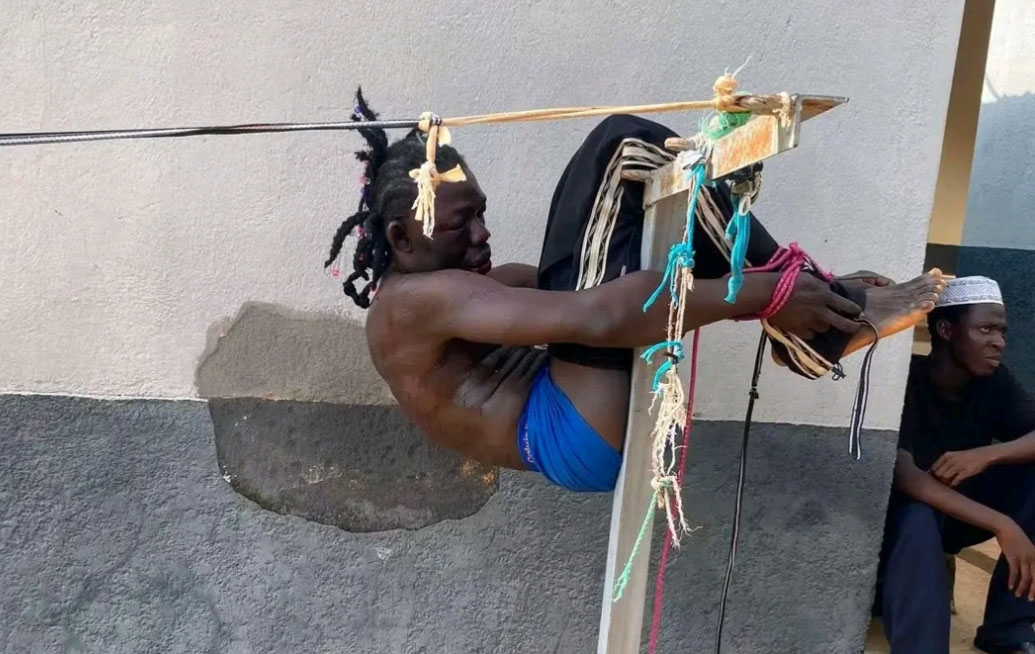
How Friends Beat Jos Model Ibrahim Mbaya to Death Over Missing iPhone 12
25-year-old UNIJOS graduate and rising pageant finalist allegedly tortured for hours after being accused of stealing a phone
The tragic death of 25-year-old Ibrahim Mbaya, a University of Jos graduate and rising model popularly known as “Ibee,” has sparked nationwide outrage after he was allegedly beaten to death by a group of friends over accusations of stealing an iPhone 12. The incident occurred on Sunday, July 26, 2026, at an off-campus apartment behind the City of David area along Ring Road in Jos, Plateau State. Mbaya’s death has sent shockwaves through Plateau’s fashion and entertainment scene, where he was regarded as one of the state’s most promising models. Family members, friends, students, and members of the entertainment industry are demanding justice for the deceased, while the Plateau State Police Command has arrested four suspects in connection with the alleged culpable homicide, with efforts ongoing to apprehend two other fleeing suspects.
According to multiple sources, Mbaya, who had graduated from the University of Jos and was still processing an outstanding academic issue, had attended a social event on campus before deciding to spend the night at a friend’s residence in Ring Road because it was too late to return to his home in Rayfield. The following morning, his friend allegedly informed him that an iPhone 12 had gone missing and insisted that since they were the only occupants of the room, he was the prime suspect. Eyewitnesses said Mbaya initially left the apartment but later returned after receiving a telephone call from the friend, who informed him of the missing phone and requested that he come back to explain himself. On his return, the young model was allegedly confronted by his friend and several other young men in the compound, who accused him of stealing the device.
Instead of reporting the matter to law enforcement, the group allegedly descended on Mbaya, subjecting him to severe torture and beating in an attempt to force a confession. The assault reportedly lasted several hours, during which the victim was beaten with sticks and other objects until he became unconscious. A viral video obtained by investigators shows the victim tied up and suspended while being assaulted. In another scene, he was allegedly forced to transfer water from one bucket into another using a teaspoon after he had already been severely beaten and appeared physically exhausted. According to sources, a nurse was later invited to examine him but reportedly confirmed that he had died. An attempt was made to move him to the Accident and Emergency Unit of the Jos University Teaching Hospital (JUTH) before security operatives were alerted.
READ ALSO:
- Oyo Receives Two Surveillance Aircraft Worth ₦7.7 Billion to Strengthen Security Operations
- Osun 2026: APC Inaugurates 292-Member Campaign Council, Declares Victory a Must
- Appeal Court Nullifies INEC Deregistration Order, Restores ADC, Accord Party, Three Others
Confirming the incident, the Plateau State Police Public Relations Officer, SP Alfred Alabo, said the command received a report at about 11:20 p.m. on July 26 through a Good Samaritan at the Jos University Teaching Hospital (JUTH), informing officers that some youths had brought an unconscious man to the facility under suspicious circumstances. Police operatives immediately mobilised to the hospital, where Mbaya was confirmed dead on arrival by the medical doctor on duty. His remains have been deposited at the hospital mortuary for preservation and autopsy. Following preliminary investigations, police arrested four suspects in connection with the killing: Rinji Daniel Fwanji (25), Emmanuel Newyear (30), Nensemka Fwanji (22), and Joshua Tell. According to the police, one of the suspects, Emmanuel Newyear, was captured in a viral video allegedly using a large wooden plank to assault the deceased and was also identified in photographs obtained during the investigation. The suspects have been transferred to the State Criminal Investigation Department (SCID) in Jos, while efforts are ongoing to apprehend two other fleeing suspects connected to the crime.
The killing has triggered widespread condemnation and calls for justice from various quarters. The University of Jos Alumni Association condemned the killing, describing it as “senseless and reprehensible” and incompatible with the institution’s values. “Violence has no place within our university community and stands in direct contradiction to the values of excellence, character, mutual respect, and humanity upon which the University of Jos was founded,” the association said in a statement. The National Association of Nigerian Students (NANS) also condemned the incident, describing Mbaya’s death as “heartbreaking” and calling for a thorough investigation to ensure those responsible are brought to justice. NANS President, Comrade Akinteye Babatunde Afeez, stressed that allegations of criminal conduct must always be handled through established legal processes rather than violence, warning that resorting to jungle justice undermines the rule of law and exposes innocent people to the risk of being unlawfully killed.
Beyond the circumstances surrounding his death, Mbaya was remembered as a promising young talent with ambitions in the fashion and entertainment industry. While his full name was Ibrahim Pilasar Mbaya, he was widely known as “Ibee,” a name he also used on his social media accounts. In a resurfaced interview, Mbaya introduced himself as a baker and a model, showing his passion for both business and the fashion industry. Before his death, organisers of Mr & Miss Glam Nigeria announced Mbaya as one of the competition’s Top 30 finalists. Two days before news of his death emerged, the organisers shared a video of Mbaya completing one of his runway tasks. Mbaya’s final Instagram post, shared on July 24, featured photos of himself with the caption: “A little sunshine, a little silence, a lot of peace.” Information on his social media pages showed that Mbaya’s birthday was September 18.
The Plateau State Police Command strongly condemned the incident, stressing that no individual or group has the legal authority to assault or kill anyone suspected of committing an offence. “Nigeria’s administration of the criminal justice system provides lawful procedures for investigating and prosecuting criminal offences, and every suspect is entitled to due process under the law,” SP Alabo said. The command urged members of the public to report cases of theft and other criminal activities to the nearest police station or other recognised security agencies, warning that resorting to self-help and mob action undermines the rule of law and exposes perpetrators to criminal prosecution. The incident has once again drawn attention to the persistent problem of mob justice in Nigeria despite repeated campaigns by security agencies and human rights advocates urging citizens to hand criminal suspects over to the police instead of resorting to violence.
How Friends Beat Jos Model Ibrahim Mbaya to Death Over Missing iPhone 12
metro
Oyo Receives Two Surveillance Aircraft Worth ₦7.7 Billion to Strengthen Security Operations
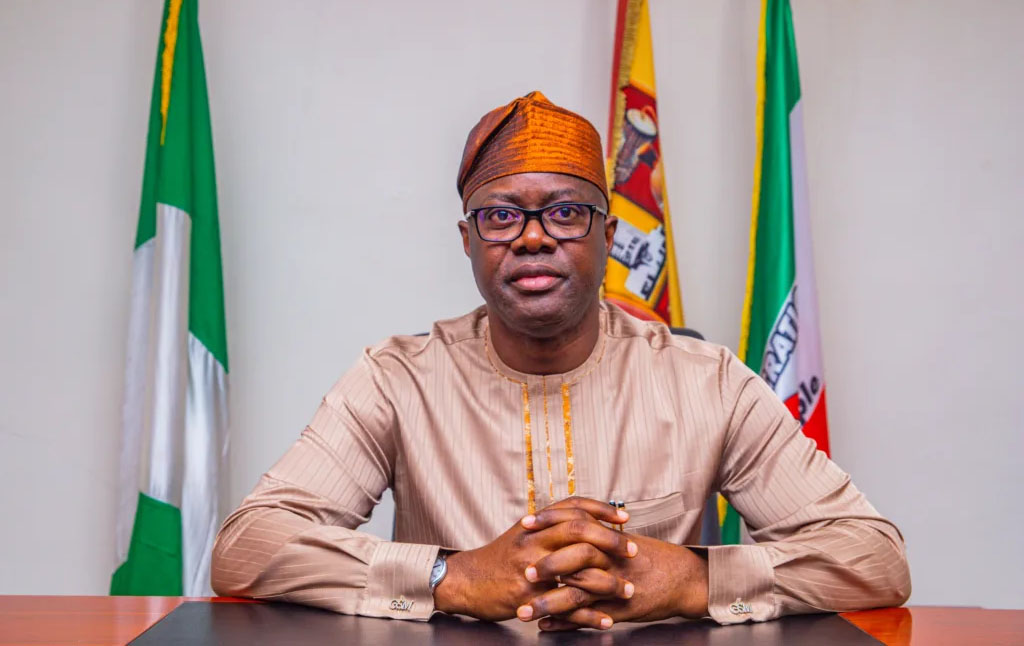
Oyo Receives Two Surveillance Aircraft Worth ₦7.7 Billion to Strengthen Security Operations
Governor Seyi Makinde takes delivery of advanced DA-42 MNG ISR aircraft, fulfilling end-of-July deployment promise after delays in Chinese assembly
The Oyo State Government on Tuesday received the two surveillance aircraft it acquired to strengthen intelligence gathering and aerial security operations across the state, fulfilling its pledge to deliver the aircraft before the end of July. Governor Seyi Makinde was at the airport in Ibadan to personally receive the aircraft upon their arrival, marking a significant milestone in the state’s security architecture.
Announcing the development in a statement, the Commissioner for Information, Prince Dotun Oyelade, said the arrival of the aircraft represents a major milestone in the state’s efforts to improve security through enhanced aerial surveillance and intelligence-led operations. He recalled that the state government announced the acquisition of the two aircraft on July 8, 2025, as part of measures to enhance the operational capacity of security agencies in tackling emerging security threats.
The state government initially announced the acquisition of the two surveillance aircraft on July 8, 2025, as part of measures to enhance the operational capacity of security agencies in tackling emerging security threats. According to Oyelade, Governor Makinde had, on July 18, 2026, disclosed that the aircraft had arrived in Nigeria and were undergoing reassembly at the Nigerian Air Force hangar in Lagos before their final deployment to Oyo State. The Commissioner noted that the government had assured residents about a week ago that the aircraft would arrive in the state before the end of July, adding that Tuesday’s delivery fulfilled that commitment. The delivery timeline was extended because the Chinese manufacturers required more time than initially anticipated to assemble the aircraft components.
The two DA-42 MNG Intelligence, Surveillance and Reconnaissance (ISR) aircraft were procured at a total cost of ₦7,763,360,000. The sophisticated surveillance technology fitted on the aircraft is capable of identifying targets from both high and low altitudes, allowing for real-time intelligence gathering and improving rapid response and precision security operations. Once fully operational, they will provide wide aerial coverage across Oyo State and significantly boost the operational capacity of security agencies in combating banditry, kidnapping, illegal mining, and related crimes.
READ ALSO:
- Osun 2026: APC Inaugurates 292-Member Campaign Council, Declares Victory a Must
- Appeal Court Nullifies INEC Deregistration Order, Restores ADC, Accord Party, Three Others
- Tinubu orders security forces to hunt down killers after 30 murdered in Kaduna attack
The Commissioner stated that the surveillance aircraft would support intelligence gathering and assist security agencies, including the Amotekun Corps and other security formations, in monitoring criminal activities and improving rapid response to security threats across the state. The aircraft will be deployed to monitor and strengthen security operations along Oyo State’s borders with Kwara State and the Republic of Benin. These border areas have been identified as vulnerable corridors often exploited by criminal elements due to their porous nature.
The urgency of the aircraft acquisition was underscored by the May 15, 2026 abduction of over 40 schoolchildren and their teachers at three different schools in Oriire Local Government Area — Baptist Nursery and Primary School, Yawota; L.A Primary School and Community Grammar School, Ahoro-Esienle. The victims were eventually rescued after 56 days in captivity. Governor Makinde confirmed that the Air Force responded promptly after the abduction was reported by deploying a surveillance platform to assist security agencies involved in the search-and-rescue operation.
While briefing the Executive Council, Governor Makinde expressed regret that the aircraft were not operational during the rescue operation, stating that he would have loved the two surveillance aircraft to participate in the rescue mission during the Oriire incident. The Governor explained that the decision to make the aircraft operational rested on the professional and technical advice of the Chinese manufacturers rather than the state government. The State Executive Council maintained that adherence to safety and technical standards was more important than yielding to public pressure, noting that it was better to be on the side of caution rather than succumb to uninformed public pressure.
The state’s decision to acquire aerial platforms followed extensive consultations with the Nigerian Air Force to guarantee access to technical maintenance support, engineering expertise, and pilot training. Governor Makinde had earlier visited China to meet with manufacturers of surveillance and reconnaissance aircraft, touring the facility of CETC Wuhu Diamond Aircraft Manufacturing Company Limited and agreeing on maintenance support and pilot training. He explained that the state procured the platforms after consultations with the Air Force to ensure access to maintenance support, engineering expertise and pilot training.
The deployment of the surveillance aircraft is expected to complement ongoing efforts by the state government to address insecurity and enhance the protection of lives and property across Oyo State. The investment underscores Governor Makinde’s commitment to proactive, intelligence-driven security strategies aimed at ensuring lasting peace and stability in the state. The aircraft will also strengthen collaborative security efforts, with enhanced intelligence sharing and coordinated operations benefiting not just Oyo but neighboring states grappling with banditry and kidnapping.
“The arrival of the aircraft marks another step in the state’s efforts to strengthen security operations through improved intelligence gathering and aerial surveillance,” Oyelade said. The deployment of the aircraft is expected to complement ongoing efforts by the state government to address insecurity and enhance the protection of lives and property across Oyo State.
Oyo Receives Two Surveillance Aircraft Worth ₦7.7 Billion to Strengthen Security Operations
-
 Politics3 days ago
2027 election: Atiku accuses Obasanjo of reviving false allegations to favour preferred candidate
-

 metro2 days ago
NDLEA intercepts ₦10bn worth of cocaine, Loud, opioids in Lagos
-

 Sports2 days ago
Super Falcons recover stolen cash after hotel theft suspect confesses
-

 Sports3 days ago
Anthony Joshua stuns Kristian Prenga with dramatic knockout to revive career
-
 metro3 days ago
Al-Mustapha Fires Back: Ex-DSS Officer’s Account of Abacha’s Death Is a Lie, I Have CCTV Evidence
-

 metro3 days ago
ISWAP finance chief surrenders to Nigerian troops with two children in Borno
-
 News3 days ago
INEC Chairman assures Nigerians every vote will count in 2027 general election
-

 metro3 days ago
Is Nigeria’s Electricity Tariff Going Up? FG Finally Breaks Silence