

metro
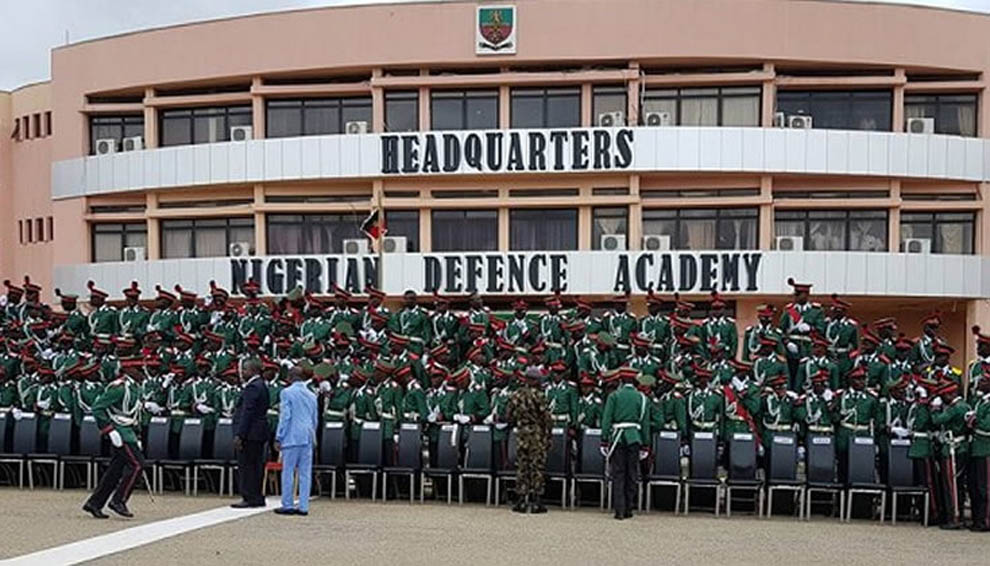
MURIC Raises Alarm Over Alleged Religious Imbalance in NDA 78RC Admission
MURIC Raises Alarm Over Alleged Religious Imbalance in NDA 78RC Admission
The Muslim Rights Concern, MURIC, Abuja Chapter, has called on President Bola Ahmed Tinubu to urgently review the recently released admission list for the 78th Regular Course of the Nigerian Defence Academy (NDA), alleging religious imbalance in the selection of successful candidates.
MURIC, in a statement dated September 10, 2026, signed by its Abuja Chapter Chairman, Ustaz Yunus Salahudeen, and the chapter’s Publicity Secretary, Lukman Babalola Laleye, said its preliminary analysis of the admission list revealed what it described as “disturbing patterns” in the distribution of Muslim and Christian candidates across several states.
The group also expressed concern over the religious composition of key officers involved in the NDA admission process.
According to MURIC, the Chief of Defence Staff, the Chairman of the NDA Selection Board, the Commandant of the NDA, the NDA Registrar and the NDA Provost are all Christians.
The organisation argued that the concentration of the key positions in the hands of people of one faith raised questions about balance, fairness and objectivity in the admission process.
It also linked its concerns to the Federal Character principle provided for under Section 14(3) of the 1999 Constitution.
MURIC said its analysis showed significant disparities in the religious composition of successful candidates from a number of states.
For instance, the group claimed that six of the 10 candidates listed for Adamawa were Christians, while all three reserve candidates were also Christians.
It alleged that Benue had only one Muslim among 10 candidates, with all three reserve candidates being Christians.
In Ebonyi, MURIC said only one Muslim was listed and that the candidate was placed on the reserve list, while Edo allegedly had no Muslim among the admitted and reserve candidates.
READ ALSO:
- Veteran Nollywood Actress Cries Out for Financial Help Over Cervical Cancer Battle
- Agunbiade fires back at Deji Yesufu: Don’t mistake Boko Haram for Islam
- Breaking the Cycle of Collective Guilt: When a Ruling Party Voice Backs Peter Obi
The organisation also claimed that Ekiti had only three Muslims among the 10 candidates, including reserves, while the Federal Capital Territory had two Muslims among six candidates.
In Gombe, MURIC alleged that five of the 10 candidates were Christians and all three reserve candidates were Christians.
The group further cited Imo, where it claimed there was only one Muslim among 13 candidates, including the reserve list, and Ondo, where it alleged that no Muslim was among the 13 candidates, including reserves.
Other states cited by MURIC included Kaduna, where it claimed six out of 10 candidates were Christians; Kebbi, with one Christian among 10; Kogi, with four Muslims among 10; Kwara, with four Muslims among 10; Lagos, with five Muslims among 10; Nasarawa, with four Muslims; Niger, with four Muslims; Ogun, with two Muslims; Oyo, with three Muslims; Plateau, with three Muslims compared with 10 Christians; and Taraba, with two Muslims among 10.
The organisation also alleged that Borno had three Christians among 10 candidates, with one Christian on the reserve list, while Yobe had two Christians among the 10 candidates.
MURIC stressed that its observations were based on a preliminary analysis of the published list and said the disparities warranted clarification from the NDA.
The group consequently urged President Tinubu to intervene immediately and direct a review of the 78 Regular Course admission list to ensure what it described as fairness and balance.
It also called for the reconstitution of key admission and appointment positions within the NDA to better reflect Nigeria’s religious and ethnic diversity.
In addition, MURIC demanded that the NDA publish the criteria used in selecting the successful candidates, including the cut-off marks and quota allocated to each state.
“As the saying goes, ‘a problem identified is a problem half solved,’” the organisation stated, expressing confidence that the Presidency would act promptly to address the issue.
MURIC said such action was necessary to promote unity, equity and national cohesion.
The group concluded by praying for leaders who would uphold justice and fairness.
MURIC Raises Alarm Over Alleged Religious Imbalance in NDA 78RC Admission






metro
ADC Leadership Crisis: Why Two Federal High Court Judgments Do Not Conflict – Obono-Obla

ADC Leadership Crisis: Why Two Federal High Court Judgments Do Not Conflict – Obono-Obla
By Newstrends Correspondent
A former Special Assistant to the President and legal practitioner, Okoi Obono-Obla, has dismissed claims that two recent Federal High Court judgments on the leadership crisis rocking the African Democratic Congress (ADC) are conflicting, insisting that the cases involved different plaintiffs, legal issues and reliefs.
Obono-Obla said the reaction of the ADC National Publicity Secretary, Mallam Bolaji Abdullahi, to the judgment delivered by Justice Peter Lifu on November 5, 2026, had introduced what he described as a misleading narrative into the public domain.
In a legal commentary titled “No Conflict of Judgments: Setting the Record Straight on the Two Federal High Court Decisions on ADC Leadership,” Obono-Obla argued that the judgment in the suit filed by Nafiu Bala Gombe against the ADC and four others was fundamentally different from an earlier ruling delivered by Justice Musa Liman.
The controversy followed a statement by the ADC, titled “Lifu Judgment: APC Wants to Set Nigeria on Fire,” in which the party reportedly questioned the latest judgment on the grounds that another Federal High Court had previously ruled on the party’s leadership dispute.
However, Obono-Obla maintained that the two cases were separate legal proceedings and should not be treated as contradictory decisions.
He explained that the first case, Suit No. FHC/ABJ/CS/1637/2025, was instituted by Hon. Leke Joseph Abejide, a serving member of the House of Representatives, who challenged the emergence of Senator David Mark and Ogbeni Rauf Aregbesola as the ADC National Chairman and National Secretary, respectively.
According to him, Justice Liman, in his judgment delivered on July 2, 2026, dismissed Abejide’s suit for lacking merit, holding that the matter concerned the internal affairs of the political party.
Obono-Obla said the second case, Suit No. FHC/ABJ/CS/1819/2025, was instituted by Nafiu Bala Gombe, who was the ADC’s elected National Deputy Chairman (North-East).
He explained that Gombe’s argument was based on the party’s constitution, particularly the succession procedure following the resignation of its former National Chairman, Chief Ralph Nwosu.
According to Obono-Obla, Gombe contended that the ADC constitution provided a mechanism through which he should have assumed the position of Acting National Chairman following Nwosu’s resignation.
He said Gombe consequently challenged the process that produced a caretaker committee led by Senator David Mark, describing it as unconstitutional and unlawful.
Obono-Obla noted that the Independent National Electoral Commission (INEC) was also joined in the suit because of its role in recognising and maintaining records of political party leadership.
He said Justice Lifu, after hearing the parties, found merit in Gombe’s arguments and declared the Mark-led caretaker committee illegal, while nullifying actions taken under it.
Explaining why the two judgments could not be regarded as conflicting, Obono-Obla said the legal principles governing res judicata and conflicting judgments required the parties, issues and reliefs involved in the cases to be substantially the same.
He argued that these requirements were absent in the ADC leadership cases because Abejide’s challenge was different from Gombe’s claim of a constitutional right to succeed the former party chairman.
He further maintained that the evidence and reliefs presented before the two judges were also different.
The former presidential aide also argued that judges of coordinate jurisdiction, such as two judges of the Federal High Court, were not bound by one another’s decisions in the same way that lower courts were bound by decisions of superior courts.
According to him, Justice Lifu was therefore not legally obligated to follow Justice Liman’s earlier decision, particularly as the two cases involved different facts and legal questions.
“To therefore claim that the judgment of 5th November 2026 conflicts with the judgment of 2nd July 2026 is to misunderstand the doctrine of precedent,” Obono-Obla stated.
He advised the ADC to pursue an appeal if it was dissatisfied with Justice Lifu’s decision, rather than relying on political statements questioning the circumstances surrounding the judgment.
Obono-Obla further cautioned against statements capable of creating the impression that the judiciary was being intimidated, insisting that the appropriate legal avenue for challenging a court decision was the appellate process.
He maintained that the Federal High Court had not contradicted itself, but had simply determined two different cases based on their peculiar facts and circumstances.
“The narrative of conflicting judgments should be discarded,” he added.
Obono-Obla, who writes from Abuja, is a legal practitioner and former Special Assistant to the President.
ADC Leadership Crisis: Why Two Federal High Court Judgments Do Not Conflict – Obono-Obla
metro
Niger Police Arrest Five Over Alleged Plot to Sacrifice Biological Children for Wealth
Niger Police Arrest Five Over Alleged Plot to Sacrifice Biological Children for Wealth
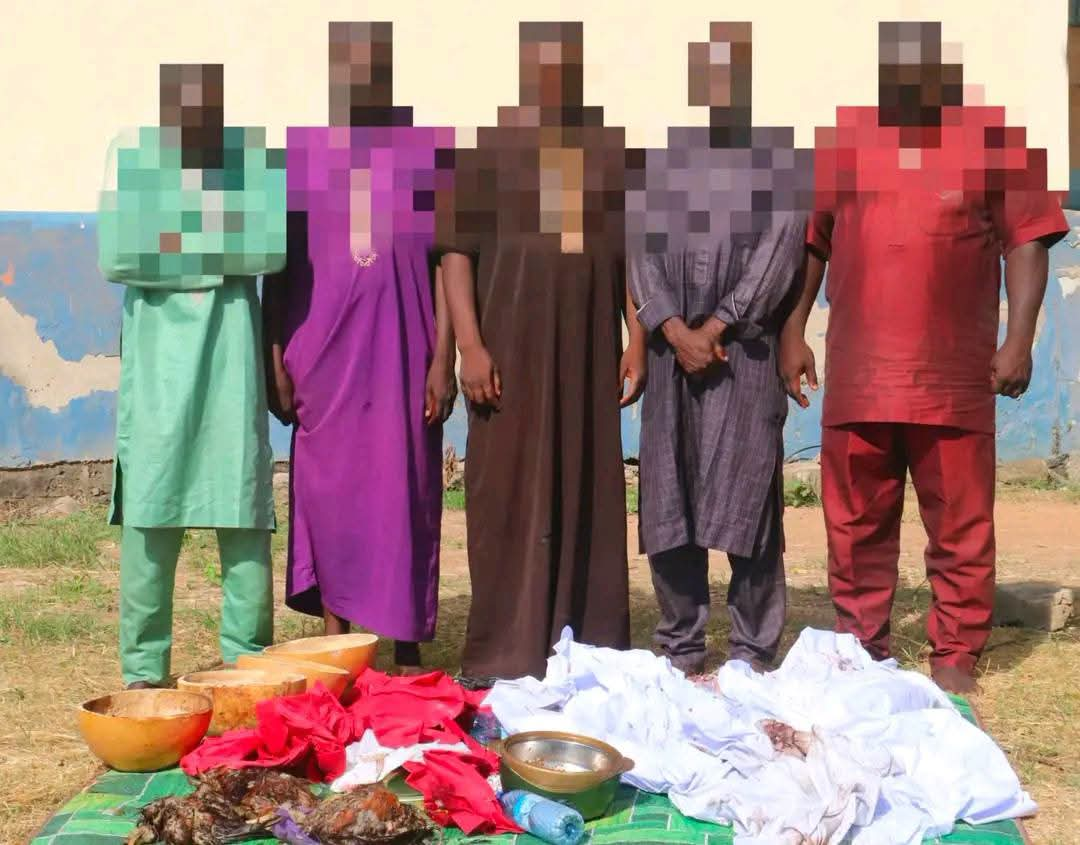
The Niger State Police Command has arrested five suspects, including four fathers accused of offering their biological children for money rituals in exchange for wealth.
The suspects were reportedly apprehended while allegedly preparing to perform a money ritual at an isolated compound in the Garima area of Bosso, Minna, following an intelligence report received by police operatives.
The Police Public Relations Officer, SP Wasiu Abiodun, disclosed this in a statement issued in Minna, saying the operation was carried out on October 27, 2026, at about 8:30pm.
According to him, operatives of the Anti-Kidnapping Unit, while on routine patrol around Bosso, received information about suspected ritual activities taking place at an isolated compound in Garima.
The officers reportedly stormed the location and arrested five men, identified as Mohammed Idris Dogara, 57, from Nasarawa State but residing in Bosso; Aliyu Sule, 25; Abubakar Abdullahi, 40, both of New Garima; Ibrahim Mohammed Hamisu, 43; and Shehu Abubakar, 40, a native doctor from Maikunkele.
Items recovered from the scene included blood-stained red and white clothing, four calabashes, two live chickens, three slaughtered chickens, a blood-stained knife and a large mat on which the suspected ritual materials were arranged.
The police said preliminary investigations revealed that four of the suspects — Ibrahim, Abubakar, Aliyu and Mohammed — had approached the native doctor to perform money rituals for them using a human skeleton allegedly discovered during mining activities.
However, the native doctor reportedly declined their request, insisting that he did not offer such services.
The four men allegedly persisted and offered their biological children as sacrifices in exchange for different sums of money.
Following their insistence, the native doctor reportedly instructed each of them to procure a chicken and meet at a designated location for the ritual.
The police said the suspects were arrested while allegedly carrying out the activities. Aliyu Sule was reportedly found holding a blood-stained knife and preparing to slaughter his chicken, while three other suspects had already slaughtered theirs.
The command added that the suspects had confessed to the allegations and were undergoing further investigation before being charged to court.
Meanwhile, the police statement did not disclose the identities or ages of the children allegedly offered for the ritual, or whether they had been located and placed under protective care.
It also remained unclear whether any of the children had been exposed to immediate danger or whether the alleged ritual had progressed beyond the slaughtering of the chickens.
The circumstances surrounding the alleged discovery of the human skeleton and its intended use in the ritual were also not fully explained by the police.
metro
NNPCL Slashes Petrol Price By Up To ₦80, Sells At ₦1,325 Per Litre In Abuja

NNPCL Slashes Petrol Price By Up To ₦80, Sells At ₦1,325 Per Litre In Abuja
ABUJA — Motorists in Abuja have received some relief following a downward adjustment in petrol pump prices by the Nigerian National Petroleum Company Limited (NNPCL), with its retail outlets now dispensing the product at ₦1,325 per litre in parts of the Federal Capital Territory.
The reduction, which followed a recent adjustment in the petrol pricing structure by the Dangote Petroleum Refinery, represents a decrease of between ₦45 and ₦80 per litre compared with the previous prices charged by NNPCL retail outlets.
According to a report by DAILY POST published on Wednesday, November 4, 2026, a market survey showed that NNPCL filling stations in Abuja and neighbouring areas had adjusted their pump prices from between ₦1,370 and ₦1,405 to ₦1,325 per litre.
The new price was reportedly implemented at the company’s retail outlets in Gwarimpa and along the Kubwa Expressway.
A fuel attendant at one of the affected NNPCL filling stations confirmed the development, explaining that the downward adjustment took effect on Wednesday afternoon.
The latest reduction comes amid renewed movements in Nigeria’s downstream petroleum market, where changes in the prices of petrol supplied by domestic refineries and depot operators continue to influence retail pump prices.
Barely two days before the adjustment, Dangote Petroleum Refinery reportedly reduced its petrol gantry price to ₦1,215 per litre, prompting expectations that filling stations would review their retail prices downward.
The development had raised hopes among motorists that the reduction in the refinery’s wholesale price would translate into cheaper petrol at filling stations across the country.
However, the impact has not been uniform across locations, as petrol prices continue to fluctuate among different marketers.
In Lagos, for instance, separate market checks reported by Vanguard showed that NNPCL and MRS filling stations were selling petrol at approximately ₦1,360 per litre, while some independent marketers charged between ₦1,365 and ₦1,370.
The differing prices highlight the competitive and changing nature of Nigeria’s deregulated downstream petroleum market.
Although the latest adjustment offers some relief to motorists patronising the affected NNPCL outlets in Abuja, it remains unclear whether the company will extend the new price to all its filling stations nationwide.
For now, motorists in Abuja can take advantage of the reduced price at the affected outlets, while consumers elsewhere will have to monitor developments in their respective locations as petroleum marketers continue to adjust their pump prices.
NNPCL Slashes Petrol Price By Up To ₦80, Sells At ₦1,325 Per Litre In Abuja
-

 metro2 days ago
FG’s N50,000 Relief: OPay Details Eligibility Check Process, Issues Strong Warning Against Scams
-

 metro2 days ago
Bandits Demand Over ₦100m Ransom for 15 Abducted Islamiya Students in Niger
-

 metro3 days ago
Tears In Ebonyi Community As Newlyweds, Groom’s Mother, Seven Others Perish In Crash
-

 International3 days ago
Australia Under Pressure To Scrap $368bn US-UK Nuclear Submarine Deal As Inquiry Warns Of China War
-

 Politics3 days ago
DSS Denies Plot to Disrupt ADC Rally, Orders Probe into Atiku’s Allegations
-

 metro3 days ago
‘I Went to My Pastor for Deliverance, Ended Up in Bed With Him’ – Lady Recounts Encounter
-

 International2 days ago
Musk Breaks Silence After $458M Gamble Backfires in Historic Democratic Sweep
-

 News2 days ago
Omoda and Jaecoo Race Past 1.4m Sales, Expand Push into AI, Electrification