

International
X banned in Brazil after disinformation row

X banned in Brazil after disinformation row
X, formerly Twitter, has been banned in Brazil after failing to meet a deadline set by a Supreme Court judge to name a new legal representative in the country.
Alexandre de Moraes ordered the “immediate and complete suspension” of the social media platform until it complies with all court orders and pays existing fines.
The row began in April, with the judge ordering the suspension of dozens of X accounts for allegedly spreading disinformation.
Reacting to the decision, X owner Elon Musk said: “Free speech is the bedrock of democracy and an unelected pseudo-judge in Brazil is destroying it for political purposes.”
The social media network is said to be used by at least a 10th of the nation’s 200 million inhabitants.
By Saturday morning some users had reported access to the platform was no longer possible.
It closed its office in Brazil earlier this month, saying its representative had been threatened with arrest if she did not comply with orders it described as “censorship” – as well as illegal under Brazilian law.
Justice Moraes had ordered that X accounts accused of spreading disinformation – many supporters of the former right-wing president Jair Bolsonaro – must be blocked while they are under investigation.
He said the company’s legal representatives would be held liable if any accounts were reactivated.
X has been threatened with fines for refusing to comply with this order, with the company and Mr Musk joining critics in Brazil in accusing the judge as being left-wing.
It is the latest in a series of rows involving the tech billionaire – who has clashed with the EU over the regulation of X and earlier this month became embroiled in a war of words with UK Prime Minister Sir Keir Starmer.
The head of Brazil’s telecommunications agency, which has been tasked with suspending the platform, said he is “proceeding with the compliance” to do so, according to Reuters news agency.
READ ALSO:
- Gunmen invade Anambra LG secretariat, set buildings, car ablaze
- Drama as PDP founding leader dumps party
- Breaking: Again, police summon Ajaero, NLC president, scribe
Justice Moraes has given companies such as Apple and Google a five-day deadline to remove X from its application stores and block its use on iOS and Android systems.
He added that people or businesses using means such as VPNs (virtual private network) to access the platform could be fined R$50,000 (£6.7k).
According to the judge’s order, a ban will be in effect until X names a new legal representative in the country and pays fines for violating Brazilian law.
In a previous post from one of its official accounts, X had said it would not comply with the demands.
“Soon, we expect Judge Alexandre de Moraes will order X to be shut down in Brazil – simply because we would not comply with his illegal orders to censor his political opponents,” the post said.
“The fundamental issue at stake here is that Judge de Moraes demands we break Brazil’s own laws. We simply won’t do that.”
Meanwhile, the bank accounts of Mr Musk’s satellite internet firm Starlink have been frozen in Brazil following an earlier order by the country’s Supreme Court.
Starlink responded with a post on X which said the “order is based on an unfounded determination that Starlink should be responsible for the fines levied – unconstitutionally – against X.”
READ ALSO:
- Nigerian man arrested in Pakistan with cocaine capsules in stomach
- Lagos-Ibadan Expressway accident claims six lives, three injured
- Easy steps to link NIN with MTN, Airtel, Glo, other lines in 2024
Mr Musk also said on X that “SpaceX and X are two completely different companies with different shareholders.”
Starlink is a subsidiary of Mr Musk’s rocket firm SpaceX.
In 2022, the government of then-President Bolsonaro gave Starlink the green light to operate in Brazil.
As South America’s largest country, Brazil and its remote regions in the Amazon have huge potential for Starlink, which specialises in providing internet services to isolated areas.
Justice Moraes gained prominence after his decisions to restrict social media platforms in the country.
He is also investigating Mr Bolsonaro and his supporters for their roles in an alleged attempted coup on 8 January last year.
X is not the first social media company to come under pressure from authorities in Brazil.
Last year, Telegram was temporarily banned over its failure to cooperate with requests to block certain profiles.
Meta’s messaging service Whatsapp also faced temporary bans in 2015 and 2016 for refusing to comply with police requests for user data.
X banned in Brazil after disinformation row











International
Iran Flogs Singer, Four Others 74 Times Over Hijab-Free Performance

Iranian singer flogged over hijab-free concert
The punishment followed a video of Ahmadi’s “Caravanserai Concert”, recorded in December 2024 at the historic Deir-e Gachin Caravanserai near Qom and released online.
The performance, staged without a live audience, showed the singer wearing a sleeveless black dress with her hair uncovered while singing alongside male musicians, in defiance of Iran’s compulsory hijab regulations and restrictions on women performing publicly.
The video attracted millions of views on YouTube and drew attention to restrictions on women’s freedom of expression and participation in public cultural activities in the Islamic Republic.
Iranian authorities subsequently opened a criminal case against Ahmadi and members of her production team over what officials described as an illegal performance that violated religious and legal standards.
A criminal court in Qom convicted nine people in June over what it described as offending public decency through the production and dissemination of immoral content online. The defendants denied the accusations.
An appeals court upheld the sentences in September, including the flogging punishment and two-year restrictions on artistic activities and foreign travel.
READ ALSO:
- Nollywood Legend Pete Edochie Dies at 79 After Battle With Prostate Cancer
- BREAKING: Court Sacks Omo-Agege as NDC Senatorial Candidate, Orders INEC to Remove His Name
- Fraud, Drugs, Money Laundering: US Targets 157 Nigerians for Deportation
It was unclear what happened to the other four people sentenced in the case, as reports confirmed the flogging of Ahmadi and four members of her team.
The enforcement of the punishment reportedly came after lawyers unsuccessfully sought to overturn the verdict, reduce the sentences or secure a suspension of the flogging.
One of the lawyers told the BBC that the defence team had exhausted efforts to stop the punishment but was unable to prevent its immediate enforcement.
The case has renewed criticism of Iran’s treatment of women, particularly artists who challenge compulsory dress regulations and restrictions on female performances.
Women in Iran are required to observe the country’s hijab rules, while solo public singing by women is restricted, particularly in performances before mixed-gender audiences.
The restrictions have remained a major flashpoint since the 2022 protests following the death of Mahsa Amini, a young Kurdish-Iranian woman who died in custody after being arrested over alleged dress-code violations.
Human rights organisations have repeatedly condemned flogging as cruel, degrading and a violation of international human rights standards, urging Iranian authorities to abolish corporal punishment and end restrictions on women’s rights.
Ahmadi’s punishment has further fuelled outrage among artists, activists and supporters of women’s rights, who say the prosecution reflects the authorities’ continued efforts to suppress artistic freedom and punish women who challenge compulsory hijab laws.
Iranian singer flogged over hijab-free concert
International
Fraud, Drugs, Money Laundering: US Targets 157 Nigerians for Deportation
Fraud, Drugs, Money Laundering: US Targets 157 Nigerians for Deportation
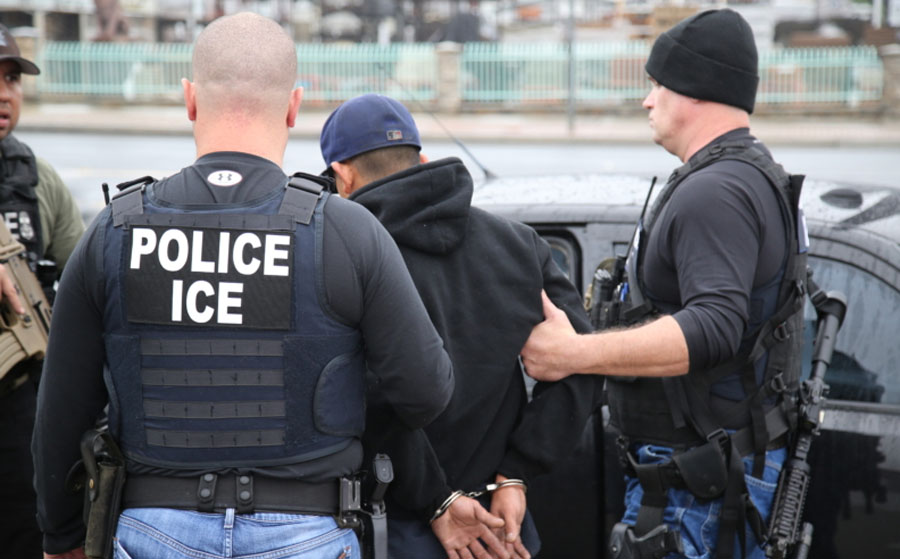
The United States government has listed 157 Nigerians on its immigration enforcement register for possible deportation over various alleged criminal offences, including fraud, money laundering, drug-related crimes, identity theft, assault and offences involving children.
The latest update by the US Department of Homeland Security (DHS) added 24 Nigerians to its controversial Worst of the Worst register, bringing the total number of Nigerians featured on the list to 157.
The development was reported on Tuesday, November 24, 2026, following an update to the DHS website, which features foreign nationals arrested by the US Immigration and Customs Enforcement (ICE) over serious criminal allegations.
According to information published by the department, the newly listed Nigerians were arrested in different locations across the United States over offences ranging from financial crimes and drug-related violations to weapons offences and child cruelty.
Among those named is Emmanuel Omowaiye, arrested in Richmond, Texas, over alleged mail fraud, while Laurene Onwuka was arrested in Chantilly, Virginia, over fraud by impersonation.
Olusegun Shonekan, arrested in Newark, New Jersey, was listed over wire fraud, while Olusegun Olaseni was arrested in Greencastle, Indiana, over the alleged sale of amphetamine.
Others include Peter Ude, arrested in Atlanta, Georgia, over wire fraud, and Newton Jemide, arrested in Fort Dix, New Jersey, over alleged wire fraud, conspiracy and mail fraud.
The register also features Shedrack Umukoro, arrested in Yazoo City, Mississippi, over money laundering; Olasoji Akinbode, arrested in Kearny, New Jersey, over fraud by impersonation; and Oluwatosin Afolabi, arrested in Conroe, Texas, over fraud.
READ ALSO:
- Uduere Killings: Ughelli Chairman Accuses Omo-Agege’s Camp of Triggering Deadly Clash, Demands IGP Probe
- ‘Shame on You’: Fayose Blasts Nigerian Youths Over Poor Protest Turnout
- KWAM 1 Warns Tinubu Over Economic Hardship, Says Nigerians Should Not Suffer to Death
Alameen Adetunji Tokosi, arrested in Chicago, Illinois, was listed over heroin possession, while Joshua Ipoade, arrested in Atlanta, Georgia, was named over wire fraud.
Another Nigerian, Michael Orji, arrested in Oxford, Wisconsin, was listed over several alleged offences, including weapons-related violations, fraud, identity theft, wire fraud, falsely claiming US citizenship and money laundering.
Other Nigerians on the updated register include Ahmadu Apooyin, arrested in Baltimore, Maryland, over a cocaine-related offence; Teslim Kiriji, arrested in Yazoo City, Mississippi, over money laundering; and Onomen Uduebor, arrested in Seattle, Washington, over identity theft.
Charles Ochi and Daniel Eta, both arrested in White Deer, Pennsylvania, were listed over money laundering and wire fraud, respectively.
The list further includes Ifeanyi Ibennah, arrested in Tampa, Florida, over alleged cruelty towards a child; Kazeem Runsewe, arrested in Thomson, Illinois, over wire fraud; and Fatiu Lawal, arrested in Lompoc, California, also over wire fraud.
Others are Justin Akubueze, arrested in Orem, Utah, over money laundering; Moyinoluwaseun Okeowo, arrested in Orlando, Florida, over larceny, forgery and concealing stolen property; Babajide Oluwaseun Faseyi, arrested in Alden, New York, over assault; and Bright Eigbedion, arrested in Lompoc, California, over money laundering.
The DHS said the register was part of President Donald Trump’s administration’s efforts to remove foreign nationals involved in serious criminal activities from the United States.
In its description of the initiative, the department said it was fulfilling Trump’s promise to remove what it described as the “worst of the worst criminal aliens” from the country.
The agency explained that the register highlights foreign nationals arrested by ICE over serious criminal activities, including drug and weapons offences, violent crimes, fraud and the misuse or theft of public benefits.
The number of Nigerians featured on the register has increased significantly in recent months. Reports indicated that 124 Nigerians were listed in July, while the figure rose to 134 in September before the latest additions brought it to 157.
However, the DHS has not disclosed specific deportation dates for the Nigerians listed or provided detailed information about the immigration status of each individual.
Importantly, inclusion on the register should not automatically be interpreted as proof of conviction for every offence listed. The descriptions reflect information published by US immigration authorities, while the criminal and immigration proceedings involving the individuals may differ.
The latest development comes amid the Trump administration’s intensified immigration enforcement and efforts to remove foreign nationals it considers to pose serious criminal or public safety concerns.
Fraud, Drugs, Money Laundering: US Targets 157 Nigerians for Deportation
International
Iran Unveils Twin-Missile Launcher, Sends Fresh Warning To US
Iran Unveils Twin-Missile Launcher, Sends Fresh Warning To US
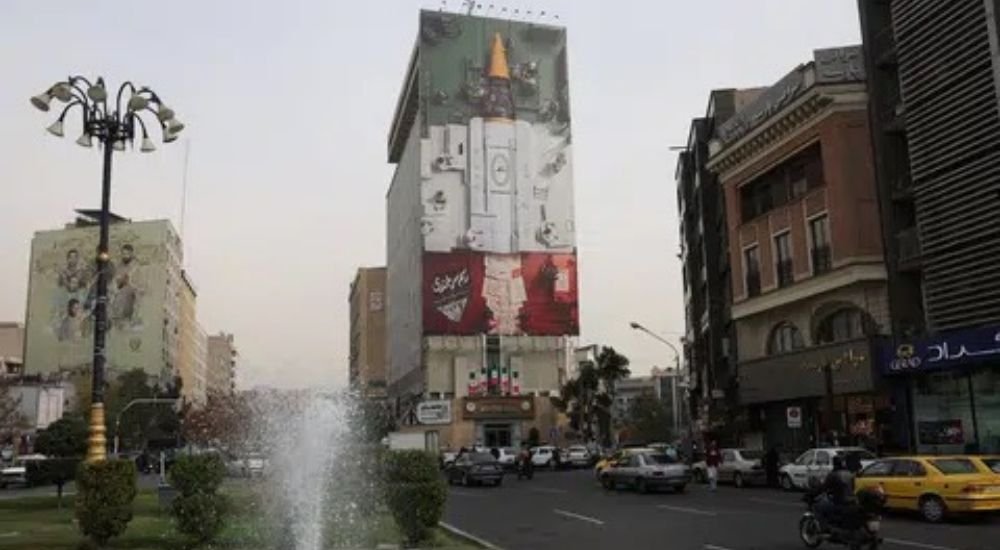
Iran has showcased a new dual-missile launcher capable of firing two missiles simultaneously, while its military commanders issued fresh warnings to the United States amid escalating tensions and concerns over a possible renewal of hostilities.
The newly displayed weapon, reportedly designed to launch two liquid-fuelled missiles at the same time, was unveiled during an inspection of an underground missile facility by senior commanders of Iran’s Islamic Revolutionary Guard Corps (IRGC).
Iranian state television broadcast footage of IRGC Commander-in-Chief Ahmad Vahidi and Aerospace Force commander Seyed Majid Mousavi touring the underground installation, where several missile systems, launchers and other military equipment were displayed.
The unveiling is seen as part of Tehran’s efforts to demonstrate that its military capabilities and missile infrastructure remain operational despite previous attacks targeting its weapons facilities.
During the visit, Vahidi issued a defiant warning to Iran’s adversaries, suggesting that the consequences of confronting the country were only beginning.
Mousavi also claimed that Iran had significantly expanded its military capabilities between recent periods of conflict, with the development of new weapons and systems designed to strengthen its defence and deterrence capabilities.
READ ALSO:
- Gombe: Three Killed, 13 Injured as Alleged Military Shooting Sparks Outcry
- Jimmy Odukoya Sues Sister, Church Trustees Over Removal as Senior Pastor
- UNILAG Gets 10 CNG Buses as FG Expands Campus Transport Scheme to 60 Institutions
The commanders’ remarks accompanied footage of missile launchers, military equipment and extensive underground tunnels, highlighting Iran’s efforts to protect its weapons infrastructure from potential airstrikes.
Iranian state media described the newly displayed launcher as an advancement in the country’s missile development programme, although detailed technical information about its range, accuracy and operational capabilities was not independently established.
Reports surrounding the unveiling also highlighted improvements in Iranian missile guidance technology, including systems designed to operate without relying entirely on the United States-developed Global Positioning System (GPS).
The latest demonstration comes amid continuing tensions between Iran and the United States, particularly over Tehran’s military activities, nuclear programme and regional influence.
Iran has repeatedly warned that any renewed military attack against its territory would attract retaliation, while the United States has maintained pressure on Tehran over issues relating to regional security and nuclear proliferation.
The unveiling also follows previous Iranian announcements showcasing underground missile installations containing ballistic and cruise missile systems.
Tehran has increasingly presented these underground facilities as an important component of its military strategy, arguing that they provide protection for weapons stockpiles and launch systems against aerial attacks.
The latest display appears intended to reinforce Iran’s message that it retains the military capacity to respond to external threats, even after previous attacks on its defence infrastructure.
However, the actual performance and combat effectiveness of the newly displayed dual-missile launcher remain unclear, as the technical claims made by Iranian authorities have yet to receive independent verification.
The development is likely to attract further international attention as Washington and Tehran continue to navigate a tense relationship, with concerns that another military confrontation could have wider consequences for security across the Middle East.
Iran Unveils Twin-Missile Launcher, Sends Fresh Warning To US
-

 metro2 days ago
‘I Paid My Ex-Husband Before He Slept With Me’ – Islamic Preacher Kaola Makes Shocking Revelation
-
 metro11 hours ago
Oyoland Grand Chief Imam Moves to End Feud, Seeks Reconciliation Among Markaziyya, Adabiyyah, Mahdul ‘Arabi
-

 Politics3 days ago
Kwankwaso Made Me Swear on Qur’an to Join APC After Election Victory — Gov Yusuf Reveals Tinubu Deal
-

 Education2 days ago
South-West Leaders Challenged to Emulate Kwankwaso, Invest in Education of Poor Children
-

 News1 day ago
Omokri Arrives in Mexico to Assume Duty as Nigerian Ambassador, Thanks Govt for Ministerial Reception
-
 Politics2 days ago
2027: Makinde Invokes 1966 Coup, Questions Obi-Kwankwaso Ticket
-

 Politics2 days ago
Uduere Killings: Ughelli Chairman Accuses Omo-Agege’s Camp of Triggering Deadly Clash, Demands IGP Probe
-

 metro2 days ago
‘Shame on You’: Fayose Blasts Nigerian Youths Over Poor Protest Turnout