

Sports
Haaland’s brace fires Norway past Brazil into first-ever World Cup quarterfinals
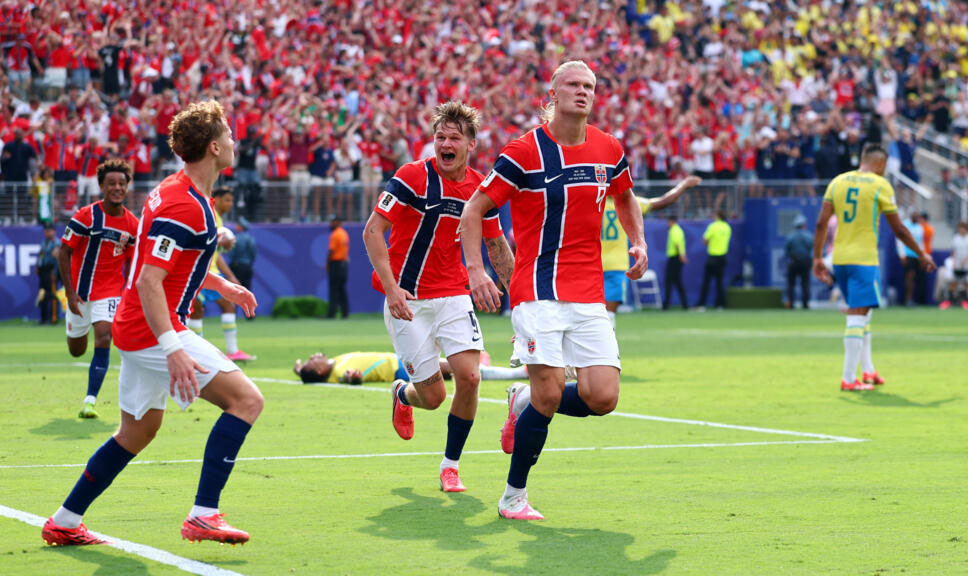
Haaland’s brace fires Norway past Brazil into first-ever World Cup quarterfinals
Erling Haaland produced a sensational late performance, scoring twice in the closing stages as Norway stunned five-time champions Brazil 2-1 to secure a historic place in the 2026 FIFA World Cup quarterfinals.
The dramatic Round of 16 encounter looked destined for extra time before Haaland struck in the 79th and 89th minutes to send the Scandinavian nation into the last eight and end Brazil’s hopes of winning a record-extending sixth FIFA World Cup title. Although Neymar converted a penalty deep into stoppage time, it proved to be only a consolation as Norway held on to complete one of the biggest upsets of the tournament.
The victory marked Norway’s first-ever appearance in a FIFA World Cup quarterfinal, while Brazil suffered a disappointing exit despite entering the tournament among the favourites. Haaland’s brace also took his tally to seven goals, moving him level at the top of the race for the tournament’s Golden Boot.
Norway nearly made the perfect start after just three minutes when Patrick Berg found the back of the net, but the celebrations were cut short after the assistant referee ruled the effort offside.
The Norwegians dominated possession during the opening exchanges, showing composure on the ball and frustrating Brazil’s attacking rhythm. The South Americans relied heavily on quick transitions through Vinícius Júnior, who remained their biggest attacking threat throughout the first half.
Brazil’s best opportunity before the break came after Matheus Cunha was brought down inside the penalty area. Although the referee initially allowed play to continue, a VAR review resulted in a penalty being awarded.
However, Bruno Guimarães failed to give Brazil the lead as Norway goalkeeper Ørjan Nyland guessed correctly and comfortably saved the spot kick. The miss proved to be one of the defining moments of the match and was Brazil’s first failed World Cup penalty since 1986.
Nyland continued to frustrate Brazil with an outstanding goalkeeping display, denying Vinícius Júnior before reacting brilliantly to prevent dangerous efforts from Gabriel Martinelli and Rayan. His commanding presence between the posts ensured Norway remained level despite sustained Brazilian pressure.
At the other end, Haaland found chances difficult to come by for much of the contest as Brazil’s defenders kept the prolific striker under close watch. His only notable opportunity before the breakthrough came when he attempted to chip goalkeeper Alisson, but failed to generate enough height on the effort.
READ ALSO:
- Technician dies protecting family during armed robbery in Ondo
- NNPCL cuts petrol price as Dangote Refinery competition intensifies
- US to closely monitor Nigeria’s 2027 elections, tie future support to religious freedom
Brazil sought fresh attacking inspiration in the second half by introducing Endrick before later bringing on Neymar, while Norway coach Ståle Solbakken responded with attacking substitutions, sending on Oscar Bobb and Andreas Schjelderup.
The tactical adjustments proved decisive.
In the 79th minute, Schjelderup delivered an inviting cross into the penalty area and Haaland rose highest to power a header beyond Alisson, finally breaking the deadlock after spending much of the game under intense defensive pressure.
The goal transformed the contest as Norway grew in confidence while Brazil struggled to regain momentum. The Scandinavian side remained disciplined defensively and intelligently managed possession as frustration mounted among the South Americans.
Haaland put the result beyond doubt in the 89th minute, producing a composed finish after Norway capitalised on the spaces left by Brazil’s desperate search for an equaliser. His second goal sparked wild celebrations among the Norwegian players and supporters as they closed in on a famous victory.
Brazil were handed a lifeline in the eighth minute of stoppage time when the referee awarded another penalty. Neymar calmly converted from the spot to reduce the deficit to 2-1, but there was insufficient time for a comeback.
Norway comfortably managed the remaining moments before the final whistle confirmed one of the biggest surprises of the 2026 FIFA World Cup. The historic victory sends the Scandinavian nation into the quarterfinals, where they will continue their remarkable campaign with renewed belief.
The defeat brought Brazil’s quest for a sixth World Cup title to an abrupt end and is likely to trigger serious reflection over the team’s performance after failing to recover from Guimarães’ first-half penalty miss.
For Norway, however, the night belonged to Haaland and Nyland. While the goalkeeper’s heroics kept Brazil at bay throughout the match, Haaland’s clinical late brace once again demonstrated why he is regarded as one of world football’s most prolific strikers and ensured Norway’s dream of winning a first-ever FIFA World Cup remains alive.
Haaland’s brace fires Norway past Brazil into first-ever World Cup quarterfinals











Sports
Portugal Beat Denmark 4-2 Without Ronaldo in Nations League Clash
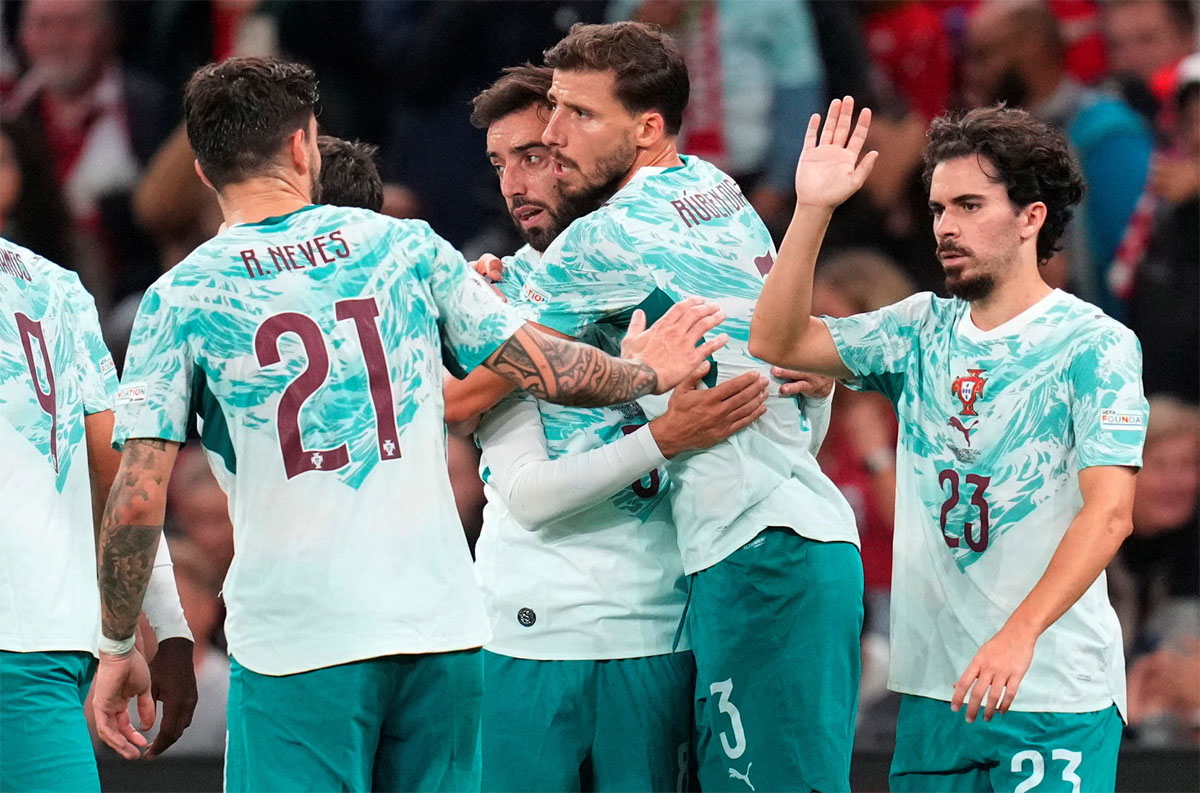
Portugal Beat Denmark 4-2 Without Ronaldo in Nations League Clash
Portugal defeated Denmark 4-2 in the UEFA Nations League on Thursday, producing a strong performance despite the absence of captain Cristiano Ronaldo.
The result extended Portugal’s perfect start under head coach Jorge Jesus, who has now overseen three victories from three matches since taking charge of the national team.
Playing in Copenhagen, Portugal took the lead in the 13th minute when João Cancelo finished from close range after Denmark struggled to clear the ball.
The hosts responded when Mikkel Damsgaard produced a composed finish to level the score.
Portugal regained the advantage shortly afterwards through Gonçalo Ramos, who found the net at the near post to make it 2-1.
Denmark refused to surrender and drew level again early in the second half through Rasmus Højlund.
READ ALSO:
- Military Personnel Begin Receiving FG-Approved Salary Increase
- Trump Threatens Iran With ‘Very Hard’ Response Over Flydubai Attack
- Phyna Knocks Out Nkechi Blessing in Fourth Round, Wins ₦50m, New Car
Portugal then regained control of the contest, with Vitinha heading home in the 57th minute to restore the visitors’ lead.
João Félix completed the scoring three minutes from full time, finishing a counter-attack to secure the 4-2 victory.
The match was played against the backdrop of Ronaldo’s absence after the veteran forward left Portugal’s training camp before the game.
Ronaldo’s departure followed a decision by Jesus not to start him against Denmark. The 41-year-old subsequently said in a social media post that he would explain the circumstances surrounding his exit at a later time.
With Ronaldo unavailable, Jesus handed Ramos the responsibility of leading the attack, and the Paris Saint-Germain forward responded with Portugal’s second goal.
The victory moved Portugal to nine points from three matches in the competition and maintained their winning run under Jesus.
Denmark, meanwhile, were left to reflect on another match in which they twice came from behind but were unable to prevent Portugal from taking all three points.
Portugal will continue their Nations League campaign against Norway, while attention is expected to remain on Ronaldo and his future involvement with the national team.
Portugal Beat Denmark 4-2 Without Ronaldo in Nations League Clash
Sports
Why Ronaldo Left Portugal Camp Ahead of Denmark Clash
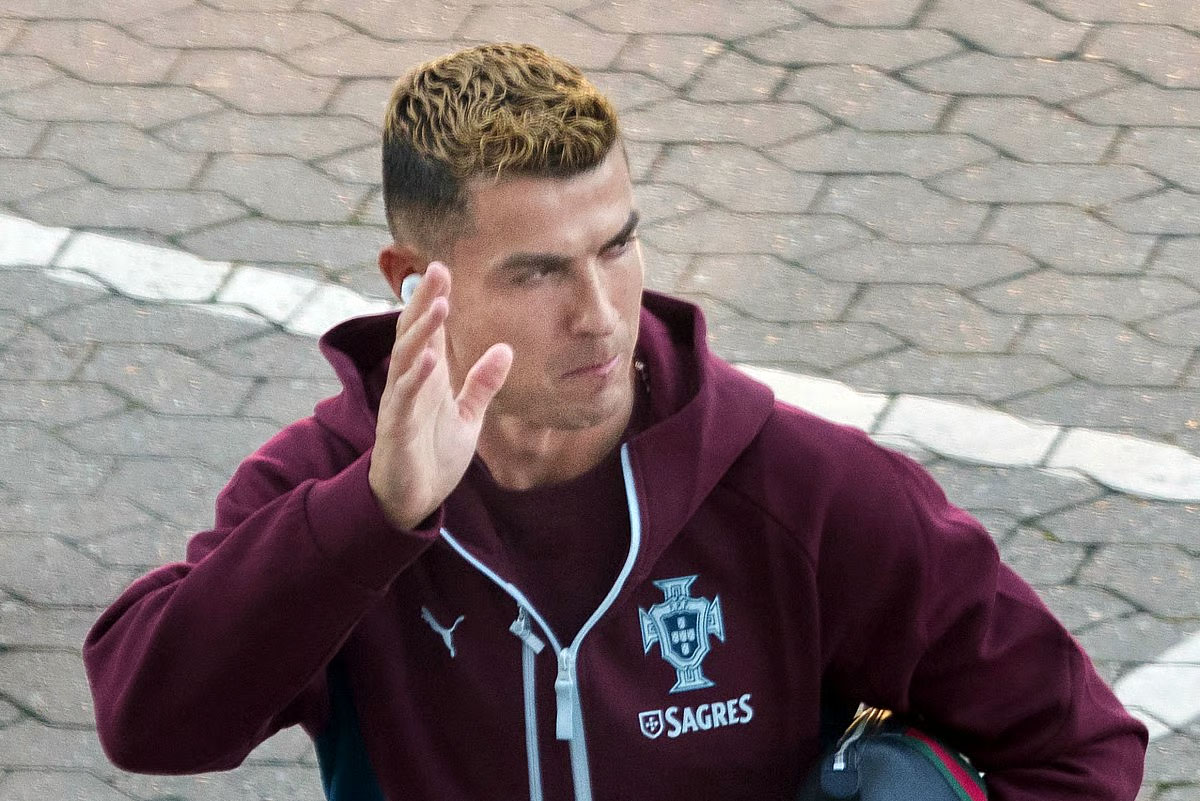
Why Ronaldo Left Portugal Camp Ahead of Denmark Clash
Cristiano Ronaldo has left the Portugal national team camp ahead of the country’s UEFA Nations League meeting with Denmark, following reports of tension over his role in the team.
Ronaldo’s departure came after Portugal coach Jorge Jesus confirmed that the 41-year-old forward would not start against Denmark.
The situation reportedly followed Portugal’s 2-1 victory over Norway, when Ronaldo remained on the bench throughout the match despite warming up during the game.
According to reports, Ronaldo was unhappy after he was not introduced and went straight to the dressing room at the final whistle rather than joining his teammates in acknowledging the Portuguese supporters.
Jesus later addressed the issue and acknowledged that Ronaldo was unhappy with the decision, but denied that there had been a major confrontation between the two.
The Portugal coach also dismissed reports that Ronaldo had refused to train, explaining that the forward had instead completed individual mobility and strengthening exercises.
READ ALSO:
- 2027: Amaechi Vows to Resign If Nigeria Fails to Change Within One Year
- Dangote Sets 40-Month Deadline for $16bn East Africa Refinery in Kenya
- Nigeria at 66: Tinubu Unveils Fresh Push for Lower Costs, Jobs, Prosperity (Full Text)
The situation intensified after Jesus confirmed that Ronaldo would again not be in the starting lineup for the Denmark vs Portugal fixture, with Gonçalo Ramos expected to lead the attack.
Jesus said Ronaldo could still be introduced as a substitute depending on how the match developed.
Ronaldo subsequently held a conversation with Portuguese Football Federation president Pedro Proença before leaving the national team camp in Copenhagen.
The Portugal captain later posted a statement on social media confirming his departure and indicating that he would explain the circumstances behind the decision at a later time.
He did not directly accuse Jesus or the Portuguese federation of wrongdoing in the statement.
The episode has nevertheless generated renewed questions about Ronaldo’s role in the Portugal national team, particularly as he approaches the later stages of his international career.
Ronaldo remains Portugal’s record goalscorer and one of the country’s most decorated players. He has also previously indicated that his playing career is approaching its final stage.
For now, the confirmed sequence is that Ronaldo was left unused against Norway, Jesus subsequently announced that he would not start against Denmark, Ronaldo met with the federation president and then left the training camp.
Portugal’s immediate focus remains its Nations League campaign, while further details about Ronaldo’s decision are expected to emerge if the player follows through on his promise to explain the circumstances.
Why Ronaldo Left Portugal Camp Ahead of Denmark Clash
Sports
Super Eagles Suffer Bissau Nightmare as Guinea-Bissau Smash Nigeria 3-0
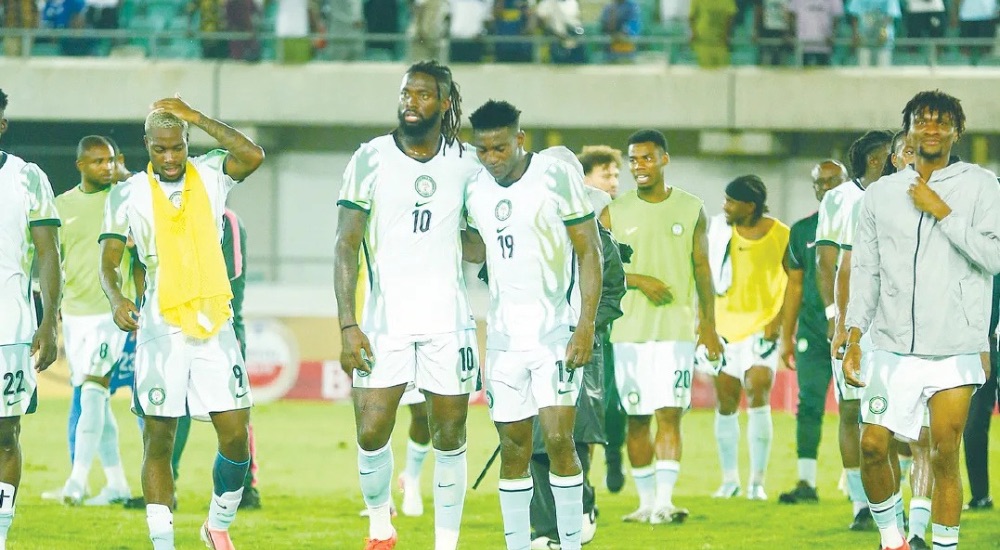
Super Eagles Suffer Bissau Nightmare as Guinea-Bissau Smash Nigeria 3-0
Nigeria’s Super Eagles suffered a stunning 3-0 defeat to Guinea-Bissau on Tuesday night, as their 2027 Africa Cup of Nations (AFCON) qualifying campaign suffered a major setback in Bissau.
The hosts produced a dominant display at the Estádio Nacional 24 de Setembro, scoring once in the first half and twice after the break to move to the top of Group L with six points from two matches.
Franculino Djú put Guinea-Bissau ahead in the 15th minute after receiving a long pass from Renato Nhaga. He worked his way into the Nigerian penalty area before curling a left-footed effort beyond goalkeeper Stanley Nwabali.
The Super Eagles struggled to find their rhythm after conceding and failed to create enough clear chances to trouble the hosts before the interval.
Coach Eric Chelle responded at the start of the second half by introducing Moses Simon and Moses Usor for Taiwo Awoniyi and Frank Onyeka.
READ ALSO:
- Trump Denies Offering Iran Sanctions Relief, Release of Frozen Funds
- Nigeria XI vs Guinea-Bissau: Awoniyi, Lookman, Adams Lead Super Eagles Attack
- Federal Workers Back N500 Petrol Demand, Threaten Three-Day Warning Strike
The changes did little to alter the pattern of the match, with Guinea-Bissau continuing to pose the greater attacking threat.
The hosts doubled their advantage in the 66th minute through Mama Baldé, who collected a pass from Mamadi Camará before cutting into the Nigerian box and firing a low shot past Nwabali.
Chelle subsequently brought on George Ilenikhena and Raphael Onyedika for Akor Adams and Wilfred Ndidi, while Tolu Arokodare replaced Ademola Lookman.
Ilenikhena came close to reducing the deficit late in the game, but Guinea-Bissau goalkeeper Embadjé made another important save to preserve his side’s two-goal advantage.
Nigeria’s miserable night was completed in the fifth minute of stoppage time when Álvaro Djaló finished a through ball from Tamble Monteiro to make it 3-0.
The result leaves Nigeria with three points from two matches, following their opening 2-1 victory over Madagascar.
Guinea-Bissau, meanwhile, have six points after beating Tanzania 2-0 in their opening fixture before defeating Nigeria.
Madagascar and Tanzania drew 1-1 in the other Group L match.
With Tanzania already guaranteed a place at the 2027 AFCON as one of the tournament co-hosts, Nigeria, Guinea-Bissau and Madagascar are competing for the qualifying position available to the highest-ranked non-host nation in the group.
The Super Eagles will have an opportunity to respond when they face Tanzania in a double-header during the November international window.
For Chelle and his players, however, the 3-0 defeat in Bissau leaves little room for another disappointing performance as the AFCON 2027 qualifying race continues.
Super Eagles Suffer Bissau Nightmare as Guinea-Bissau Smash Nigeria 3-0
-

 Entertainment3 days ago
Phyna Knocks Out Nkechi Blessing in Fourth Round, Wins ₦50m, New Car
-
 metro2 days ago
NYSC Kidnap: Abductors Demand N950m for 19 Prospective Corps Members in Imo
-
 Entertainment3 days ago
Olu Jacobs Laid to Rest in Lagos as Dignitaries, Nollywood Stars Honour Screen Icon
-

 Politics2 days ago
2027: Oshiomhole Dares Opposition Over ₦500 Petrol Promise, Says APC Will Take Argument to Nigerians
-

 International3 days ago
Trump Threatens Iran With ‘Very Hard’ Response Over Flydubai Attack
-

 metro3 days ago
Nigeria Launches 11-Character Digital Postcode System for Every Addressable Building
-
 metro2 days ago
Amaechi: Tinubu’s Policies Made My Mother’s Drugs Unaffordable
-
 Politics3 days ago
NDC Protests Police Cancellation of Obi-Kwankwaso March in Akwa Ibom