
metro
NAF disowns online admission into school of medical sciences, aviation medicine

THE Nigerian Air Force (NAF) has dismissed an online notification of admission into National Diploma/Higher National Diploma (ND/HND) Nursing Programmes for the 2023/2024 Academic Session at NAF School of Medical Sciences and Aviation Medicine (NAFSMSAM), Kaduna.
The Director, Public Relations and Information, NAF, Air Commodore Ayodele Famuyiwa, in a statement on Tuesday, described the said online admission notification as “spurious and fraudulent”.
Famuyiwa said the advert signed by an ‘impostor, Air Commodore Anike Obinna’, asking unsuspecting members of the public to pay a non-refundable fee of N15,000.00 for the purchase of admission form was fake.
READ ALSO:
- BREAKING: DSS confirms plot to install interim government to stop Tinubu
- US student, work visa fees rise by 15%
- Afenifere leaders disagree on Tinubu’s election, two officers suspension
According to him, the fraudster also provided two fake telephone numbers 07047290540 and 09169461866 for enquiries in an effort to legitimize the illicit act.
“The NAF wishes to inform the public that it has nothing to do with the person or claims by the fraudster.
“The Service is yet to commence admission process into ND/HND programmes at NAFSMSAM and has not authorised any agent or third party to advertise or collect money on its behalf for such things.
“Admission into ND/HND Nursing programmes is conducted by the NAF College of Nursing Sciences through the Joint Admission and Matriculation Board (JAMB).
“Also, Information regarding admission into ND/HND programmes at NAFCONS will be communicated to the general public in due course through the College official website www.nafcons.edu.ng.
“Therefore, members of the public are advised to disregard the advert currently being circulated on social media platforms as anyone involved does so at his/her risk,” he said. (NAN)








Education
Students expelled as police probe viral assault at Igbinedion School

Students expelled as police probe viral assault at Igbinedion School
The Edo State Police Command has launched an investigation into a viral video showing a violent bullying incident involving students of Igbinedion Secondary School.
The footage, which has been widely circulated on social media, shows two students repeatedly beating, kicking and dragging a younger boy believed to be in a junior class across the floor.
During the assault, one of the attackers was seen using a belt to flog the victim, while another stomped on the boy’s chest as he cried out in pain.
The victim could be heard screaming while another student, who appeared to be recording the incident, pleaded with the attackers to stop.
The motive behind the assault has not yet been established.
Reacting to the incident on Sunday, the Edo State Police Command’s spokesperson, SP Eno Ikoedem, said the police were aware of the disturbing video and had commenced steps to investigate the matter.
She said the Commissioner of Police in the state, Monday Agbonika, had directed the Divisional Police Officer in charge of the area to immediately visit the school and begin a thorough inquiry.
“The Commissioner of Police has directed the Divisional Police Officer in charge of the area to proceed to the school and commence a detailed inquiry into the matter,” Ikoedem said.
She noted that although the school authorities had taken disciplinary action, the police would still carry out a comprehensive investigation into the incident.
According to her, the management of the school informed the police that the students involved in the bullying had already been expelled.
The command condemned all forms of bullying, violence and intimidation among students, warning that anyone found culpable would be dealt with in accordance with the law and in line with their ages.
Ikoedem also urged members of the public to remain calm and assist the police with credible information that could aid the ongoing investigation.
metro
Five Sunnah Acts Muslims Should Observe on Eid al-Fitr

Five Sunnah Acts Muslims Should Observe on Eid al-Fitr
Eid al-Fitr marks the conclusion of the blessed month of Ramadan for Muslims worldwide. After weeks of fasting, reflection, and devotion, Eid is a day of celebration, gratitude, and communal joy. Beyond festive meals, new clothing, and visits with family and friends, Eid carries significant religious meaning, with certain practices recommended by the Prophet Muhammad (peace be upon him) to ensure the day is observed mindfully. These practices, known as Sunnah, guide Muslims in combining spirituality, gratitude, and social connection.
Here are five Sunnah acts recommended for Eid day, enhanced with additional insights from authentic Islamic sources:
1. Take a Bath (Ghusl) Before Eid Prayer
On Eid morning, it is Sunnah to perform Ghusl, a ritual bath, before heading out for the Eid prayer. This act of cleanliness symbolizes physical purification and spiritual readiness for the special day.
Islamic scholars note that just as Muslims prepare for Jumu’ah (Friday) prayers, Eid requires similar attention to personal hygiene. The Prophet ﷺ emphasized presenting oneself in a clean and pleasant state, reflecting respect for the day and the communal worship it entails.
Reference: Narrations in Sunan Abu Dawud and Sahih Muslim highlight the Prophet ﷺ’s practice of bathing before Eid prayers.
READ ALSO:
- Ramadan Day 26: Understanding the Importance of Zakatul Fitr Before Eid
- UK MPs Ask Starmer to Challenge Tinubu Over Killings of Christians in Nigeria
- Trump Urges UK, China, Others to Send Warships as Iran Threatens Strait of Hormuz Oil Route
2. Wear Clean or New Clothes
Another Sunnah practice is to wear clean and presentable clothes for Eid. While wearing new garments is recommended if financially feasible, it is not obligatory. The focus is on neatness, modesty, and expressing the joy of the occasion.
Dressing well for Eid symbolizes gratitude to Allah and reflects the celebratory nature of the day. Traditionally, Muslims would wear their best available clothing to the Eid prayer to honor the communal gathering and the blessings of the month.
3. Eat Before Eid Prayer (for Eid al-Fitr)
For Eid al-Fitr, it is Sunnah to eat a small meal before attending the Eid prayer. The Prophet ﷺ reportedly ate dates or a small portion of food before leaving home. This practice serves as a marker for the conclusion of Ramadan fasting and allows believers to begin the day in a state of nourishment and spiritual reflection.
It is important to note that for Eid al-Adha, the Sunnah differs: the Eid prayer is offered on an empty stomach, with the sacrificial feast taking place afterward.
4. Recite the Eid Takbeer
The Takbeer (Allahu Akbar, Allahu Akbar… La ilaha illa Allah, Allahu Akbar wa Lillah al-Hamd) is a declaration glorifying Allah, recited from the night before Eid until the conclusion of the Eid prayer.
Muslims often recite the Takbeer while traveling to the mosque or during personal devotion at home. It serves as a reminder of Allah’s greatness and reinforces the spiritual purpose behind the Eid celebrations.
Reference: Scholars in Fiqh al-Sunnah recommend the Takbeer for both Eid al-Fitr and Eid al-Adha, emphasizing its communal and spiritual significance.
5. Greet Others and Spread Joy
Eid is a time for strengthening bonds, kindness, and community cohesion. Muslims are encouraged to greet one another with phrases such as “Eid Mubarak” and to visit family, friends, and neighbours.
Sharing in the happiness of the day, giving gifts, and checking on vulnerable community members are all considered Sunnah practices that enhance the communal spirit and reflect the Prophet’s teachings on compassion and unity.
Reference: The Prophet ﷺ said: “The one who greets and shakes hands spreads peace and love among the community.” (Sunan Ibn Majah)
A Day of Gratitude and Reflection
Eid is more than festivity; it is a day of gratitude. Muslims thank Allah for granting the strength to complete Ramadan, for the blessings received, and for the opportunity to grow spiritually. Observing these Sunnah acts transforms Eid from a social celebration into a spiritually enriching day, balancing devotion, generosity, and community engagement.
By performing the Sunnah of bathing, wearing clean clothes, eating before prayer, reciting the Takbeer, and greeting others, Muslims begin Eid with mindfulness, gratitude, and a sense of shared joy.
Five Sunnah Acts Muslims Should Observe on Eid al-Fitr
metro
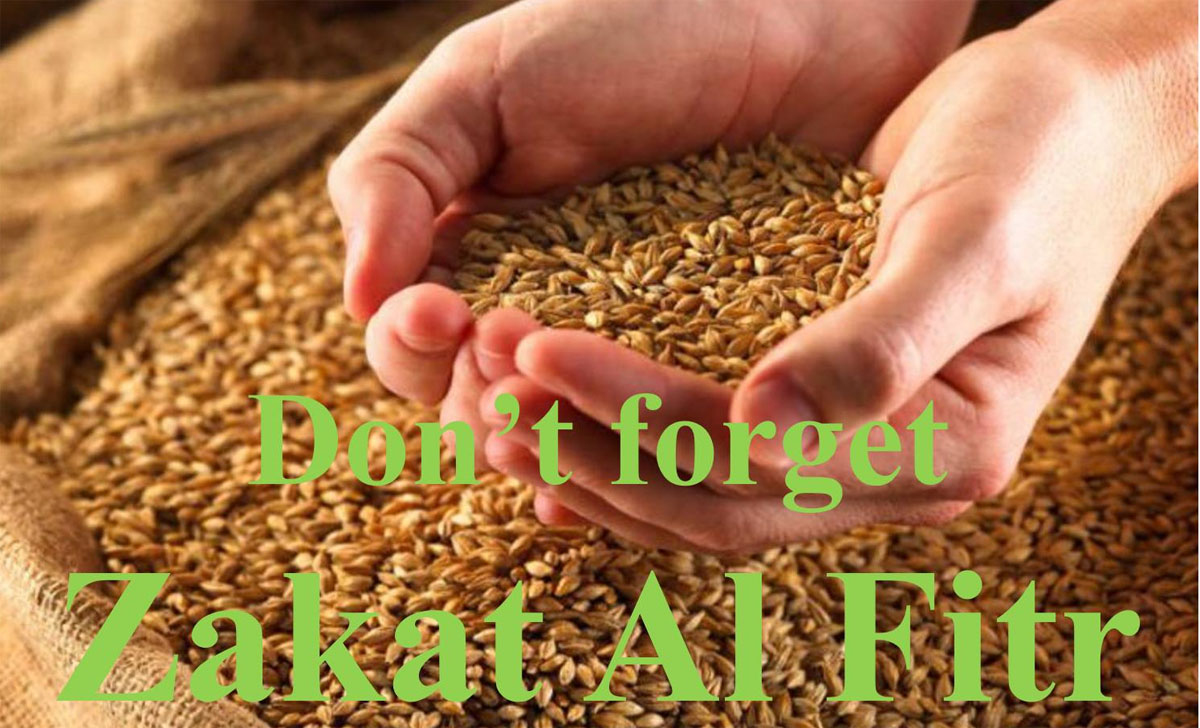
Ramadan Day 26: Understanding the Importance of Zakatul Fitr Before Eid
Ramadan Day 26: Understanding the Importance of Zakatul Fitr Before Eid
As the holy month of Ramadan draws to a close, Muslims around the world prepare for one of the most important charitable obligations in Islam — Zakatul Fitr. This special charity is performed at the end of Ramadan and represents the spiritual and social completion of fasting.
Unlike other forms of charity, Zakatul Fitr is obligatory for every Muslim who has the financial means. Its purpose is not only to purify the fasting believer but also to ensure that the joy and blessings of Eid al-Fitr are shared with the less privileged in society.
Islam teaches that worship is not limited to personal devotion but must also reflect compassion toward others. Through Zakatul Fitr, the teachings of Ramadan are translated into real acts of generosity that uplift the poor and strengthen community bonds.
The obligation of Zakatul Fitr was established by the Prophet Muhammad (peace be upon him) as a purification for those who fast. A narration reported by Ibn Abbas states that the Prophet prescribed the charity as a means of cleansing the fasting person from idle talk and indecent speech while also serving as food for the poor.
This teaching highlights the dual essence of Zakatul Fitr — spiritual purification and social compassion.
READ ALSO:
- UK MPs Ask Starmer to Challenge Tinubu Over Killings of Christians in Nigeria
- Trump Urges UK, China, Others to Send Warships as Iran Threatens Strait of Hormuz Oil Route
- ADC: Appeal Court Did Not Sack David Mark, Aregbesola
During the month of Ramadan, believers strive to maintain discipline, patience, and righteousness. However, human imperfection means that people may still fall into minor mistakes such as careless speech or impatience. Zakatul Fitr therefore acts as a form of spiritual cleansing that helps perfect the fast and compensate for these shortcomings.
Beyond spiritual purification, the charity plays a vital social role. Islam emphasizes that celebrations such as Eid al-Fitr should not exclude the poor or vulnerable members of society. By making Zakatul Fitr mandatory, the religion ensures that struggling families also have food and resources to celebrate the festival with dignity.
Traditionally, Zakatul Fitr is given in the form of staple foods commonly consumed in a community, such as rice, wheat, dates, barley, or maize. The prescribed amount is one ṣā‘, which scholars estimate to be roughly 2.5 to 3 kilograms of food per person.
The responsibility for paying Zakatul Fitr usually falls on the head of the household, who gives the charity on behalf of all dependents, including children. In this way, the entire family participates in an act of generosity that benefits those in need.
Timing is also an important aspect of the charity. Islamic scholars emphasize that Zakatul Fitr must be distributed before the Eid prayer, allowing the poor to prepare for the celebration. If it is given after the prayer, it may only count as ordinary charity rather than the special Ramadan obligation.
The essence of Zakatul Fitr lies in gratitude, purification, and compassion. After a month of fasting and spiritual reflection, Muslims are reminded that true worship should lead to kindness and generosity toward others.
Ultimately, Zakatul Fitr represents the final act that completes Ramadan. It purifies the fast, strengthens social solidarity, and spreads joy throughout the community as Muslims prepare to celebrate Eid al-Fitr.
Ramadan Day 26: Understanding the Importance of Zakatul Fitr Before Eid

-

 Entertainment2 days ago
Broda Shaggi Reportedly Shot While Filming Skit in Ogun, Hospitalised
-

 metro1 day ago
Viral Video: Igbinedion Education Centre Expels Students Over Assault on Classmate
-

 metro3 days ago
Tracy Ohiri Retracts Allegations Against Umahi, Issues Public Apology
-

 metro1 day ago
Popular Pastor Agbala Gabriel Faces Fraud, Sexual Allegations
-

 metro2 days ago
King Mitchy Apologises to Seyi Tinubu, Ooni of Ife, VeryDarkMan After Online Controversy
-

 International1 day ago
Iranian Missile Strike Damages Five US Refueling Tanks at Saudi Air Base
-

 metro1 day ago
Anambra Govt Arrests Native Doctor Accused of Luring Youths With Ritual Wealth
-

 International1 day ago
Old Dominion University Shooting: Terrorism Suspect Had Links to Nigeria-Based ISIS