
Politics
Nasarawa governor sacks commissioners, other political appointees

Nasarawa State Governor, Abdullahi Sule, has dissolved the state executive council, sacking all the commissioners and other political appointees.
The commissioners and political appointees were mostly recommended to the governor by his predecessors. They were inaugurated on November 1, 2019.
Sule made the announcement during an emergency state executive council meeting, which was held at the Government House, Lafia, the state capital on Monday.
The governor also announced the sack of his special advisers and senior special assistants, except those manning humanitarian services and sustainable development goals.
He thanked them for the services rendered to the administration, stressing that his administration would continue to count on their support in the future.
Responding, Associate Professor Abdulkarim Abubakar, who was the state Attorney General and Commissioner for Justice, commended the governor for giving them the opportunity to serve the state and his administration.
He assured the governor of their continued support ahead of the 2023 general elections.
According to the sources, Sule had to dissolve them to enable him to build his own structure and boost the chances of getting a second term ticket.
Daily Trust quoted a source as saying, “We all know that most of the political appointees in this state were recommended by past governors of the state under pressure.
“So, I believe that he is sacking them to be able to bring his foot soldiers into the political limelight before the commencement of the local government elections on October 6th and the governorship election in 2023 because he has been getting endorsement across the state to continue as governor.”
Further investigations by our correspondent indicated that the governor had earlier summoned the formers state’s executive members for a meeting on his plan to relieve them of their appointment.




Politics
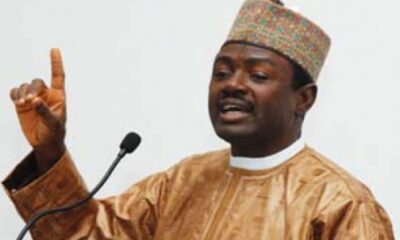
ADC Crisis: Supreme Court to Hear David Mark’s Appeal April 14

ADC Crisis: Supreme Court to Hear David Mark’s Appeal April 14
The leadership crisis rocking the African Democratic Congress (ADC) is set for a decisive legal showdown as the Supreme Court prepares to hear an appeal filed by former Senate President, David Mark, on Tuesday, April 14, 2026.
The appeal challenges the March 12 judgment of the Court of Appeal, which has fueled internal disputes within the party over its national leadership structure.
According to official court documents, the case—marked SC/CV/180/2026—was scheduled following a hearing notice issued by the apex court and circulated to all parties through its Litigation Department.
In the suit, Mark is seeking a stay of execution of the appellate court’s ruling, warning that failure to grant the request could render his appeal ineffective. He is also asking the Supreme Court to restrain the Independent National Electoral Commission (INEC) from recognising any leadership outside the current ADC national executives led by him.
The appeal lists Nafiu-Bala Gombe, the ADC, Rauf Aregbesola, INEC, and Ralph Nwosu as respondents in the ongoing legal battle.
Through his counsel, Realwan Okpanachi, Mark argued that the Court of Appeal’s directive for parties to maintain status quo ante bellum has been misinterpreted and used to undermine his leadership.
READ ALSO:
- FG Boosts Power Generation to 4,300MW in Two Weeks — Adelabu
- Stop Blaming Tinubu, Focus on States, LGs — Lagos Lawmaker
- Zulum Defends NAF Airstrike, Says Jilli Market Closed Five Years Ago
He alleged that Gombe has relied on the ruling to pressure INEC into withdrawing recognition of the current party leadership, a move he described as an attempt to enforce the judgment prematurely.
The situation escalated after INEC reportedly removed the names of Mark and Aregbesola from its official portal on April 1, triggering fresh legal actions and intensifying tensions within the party.
In response, Mark approached the Federal High Court in Abuja, seeking an order to compel INEC to restore their names as national chairman and national secretary respectively. The case, assigned to Justice Emeka Nwite, is also scheduled for hearing on April 14.
However, legal experts say proceedings at the lower court may be suspended or adjourned in deference to the Supreme Court, in line with established judicial hierarchy.
The dispute originated from a suit filed by Gombe, a former Deputy National Chairman of the ADC, who is challenging the legality of Mark and Aregbesola’s emergence. He argued that their appointments violated provisions of the party’s constitution and the Electoral Act.
Gombe is seeking a court order restraining both men from parading themselves as national officers of the party.
Earlier, Justice Nwite had declined an ex-parte application to halt the Mark-led leadership, instead directing that all parties be put on notice. The matter later moved to the Court of Appeal after the Mark faction challenged the jurisdiction of the lower court.
The appellate court subsequently ordered all parties to maintain the status quo pending the determination of the dispute—an order that has now become a central issue in the ongoing appeal.
Legal analysts say the Supreme Court’s ruling will be crucial in determining the authentic leadership of the ADC and could significantly influence the party’s internal stability ahead of the 2027 general elections.
With the case now before Nigeria’s highest court, stakeholders within and outside the party are watching closely, as the outcome is expected to shape party leadership legitimacy, electoral positioning, and broader political realignments in the country.
ADC Crisis: Supreme Court to Hear David Mark’s Appeal April 14
Politics
Stop Blaming Tinubu, Focus on States, LGs — Lagos Lawmaker
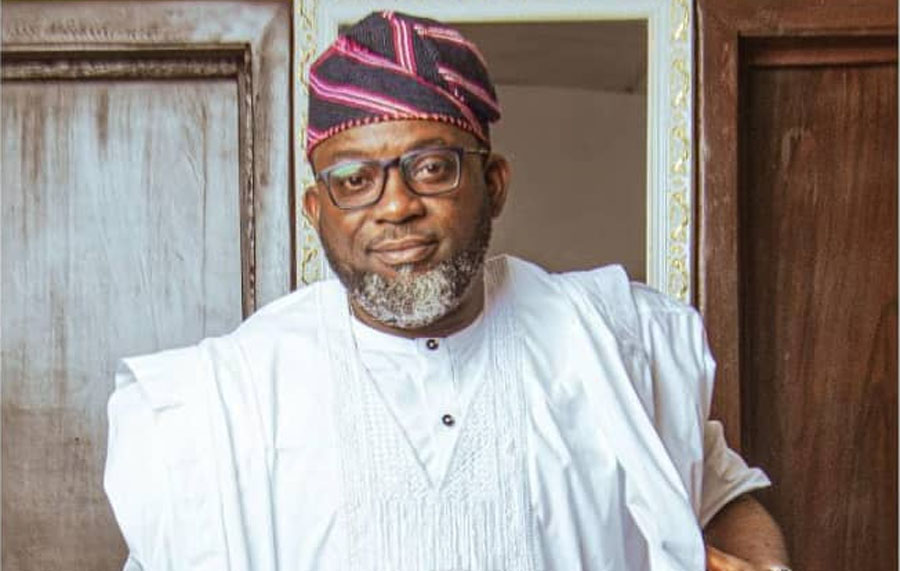
Stop Blaming Tinubu, Focus on States, LGs — Lagos Lawmaker
A member of the Lagos State House of Assembly, Temitope Adewale, has urged Nigerians—particularly councillors—to hold local government chairmen accountable for governance and service delivery at the grassroots level.
Adewale, who represents Ifako-Ijaiye Constituency I, made the call during an interview on Sunday in Lagos, stressing that Nigeria’s governance challenges cannot be solved by the Federal Government alone.
He referenced the landmark 2024 Supreme Court judgment which granted full financial autonomy to Nigeria’s 774 local governments, mandating that allocations from the Federation Account be paid directly to councils rather than routed through state governments.
The apex court ruling also barred state governors from withholding or tampering with local government funds and reaffirmed that only democratically elected councils are entitled to manage such allocations. (Independent Newspaper Nigeria)
According to Adewale, the judgment has significantly increased financial inflows to local governments and created an opportunity for real development at the grassroots.
“It is wrong to place all the blame on the President. Governors and council chairmen must complement federal efforts,” he said.
READ ALSO:
- Zulum Defends NAF Airstrike, Says Jilli Market Closed Five Years Ago
- Dabiri-Erewa Warns Obidients Could Hurt Peter Obi’s 2027 Ambition
- BREAKING: Troops Arrest 15-Year-Old Linked to Killing of Gen Braimah in Borno
The lawmaker noted that since President Bola Tinubu assumed office in May 2023, allocations to local governments have improved, aided by reforms supporting direct funding and fiscal transparency.
He commended the Federal Government for enforcing local government autonomy, describing it as a major step toward deepening Nigeria’s federal system and ensuring that development reaches rural communities.
“The President ensured councils get allocations directly, enabling development from the grassroots,” he said.
“You will notice governors no longer receive funds on behalf of councils, leading to increased infrastructure and development projects across local governments.”
Adewale, however, warned that financial autonomy alone would not translate into development without strong accountability mechanisms.
He urged councillors to actively monitor the use of public funds and demand transparency from local government chairmen.
“Councillors must hold chairmen accountable and ensure public funds are properly spent,” he said, adding that they must be bold enough to challenge cases of misappropriation.
Experts have noted that while the Supreme Court ruling represents a major shift, local governments still face challenges such as weak financial systems, low internally generated revenue, and poor accountability structures, which could undermine effective service delivery if not addressed. (Punch Newspapers)
On security, Adewale emphasized that responsibility lies with all tiers of government, not just the Federal Government.
He reiterated calls for the establishment of state police, noting that decentralised policing would improve response to insecurity at the grassroots.
“The President has been advocating state and community policing, which can help tackle insecurity effectively,” he said.
He further urged the National Assembly to fast-track legislation that would enable the creation of state police across the country.
Adewale concluded that meaningful development in Nigeria would only be achieved when local governments function effectively as the third tier of government closest to the people.
Stop Blaming Tinubu, Focus on States, LGs — Lagos Lawmaker
Politics
Dabiri-Erewa Warns Obidients Could Hurt Peter Obi’s 2027 Ambition

Dabiri-Erewa Warns Obidients Could Hurt Peter Obi’s 2027 Ambition
The Chairman of the Nigerians in Diaspora Commission (NiDCOM), Abike Dabiri-Erewa, has sparked widespread reactions after criticising supporters of Peter Obi, describing some of them as “monsters” and warning that their conduct could undermine his political ambitions ahead of the 2027 elections.
The controversy followed a post shared by Dabiri-Erewa on her verified X (formerly Twitter) account, where she highlighted her recent visit to Silicon Valley in California, United States. During the visit, she met with Nigerian professionals in the tech industry and experienced a ride in a driverless car, which she described as impressive and forward-looking.
In the post, she expressed appreciation to Nigerian architect and designer Kunle Adeyemo for hosting her during the tour. However, the update quickly drew backlash from some social media users who criticised her for praising technological advancement abroad while, in their view, supporting political structures at home that do not reflect similar progress.
Some of the reactions were sharply critical and, in certain instances, abusive, with users accusing her of hypocrisy and questioning her political stance. The exchange quickly escalated into a heated online debate.
In response, Dabiri-Erewa defended her position and took aim at a segment of Obi’s supporters, popularly known as the Obidient movement, accusing them of engaging in toxic and aggressive online behaviour.
She wrote that Obi had “raised monsters” and warned that if such behaviour continued unchecked, it could ultimately harm his chances in future political contests, particularly the 2027 presidential race.
READ ALSO:
- BREAKING: Troops Arrest 15-Year-Old Linked to Killing of Gen Braimah in Borno
- Fayose Warns Makinde May Query Olubadan Over Absence at Ibadan Coronation Event
- Manchester City Beat Chelsea 3–0 to Close Gap on Arsenal
Dabiri-Erewa further suggested that the same supporters could become a liability to Obi, even if political power eventually rotates to the South-East region, where Obi hails from.
Doubling down in subsequent posts, she reiterated that the conduct of some supporters reflects poorly on the former Labour Party presidential candidate and stressed the need for him to call them to order.
She also rejected criticism that her status as a public official should prevent her from engaging online critics, insisting that her social media account is personal and that she has the right to respond to attacks directed at her.
The remarks have since generated mixed reactions across Nigeria’s political space, with critics of Obi aligning with Dabiri-Erewa’s position, while his supporters argue that her comments are unfair and politically motivated.
Supporters of Obi maintain that the Obidient movement is largely grassroots-driven and issue-focused, adding that online excesses by a few individuals should not define the broader movement.
As of the time of filing this report, Peter Obi has not issued an official response to the NiDCOM chair’s remarks.
Political analysts say the episode highlights the growing influence—and risks—of digital political movements and online activism in Nigeria, especially as the country gradually shifts toward the 2027 election cycle.
Dabiri-Erewa Warns Obidients Could Hurt Peter Obi’s 2027 Ambition

-
 metro2 days ago
JUST IN: FG Publishes List of 48 Individuals, Groups Linked to Terrorism Financing in Nigeria
-

 metro12 hours ago
BREAKING: Troops Arrest 15-Year-Old Linked to Killing of Gen Braimah in Borno
-

 metro2 days ago
42-Year-Old Married Woman Declared Missing Found in Hotel with Man
-
 Politics2 days ago
Did Faleke Just Reveal Lagos’ Next Governor? Party Moves Begin
-

 Education3 days ago
Germany Opens Fully Funded Scholarships for Nigerians, Africans
-
 Politics2 days ago
2027: Oyo APC Governorship Aspirant Saheed Oladele Resigns From Party
-
 metro2 days ago
ADC Threatens Civil Disobedience To Force INEC Chairman To Resign
-

 metro13 hours ago
Fayose Warns Makinde May Query Olubadan Over Absence at Ibadan Coronation Event