

News
NDLEA arrests 90-year-old, teenagers arrested for selling drugs in Katsina, Ondo
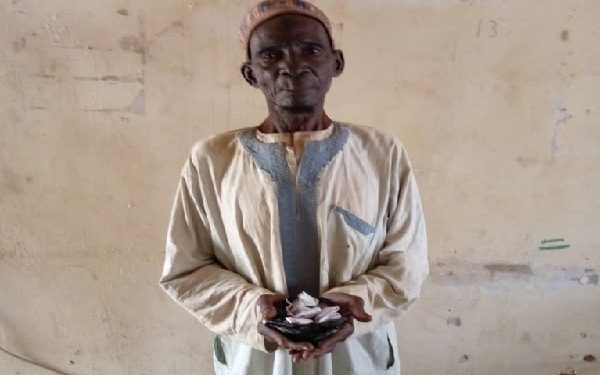
A 90-year-old, Yusuf Yarkadir, has been arrested by operatives of the National Drug Law Enforcement Agency (NDLEA) for allegedly selling drugs to youths in Yarkadir village in Rimi Local Government Area of Katsina State.
Director, Media & Advocacy, NDLEA Headquarters, Abuja, Femi Babafemi, made this known in a statement on Friday.
Babafemi said the nonagerian was full of regrets under interrogation, as he confessed he has been selling cannabis sativa to the youths in his community for eight years due to their demand for it.
“Though he failed to disclose his source of supply, he however vowed his arrest on Wednesday 7th July, 2021 would now make him to back out of the business having tried in the past to stop the illicit trade without success,” the agency spokesman said.
Babafemi said narcotic officers in the Ondo state command of the Agency have also arrested two teenage siblings along with other suspects for dealing in assorted illicit drugs in the state capital, Akure.
“The teenagers Onyema Sunday, 16, and his sister, Onyema Amaka, 15, were arrested in Car street area of Akure with 1.894kilograms of Tramadol on Monday 5th July while 23-year-old Kazeem Oluyede was nabbed in Eru Oba area of the capital city with 300grams of cannabis and 3grams of methamphetamine, just as a lady Maryam Musa, 35, was arrested in Igbara-Oke, Ifedore local council area of the state with 5.5kilograms of cannabis, all same day,” the statement reads.
Babafemi said also in Ondo state, following credible intelligence and surveillance, NDLEA operatives on Wednesday 7th July stormed the Ogbese market, in Akure North LGA, where Messrs Jalamia Ochonogor and Austin Uzoka were arrested with 63kilograms of cannabis.
“Elsewhere in Bauchi state, at least seven persons have been arrested and 28.091kilograms of assorted drugs such as Diazepam, Exol-5, Rophynol, Tramadol, Codeine, and cannabis recovered from them.
‘’Those arrested in two separate raids by operatives of the Bauchi state command of the Agency include Sunday Obi, Abba Abdullahi, Samuel John, Chijioke Agu, Sani Musa, Alhaji Alhaji Baffa, and Abubakar Saidu.
“Meanwhile, different quantities of illicit drugs going to the United States, the United Kingdom and New Zealand have been intercepted and seized by narcotic officers of the Directorate of Operations and General Investigations, DOGI, attached to some courier companies in Lagos.
“In one of the courier firms, 400 grams of Ketamine hidden in walls of hair attachments carton coming from Cameroon and heading to the US was seized. Others include: 30grams of Tramadol concealed in female headgear coming from Onitsha, Anambra state and going to the UK; 200grams of Ketamine from Cameroon going to USA; and 400grams of Methamphetamine from Asaba, Delta state heading to New Zealand.’’

News
₦60 Fuel Discount: Ondo ADC Slams Tinubu, Says Atiku Deserves Credit for Subsidy Restoration
₦60 Fuel Discount: Ondo ADC Slams Tinubu, Says Atiku Deserves Credit for Subsidy Restoration
The party describes the discount as inadequate relief for Nigerians battling rising petrol prices, transportation costs and the high cost of living ahead of the 2027 general election.
The Ondo State chapter of the African Democratic Congress (ADC) has criticised President Bola Ahmed Tinubu’s administration over its reported ₦60-per-litre petrol discount, describing the measure as inadequate to address the economic hardship confronting millions of Nigerians.
The party also commended former Vice-President Atiku Abubakar for advocating the restoration of fuel subsidy, arguing that government policies should prioritise citizens’ welfare and provide meaningful relief from the rising cost of living.
The ADC’s position was contained in a press statement signed by its Ondo State Publicity Secretary, Hon. Remi Ofakunrin, in which the party accused the All Progressives Congress (APC)-led Federal Government of offering Nigerians insufficient relief amid soaring fuel prices and declining purchasing power.
According to the statement, the reported ₦60 discount falls far short of what households, businesses, transport operators, students and workers need to cope with the prevailing economic challenges.
The party argued that Nigerians require sustainable measures to reduce the cost of living rather than temporary interventions that have limited reach and impact.
“At a time when Nigerians are struggling to survive the crushing cost of living, with petrol prices reportedly hovering around ₦1,400 per litre, the government’s decision to offer a mere ₦60 discount is not the relief citizens deserve,” the statement said.
The opposition party maintained that the discount was insignificant compared with the financial pressure experienced by ordinary Nigerians, particularly those whose livelihoods depend on transportation and fuel-powered businesses.
It accused the Tinubu administration of expecting public approval for what it described as a token concession after implementing policies that have significantly affected household budgets and business operating costs.
ADC questions petrol prices despite Nigeria’s crude oil resources
The ADC also questioned why petrol prices remained so high in Nigeria, an oil-producing country, despite the availability of abundant crude oil resources.
READ ALSO:
- ‘Mad People’: Presidency Fires Back at Amaechi Over Tinubu Re-Election Remarks
- ‘What Happens on Day 31?’ Atiku Slams Tinubu’s 30-Day Fuel Discount as Election-Laced Package
- Ronaldo Breaks Silence on Portugal Row as Pelé, Maradona Comparison Sparks Meme Frenzy
It asked why citizens should continue to struggle with the cost of fuel and other essential commodities while bearing the consequences of government economic policies.
The party further argued that the discount underscored the need for government intervention to cushion the effects of high fuel prices on the wider economy.
According to the ADC, the measure demonstrated that the consequences of petrol pricing remained a major concern requiring a broader policy response.
However, the party said a temporary discount at selected Nigerian National Petroleum Company Limited (NNPCL) filling stations could not provide lasting relief from the rising costs of food, transportation, production and other necessities.
It called on the Federal Government to adopt a more comprehensive and transparent approach to addressing fuel costs and their impact on Nigerians.
The ADC also urged the government to explain how the country’s oil resources could be better managed to improve citizens’ living conditions and promote national prosperity.
Atiku deserves credit for subsidy restoration advocacy — ADC
The Ondo ADC chapter used the statement to commend Atiku Abubakar for advocating the restoration of fuel subsidy as part of a broader strategy to ease economic hardship and improve the welfare of Nigerians.
The party said Atiku’s position deserved consideration, insisting that the debate should focus on how economic policies could protect citizens’ purchasing power and ensure that the benefits of the country’s natural resources reached ordinary people.
According to the ADC, the reported fuel discount reinforces the argument that government intervention may be necessary to cushion the effects of high petrol prices, although it maintained that the current measure was inadequate.
The party called for a more sustainable framework capable of delivering meaningful relief rather than temporary concessions.
It said Atiku and the ADC were committed to an economic direction that would enable workers to earn a living wage, businesses to operate sustainably and families to afford food, transportation, education and healthcare.
Beyond fuel subsidy, the party said its proposed policy direction included economic recovery, improved purchasing power, affordable education, local government autonomy, the fight against insecurity and corruption, and responsible management of national resources.
The statement presented these priorities as part of the party’s broader vision for addressing the country’s economic and governance challenges.
ADC urges Nigerians to vote for change in 2027
With the 2027 general election approaching, the Ondo ADC urged Nigerians to assess the performance of the current administration and consider alternative leadership.
The party cautioned citizens against being swayed by temporary concessions that, in its view, failed to address the underlying causes of economic hardship.
It called on voters to support Atiku Abubakar and other ADC candidates, arguing that a change in leadership and policy direction could provide an opportunity to improve living standards and restore public confidence in government.
The party said Nigeria needed leadership capable of addressing economic difficulties, insecurity and declining purchasing power while promoting national unity and development.
It also expressed confidence that the country could harness its human and natural resources to create prosperity and improve the welfare of present and future generations.
“A ₦60 discount cannot erase years of blanket display of mercilessness and economic hardship, but a change in leadership and policy direction can begin the process of national recovery,” the statement said.
The ADC consequently called on Nigerians to demand economic reforms that would produce measurable improvements in their daily lives and support the party in the 2027 elections.
Fuel pricing remains a major political issue
The statement highlights the continuing political debate over petrol pricing, the removal of fuel subsidy and the government’s responsibility to cushion the effects of economic reforms.
While the Tinubu administration has defended its economic policy direction as part of efforts to reform the economy, opposition parties have continued to raise concerns about the effects of higher fuel costs on transportation, food prices, businesses and household incomes.
The Ondo ADC’s latest position places fuel subsidy and the affordability of petrol at the centre of its campaign message ahead of the next general election.
However, the party’s claims about the adequacy of the discount and the benefits of subsidy restoration reflect its political position. The actual impact of any fuel discount depends on its implementation, duration, eligibility conditions and the extent to which the savings are passed on to consumers.
The statement was signed by Hon. Remi Ofakunrin, Publicity Secretary of the African Democratic Congress in Ondo State.
The party concluded by insisting that Nigerians deserved meaningful economic relief and urging voters to support what it described as an alternative path to national recovery.
₦60 Fuel Discount: Ondo ADC Slams Tinubu, Says Atiku Deserves Credit for Subsidy Restoration
News
‘What Happens on Day 31?’ Atiku Slams Tinubu’s 30-Day Fuel Discount as Election-Laced Package

‘What Happens on Day 31?’ Atiku Slams Tinubu’s 30-Day Fuel Discount as Election-Laced Package
Former Vice-President Atiku Abubakar has criticised President Bola Tinubu’s proposed 30-day petrol discount, describing it as an “election-laced subsidy package” and questioning whether Nigerians will receive lasting relief from rising fuel prices and living costs.
Atiku argued that the Federal Government’s intervention was too limited to address the economic pressures facing households and businesses, warning that motorists could return to paying higher prices once the 30-day arrangement expires.
The criticism came after the government announced a temporary fuel-price intervention at Nigerian National Petroleum Company Limited (NNPC) filling stations as part of efforts to cushion the impact of rising petrol prices, transportation costs and international crude oil market pressures.
In a statement issued on Thursday, October 8, through Phrank Shaibu, Director of Strategic Communication of the African Democratic Congress (ADC) Presidential Campaign Council, Atiku questioned the timing, scope and sustainability of the initiative.
The former vice-president described the measure as a “panic-driven publicity stunt”, arguing that a temporary discount could not compensate Nigerians for the prolonged increase in the cost of fuel, transportation, food and other essential goods.
“What happens on Day 31?” Atiku asked, warning that consumers could face the same economic difficulties when the intervention ends.
He maintained that Nigerians needed a sustainable strategy to reduce the cost of living rather than a short-term measure that offered relief for only one month.
The Federal Government’s plan provides for NNPC Limited to temporarily forgo its retail profit margin and sell petrol at cost at its filling stations during the 30-day period. Finance Minister and Coordinating Minister of the Economy Taiwo Oyedele said public transport operators would receive priority under the arrangement.
The government has maintained that the initiative is not a return to the former petrol subsidy regime, which the Tinubu administration removed on May 29, 2023.
READ ALSO:
- Ronaldo Breaks Silence on Portugal Row as Pelé, Maradona Comparison Sparks Meme Frenzy
- [UPDATED] Lagos Train Crash: 55-Year-Old Motorist Survives as Honda Car Is Wrecked at PWD Crossing
- How Parents Raised Millions to Free 20 Abducted NYSC Members
However, Atiku questioned whether the proposed discount would deliver meaningful savings to ordinary Nigerians, particularly those who depend on commercial buses, taxis and other forms of public transportation.
He also raised concerns about the initiative’s limited coverage, noting that the arrangement was tied to NNPC filling stations. He called for greater clarity on the expected reduction in petrol prices and how any savings would translate into lower transport fares and reduced costs for consumers.
According to Atiku, without clear implementation details and measures to ensure that the benefits reach the public, the intervention could offer only limited relief while leaving the wider economic challenges unresolved.
The ADC presidential candidate also advocated a more sustainable approach linked to locally refined petroleum products, proposing capped and budgeted support for domestic refining with safeguards to ensure that consumers benefit.
He argued that a structured framework could help ease pressure on households while supporting Nigeria’s domestic refining capacity.
The government, however, has defended the removal of petrol subsidies on the grounds that the previous arrangement placed a heavy burden on public finances. The administration has argued that the savings can be redirected towards infrastructure, healthcare, education and other public services.
Despite that position, petrol prices and their knock-on effects on transportation, food distribution and business operating costs remain major concerns for many Nigerians.
Atiku’s criticism has also brought the economic intervention into the political debate ahead of the 2027 general elections. He questioned the timing of the announcement and suggested that the short duration of the discount raised concerns about its political implications.
The government’s stated objective is to cushion consumers against rising fuel costs, while Atiku insists that the initiative falls short of the lasting relief Nigerians need.
Ultimately, the impact of the 30-day NNPC petrol discount will depend on how the arrangement is implemented, the actual savings delivered to motorists and whether public transport operators pass on any reductions to passengers.
For Nigerians facing higher fuel and transportation expenses, the central question remains whether the temporary intervention will provide meaningful relief or merely postpone the return of higher costs.
‘What Happens on Day 31?’ Atiku Slams Tinubu’s 30-Day Fuel Discount as Election-Laced Package
News
BREAKING: FG Announces 30-Day Petrol Discount, Gives NNPCL Fresh Directive
BREAKING: FG Announces 30-Day Petrol Discount, Gives NNPCL Fresh Directive
Public transporters to get priority as government moves to cushion impact of high fuel prices
The Federal Government has announced a 30-day discount on petrol sold through the Nigerian National Petroleum Company Limited (NNPCL), with public transport operators to receive priority under the arrangement.
The Minister of Finance and Coordinating Minister of the Economy, Taiwo Oyedele, announced the measure on Thursday, October 8, 2026, during a press briefing in Abuja on petrol prices and subsidy-related issues.
Oyedele said the intervention should not be interpreted as a return to petrol subsidy, explaining that the government would instead allow petrol to be sold at cost during the period.
“We are offering a discount on petrol dispensed by NNPC Limited for the next 30 days in the first instance with priority for public transporters nationwide.”
The minister added: “It’s not a subsidy; government is just saying we sell to you at cost.”
FG targets N1,350 petrol landing-cost ceiling
The announcement forms part of a broader package of measures being introduced by the Federal Government to moderate the impact of rising petrol and transportation costs.
Oyedele also disclosed that the government was negotiating a ₦1,350-per-litre ceiling on the ex-gantry or landing cost of petrol.
According to him, the proposed price-modulation arrangement is intended to prevent pump prices from immediately following every fluctuation in international crude oil prices and foreign exchange rates.
READ ALSO:
- Man Allegedly Caught Using Old Tyres to Scam POS Operator
- BREAKING: FG Unveils 10 Measures to Cushion Fuel Price, Inflation Pressures
- 2027: ADC Vows to Collate, Share Polling-Unit Results Despite INEC Warning
He said the ceiling would be reviewed monthly, with adjustments made when necessary.
Public transporters given priority
Under the 30-day arrangement, public transport operators nationwide are expected to receive priority in accessing the discounted petrol.
The measure is significant because fuel costs have a direct impact on transport fares and, consequently, the prices of food and other essential commodities.
The government is therefore seeking to provide immediate relief while working on longer-term measures aimed at reducing volatility in petrol prices.
No exact discount amount announced yet
However, the Federal Government has not, as of the announcement, disclosed the exact amount of the 30-day discount or stated a new uniform pump price that all NNPCL stations will charge.
Vanguard reported that NNPCL had separately announced a ₦66-per-litre discount for customers using the NNPC Fuel App at its stations nationwide.
The latest announcement appears to be a broader government intervention, but details of its implementation, including how eligible public transporters will access the discount, are still expected.
FG unveils wider relief measures
Oyedele also disclosed other measures aimed at easing the pressure of high fuel and transportation costs.
These include efforts to moderate taxes and levies that increase logistics costs, forward crude sales to domestic refiners, increased funding for cash transfers to vulnerable households and subsidised credit for small businesses and consumers.
The government is also working with state governments to accelerate the rollout of compressed natural gas (CNG) as an alternative fuel for transportation.
What Nigerians should know
The latest announcement does not amount to a formal restoration of the petrol subsidy, according to the Finance Minister.
Rather, the government says it intends to temporarily sell petrol through NNPCL at cost, with public transporters prioritised, while pursuing mechanisms to make fuel prices less vulnerable to sudden international market and exchange-rate movements.
The 30-day period is expected to provide some relief to transport operators and commuters, although the impact on pump prices and transport fares will depend on the details of the implementation.
Newstrends.ng will continue to monitor the Federal Government and NNPCL for the exact discount amount, effective pump prices and implementation guidelines.
BREAKING: FG Announces 30-Day Petrol Discount, Gives NNPCL Fresh Directive
-

 metro2 days ago
[UPDATED] 20 NYSC Prospective Corps Members Freed After Seven Days in Captivity
-
 Politics3 days ago
‘No Decent Wages, No Credible Elections’ — Sowore Threatens 2027 Boycott
-

 metro3 days ago
Seven Years With Parkinson’s: Man Seeks N65m for Brain Surgery in Türkiye
-

 Politics3 days ago
2027: Obi Makes U-Turn, Vows to Restore Fuel Subsidy If Elected
-

 Africa1 day ago
FBI Raids Ghana Scam Centre, Detains Over 130 in $10m Fraud Probe
-

 metro2 days ago
Yayi, Adebule, Muslim Leaders, Others for Imodi-Ijebu Turbaning, ₦1bn Fundraiser
-

 metro1 day ago
EFCC Re-Arraigns Two Over Alleged £110,000 Money Laundering, ₦500m Fraud
-

 Politics3 days ago
2027: Galadima Alleges APC Offering N50m, N200m to Lawmakers to Step Aside