
metro
NDLEA denies saying 20 Kano LG chair candidates tested positive for drugs
NDLEA denies saying 20 Kano LG chair candidates tested positive for drugs
The Kano state command of the National Drug Law Enforcement Agency (NDLEA) has refuted claims that 20 politicians who tested positive for drugs belong to a single political party.
The NDLEA’s clarification follows media reports on Tuesday, alleging that 20 aspirants from the New Nigeria Peoples Party (NNPP) in the state’s local government election had tested positive for multiple drugs.
In a statement issued by Sadiq Muhammad-Maigatari, the NDLEA spokesperson, the agency denied being misquoted in the reports, emphasizing that while 20 candidates did test positive, the results did not specify any political party or position.
READ ALSO:
- JUST-IN: Osun monarch Oba Aromolaran takes a bow after 42-year reign, palace confirms
- Seven family members murdered in their South African home
- JUST IN: DSS orders arrest of Omoyele Sowore
“The National Drug Law Enforcement Agency (NDLEA) Kano State Command wishes to correct a misquote circulating in the media regarding the drug integrity test results of chairmanship candidates,” the statement read.
“Contrary to reports, the NDLEA did not state that 20 chairmanship candidates tested positive for drugs. However, as of the time of the report, 20 candidates had indeed tested positive, but this number is not specific to any particular seat (chairmanship or councilorship) or political party.”
The NDLEA explained that candidates undergo the drug integrity test individually, without disclosing their political aspirations or affiliations, making it impossible for the agency to determine who is running for chairmanship or councillorship positions.
The agency urged the public to await the official release of the test results after the screening exercise is completed and reaffirmed its commitment to transparency in the electoral process.
NDLEA denies saying 20 Kano LG chair candidates tested positive for drugs








metro
Security Forces Deployed as Bandits Kill Three Residents in Niger Communities
Security Forces Deployed as Bandits Kill Three Residents in Niger Communities
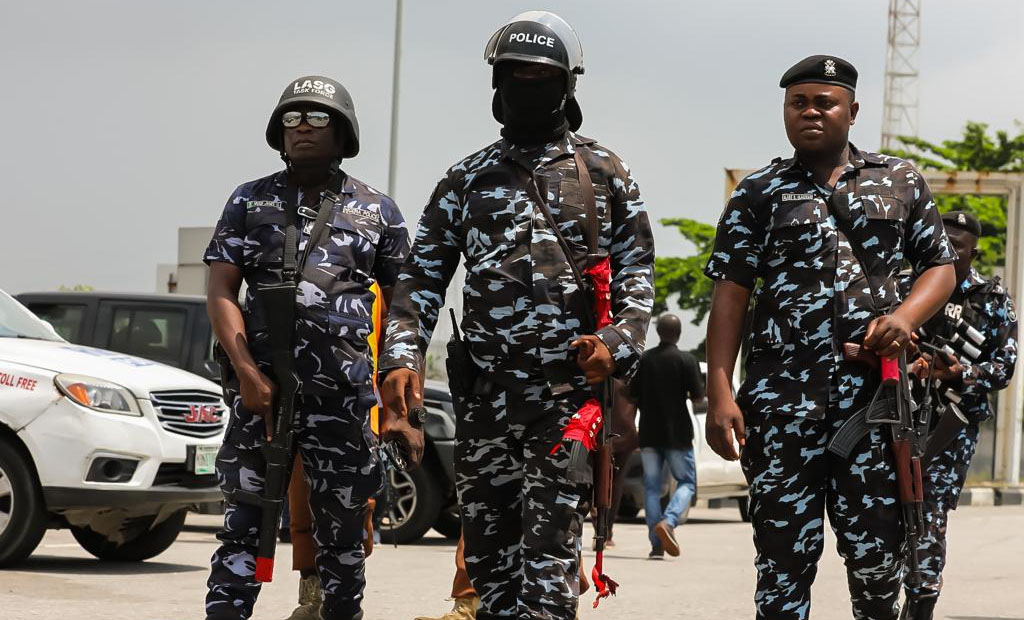
At least three residents have been killed and several others injured after armed bandits attacked the Lanta, Tunga, and Bagna communities in the Erena ward of Shiroro Local Government Area, Niger State. The attacks, which began around 10:30 a.m. on Tuesday, mark another deadly incident in the region’s growing insecurity crisis.
Eyewitnesses said the assailants arrived in large numbers on motorcycles, operating for several hours without resistance, looting properties and opening fire on residents before fleeing. Local sources warned that the death toll could rise as families continue to account for missing relatives. Many residents have reportedly fled to Erena town, considered a safer nearby settlement.
A local resident said, “So far, we have recovered three bodies. Many others sustained injuries of varying degrees. Many people have fled… We are calling on the government to come to our rescue.”
READ ALSO:
- Resident Doctors Resume Work as FG Reverses Allowance Decision
- FG Deports US Missionary Alex Barbir Over Alleged Role in Nigeria Insecurity
- Iran Lists Tough Conditions for Peace Talks with US
Maurice Bello Magaji, Niger State Commissioner for Homeland Security, confirmed the incident and stated that the government is working with security forces to respond to the attacks and restore order. Officials say reinforcement teams and patrols have been deployed to the affected communities to prevent further casualties.
The attack highlights the deepening insecurity in rural Niger State, where armed bandits have frequently targeted villages, abducted residents, and caused widespread fear. Analysts note that bandits often exploit the remote terrain to carry out raids with minimal resistance, killing civilians, looting homes, and displacing populations.
Local leaders and residents have condemned the attacks, urging both state and federal authorities to intensify security measures and protect vulnerable communities. Meanwhile, displaced residents face uncertainty as they seek safety and access to basic services.
Security agencies have promised to track down the perpetrators, but analysts warn that sustained and coordinated action is necessary to curb banditry in Niger State and prevent further attacks.
Security Forces Deployed as Bandits Kill Three Residents in Niger Communities
metro
Army Debunks Viral Claims by Ex-Soldier ‘Soja Boi’, Insists Allegations Are False
Army Debunks Viral Claims by Ex-Soldier ‘Soja Boi’, Insists Allegations Are False
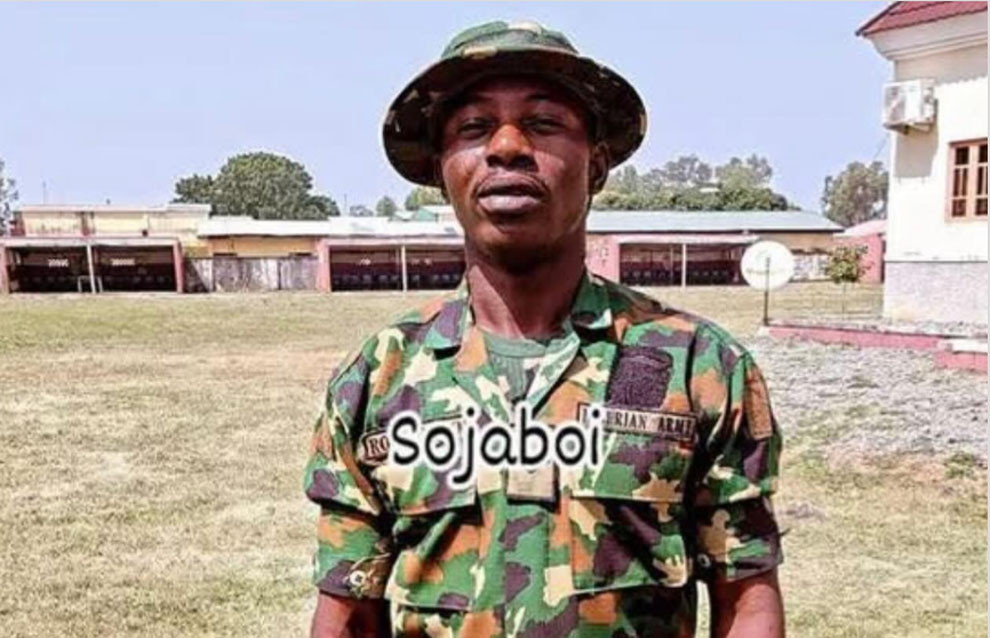
The Nigerian Army has dismissed allegations made by former lance corporal, Rotimi Olamilekan, popularly known as “Soja Boi,” describing his viral interview as misleading, false, and damaging to national security efforts.
In a statement released on April 7, the Army, through its spokesperson Appolonia Anele, clarified that Olamilekan was dismissed due to repeated acts of indiscipline and violations of military regulations, not for “speaking the truth” or expressing political opinions as claimed in the interview.
According to the Army, the former soldier’s dismissal followed due process and was based on serious misconduct, including breaches of the Armed Forces Social Media Policy. These violations, the military said, involved unauthorised media appearances, commercialisation of military identity, partisan content creation, and misuse of military uniform.
The Army stressed that the narrative being circulated online misrepresents the facts and could undermine public trust in the military, especially amid ongoing Nigeria security challenges.
READ ALSO:
- Iran Lists Tough Conditions for Peace Talks with US
- BVN Enrolment Hits 68.6 Million as Growth Slows – NIBSS
- Lagos Announces Partial Road Closures for Project Commissioning
Responding to claims about poor welfare, the Army rejected assertions that personnel receive only basic salaries without additional support. It explained that the Nigerian Army salary structure is governed by the Manual of Financial Administration for Armed Forces of Nigeria (MAFA), which ensures a transparent and structured remuneration system based on rank and years of service.
It added that soldiers are entitled to various benefits, including uniform allowances and service-related entitlements, which are paid directly into their accounts. The Army further noted that personnel deployed in combat zones—such as Operation HADIN KAI—receive operational allowances and mission-specific incentives designed to support their welfare and effectiveness.
The military also debunked claims that troops are forced to purchase their own uniforms and protective equipment, describing such allegations as entirely false. It stated that all necessary kits, including uniforms, weapons, and operational gear, are issued through established logistics systems overseen by ordnance units.
Addressing concerns about troop safety, the Army insisted that no soldier is deployed without adequate protective equipment, including bulletproof vests and helmets. It described claims suggesting otherwise as deliberate misinformation aimed at misleading the public.
The Army warned that spreading unverified information could harm troop morale and national security, urging Nigerians to rely on official sources for accurate updates on military activities.
It concluded by calling on the public to disregard what it termed baseless allegations intended to generate sympathy and discredit the Armed Forces, reiterating its commitment to professionalism, discipline, and the welfare of its personnel.
The development comes as public scrutiny of the military continues to grow, with social media amplifying narratives around military welfare in Nigeria and operational transparency.
Army Debunks Viral Claims by Ex-Soldier ‘Soja Boi’, Insists Allegations Are False
metro
FG Deports US Missionary Alex Barbir Over Alleged Role in Nigeria Insecurity

FG Deports US Missionary Alex Barbir Over Alleged Role in Nigeria Insecurity
The Federal Government has expelled American missionary, Alex Barbir, over allegations that his public statements could worsen Nigeria insecurity and deepen divisions in volatile regions.
Authorities said his remarks were provocative and divisive, warning they had the potential to trigger violence, particularly in Plateau State and across the North-Central region. The decision comes at a time of heightened tension, with growing concerns about communal clashes in Nigeria.
The development was confirmed by Abiodun Essiet, Senior Special Assistant to President Bola Tinubu on Community Engagement (North Central). Speaking during an interview, she stated that the government acted after carefully reviewing the impact of Barbir’s activities and public engagements.
According to her, the missionary has already been removed from the country. She explained that his actions were considered harmful to national unity, stressing that authorities could not allow statements capable of creating division to persist.
READ ALSO:
- Iran Lists Tough Conditions for Peace Talks with US
- BVN Enrolment Hits 68.6 Million as Growth Slows – NIBSS
- Lagos Announces Partial Road Closures for Project Commissioning
Essiet further alleged that one of Barbir’s speeches in Jos was followed by a violent incident in which two people were reportedly killed. She argued that such outcomes reinforced fears that his comments could incite unrest, even if indirectly, and justified the government’s decision to act swiftly.
Before his expulsion, Barbir had built a strong presence in parts of Benue State and Plateau, where he was widely known for humanitarian work. His activities included rebuilding homes destroyed by attacks, supporting displaced persons, and providing basic infrastructure in affected communities. In Yelwata, a community hit by violence in 2025, his organisation reportedly reconstructed several houses and assisted residents struggling to recover.
While many locals and community leaders praised his interventions for bringing relief where government response was perceived as slow, his growing influence also attracted criticism. Observers accused him of presenting the Nigeria security crisis in a manner that could heighten religious and ethnic tensions. His repeated description of the situation as a “war,” along with his public criticism of authorities, raised concerns among officials and analysts.
Barbir, however, has denied all allegations. In a video response, he defended his work, insisting that his humanitarian efforts were being overlooked while his comments were being misinterpreted. He also rejected claims linking his statements to violence, accusing government officials of misrepresentation and maintaining that he has never engaged in activities capable of inciting unrest.
Supporters of the missionary, including some religious figures, have backed him, arguing that he was merely drawing global attention to the plight of victims in conflict-affected areas. They described his work as humanitarian and faith-driven, warning that his expulsion could discourage international support for vulnerable communities.
Legal experts note that the Nigerian government has the authority to deport foreign nationals whose actions are considered a threat to public order or national security. Although freedom of expression is guaranteed, it does not extend to statements seen as capable of inciting violence or deepening divisions.
Essiet maintained that the government’s action was preventive, aimed at safeguarding unity and avoiding further escalation of tensions. She warned against narratives that could divide communities, stressing that Nigeria must avoid situations that could spiral into broader conflict.
The expulsion highlights increasing sensitivity by authorities to external voices shaping narratives around the Nigeria insecurity crisis, particularly in regions already grappling with persistent violence and fragile peace.
FG Deports US Missionary Alex Barbir Over Alleged Role in Nigeria Insecurity

-
 Politics3 days ago
Adeleke’s Aide Anisu Resigns, Defects to APC
-
 metro23 hours ago
MURIC Backs Egba Imams’ Call for Inclusive Leadership in Ogun 2027 Governorship Race
-

 Entertainment3 days ago
Nollywood Actress Laide Bakare Sets Strict Dating Rules: No Men in Her Home
-

 International2 days ago
Netanyahu Condemns ‘Christian Persecution’ in Nigeria in Easter Message
-

 Politics2 days ago
ADC Crisis Halts Makinde, Bala, Lawmakers’ Defections
-

 metro2 days ago
Hajiya Hadiza Attahiru Jega, Wife of Former INEC Chairman, Dies in Abuja
-

 Politics1 day ago
2027: Atiku Signs $1.2m US Lobbying Deal to Engage Trump
-

 Business1 day ago
Tax Evasion: Lagos Government Sues Bi-Courtney, DAAR, 33 Others