
News
Nigeria needs new Constitution, not amendment – Okowa

Delta Governor Dr. Ifeanyi Okowa, on Wednesday, said Nigeria needed a new Constitution, not an amendment to accommodate emerging issues of good governance and greater interest of Nigerians.
Okowa stated this when he received on a courtesy visit, the Senate Sub-Committee on review of the 1999 Constitution led by Senator James Manager at Government House, Asaba.
He said that a new Constitution for the country had become imperative in view of observed lacunas in the 1999 Constitution and called for the insertion of a clause to allow for the re-writing of the Constitution while it would continue to be in operation until a new one was ready.
“There is no doubt that there is still a lot to work on in our Constitution to have a near-perfect document, and I know that the National Assembly has continued over time, to cause some of the amendments to be.
“I thank God that those sent here are familiar with the zone; so, when the people truly speak they would understand.
“But, I also wished that some persons from other zones actually had the opportunity to come down here to hear the voices of our people directly because sometimes we do not understand the extent of the pains that people of the Niger Delta truly suffer in our nation.
“We believe in one Federation; we believe in the unity of Nigeria, but we will continue to ask for very strong equity in our Federation as a people and I know that the people will really voice out their opinion at the public hearing.
“We know that some amendments were made recently but on a general note, we are also aware that the Constitution itself appears to have just been hurriedly put up just before the 1999 elections and handed over.
“I wished it was possible to start the whole process again and to re-write the Constitution and also believe that there may be a need for us to look very closely on ways and means of re-writing the Constitution as a new document even when the current Constitution exists,’’ Okowa said.
He recalled that the process of reviewing the 1999 Constitution started in the 7th Assembly, but that it was not possible to push it forward because of certain disagreements at that time.
Reiterating the necessity of a new constitution for the country, he said “if we look deeply as lawmakers we would be able to create a window for that purpose because every year or in every assembly, we continue to engage ourselves in one amendment or the other.
“I think that it is possible to insert a clause that will enable us to truly rewrite the constitution while the current constitution may be operational until the new one is brought into force.
“In that case, we would not be struggling year-in-year-out trying to amend one clause or the other because there are challenges when it comes to that.’’
The governor urged the National Assembly to look into power devolution to the states, review of revenue allocation formula, oil derivation and state police in the amendment to enable Chairman of Revenue Mobilisation Allocation and Fiscal Commission to lay revenue allocation formula proposals directly before the lawmakers.
“As a state, we believe that the way the federal structure is in terms of governance, the powers at the federal level or what you call the powers of the Presidency are too weighted against the rest of the structures in the state or what you call the sub-national governments.
“We believe that the exclusive list ought not to be as it is, because there are many things in that place that could truly be in the concurrent list.
“This is because the sub-national governments are much closer to the people and understand truly the pains and needs of their people and they are more likely to affect development changes that will be impactful on their people,” he stated.
He regretted that no review had been made to the revenue allocation formula for the past 24 years whereas it was supposed to be reviewed every five years.
Okowa said that oil-producing states had continued to struggle for the 13 percent derivation fund, and remarked that oil was a wasting asset while the environment where it was being extracted had continued to be polluted and degraded.
“The 13 percent is actually too low and we believe it should be reviewed to 50 percent as it used to be in the past or allow the states to own the assets and pay tax to the centre as applicable in other climes.
“We are also fully aware that our country is going through tough times with the current insecurity pervading our nation.
“We believe in the Nigerian Police but to fully secure the land there is a need for states to have their own police and all the governors of this nation are in support of that.
“The Nigerian police have been stretched beyond the limit and to complement the Federal Police Force there is a need for the states to have their own police,” he added.
He assured the Committee of the support of the state when recommendations were made from the National Assembly.
“We are glad that you have come to listen to the people and we hope that when you also speak within the larger Committee that those voices which do not understand the pains of our people will not suppress the voices of our people.
“It is in the interest of the country that we provide more funds for the development of oil-producing states and for them to take care of the degradation of their environment,” the governor stated.
Earlier, Senator Manager had said that the Committee which comprised Senators from Edo, Bayelsa, and Delta was in the state to conduct a two-day public hearing on the amendment of the 1999 Constitution.
He said that aside from the Spiritual Books, the Constitution was the most important book for any country.
Manager restated that Southern Senators had endorsed all the resolutions made by the Southern Governors in the “Asaba Declaration’’ of May 11.
“The amendment of the Constitution is not what can be done by the National Assembly alone, but it involves states’ Houses of Assembly and other stakeholders.
“The document is never a perfect one; therefore, amendments are inevitable from time to time and in tune with current realities.
“The public hearing will afford the Committee the opportunity to hear from the people and collate their views for onward processing by the Senate,” he stated.







News
MURIC Demands Sack of INEC Chairman Over Alleged Bias, Calls for Replacement
MURIC Demands Sack of INEC Chairman Over Alleged Bias, Calls for Replacement
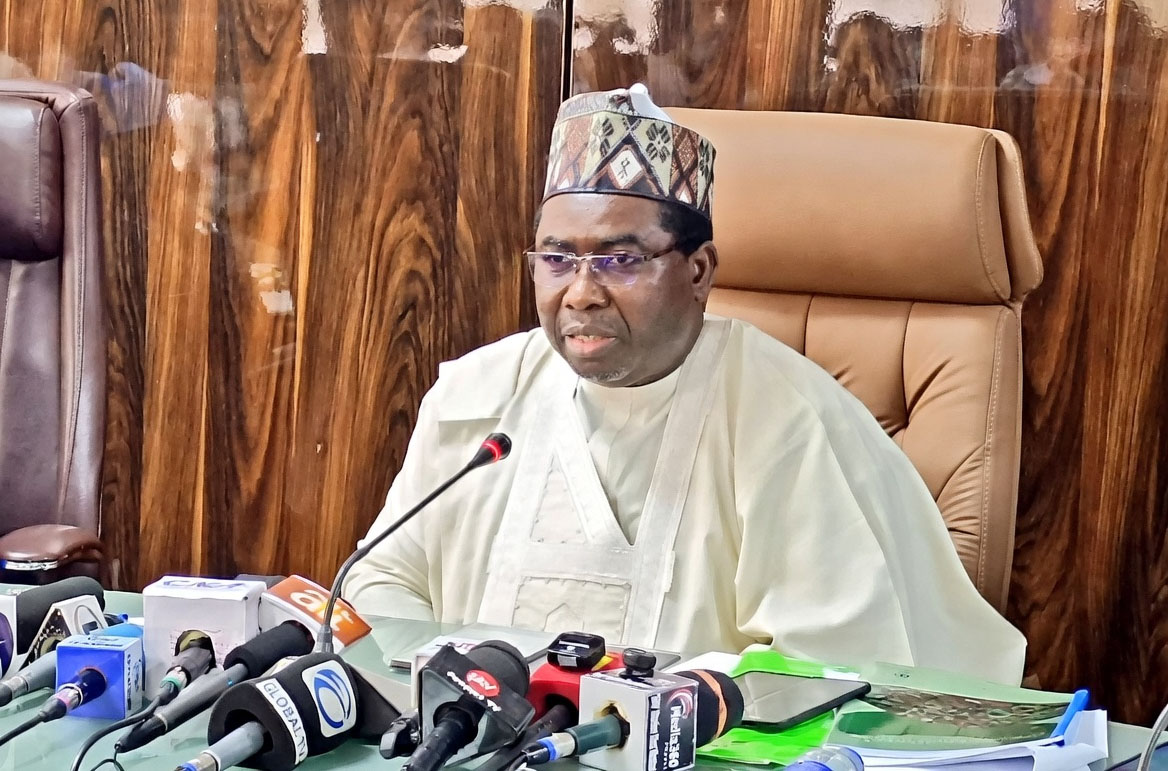
The Muslim Rights Concern (MURIC) has called for the immediate removal of the Chairman of the Independent National Electoral Commission (INEC), Professor Joash Amupitan, describing him as a threat to religious harmony in Nigeria.
In a press release issued on April 6, 2026, and signed by its Executive Director, Professor Ishaq Akintola, the group accused the INEC chairman of authoring what it described as a “toxic 80-page legal brief,” allegedly used by the United States of America to indict Nigeria over claims of Christian genocide.
MURIC expressed dissatisfaction with what it termed the “graveyard silence” of the Federal Government over calls from Islamic organisations for Amupitan’s removal. According to the group, the government’s inaction reflects a lack of sensitivity to the concerns of the Muslim community.
The organisation further alleged that Amupitan’s continued leadership poses a risk to the credibility of Nigeria’s electoral system, claiming that a planned voter registration or revalidation exercise could disenfranchise Muslim voters.
“MURIC hereby declares a vote of no confidence in the current INEC boss,” the statement read, urging the Federal Government to replace him with what it described as a “tolerant Christian” to restore confidence and balance.
The group also accused the INEC chairman of failing to address the allegations against him, noting that his silence has raised concerns among observers. It argued that public officials in other countries often resign over similar controversies, citing examples of past resignations by international political figures.
MURIC warned that Nigeria’s progress could be hindered if individuals accused of misconduct remain in sensitive public offices, stressing that Amupitan’s continued stay in office represents what it called a “sit-tight syndrome.”
Describing the INEC chairman as an “electoral burden” and a “threat to religious harmony,” the group insisted that his resignation or removal is necessary to safeguard national unity and the integrity of the electoral process.
As of the time of filing this report, neither INEC nor the Federal Government had issued an official response to the allegations.
MURIC Demands Sack of INEC Chairman Over Alleged Bias, Calls for Replacement
News
Tinubu Commissions Gateway Airport, Pledges to Crush Banditry in Nigeria
Tinubu Commissions Gateway Airport, Pledges to Crush Banditry in Nigeria
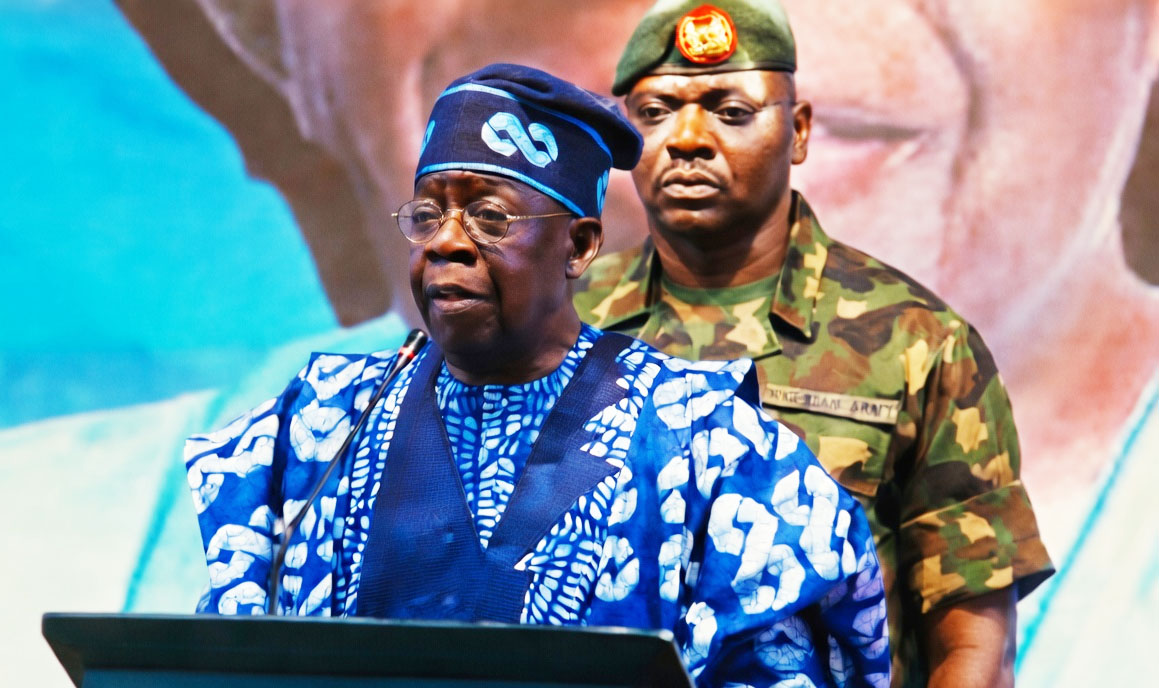
President Bola Tinubu has pledged to defeat banditry, terrorism, and insecurity across Nigeria, promising continued investment in the country’s security architecture. He made the declaration while commissioning the Gateway International Airport and several other federal projects in Ogun State on Saturday.
Speaking at a reception following the inauguration, Tinubu said his administration will intensify efforts to protect lives and property across the nation. “We will win over banditry and defeat insecurity. We will continue to invest more to strengthen the security architecture of Nigeria,” he stated, emphasizing the government’s commitment to national safety.
The president described the Gateway International Airport as the economic nerve center of Nigeria’s corridor, highlighting its role in boosting the aviation sector, trade, and socioeconomic development in Ogun State and the wider region. The airport is integrated with independent gas and energy infrastructure, ensuring sustainability and operational efficiency.
Tinubu also lauded Governor Dapo Abiodun for using improved federal allocations to develop infrastructure capable of driving Ogun State to greater economic heights. He praised the state government’s focus on mobility, security, agriculture, and industrial development, noting that projects like the airport and new Gateway Airlines will enhance trade, logistics, and employment opportunities.
READ ALSO:
- La Liga: Barcelona Fight Back to Beat Atletico Madrid 2–1
- Gov Yusuf Pledges Full Support for Tinubu, Declares APC Unbeatable in Kano
- Military Arrests Two Suspects, Recovers Weapons After Jos Crisis
Governor Abiodun, in his remarks, emphasized the transformative impact of the airport and related infrastructure on Ogun State’s economy. He noted that the state’s internally generated revenue has grown from ₦40 billion to over ₦250 billion annually, while its GDP increased from ₦4 trillion to ₦17 trillion over the past seven years. He added that the airport features a four-kilometre runway, modern control tower, advanced aviation systems, and cargo facilities, making it a centerpiece of the state’s emerging aerotropolis.
The ceremony also saw the launch of Gateway Airlines, operating Bombardier CRJ900 aircraft, alongside cargo services designed to expand trade and logistics capacity. Beyond aviation, Ogun State has invested heavily in roads, healthcare, and housing, including over 1,600 km of rehabilitated roads, more than 7,000 affordable homes, and 140 primary healthcare centers, according to Governor Abiodun.
The event was attended by prominent dignitaries including Senate President Godswill Akpabio, former President Olusegun Obasanjo, state governors, lawmakers, captains of industry, and traditional leaders. Both praised the collaboration between federal and state governments in delivering critical infrastructure, with Tinubu’s leadership highlighted as key to Nigeria’s development and security progress.
Tinubu emphasized that the federal government’s reforms and infrastructure investments are people-centered, aimed at improving daily life, fostering prosperity, and ensuring national security. He added that these efforts are designed to overcome violence and terrorism while positioning Nigeria for sustained economic growth.
Tinubu Commissions Gateway Airport, Pledges to Crush Banditry in Nigeria
News
Mother, Six Children Kidnapped in Fresh Kaduna Bandit Attack
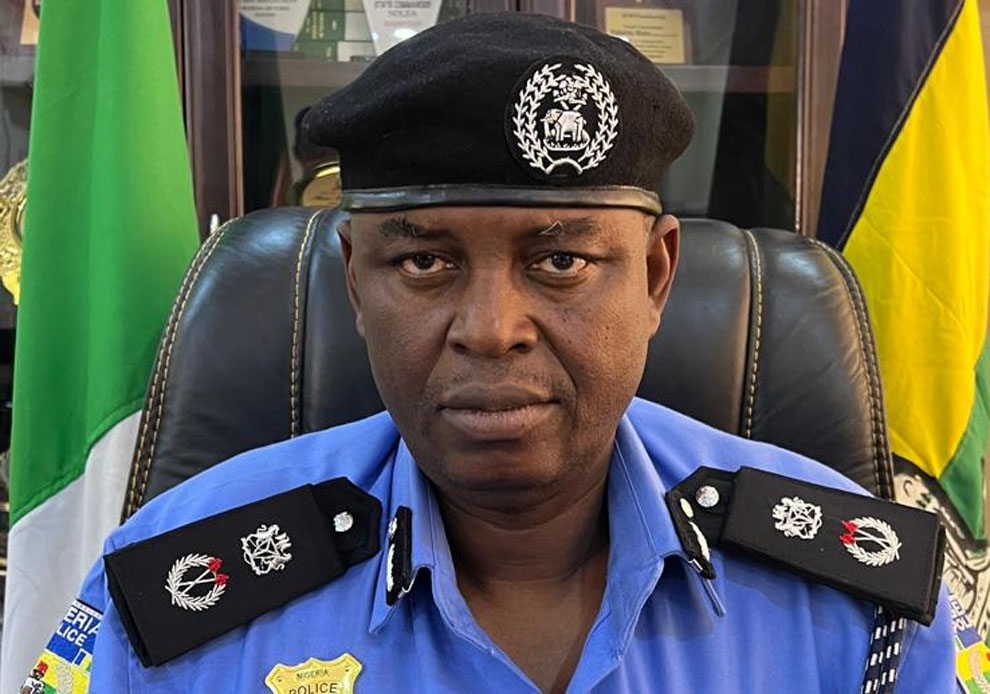
Mother, Six Children Kidnapped in Fresh Kaduna Bandit Attack
In a fresh wave of banditry in Kaduna State, a mother and six children were abducted from their home in Kurmin‑Uwa near Janjala community in Kagarko Local Government Area on Friday night. The attack comes less than 24 hours after suspected bandits kidnapped ten residents, including seven members of a single family, in Unguwar Sabon‑Titi, Katari.
According to residents, the raid occurred around 10:23 p.m., with the assailants going directly to the targeted house before whisking away the victims, identified as Ladi Malachy, Patience Malachy, Promise Malachy, Inama Malachy, Peter Malachy, and Aboyi Malachy. Witnesses said the attackers fled into surrounding forests, leaving the community in fear.
READ ALSO:
A local resident, Ibrahim Shehu, confirmed the abduction, while a community leader, speaking on condition of anonymity, revealed he alerted security operatives immediately after learning about the raid. However, it remains unclear whether authorities responded promptly. Kurmin‑Uwa is located about two kilometres from Kagarko town, an area that has seen repeated bandit attacks on households.
Security sources indicate that search and rescue operations have been launched, as authorities work to locate the kidnappers and secure the release of the abducted family. Meanwhile, the Kaduna State Police Command has yet to issue an official statement regarding the incident.
The back‑to‑back kidnappings have heightened tension in rural Kaduna communities, with residents calling for intensified patrols, improved security presence, and faster emergency response to prevent further abductions. Analysts warn that without swift action, such violent raids may continue to terrorise villages across the state.
Mother, Six Children Kidnapped in Fresh Kaduna Bandit Attack

-
 metro2 days ago
Pastor Found Dead in Guest House After Night Out With Married Female Church Member
-
 metro3 days ago
Tinubu Approves 1,000 Forest Guards, Orders 5,000 CCTV Cameras to Boost Security in Plateau
-

 Health1 day ago
Men Encouraged to Ejaculate More to Reduce Prostate Cancer Risk
-

 International2 days ago
Iran Announces ‘Bounty’ on US Pilots After Claiming Downing of Fighter Jet
-
 Politics1 day ago
Adeleke’s Aide Anisu Resigns, Defects to APC
-

 Politics2 days ago
Wike: PDP Not Financially Ready for 2027 Presidential Election
-

 Sports3 days ago
UEFA Threatens to Strip Italy of Euro 2032 Hosting Rights
-

 Africa2 days ago
Nigeria Apologises Over ‘Igbo King’ Controversy in South Africa as Protests Turn Violent