
metro
Nigerian Man Pleads Guilty in US to $5 Million Illegal Money Transfer Scheme

Nigerian Man Pleads Guilty in US to $5 Million Illegal Money Transfer Scheme
A Nigerian-born US resident, Ifeanyi Emmanuel Ugwu, has pleaded guilty to running a $5 million illegal money transfer scheme linked to fraud and cybercrime, in a case that underscores growing international efforts to combat financial crimes.
The guilty plea was announced by US Attorney Eric Grant in Fresno, California. Ugwu, 49, who lives in Bakersfield, California, admitted to operating an unlicensed money transmitting business between December 2020 and August 2023.
According to court documents, Ugwu used his company, Franklin Finance Inc., to open and control about 20 bank accounts across nine financial institutions, receiving approximately $5 million from over 100 individuals in the United States.
READ ALSO:
- Police Rescue Seven Kidnap Victims of Kaduna Easter Church Attack
- Man Arrested for Allegedly Killing Beer Parlour Customer Over N25,000 Debt
- Trump Claims US Sent Weapons to Iranian Protesters but They Were Diverted
Authorities revealed that at least $580,000 of the funds were proceeds of fraud, sent by victims of cybercrime, including business email compromise (BEC) scams and other online fraud schemes. Ugwu then transferred the money to individuals in countries such as China and Nigeria, effectively facilitating money laundering operations.
Prosecutors said the business operated without the required licences, and Ugwu used false representations to banks and customers to conceal the illegal nature of his activities, allowing the scheme to run for nearly three years.
The case was investigated by the Internal Revenue Service Criminal Investigation and Homeland Security Investigations, reflecting intensified US crackdowns on international fraud networks and financial crimes.
Ugwu is scheduled to be sentenced on July 27, 2026, by Jennifer L. Thurston. He faces a maximum penalty of five years in prison and a $250,000 fine, although the final sentence will be determined based on federal guidelines.
The US fraud case involving Ifeanyi Ugwu highlights the critical role of intermediaries in enabling global cybercrime and the increasing cooperation among law enforcement agencies to dismantle such networks.
Nigerian Man Pleads Guilty in US to $5 Million Illegal Money Transfer Scheme









metro
FG Deports US Missionary Alex Barbir Over Alleged Role in Nigeria Insecurity
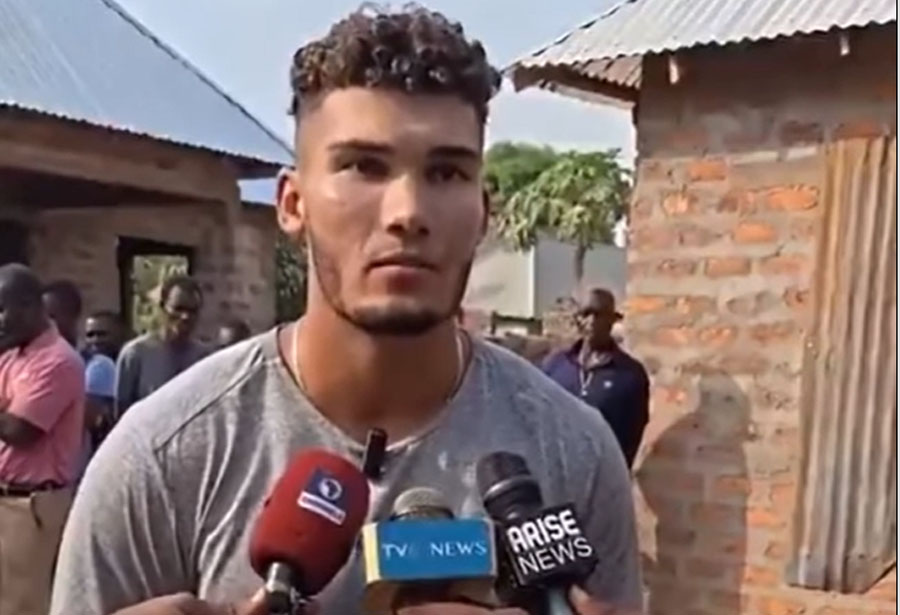
FG Deports US Missionary Alex Barbir Over Alleged Role in Nigeria Insecurity
The Federal Government has expelled American missionary, Alex Barbir, over allegations that his public statements could worsen Nigeria insecurity and deepen divisions in volatile regions.
Authorities said his remarks were provocative and divisive, warning they had the potential to trigger violence, particularly in Plateau State and across the North-Central region. The decision comes at a time of heightened tension, with growing concerns about communal clashes in Nigeria.
The development was confirmed by Abiodun Essiet, Senior Special Assistant to President Bola Tinubu on Community Engagement (North Central). Speaking during an interview, she stated that the government acted after carefully reviewing the impact of Barbir’s activities and public engagements.
According to her, the missionary has already been removed from the country. She explained that his actions were considered harmful to national unity, stressing that authorities could not allow statements capable of creating division to persist.
READ ALSO:
- Iran Lists Tough Conditions for Peace Talks with US
- BVN Enrolment Hits 68.6 Million as Growth Slows – NIBSS
- Lagos Announces Partial Road Closures for Project Commissioning
Essiet further alleged that one of Barbir’s speeches in Jos was followed by a violent incident in which two people were reportedly killed. She argued that such outcomes reinforced fears that his comments could incite unrest, even if indirectly, and justified the government’s decision to act swiftly.
Before his expulsion, Barbir had built a strong presence in parts of Benue State and Plateau, where he was widely known for humanitarian work. His activities included rebuilding homes destroyed by attacks, supporting displaced persons, and providing basic infrastructure in affected communities. In Yelwata, a community hit by violence in 2025, his organisation reportedly reconstructed several houses and assisted residents struggling to recover.
While many locals and community leaders praised his interventions for bringing relief where government response was perceived as slow, his growing influence also attracted criticism. Observers accused him of presenting the Nigeria security crisis in a manner that could heighten religious and ethnic tensions. His repeated description of the situation as a “war,” along with his public criticism of authorities, raised concerns among officials and analysts.
Barbir, however, has denied all allegations. In a video response, he defended his work, insisting that his humanitarian efforts were being overlooked while his comments were being misinterpreted. He also rejected claims linking his statements to violence, accusing government officials of misrepresentation and maintaining that he has never engaged in activities capable of inciting unrest.
Supporters of the missionary, including some religious figures, have backed him, arguing that he was merely drawing global attention to the plight of victims in conflict-affected areas. They described his work as humanitarian and faith-driven, warning that his expulsion could discourage international support for vulnerable communities.
Legal experts note that the Nigerian government has the authority to deport foreign nationals whose actions are considered a threat to public order or national security. Although freedom of expression is guaranteed, it does not extend to statements seen as capable of inciting violence or deepening divisions.
Essiet maintained that the government’s action was preventive, aimed at safeguarding unity and avoiding further escalation of tensions. She warned against narratives that could divide communities, stressing that Nigeria must avoid situations that could spiral into broader conflict.
The expulsion highlights increasing sensitivity by authorities to external voices shaping narratives around the Nigeria insecurity crisis, particularly in regions already grappling with persistent violence and fragile peace.
FG Deports US Missionary Alex Barbir Over Alleged Role in Nigeria Insecurity
metro
Lagos Announces Partial Road Closures for Project Commissioning
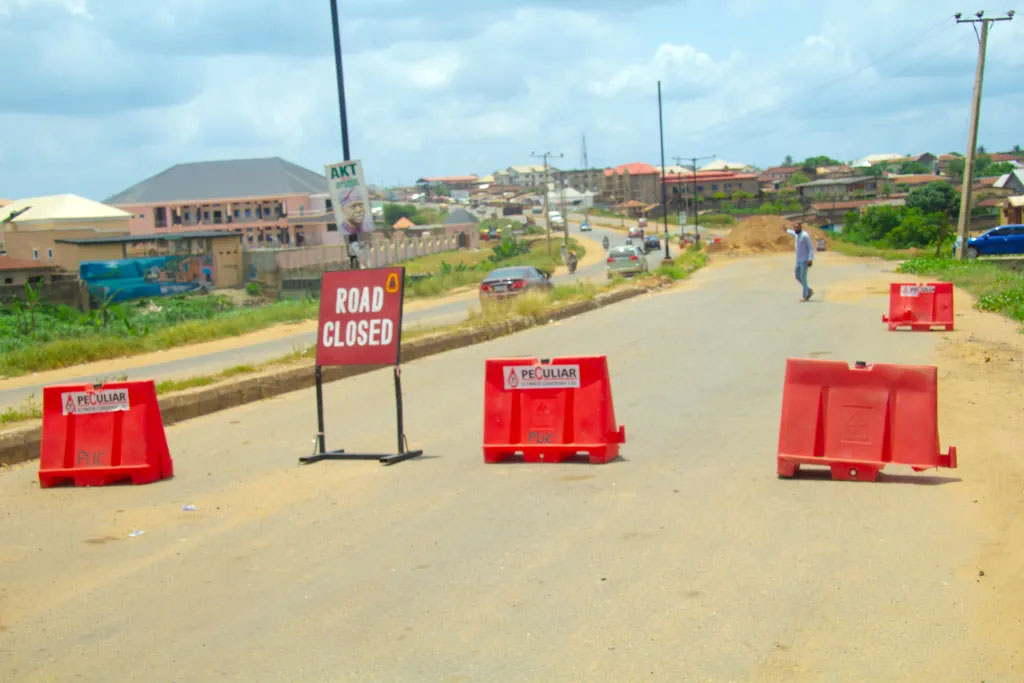
Lagos Announces Partial Road Closures for Project Commissioning
The Lagos State Government has announced partial road closures across key parts of the state ahead of the commissioning of major infrastructure projects scheduled for Wednesday and Thursday.
In a statement issued on Tuesday, the Commissioner for Transportation, Oluwaseun Osiyemi, said the temporary closures were necessary to ensure safety and the smooth conduct of the events.
He advised motorists to plan their journeys in advance and avoid affected corridors during the specified periods to minimise traffic disruptions.
According to the statement, the Opebi-Mende Link Bridge will be commissioned on Wednesday, April 8, between 9:00 a.m. and 1:00 p.m., with traffic expected to be affected in the Opebi-Allen, Ikeja and Ojota areas.
“All motorists transiting this corridor during the specified hours should seek alternative routes to avoid congestion and ensure timely arrival at their destinations,” the statement read.
On Thursday, April 9, two separate commissioning events are scheduled between 9:00 a.m. and 1:00 p.m. The first is the commissioning of the Tolu Schools Complex, which will impact traffic in the Olodi Apapa and Ajegunle areas. Motorists operating within these locations have been urged to consider alternative routes and allow additional travel time.
Later in the day, from 4:00 p.m. to 7:00 p.m., another event will take place at Eko Hotel and within Victoria Island, with road users advised to avoid the corridor or expect delays.
The government added that officials of the Lagos State Traffic Management Authority (LASTMA) and other traffic enforcement agencies would be deployed to manage vehicular movement and assist commuters.
Meanwhile, President Bola Tinubu is expected to attend the events. Authorities have also deployed 500 additional LASTMA officers to ensure effective traffic control and public safety during the commissioning programmes.
Lagos Announces Partial Road Closures for Project Commissioning
metro
Missing worshippers still in captivity, Kaduna community disputes Army’s rescue claim

Missing worshippers still in captivity, Kaduna community disputes Army’s rescue claim
Confusion and anger have trailed the Nigerian Army’s claim that it rescued some of the 31 abducted worshippers following a deadly Easter Sunday attack on a church in Kaduna State, as residents insist no such rescue took place.
The military had announced that troops repelled gunmen who stormed a church in Ariko during Easter celebrations, freeing dozens of captives in the process. It also put the death toll at five.
But on the ground, a different story is emerging.
Community leaders and residents say the abducted victims remain in the hands of their captors, casting doubt on the army’s version of events and deepening fears among families still awaiting news of their loved ones.
“As far as we are concerned, all the abducted victims are still with the bandits,” said Joseph Ariko, president of the Ariko community association, in an interview with the BBC.
He challenged the military to provide details of those allegedly rescued.
The army has yet to respond to the claims.
In its earlier statement, the military said soldiers engaged the attackers in a “fierce firefight,” forcing them to flee and abandon both hostages and the bodies of victims.
It also suggested the attackers suffered heavy casualties, citing blood trails along their escape routes.
However, residents told local media that the gunmen operated for an extended period without resistance—raising fresh questions about the speed and effectiveness of the military response.
Doubts over the rescue narrative were echoed by John Hayab of the Christian Association of Nigeria, who said he found no evidence of any freed captives after speaking with locals.
“Nobody has been rescued… If they are rescued, where did they take them to?” he asked.
Beyond the conflicting accounts, the tragedy has once again spotlighted the persistent insecurity across northern Nigeria, where attacks on communities, mass abductions, and ransom demands have become disturbingly routine.
While the army says troops have been deployed to track down the attackers and reinforce security, residents remain sceptical, urging authorities to prioritise transparency and accountability.
In a separate development, security forces reportedly killed 65 bandits during an offensive in Zamfara State, according to AFP, just days after another mass abduction in the region triggered a manhunt.
Nigeria’s security crisis has also drawn international attention.
Under Donald Trump, the United States previously raised concerns about violence affecting Christian communities, although the Nigerian government has consistently rejected claims of targeted religious persecution, maintaining that victims cut across faiths.
In February, US troops were deployed to Nigeria to support military training and intelligence sharing in the fight against insurgents and armed groups.
For residents of Ariko, however, the immediate concern is far more personal: the fate of those still missing—and the growing gap between official assurances and lived reality.

-

 Health3 days ago
Men Encouraged to Ejaculate More to Reduce Prostate Cancer Risk
-
 Politics3 days ago
Adeleke’s Aide Anisu Resigns, Defects to APC
-
 metro21 hours ago
MURIC Backs Egba Imams’ Call for Inclusive Leadership in Ogun 2027 Governorship Race
-

 Entertainment3 days ago
Nollywood Actress Laide Bakare Sets Strict Dating Rules: No Men in Her Home
-

 International2 days ago
Netanyahu Condemns ‘Christian Persecution’ in Nigeria in Easter Message
-

 metro3 days ago
Autopsy Confirms Destiny Boy Died from Toxic Substances
-
 Politics2 days ago
ADC Crisis Halts Makinde, Bala, Lawmakers’ Defections
-

 metro2 days ago
Hajiya Hadiza Attahiru Jega, Wife of Former INEC Chairman, Dies in Abuja