
Business
NNPC denies operating secret account, says fuel subsidy gulps N2.6tn
The Nigerian National Petroleum Company Limited (NNPCL) has not remitted any amount to the federation account since the beginning of this year as the company’s deduction for petrol subsidy rose to N2.565 trillion at the end of August 2022.
A new report by the NNPC revealed this even as the company denied any involvement in the operation of any secret bank account, stating that the Office of the Accountant General of the Federation (OAGF) was aware of its financial transactions.
An analysis of NNPC’s monthly presentation to the Federation Account Allocation Committee (FAAC) at the weekend, further showed that the NNPCL has so far spent N2.565 trillion on the controversial subsidy this year.
Information from the FAAC meeting had earlier revealed that the money available for distribution among the three tiers of government for the month slumped by N280.948 billion to N673.137 billion when put aside the N954.085 shared in July.
Of the amount, the Federal Government received N259.641 billion; the states received N222.949 billion, while the local governments got N164.247 billion.
“The sum of N525,714,373,874.60 being federation account share was used to defray value shortfall/subsidy for the month,” the NNPCL stated in a document quoted by TheCable.
According to the national oil firm, in January, February, March, and April 2022, the petrol subsidy gulped N210.38 billion, N219.78 billion, N245.77 billion and N271.13 billion respectively.
Furthermore, in May, June, and July, the country spent N327.07 billion, N319.18 billion and N448.78 billion respectively before the hugest deduction of N525.71 billion in the latest instance.
The NNPCL also on Saturday said it was not involved in the operation of any secret bank account.
It said that the Office of the Accountant General of the Federation (OAGF) was aware of its financial transactions.
In a thread on its verified Twitter handle last night, signed by the spokesman for the national oil company, Mr Garba Muhammad, the company explained that it was unaware of the existence of any such account.
The House of Representatives a few days ago said it was probing the structure and accountability of the joint venture businesses and Production Sharing Contracts (PSCs) of the NNPCL in the last 32 years.
The lawmakers had alleged that they had uncovered a secret account owned by the NNPCL allegedly in breach of due process.
The report stated that an official of the OAGF, Mr Chize Peters, disclosed to the Abubakar Fulata-led Adhoc committee probing the matter.
The committee was said to have directed the Group Chief Executive Officer of the NNPCL, Mele Kyari, to appear before it to offer explanations on the issue.
But in a series of tweets, the spokesman of NNPCL said, “The NNPCL, directly or through its upstream arm, the National Petroleum Investment Management Services (NAPIMS), does not operate secret accounts at all.
“The joint venture cash call accounts denominated in US Dollars and Nigerian Naira are all domiciled with the Central Bank of Nigeria in line with the Treasury Single Account (TSA) policy.
“The Joint Venture Cash Call (JVCC) NGN and USD accounts were created to cater for the funding of cash calls for the various Joint Ventures managed by NNPCL on behalf of the Federal Government,” the company said.
The statement added that the ‘Joint Venture Proceeds Accounts’ were opened for the individual JVs to implement the self-funding strategy which aims at making them be self-reliant.
“The Office of the Accountant-Gen. of the Federation (OAGF) is fully aware of the JVCC accounts as the OAGF regularly sanctions & approves the updates/change of signatories to the accounts.
The NNPCL has documents where these correspondences with the OAGF were acknowledged.
“The NNPC/NAPIMS books of accounts in respect of the federations upstream petroleum activities are audited annually by independent external auditors,” the national oil company said.
According to the NNPCL, a critical part of the independent statutory audit is sending ‘circularisation’ to banks to confirm balances and bank accounts belonging to NNPC/NAPIMS.
It stressed that Audited Financial Statements (AFS) are submitted to all stakeholders including the National Assembly.
In addition, the company stated that the OAGF conducts periodic (yearly) checks on the activities of NNPC/NAPIMS, maintaining that the activities of the NNPCL and NAPIMS are audited yearly by the Nigerian Extractive Industry Transparency Initiative (NEITI).
“NNPCL has documented evidence of the correspondences between the company and the OAGF before the accounts were opened with the @cenbank, in line with the Treasury Single Account (TSA) policy.
“We also have evidence of reconciliations carried out with the @cenbank for the year ended 31-12-2021 in respect to the JV Cash Call Accounts.
“Thus, with such multiple layers of checks and balances, it is impossible for @nnpclimited to operate secret accounts until the ad hoc Committee, with due respect to its competencies, discovers it.
“If such ‘secret account’ does exist, then @nnpclimited certainly is not aware of, and has absolutely nothing to do with it,” the statement concluded.






Business
Fuel Costs Remain Elevated at ₦1,300 per Litre Despite Dangote Price Adjustment

Fuel Costs Remain Elevated at ₦1,300 per Litre Despite Dangote Price Adjustment
Despite a recent price reduction by Dangote Petroleum Refinery, petrol prices in Nigeria remain high at around ₦1,300 per litre, as global oil market volatility fueled by the Middle East conflict continues to impact local fuel costs.
Dangote Petroleum Refinery, responsible for a significant portion of Nigeria’s domestic petrol supply, recently cut its ex‑depot price to ₦1,075 per litre, reflecting a slight easing of global crude oil prices, which dropped to approximately $88 per barrel. However, marketers have not fully passed on the reduction at retail pumps, leaving consumers paying roughly ₦1,300 per litre in major cities including Lagos, Port Harcourt, and Calabar.
READ ALSO:
- Iran Threatens Strikes on US, Israeli Banks, Tech Giants
- BREAKING: Tambuwal Quits PDP, Defects to ADC Amid Internal Party Crisis
- UN Condemns Iran’s Attacks on Gulf States, Jordan as Russia, China Abstain
Analysts note that the persistent high petrol prices are largely due to ongoing tensions in the Middle East, which have disrupted crude supply routes and caused market uncertainty. Transport operators and commuters have expressed frustration, citing higher operating costs and increased fares as a result of elevated fuel prices.
The African Democratic Congress (ADC) and other socio-economic advocates have called on the Federal Government to intervene, urging measures such as increasing crude supply to local refineries or considering targeted price caps or subsidies to cushion the impact on Nigerians.
Economists warn that sustained high petrol prices could drive inflation higher, further straining the cost of living and affecting businesses that rely heavily on transportation and logistics. While the Dangote refinery’s price cut is a positive step, market analysts say that global instability and oil supply disruptions mean pump prices are likely to remain elevated in the near term.
Fuel Costs Remain Elevated at ₦1,300 per Litre Despite Dangote Price Adjustment
Auto
French automakers return to Nigeria, team up with Dangote, Coscharis for 44,000-vehicle production
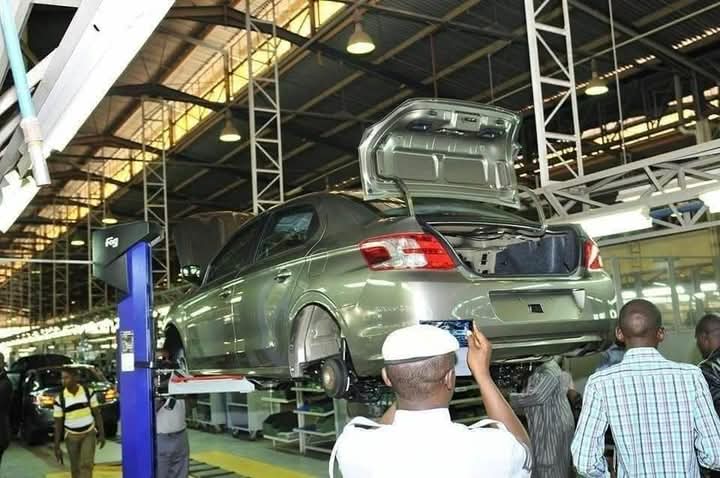
French automakers return to Nigeria, team up with Dangote, Coscharis for 44,000-vehicle production
French automobile manufacturers are mounting a fresh comeback in Nigeria’s automotive sector through strategic alliances with major local players, targeting the production and sale of about 44,000 vehicles annually as part of efforts to revive local assembly.
The renewed push involves two major partnerships: Peugeot’s collaboration with Dangote Peugeot Automobiles Nigeria (DPAN) and Renault’s alliance with Coscharis Group to produce vehicles for the Nigerian market.
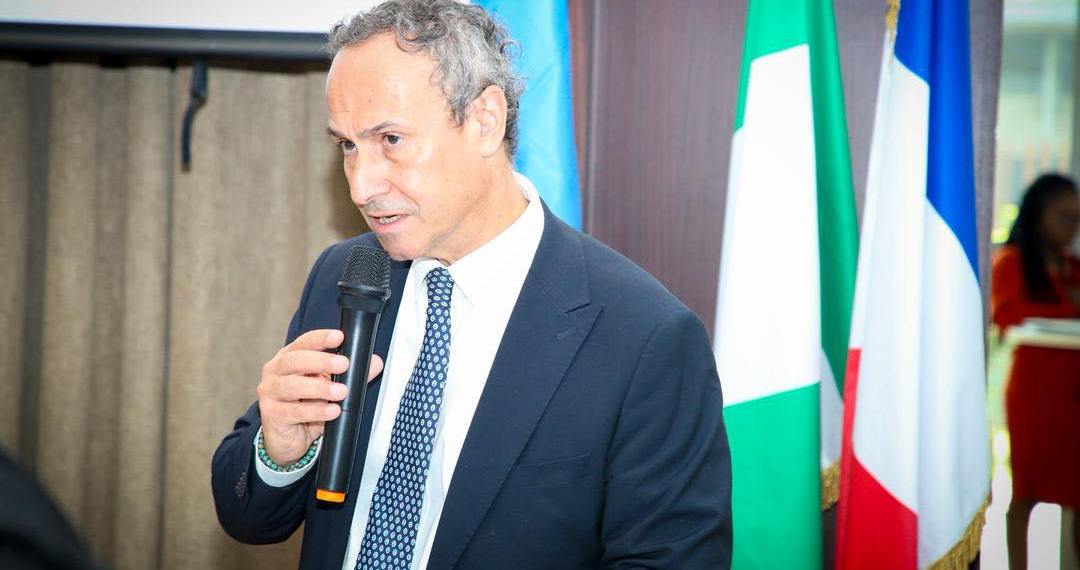
The development was disclosed by Marc Fonbaustier, the French Ambassador to Nigeria, who said French carmakers are gradually rebuilding their presence in one of Africa’s largest automobile markets.
According to him, the partnership between Peugeot and Dangote Peugeot Automobiles Nigeria has already restarted operations with the Peugeot 301, while plans are underway to assemble additional models including the 308, 3008, 5008 and 508.
The ambassador noted that the relaunch is part of a broader strategy to scale up production capacity and increase local vehicle supply.
“The target of 44,000 vehicles annually is ambitious but achievable,” he said.
In a parallel move, Renault is partnering Coscharis Group to co-produce vehicles under the Logan brand for the Nigerian market.
French carmakers were once dominant in Nigeria’s automobile industry, largely through the activities of Peugeot Automobile Nigeria, which operated a major assembly plant in Kaduna.
Established in the 1970s, the plant assembled several Peugeot models locally and became a cornerstone of Nigeria’s auto industry. Vehicles such as the Peugeot 504 were widely used by government institutions, businesses and private motorists for decades.
However, economic downturns, policy changes and a surge in cheaper imported vehicles gradually weakened local assembly operations, causing production levels and market share for French brands to decline sharply.
The situation later prompted the Dangote Group to acquire a controlling stake in the company, leading to the creation of Dangote Peugeot Automobiles Nigeria, which has since modernised its assembly facilities and expanded production capacity.
Despite the revival efforts, the competitive landscape has changed significantly. Automakers from China and India have strengthened their foothold in Nigeria with more affordable models and growing local assembly operations.
Still, French investors remain optimistic about Nigeria’s long-term market potential. Fonbaustier said about 100 French companies currently operate in Nigeria, employing roughly 16,000 Nigerians.
He added that although rebuilding France’s automotive presence in Nigeria will take time, the new partnerships with Dangote and Coscharis mark an important step toward restoring local vehicle manufacturing in the country.
Business
JUST IN: Dangote Refinery Cuts Petrol, Diesel Ex-Depot Prices Amid Market Relief

JUST IN: Dangote Refinery Cuts Petrol, Diesel Ex-Depot Prices Amid Market Relief
Dangote Petroleum Refinery has announced a reduction in its ex-depot prices for Premium Motor Spirit (PMS), popularly known as petrol, and Automotive Gas Oil (AGO), or diesel, marking the first downward adjustment after several sharp increases in recent days. The new pricing, released on March 10, 2026, reflects easing global crude oil prices and provides potential relief for fuel marketers, bulk buyers, and consumers nationwide.
Under the updated pricing template, the gantry price of petrol has been cut by ₦100, from ₦1,175 per litre to ₦1,075 per litre. For PMS supplied through coastal distribution, the refinery set a slightly lower price of ₦1,050 per litre, accounting for marginal cost differences in maritime delivery.
The gantry price of diesel has also been significantly reduced by ₦190, bringing it down to ₦1,430 per litre from the previous ₦1,620 per litre. The refinery clarified that these ex-depot prices exclude statutory charges imposed by the Nigerian Midstream and Downstream Petroleum Regulatory Authority (NMDPRA), meaning retail pump prices may still vary depending on additional levies and distribution costs.
READ ALSO:
- Family of Teacher Killed in Student Prank Tragedy Wants Charges Against Teens Dropped
- Pregnant Woman Begs Authorities to Free Husband Jailed for Domestic Violence
- Strait of Hormuz Crisis: Iran Threatens to Stop Gulf Oil Shipments
Context and Market Impact
The price adjustment follows a period of rapid increases in fuel prices, which had raised petrol to ₦1,175 per litre and diesel to ₦1,620 per litre in early March. Analysts say the reduction is a response to declining international crude oil prices and signals potential easing of fuel costs across the downstream sector.
Industry experts note that while the ex-depot price cuts offer short-term relief for marketers and bulk buyers, the extent to which they will translate to lower retail pump prices remains to be seen. Retail fuel pricing also depends on transportation costs, depot margins, and regulatory fees, which can differ across regions.
For Nigerian consumers, even modest reductions in ex-depot prices could help alleviate transport and logistics costs, easing broader inflationary pressures in the economy. Motorists and businesses are now closely monitoring fuel stations to see how quickly the reductions are reflected at the pumps.
The move underscores Dangote Refinery’s continued influence as Africa’s largest petroleum refinery, shaping pricing trends and impacting Nigeria’s energy sector amid volatile global oil markets.
JUST IN: Dangote Refinery Cuts Petrol, Diesel Ex-Depot Prices Amid Market Relief

-

 metro15 hours ago
Ikeja Electric Apologises to Customers Over Power Disruptions
-

 metro3 days ago
Tragedy in Ibadan as Woman, 26, Dies at Boyfriend’s Residence
-

 Business2 days ago
JUST IN: Dangote Refinery Cuts Petrol, Diesel Ex-Depot Prices Amid Market Relief
-

 metro3 days ago
Students Escape as Four-Storey School Building Collapses in Lagos
-

 News1 day ago
India, Other Countries Reject Tinubu’s Ambassadorial Nominees
-

 Politics3 days ago
BREAKING: Zamfara Governor Dauda Lawal Defects from PDP to APC
-
 News3 days ago
OYOSUBEB Chairman Adeniran Joins 2027 Oyo Governorship Race
-
 International3 days ago
Beijing Warns Against Threats to Iran’s New Leader Mojtaba Khamenei