
metro
Obi, Civil Groups Lead Abuja Protest Against Senate’s Electoral Act Position
Obi, Civil Groups Lead Abuja Protest Against Senate’s Electoral Act Position
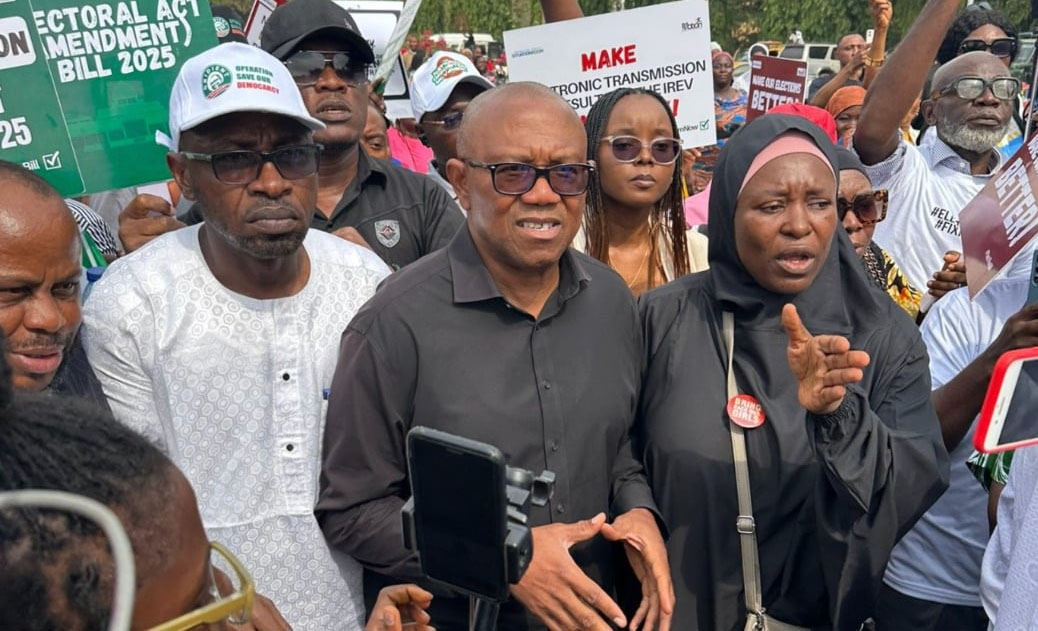
Hundreds of protesters on Monday stormed the National Assembly Complex in Abuja, demanding that lawmakers explicitly mandate real-time electronic transmission of election results in the proposed Electoral Act Amendment Bill 2026, amid rising concerns over transparency ahead of the 2027 general elections.
The protest, branded “Occupy National Assembly”, was organised by civil society organisations, youth groups, labour activists and opposition supporters who accused the Senate of attempting to weaken electoral safeguards by removing a clause that would have made electronic transmission of results compulsory from polling units.
Demonstrators carried placards calling for credible elections, results transparency, and accountability, insisting that vague legislative wording could reopen the door to election manipulation and undermine public confidence in Nigeria’s democratic process.
READ ALSO:
- Man Blindfolded, Removed From Lagos Court by Osun Officers, Faces Same Charges
- Timi Frank Petitions Trump Over Threats to Nigeria’s 2027 Elections
- BoI Gets CBN Approval to Launch Non‑Interest Banking Window in Nigeria
Former presidential candidate Peter Obi joined the protest, urging lawmakers to prioritise national interest and democratic integrity. He stressed that clear, mandatory provisions for electronic transmission of results would strengthen trust in elections rather than disrupt them, warning that continued ambiguity could fuel voter apathy and political tension.
Security agencies, including the Nigeria Police Force, the Nigerian Army, and the Nigeria Security and Civil Defence Corps, were heavily deployed around the National Assembly to maintain order as protesters gathered at the main entrance, chanting solidarity songs and demanding immediate legislative action.
The protest follows a controversial decision by the Senate to retain discretionary powers for the Independent National Electoral Commission (INEC) over results transmission, rather than mandating real-time electronic upload of polling unit results. Lawmakers defending the decision cited concerns over inconsistent network coverage in some parts of the country.
However, critics argue that such concerns should not override the need for clear legal backing for electronic result transmission, especially after its partial use during the 2023 general elections. They insist that strengthening the law would compel improvements in infrastructure rather than excuse electoral loopholes.
Adding to the pressure, the Nigeria Labour Congress (NLC) has warned of possible nationwide protests if the final version of the Electoral Act fails to guarantee electronic transmission and digital collation of results. Labour leaders say anything short of a firm legal mandate would amount to democratic regression.
The controversy has also exposed a rift between the Senate and the House of Representatives, with the lower chamber previously approving amendments that would make electronic transmission of election results mandatory. Both chambers are expected to reconcile their positions during the harmonisation process.
With public pressure mounting, attention is now focused on whether the National Assembly will amend the bill to clearly protect electoral transparency, a move many observers believe could shape voter confidence and political stability ahead of the 2027 elections.
Obi, Civil Groups Lead Abuja Protest Against Senate’s Electoral Act Position








metro
Cars Torched as South Africans Protest Alleged Nigerian ‘Igbo King’ Coronation

Cars Torched as South Africans Protest Alleged Nigerian ‘Igbo King’ Coronation
Violence erupted on Monday in KuGompo City, Eastern Cape, South Africa, following the reported coronation of a Nigerian national as a traditional king, prompting the Nigerian High Commission to issue a 10-point safety advisory urging Nigerians in the country to prioritise safety and maintain a low profile.
According to the advisory titled “Advisory to All Nigerians Living in the Republic of South Africa,” citizens were urged to exercise caution, limit movement, avoid interactions with unfamiliar persons, and suspend socio-cultural activities to reduce the risk of becoming targets amid rising tensions. The circular also advised Nigerians to respect local laws and customs and refrain from posting inflammatory content on social media that could escalate the situation.
What began as a peaceful protest over the alleged installation of Solomon Eziko as Igwe Ndigbo quickly escalated. Videos and images of the coronation circulated widely, sparking anger among residents and civic groups. Protesters torched vehicles, vandalised properties, and clashed with law enforcement. Police reportedly deployed teargas and rubber bullets to disperse the crowds, while fire services worked to contain the blazes.
READ ALSO:
- AI Facial Recognition Error: Grandmother Wrongfully Jailed for Five Months
- El-Rufai Alleges Plot to Arrest Brother to Force Negotiation
- WAEC Releases 2026 WASSCE Timetable for School Candidates
A man was stabbed during the unrest and taken to hospital. Authorities clarified that the victim was not linked to the demonstration, though some civic groups claimed one of their members was injured and also struck by a vehicle.
Several groups, including ActionSA, the Patriotic Alliance, and the civic movement March and March, joined traditional leaders in condemning the alleged coronation as illegal and unconstitutional.
- Athol Trollip, ActionSA Eastern Cape leader, said: “There is no constitutional provision for any foreigner, legal or illegal, to coronate themselves in the Eastern Cape. We support existing local kings, not Nigerian kings.”
- Steve Motale, Patriotic Alliance spokesperson, said: “We condemn this fake coronation. Even the Nigerian High Commissioner has denounced it.”
The Royal House of AbaThembu also denied involvement, calling social media claims linking King Buyelekhaya Dalindyebo to the coronation false and misleading.
The unrest follows recent anti-migrant protests in South Africa, where residents demanded stricter immigration policies targeting Nigerians and other foreign nationals. Analysts say the protests reflect broader xenophobic tensions and concern over foreign influence on local traditional structures.
The Federal Government of Nigeria continues to monitor the situation closely, urging citizens in South Africa to remain law-abiding, cautious, and vigilant until stability returns.
Cars Torched as South Africans Protest Alleged Nigerian ‘Igbo King’ Coronation
metro
El-Rufai Alleges Plot to Arrest Brother to Force Negotiation
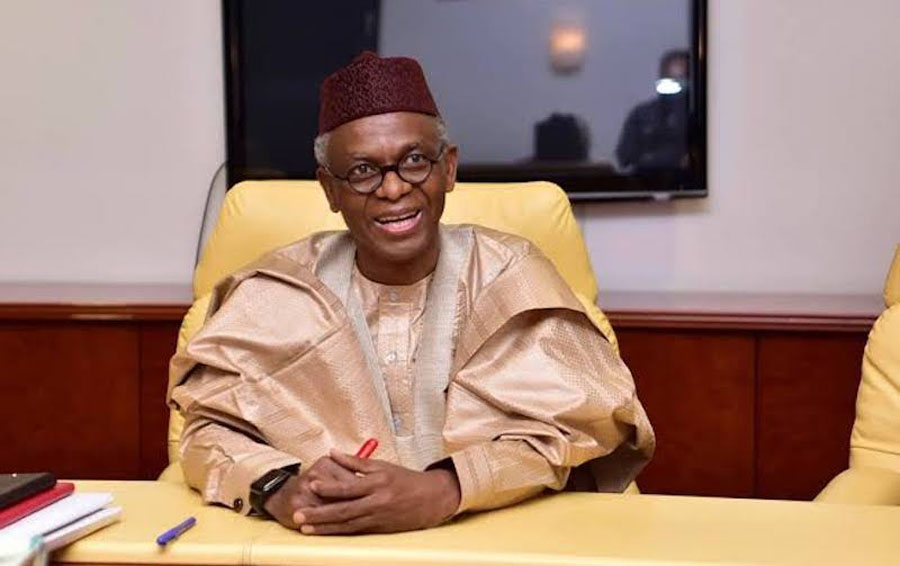
El-Rufai Alleges Plot to Arrest Brother to Force Negotiation
Former Kaduna State governor Nasir El-Rufai has alleged that security operatives planned to arrest his elder brother, Bashir El-Rufai, if he returned to Nigeria for their mother’s burial — reportedly as a tactic to pressure him into negotiations.
In a video statement, the African Democratic Congress (ADC) chieftain said Bashir avoided attending the funeral to prevent detention. “My elder brother Bashir El-Rufai couldn’t make it because we learned there was a plan to arrest him… they believe if they get him, I will negotiate,” he revealed.
El-Rufai’s mother, Hajiya Umma El-Rufai, passed away in Cairo, Egypt, on Friday. Her remains were flown to Abuja and buried on Sunday. The burial coincided with El-Rufai’s ongoing legal troubles, including his arrest and detention by the Independent Corrupt Practices and Other Related Offences Commission (ICPC) over allegations of corruption and money laundering.
READ ALSO:
- WAEC Releases 2026 WASSCE Timetable for School Candidates
- UK, US, France Among 10 Nations Granting Agrément to Nigerian Ambassadors
- Aiyedatiwa Sacks All Political Aides, Plans 1,000 New Appointments
The former governor was arraigned before a Federal High Court in Kaduna on March 24 on a 10-count charge. His case was adjourned until March 31, 2026, for hearings on pending applications, including his bail request. He was granted temporary release from ICPC custody to attend his mother’s funeral.
Observers say El-Rufai’s claims highlight concerns over the alleged use of family members as leverage in political and legal disputes, sparking debate over the conduct of anti-graft agencies in Nigeria. Analysts also note the potential political implications as El-Rufai continues to assert his innocence and challenge the legal proceedings against him.
El-Rufai Alleges Plot to Arrest Brother to Force Negotiation
metro
Tinubu Appoints Senator Ibrahim Ida as CAC Chairman, Names Seven NPC Commissioners
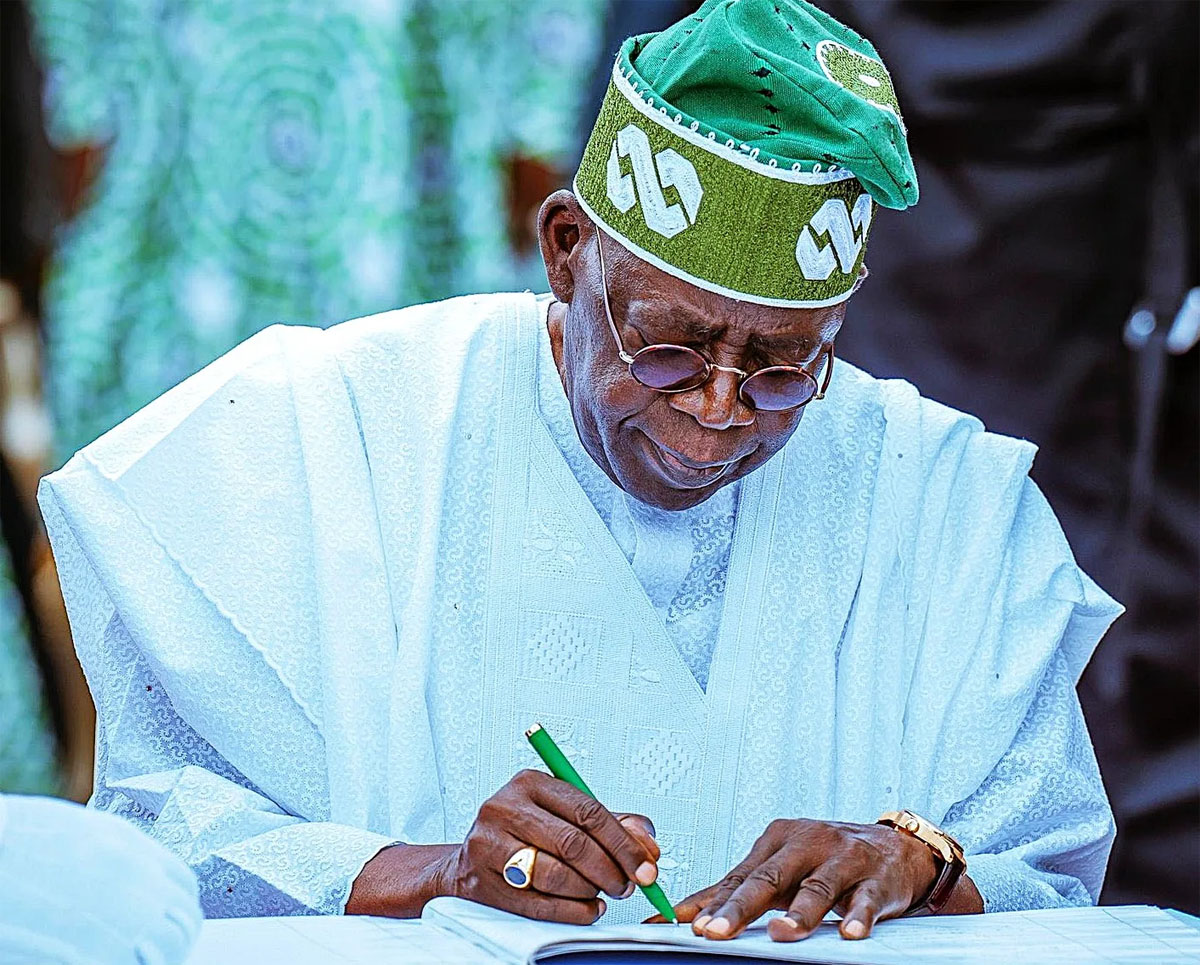
Tinubu Appoints Senator Ibrahim Ida as CAC Chairman, Names Seven NPC Commissioners
President Bola Ahmed Tinubu has approved a major leadership reshuffle in key federal institutions, appointing Senator Ibrahim Ida as Chairman of the Corporate Affairs Commission (CAC) and nominating seven individuals to fill vacant Federal Commissioner positions at the National Population Commission (NPC). The move is aimed at strengthening institutional capacity, promoting good governance, and improving data-driven planning and corporate regulation across Nigeria.
Senator Dr. Ibrahim Ida holds a Master’s degree in Banking and Finance from the University of Ibadan and a Bachelor of Laws (LLB) from the University of Abuja. Prior to his tenure in the Senate representing Katsina Central, he served as Commissioner of Finance in Katsina State and later as a Permanent Secretary in the Federal Civil Service. At CAC, he is expected to streamline company registration, enhance corporate governance, and boost investor confidence.
READ ALSO:
- Naira Slides to ₦1,415 per Dollar in Parallel Market as Official Rate Weakens
- Plateau Attackers Spoke Fulfulde, Came on Motorbikes, Ex‑Rep Says
- US Lawmaker Urges King Charles to Meet Jeffrey Epstein Survivors During US Visit
The seven nominees for the NPC are:
- Kolawole Oladipupo Alabi (Ekiti State)
- Nasiru Mu’azu (Zamfara State)
- Usman Abubakar Tuggar (Bauchi State)
- Dr. Isiaka Alada Yahaya (Kwara State)
- Professor Sadiq Isah Radda (Katsina State)
- Suleiman Umar (Jigawa State)
- Honourable Chiso Abdullahi Dattijo (Sokoto State)
These nominees will support the NPC in population data collection, census planning, and demographic research, crucial for effective national policy formulation. Their appointments are subject to confirmation by the National Assembly.
In a related development, President Tinubu also appointed Bala Mohammed Bello as Special Adviser on Political Economy. Bello, a graduate of Accounting with an MBA from Ahmadu Bello University, Zaria, previously served as Deputy Governor (Corporate Services) at the Central Bank of Nigeria and as Executive Director at the Nigerian Export-Import Bank. Additionally, Dr. Yusuf Mohammed from Kano State was appointed Chairman of the Federal Polytechnic, Kaltungo, a key institution for technical and vocational education in Gombe State.
President Tinubu expressed confidence in the appointees, emphasizing that their leadership will advance institutional reforms, enhance corporate regulation, and support data-driven governance, contributing to improved economic growth and service delivery across Nigeria.
Tinubu Appoints Senator Ibrahim Ida as CAC Chairman, Names Seven NPC Commissioners

-

 Entertainment17 hours ago
Funke Akindele, Toyin Abraham Spark Reactions Over Alleged Snub at Iyabo Ojo’s Premiere
-
 metro1 day ago
Jos Attack: Plateau Govt Declares 48-Hour Curfew After Deadly Assault
-

 metro3 days ago
Tragedy in Aramoko: Trailer Rams Residential Building, Kills 300‑Level Student
-

 Entertainment3 days ago
Nollywood Actress Declares Love for Ibrahim Chatta, Offers to Pay Her Own Dowry
-
 Entertainment3 days ago
Streamer Peller Escorted Out of Alake of Egbaland’s Palace in Abeokuta
-
 metro3 days ago
ADC Chairman’s Daughter Joins Pro-Tinubu Campaign Organisation
-
 News17 hours ago
UK Raises Visa Costs, Tightens Immigration Rules From April 8
-
 International2 days ago
Iran Threatens US-Linked Universities in Middle East Amid Escalating Tensions