
News
Oil belongs to Niger Delta, not Nigeria, Adebanjo replies Obasanjo

Afenifere has reiterated that President Muhammadu Buhari would remain the number one enemy of Nigeria so long as he opposes restructuring of Nigeria.
Speaking at a press conference, yesterday, its acting leader, Chief Ayo Adebanjo, in an address entitled, ‘Obasanjo’s provocative statement, catalyst to Nigeria’s breakup: Niger Delta resources don’t belong to Nigeria’ said the best advice the former president can offer, as an elder statesman is to counsel President Buhari to restructure Nigeria.
“I will passionately appeal to General Obasanjo to join hands with the other patriots to bring pressure to bear on President Muhammad Buhari to ensure change of the present fraudulent constitution by restructuring the present unitary constitution to the federal system agreed to by our fathers founding fathers before the 2023 elections. This will enable the nation move forward peacefully in unity and progress.”
He faulted Obasanjo’s argument that the resources in the Niger Delta belongs to Nigeria.
“When General Obasanjo asserts that the Niger Delta Resources is not owned by Niger Delta but Nigeria, is the General suggesting that God created the resources in Niger Delta when Nigeria came into existence in 1914, or it was there before the amalgamation?”
READ ALSO:
- Side dudes worse than side chicks – Shan George
- Bandits kill 51, houses burnt in attacks on communities
- PDP Publicity Secretary collapses outside court premises in Ebonyi ..as supporters of PDP express displeasure
Obasanjo had last December said Niger Delta cannot lay claim to the crude oil found in the region as it belonged to the whole country not the region. He noted that there cannot be two sovereign entities within a country, and stressed that the situation cannot change until the Nigerian federation is dissolved.
But Adebanjo noted that Nigeria went through various unitary Constitutions with their accompanying problems under colonial rule until a federal constitution was promulgated in 1954.
He said some aspects of the 1954 constitution were incorporated into the 1960 and 1963 constitution, which he said encouraged fiscal federalism.
“Our colonial masters brought the various ethnic nationalities together through various constitutional reforms under a unitary form of government from 1914 to 1950 under Macpherson Constitution when Nigeria was divided into three regions namely Northern Region, Western Region and Eastern Region. The Macpherson Constitution collapsed following a motion by the late Chief Anthony Enahoro for self-government for Nigeria in 1956. Our founding fathers, Dr. Nnamdi Azikiwe, Sir Ahmadu Bello and Chief Obafemi Awolowo went to Lancaster House in London.
“It was at this conference that the defects in Macpherson unitary constitution were dissected and they settled for a federal constitution which became operative in 1954 with the establishment of the three autonomous regions headed by premiers. The provision of this federal constitution with some amendments was incorporated in the 1960 and 1963 Independence Constitution.
“The residual powers in the constitution reserved for the federating autonomous regions. Revenue allocation was agreed to be on derivation which you now refer to as resource control with the payment of 50 per cent (Section 140, 1963 Constitution) to the region where the revenue was derived.
“This was the peaceful co-existence position of the unity of the ethnic groups until 1966 when the military took over the government and abrogated the constitution agreed to by our founding fathers and set up the present 1999 constitution. The obnoxious provisions of this constitution have been the cause of instability in the country.”











News
Amnesty Int’l Condemns Canada for Abstaining from UN Slavery Reparations Vote
Amnesty Int’l Condemns Canada for Abstaining from UN Slavery Reparations Vote
Human rights organisation Amnesty International Canada has strongly criticized Canada for abstaining from a landmark United Nations vote on reparations for the harms caused by the transatlantic slave trade, describing the decision as a missed opportunity to uphold justice and defend the rights of people of African descent.
The UN General Assembly resolution, adopted on March 25, formally recognised the transatlantic trafficking and enslavement of African people over more than four centuries as the gravest crime against humanity. Spearheaded by Ghana, the resolution received 123 votes in favour, with three countries voting against—Argentina, Israel, and the United States—and 52 countries, including Canada, abstaining.
Amnesty International Canada and the Black Canadians Civil Society Coalition (BCCSC) welcomed the resolution as a long-overdue acknowledgment of historical truth and a necessary step toward reparatory justice. However, both organisations expressed disappointment that Canada chose not to support the resolution.
READ ALSO:
- Madam Saje brokers peace in Akindele–Abraham feud
- 2027: APC Confident of Landslide Victory in Kaduna – Abbas Assures Tinubu
- INEC Derecognition: ADC Alleges Plot to Silence Opposition
Racial justice campaigner Melak Gebresilassie of Amnesty International Canada said, “Canada’s abstention is deeply discouraging. This was not a neutral act. It was a choice to step back from a moment of accountability, prioritising political comfort over moral clarity.” He stressed that the Canadian government must acknowledge historical wrongs, commit to reparatory justice, and stand in meaningful solidarity with Black communities to promote dignity, healing, and justice.
Hodan Ahmed, co-founder of the BCCSC, added that the resolution is “a powerful, necessary, and long-overdue acknowledgment of truth—one that survivors, descendants, scholars, and activists have demanded for centuries.” She emphasised that such recognition should serve as the foundation for concrete actions addressing the legacies of slavery, including systemic inequalities and discrimination that persist today.
The UN resolution also encourages participating states to explore reparations measures, including apologies, restitution, compensation, rehabilitation, and initiatives to tackle systemic racial inequalities. While non-binding, the resolution represents a critical step toward global acknowledgment of historical injustices and the promotion of international human rights.
Amnesty International Canada and its partners are urging the Canadian government to reconsider its abstention, actively support reparatory initiatives through the UN framework, and work domestically to address persistent anti-Black racism rooted in slavery and colonialism.
International observers have noted that Canada’s abstention risks undermining its moral authority on human rights issues and may signal hesitation to fully engage in the ongoing global dialogue on reparations and accountability.
Amnesty Int’l Condemns Canada for Abstaining from UN Slavery Reparations Vote
News
EFCC Arrests Abuja House Agent Over ₦288 Million Property Fraud
EFCC Arrests Abuja House Agent Over ₦288 Million Property Fraud
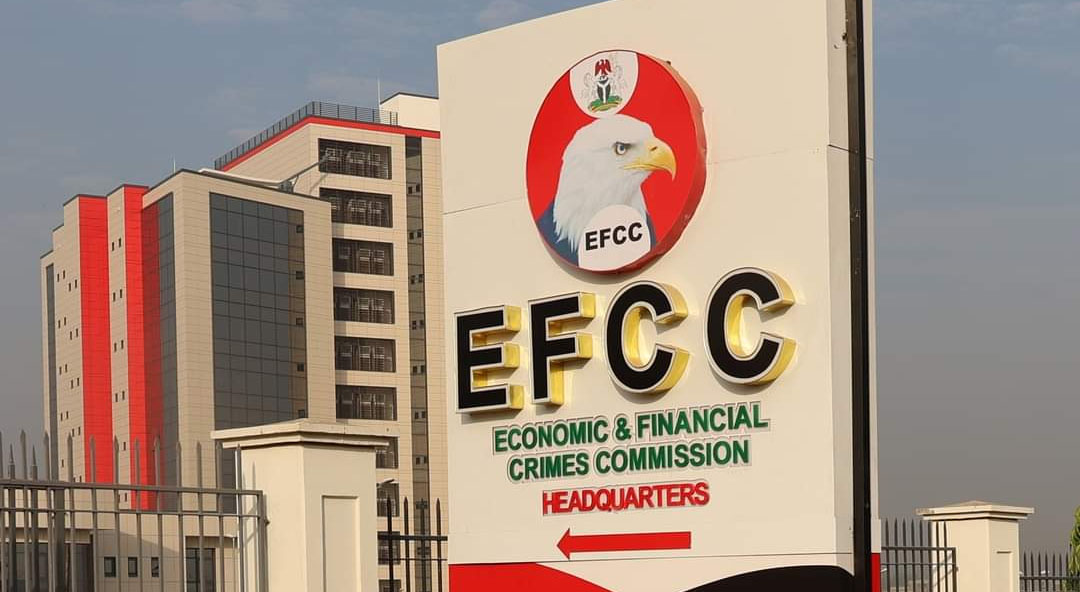
The Economic and Financial Crimes Commission (EFCC) has arrested an Abuja-based real estate agent, Hajia Adama Ahmed Adamu, in connection with an alleged ₦288 million property fraud, the agency confirmed on Wednesday.
According to the EFCC, operatives of its Ilorin Zonal Directorate apprehended Adamu following a petition from a complainant, Alhaji Tanko Yawale, who alleged that the agent collected the funds under the pretext of facilitating the purchase of a property at House 31, Haile Selassie Street, Asokoro, Abuja.
READ ALSO:
- Tinubu Govt Unveils National Laureate Prize to Reward Best Theses
- Foreign Intelligence Operations Behind Recent Nigeria Killings – Gumi
- Arise News Anchor Ikokwu Quits Journalism, Joins Politics
“Following the payment, Hajia Adamu allegedly failed to provide valid property documents and became evasive, raising suspicion and prompting a formal petition to the EFCC,” the commission stated on its official X handle.
Property-related fraud continues to be a recurring concern in Nigeria’s real estate sector, particularly in major cities like Abuja, where unsuspecting buyers often fall victim to agents posing as legitimate intermediaries. In response, the EFCC has intensified enforcement against land and housing scams, urging Nigerians to verify ownership and documentation before making payments.
The suspect is currently in EFCC custody as investigations continue. The commission also reiterated a warning to the public to remain vigilant against fraudulent property schemes and to report any suspected cases promptly.
EFCC Arrests Abuja House Agent Over ₦288 Million Property Fraud
News
Alkali resigns as Transport minister to chase Gombe governor’s seat
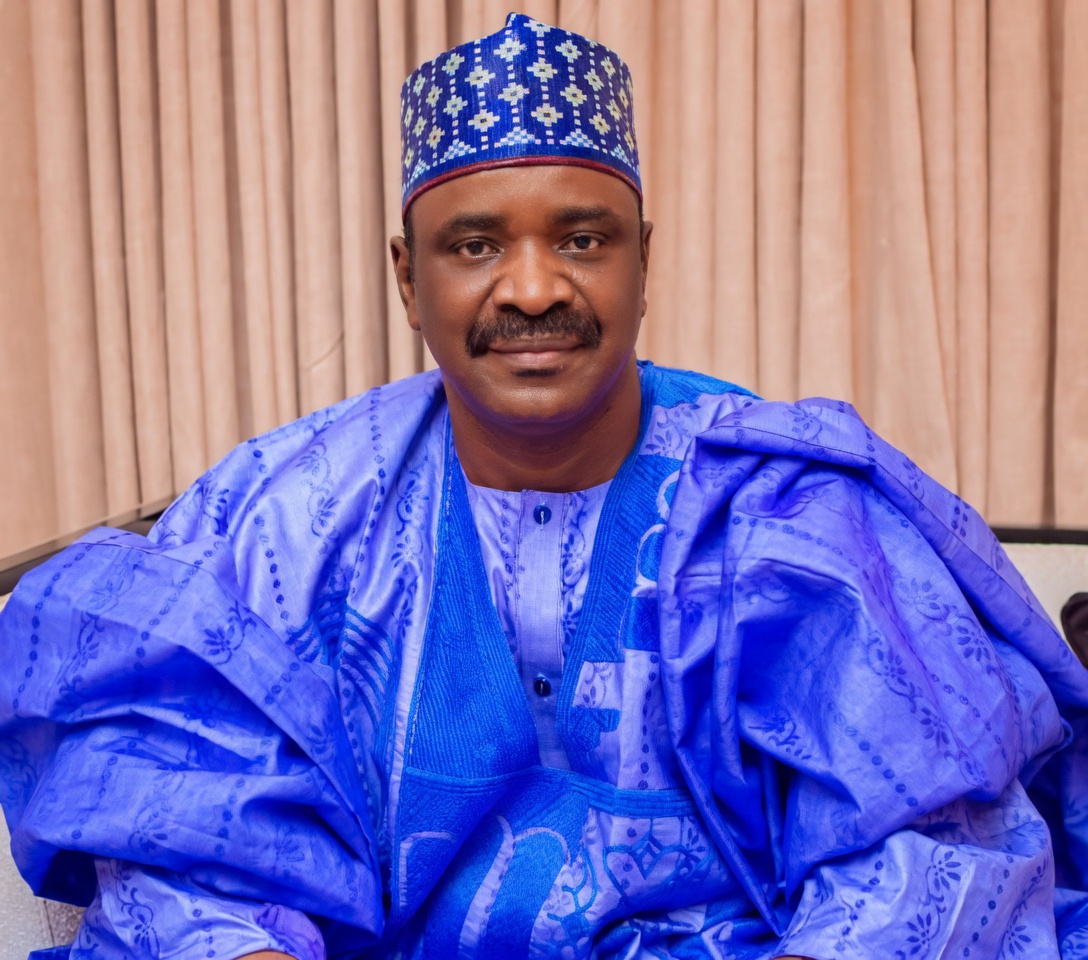
Alkali resigns as Transport minister to chase Gombe governor’s seat
The race for Gombe State’s Government House has officially claimed its latest heavyweight contender. Saidu Ahmed Alkali has stepped down from his role as the Minister of Transportation to focus entirely on his 2027 governorship bid.
Alkali’s exit follows a high-profile meeting with President Bola Tinubu at the Presidential Villa on Tuesday.
His departure was formalized via a circular from the Office of the Secretary to the Government of the Federation (SGF), Senator George Akume.
The move is not just about personal timing; it’s about legal compliance. Alkali is adhering to:
* Section 88(1) of the Electoral Act, 2026: Which mandates officials to vacate office before seeking elective posts.
* The INEC Timetable: With party primaries for the 2027 elections looming, the window for transition is closing.
* Presidential Directive: President Tinubu has been firm that any cabinet member eyeing an elective seat must resign before the primary process begins.
Alkali, a veteran politician and former Senator for Gombe North, is now the third member of the Federal Executive Council (FEC) to trade their ministerial portfolio for a campaign trail.
His resignation leaves a vacancy in the Ministry of Transportation at a critical time for the nation’s infrastructure projects, but signals a tightening of the political battlefield in Gombe.
The circular confirming the development was issued by the Permanent Secretary, General Services Office, Ibrahim Kana.
The circular stated that the directive “followed the provisions of Section 88(1) of the Electoral Act, 2026, as well as the timetable released by the Independent National Electoral Commission (INEC) for party primaries ahead of the 2027 election.”

-

 Education2 days ago
WAEC Releases 2026 WASSCE Timetable for School Candidates
-

 Auto2 days ago
Lagos NURTW Chairman Sego Distributes Exotic Cars, Luxury Items to Cabinet Members (Video)
-

 metro2 days ago
Cars Torched as South Africans Protest Alleged Nigerian ‘Igbo King’ Coronation
-

 Railway1 day ago
Easter train: NRC increases Lagos-Ibadan trips, offers free Osun holiday transit
-

 Sports2 days ago
Osimhen Among Highest-Paid African Footballers in 2026 — See Full List
-

 Education2 days ago
JAMB Releases 2026 UTME Mock Results, Delists Over 20 CBT Centres
-

 Business2 days ago
Bottles of Death: SWAN rallies media to combat ₦472bn illicit alcohol crisis
-

 Politics2 days ago
Adebayo Adelabu Resigns as Power Minister to Run for Oyo State Governorship