

News
Opposition parties ganging up against Buhari – Lai Mohammed
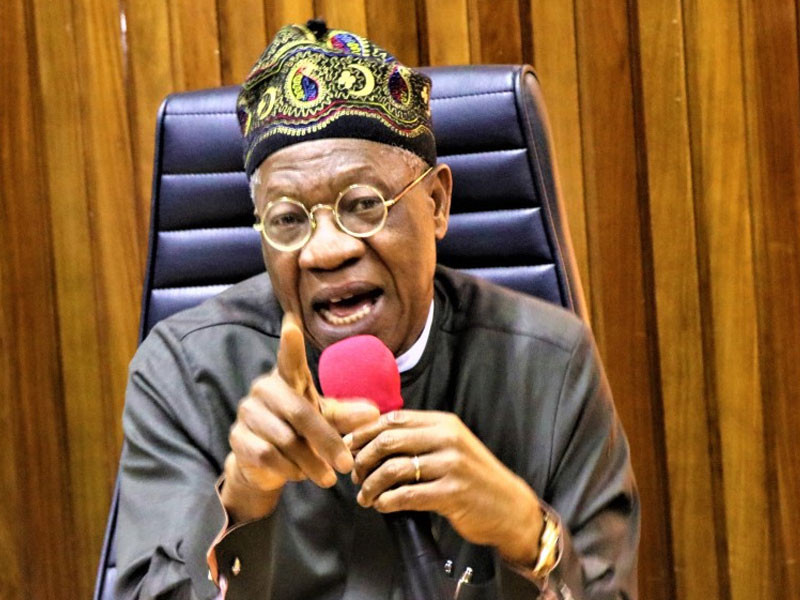
The Minister of Information and Culture, Lai Mohammed, has claimed that the opposition parties are ganging up against President Buhari’s administration.
Lai Mohammed said this while speaking at the 14th edition of the PMB scorecard series in Abuja, on Tuesday.
He added that no administration in the history of Nigeria has had a Social Investment Programme that feeds 10 million school children a day.
“Permit me to quickly respond to the preposterous claim by the opposition, on the campaign trail, that this administration has not achieved anything and hence has nothing to campaign with. Are these people living in a cave?
“If they haven’t seen, have they not heard of our National Social Investment Programme which is unprecedented in the history of this country?
READ ALSO:
- Labour Party fires CSO for linking Obi to IPOB
- NSCDC Put state commandants on alert as agency uncovers plot to attack INEC facilities
- Oshoala helps Barcelona set Champions League record.
“No administration in the history of Nigeria has had a Social Investment Programme that feeds 10 million school children a day; a cash transfer scheme that has enrolled 1,632,480 households (households, not individuals); a scheme that empowers and pays stipends to unemployed graduates and an enterprise empowerment programme that provides easily-accessible micro-loans to those at the bottom of the pyramid, who engage in commercial activities but face significant challenges with access to finance/credit?
“He said that in today’s system, Nigeria did not have a functioning modern railway system and claimed that Buhari administration has makes most of the railway network to be functioning.
“Before we came into office in 2015, Nigeria did not have a functioning modern railway system. Today, we have a well-functioning Abuja-Kaduna, Lagos-Ibadan and Itakpe-Warri modern rail systems. They lay claim to starting Abuja-Kaduna but forgot that Itakpe-Warri was also started by another administration over 30 years ago, but abandoned until this administration assumed office in 2015,”
“Before this administration came into office in 2015, several past administrations had started and completed -on paper – the all-important Second Niger Bridge.
“Only last week, this bridge became a reality when it was opened to motorists. What about the 40-kilometre Bonny-Bodo road that has a total of 13 bridges? In the words of the minister of Works and Housing, for the first time in the history of mankind, you can now walk on your way between Bodo and Bonny. What about airport terminals? Do these people close their eyes when they fly through brand new terminals at airports in Abuja, Lagos, Port Harcourt and Enugu?
READ ALSO:
- Lionel Messi, teammates evacuated by helicopter after crowds swarm team bus
- 73-year-old man filmed allegedly defiling five-year-old girl
- Peter Rufai, ex-Super Eagles goalkeeper, ‘defrauds’ businessman trying to build a sports complex
“Is the opposition pretending not to have heard of the Ajaokuta-Kaduna-Kano (AKK), a 614-km-long gas pipeline project that will ferry gas from southern to northern Nigeria, and which represents phase 1 of the 1,300-km-long Trans-Nigerian Gas Pipeline Project? Can they deny the crude oil found in the Kolmani Field spanning Bauchi and Gombe states where drilling was flagged off by Mr President last month? Can they deny that the Anchor Borrowers’ Programme has helped to move Nigeria closer to attaining self-sufficiency in many staples?
“Can the opposition deny that we have put in place the Integrated National Security and Waterways Protection Infrastructure, otherwise known as Deep Blue Asset that has seen a drastic decline in piracy attacks? Can an administration, with at least one road construction in every state of the federation, and the one that has completed housing projects in 35 states, be labelled as non-performing?
“What about the liberation of Nigeria’s territory from insurgents and the re-equipping of our security forces, the same security forces that were left stranded when money meant to equip them were looted silly by rampaging officials, some of whom admitted to spending N2.2 billion to pray against Boko Haram?
“Who gave Nigeria the Petroleum Industry Act, the most ambitious attempt at overhauling the petroleum sector in Nigeria?”







News
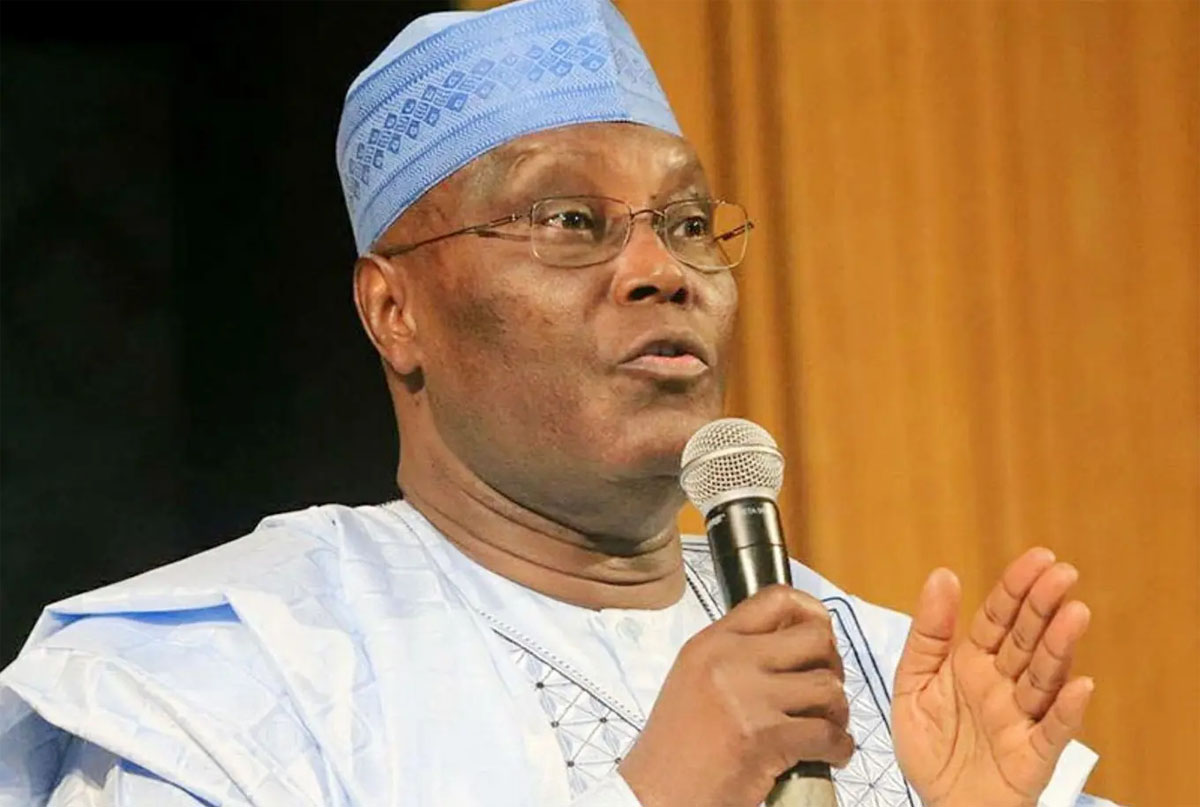
Atiku Challenges Tinubu’s Prosperity Claim, Says Nigerians Can Barely Afford to Live
Atiku Challenges Tinubu’s Prosperity Claim, Says Nigerians Can Barely Afford to Live
Former Vice President and African Democratic Congress (ADC) presidential candidate, Atiku Abubakar, has criticised President Bola Ahmed Tinubu’s claim that Nigeria has entered an era of prosperity, saying millions of Nigerians are still struggling to afford basic necessities.
Atiku made the remarks in his Independence Day address on Thursday as Nigeria marked its 66th anniversary, arguing that the economic gains highlighted by the government have yet to translate into improved living conditions for many households.
Tinubu, in his own Independence Day address, said Nigeria had moved from a period of difficult economic reforms into what he described as an era of shared and widespread prosperity. He said the government’s focus was now on lowering the cost of living, creating jobs, expanding production and improving opportunities for Nigerians.
Atiku, however, disputed that assessment, saying the reality confronting ordinary Nigerians was different from the picture presented by the government.
He argued that a reduction in the rate of inflation does not automatically restore the purchasing power lost by households after years of rising prices.
According to Atiku, the current N70,000 minimum wage can purchase about 50 litres of petrol, compared with about 118 litres that the former N30,000 minimum wage could buy in April 2023.
He also cited the rising prices of basic food items, including bread and eggs, as evidence of the pressure facing families.
READ ALSO:
- Edo Police Arrest 37-Year-Old Man Over Alleged Rape of 70-Year-Old Woman
- Why Ronaldo Left Portugal Camp Ahead of Denmark Clash
- 2027: Amaechi Vows to Resign If Nigeria Fails to Change Within One Year
The ADC candidate said his approach to reducing petrol prices would include a capped and budgeted production subsidy restricted to petrol refined in Nigeria. Under his proposal, imported petrol would not qualify for the subsidy.
He said the arrangement would have a spending limit, with the cost made public and payments independently audited. He argued that such a policy could reduce pump prices while supporting domestic refining and creating jobs.
Atiku also questioned the Federal Government’s reported cash transfers to vulnerable Nigerians, asking how more than 10 million beneficiaries were identified and paid.
He said the government should provide details of the beneficiaries and explain how the funds were disbursed.
The former vice president also raised concerns over Nigeria’s public debt, citing a debt stock of about N166.79 trillion as of the end of June 2026. He criticised the extension of the 2025 budget into 2026 and questioned the management of public resources.
On insecurity, Atiku said Nigerians continued to face threats from armed groups, while farmers in some communities remained unable to access their farms safely.
He also called for greater adherence to the rule of law, raising questions about the continued detention of certain individuals, including Sheikh Sani Khalifa Zaria and former Kaduna State governor Nasir El-Rufai.
On the case of Nnamdi Kanu, Atiku said the legal process should respect his right to appeal and that the grievances surrounding the case should be addressed through lawful means.
He also criticised the reported arrest of Nigerians over the wearing of T-shirts bearing the slogan “Tinubu Must Go”, arguing that political expression should not by itself be treated as a criminal offence.
Atiku further challenged the administration over its handling of the economy, saying Nigerians had endured substantial hardship following the removal of the petrol subsidy and other economic reforms.
He maintained that the benefits promised from the reforms had not yet been sufficiently felt by ordinary citizens.
The ADC candidate urged Nigerians to remain engaged in the political process ahead of the 2027 general election, calling on voters to protect their votes and participate actively in determining the country’s leadership.
Atiku said the central issue was whether government policies were improving the daily lives of Nigerians, particularly in the areas of food prices, transportation, employment, healthcare, security and household income.
His address came shortly after Tinubu told Nigerians that the government had completed the most difficult phase of its economic reforms and was now focused on translating those reforms into broader prosperity.
The contrasting Independence Day messages highlighted the competing assessments of Nigeria’s economic situation ahead of the 2027 elections, with Tinubu defending the direction of his reforms and Atiku arguing that the hardship experienced by many households remains unresolved.
Atiku Challenges Tinubu’s Prosperity Claim, Says Nigerians Can Barely Afford to Live
News
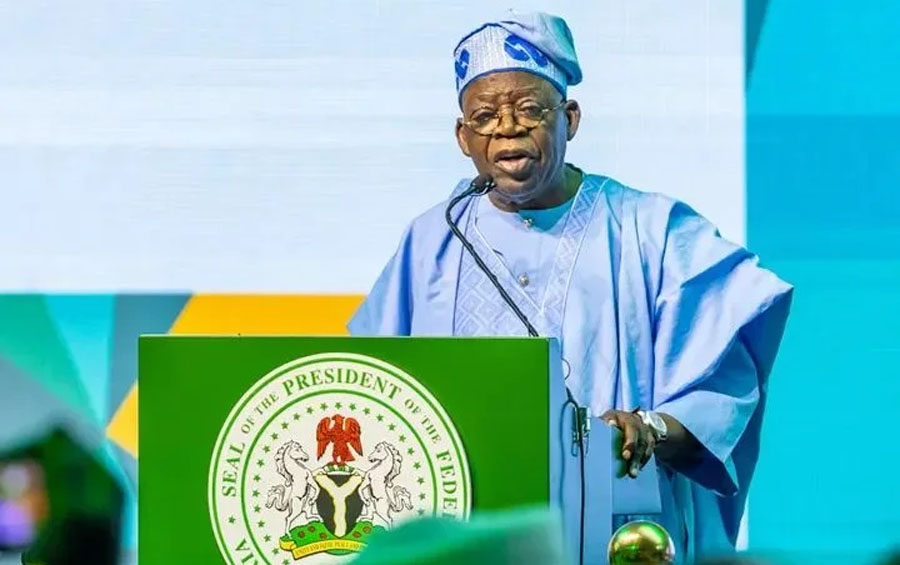
Nigeria at 66: Tinubu Unveils Fresh Push for Lower Costs, Jobs, Prosperity (Full Text)
Nigeria at 66: Tinubu Unveils Fresh Push for Lower Costs, Jobs, Prosperity (Full Text)
President Bola Ahmed Tinubu has declared that Nigeria is entering what he described as an “age of prosperity”, saying the focus of his administration will now shift from economic reforms to lower living costs, job creation, industrial growth and improved living standards.
Tinubu made the declaration in his 66th Independence Day address to Nigerians on Thursday, October 1, 2026, saying his administration had spent the past three years addressing what it regarded as longstanding economic distortions and was now moving towards what he called “shared and widespread prosperity.” (State House)
“The emergency treatment is over. The foundation has been repaired,” the President said, arguing that the country had reached a turning point after a difficult period of economic adjustment.
Tinubu said the next phase would concentrate on translating economic improvements into tangible benefits for Nigerians, particularly by reducing the cost of producing and transporting goods, expanding agricultural production and creating millions of productive opportunities.
According to the President, the government will pursue expanded mechanised irrigation and dry-season farming, improved access to seeds and fertiliser, greater agricultural mechanisation, storage facilities and better transportation infrastructure.
He said investments in roads, railways and ports would also help connect farms and factories to markets and reduce the cost of moving goods across the country.
READ ALSO:
- Israeli Actor, Flight Instructor Among Two Killed In California Plane Crash
- Flood Cuts Off Part of Agbarho-Ughelli Road, Strands Commuters in Delta
- Dangote Draws Battle Lines as Fuel Import Fight Heads Back to Court
Tinubu said the administration’s approach was based on lowering production costs so that savings could eventually be reflected in the prices paid by consumers.
He also placed job creation and industrialisation at the centre of the next phase of his economic programme, saying Nigeria’s large youth population could become an engine of production if provided with the right opportunities, skills, infrastructure and access to finance.
The President said government would use the country’s natural gas resources to support new industries and help businesses revive factories, while expanding digital connectivity and skills development.
“I want to see more Nigerians making things,” Tinubu said, outlining a vision in which Nigerian farms supply cities and factories, local businesses expand their exports and young Nigerians build technology companies and other enterprises.
On social protection, Tinubu acknowledged that millions of Nigerians still face difficulties paying for food, education, healthcare and transportation.
He said government would strengthen support for vulnerable households through the National Social Register, while continuing programmes such as the Nigerian Education Loan Fund (NELFUND) and CREDICORP.
The President also said the Federal Government would continue working with state and local governments to strengthen primary healthcare, basic education and other essential public services.
Tinubu said these interventions were intended to support vulnerable Nigerians while the broader economy expands, rather than serve as a permanent substitute for economic opportunity.
He also defended the administration’s economic reforms, arguing that the measures did not create Nigeria’s longstanding economic weaknesses but were intended to address them.
The President said the Nigerian economy had grown by more than four per cent in 2026, while inflation had fallen from its peak, foreign reserves had been rebuilt and the foreign exchange market had stabilised. He also said oil theft had declined and that Nigeria generated more than $6 billion in non-oil export revenue in 2025, which he described as a record. These figures were presented as part of the administration’s assessment of its economic performance. (State House)
Tinubu acknowledged the hardship associated with the reforms but argued that the government could not reverse in four years problems that had accumulated over several decades.
“We cannot erase in four years what accumulated over generations,” he said, while promising to change the country’s economic direction and steadily reduce poverty.
The President said the administration’s ultimate objective was not merely to manage poverty but to create conditions that would allow more Nigerians to move out of poverty through sustained economic growth and productive employment.
“The age of reform has done its work. Now begins the age of prosperity,” Tinubu declared.
He urged Nigerians to look ahead and support efforts to build what he described as a country of greater abundance and opportunity.
Tinubu concluded his Independence Day speech by calling for national unity and renewed confidence in Nigeria’s future, saying the country had corrected its economic direction and should now move forward without looking back. (State House)
Full Tinubu Independence Day speech
The complete 66th Independence Day address by President Bola Ahmed Tinubu, titled “From Reform to Prosperity,” is available in full on the official State House website. (State House)
Read Tinubu’s full 66th Independence Day address
Nigeria at 66: Tinubu Unveils Fresh Push for Lower Costs, Jobs, Prosperity (Full Text)
News
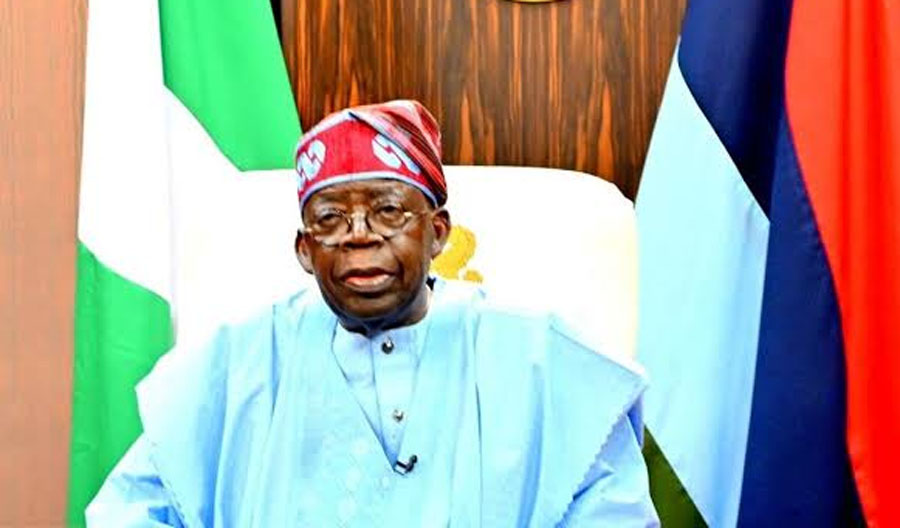
Independence Day: Tinubu Unveils Plan to Cut Living Costs, Expand Jobs
Independence Day: Tinubu Unveils Plan to Cut Living Costs, Expand Jobs
President Bola Ahmed Tinubu has declared that reducing the cost of living, creating productive jobs and expanding industrial growth will be the focus of the next phase of his administration, as Nigeria moves from economic reforms to what he described as an “age of prosperity.”
Tinubu made the declaration in his Independence Day address on Thursday, October 1, 2026, as Nigeria marked its 66th anniversary.
The President said his administration had spent the past three years correcting what he described as deep-rooted economic distortions and was now shifting its attention towards ensuring that the benefits of economic growth reach more Nigerians.
“Our priority is to bring down the cost of living,” Tinubu said, explaining that the government would pursue the goal by reducing the cost of producing and transporting goods consumed by Nigerians.
He said the government would expand mechanised irrigation and dry-season farming, improve access to seeds and fertilisers, increase agricultural mechanisation and invest in storage and transportation.
Tinubu also linked lower consumer prices to improved infrastructure, saying the government was building and completing roads, railways and ports to connect farms and factories with markets.
He said reducing post-harvest losses, lowering manufacturers’ energy costs and improving the movement of goods would help bring down prices.
Tinubu targets millions of productive jobs
The President said job creation, enterprise and industrial development would be at the centre of the next phase of his economic programme.
He noted that millions of young Nigerians enter adulthood every year and said the government must turn the country’s youthful population into an engine of production and opportunity.
Tinubu pledged to use Nigeria’s natural gas resources to power industries, support the revival of factories, expand digital connectivity and provide young Nigerians with skills required by employers.
He also promised greater support for Nigerian businesses through infrastructure and access to finance.
“I want to see more Nigerians making things,” the President said, adding that he wanted Nigerian farms to supply domestic factories and Nigerian businesses to sell more goods internationally.
CNG expansion to reduce transport costs
The President also pointed to the expansion of Compressed Natural Gas (CNG) as part of the government’s strategy to reduce transportation costs following the removal of petrol subsidy.
He said more than 120,000 vehicles had been converted to CNG, with more than 400 certified conversion centres and over 90 CNG refuelling stations now operating across the country.
The government has also targeted lower fares on selected routes through the National Affordable CNG Transit Programme.
The Presidency said CNG and electric public transport services in parts of Borno were already carrying passengers for between N50 and N100, compared with commercial fares of about N300 to N600 on some routes. It also cited cheaper fares on the Suleja-Abuja route and subsidised electric-bus services in Abia.
However, concerns remain about the ability of CNG infrastructure and vehicle deployment to deliver nationwide reductions in transport costs.
Social protection for vulnerable Nigerians
Tinubu acknowledged that many Nigerians still face difficulties meeting basic needs, including food, education, healthcare and transportation costs.
He said the government would strengthen social protection programmes and improve the National Social Register to ensure assistance reaches vulnerable households.
The President also highlighted the Nigerian Education Loan Fund (NELFUND), which provides financing for students, and CREDICORP, which offers consumer credit for eligible Nigerians seeking to acquire assets such as vehicles, solar systems and digital devices.
He said the government would continue working with state and local governments to strengthen primary healthcare, basic education and essential public services.
Tinubu defends economic reforms
The President maintained that the economic reforms introduced since 2023 were necessary to address longstanding weaknesses rather than the cause of Nigeria’s economic difficulties.
He said Nigeria’s economy had grown by more than 4 per cent in 2026, while inflation had fallen from its peak, foreign reserves had been rebuilt and the foreign exchange market had stabilised.
Tinubu also said oil theft had declined and that Nigeria generated more than $6 billion in non-oil export revenue in 2025, which he described as the highest in the country’s history.
The President acknowledged, however, that the reforms had brought significant hardship to many households.
He said the government could not immediately erase problems that had accumulated over decades but could change the country’s economic direction by sustaining growth and creating millions of productive opportunities.
“The age of reform has done its work. Now begins the age of prosperity,” Tinubu declared.
The speech comes amid continuing concerns over food prices, transportation costs, unemployment, insecurity and household purchasing power.
While the government says its reforms have stabilised the economy and created the foundation for growth, concerns remain about poverty, governance and the pace at which economic improvements are reaching ordinary Nigerians.
Tinubu’s new economic agenda therefore places lower living costs, job creation, industrialisation, agricultural productivity and social protection at the centre of the next phase of his administration.
Independence Day: Tinubu Unveils Plan to Cut Living Costs, Expand Jobs
-
 metro2 days ago
$2.1m Land Suit: Court Orders Wike’s Son to Produce American Passport
-

 metro3 days ago
Hamzat Clarifies Lagos Traffic ‘Lifestyle’ Remark After Backlash
-
 metro2 days ago
Osogbo Food Bonanza: Angry Customers Loot Warehouse After Operators Vanish
-

 metro3 days ago
Chimamanda Adichie: Hospital Seeks to Stop Inquest Into Son’s Death
-

 Sports3 days ago
Nigeria XI vs Guinea-Bissau: Awoniyi, Lookman, Adams Lead Super Eagles Attack
-
 Business1 day ago
Dangote Sets 40-Month Deadline for $16bn East Africa Refinery in Kenya
-
 News2 days ago
Tinubu Returns After 30 Days in Europe, Says ‘I’m Healthy and Ready to Work’
-
 Politics1 day ago
2027: Amaechi Recalls How APC Defeated PDP, Orders ADC Mobilisation