

News
Oyo Kidnappers Demand Release of Ansaru Terrorist Commanders in Exchange for Schoolchildren
Oyo Kidnappers Demand Release of Ansaru Terrorist Commanders in Exchange for Schoolchildren
OYO STATE, Nigeria – The armed group responsible for the abduction of students and teachers from three schools in the Oriire Local Government Area of Oyo State has made a chilling and unconventional demand: the release of high-profile Ansaru terrorist commanders currently in government custody, rather than a conventional ransom. The kidnappers, who targeted schools in the Esinele, Yawota, and Alawusa communities on May 15, 2026, allegedly requested the release of imprisoned terrorist leaders, a ransom payment, two Hilux trucks, and the enforcement of Sharia law prior to releasing the hostages. The attack resulted in the abduction of 46 people — seven teachers and 39 students and pupils — according to a full list of victims published by local media. One teacher, Mr. Michael Oyedokun, was brutally beheaded by the abductors in a gruesome act that has sent shockwaves across the nation. The coordinated attack occurred simultaneously with another school abduction in Borno State, where suspected terrorists abducted schoolchildren from Mussa Primary and Junior Secondary School in Askira Uba, marking an unprecedented escalation in the country’s security crisis.
The Federal Government now finds itself caught between its determination to secure the victims’ freedom and its reluctance to release captured commanders back into circulation, where they could regroup and resume attacks. According to a Presidency source who spoke on condition of anonymity, the Oyo and Borno school abductions were deliberately coordinated and timed to maximize pressure on the government and strengthen the terrorists’ bargaining position. “In the Oyo kidnapping, the terrorists did a coordinated attack with that of Borno because they want to use it as a negotiation,” the source explained. “They are pressing for a swap with some high-profile terrorists who are in government custody. These are some of their leaders who were arrested.” The government has maintained that the safe return of every child and every teacher remains a top national priority. Speaking at a special national security media briefing themed “Unite Against Terror,” the Minister of Information and National Orientation, Mohammed Idris, stated that President Bola Tinubu has directed security agencies to deploy all lawful means to secure the release of those in captivity. “The President has made it clear that no child belongs in captivity and that no effort will be spared in ensuring that those responsible for these heinous crimes are brought to justice,” Idris said.
READ ALSO:
- Kaduna Woman Sues Husband for Renting Out Her Bedroom Without Permission
- Nollywood Actress and Abia Gov Candidate Doris Ogala Collapses in Umuahia, Hospitalized at FMC
- US Intercepts Iranian Missiles, Drones Targeting Kuwait, Bahrain
Chronicle NG gathered that two of the terrorists being demanded for release are Mahmud Usman, also known as Abu Bara’a or Abbas Mukhtar, and his deputy, Abubakar Abba, alias Isah Adam or Mahmud al-Nigeri, who is also known as Mallam Mamuda. Mahmud Usman is from the Okene Local Government Area of Kogi State, while Mahmud al-Nigeri is from Daura, Katsina State — the home state of former President Muhammadu Buhari. The two men are leaders of the Jama’atu Ansarul Muslimeena Fii Bilaadis Sudan (JAMBS/Ansaru) , a breakaway offshoot of Boko Haram that has established links to the al-Qaeda terrorist network. They are accused of assisting and abetting terrorist operations in the country between 2013 and 2015, a period that saw some of the deadliest attacks in Nigeria’s northeast. The suspects were captured between May and July 2025 after high-risk, intelligence-led operations announced by National Security Adviser Nuhu Ribadu on August 16, 2025. They are currently on trial for terrorism in a suit filed on September 4, 2025, under case number FHC/ABJ/CR/464/2025. The trial of the suspects began on January 15, 2026, before Justice Emeka Nwite of the Federal High Court in Abuja. Mahmud Usman had previously been sentenced to 15 years in prison on September 11, 2025, after pleading guilty to one count of engaging in illegal mining activities and using the proceeds to acquire arms for terrorism, though he denied other allegations. The case against him and his deputy includes charges of terrorism financing, membership in a proscribed organization, and conspiracy to commit acts of terrorism. When asked why the government kept the terrorist leaders in custody despite the horrors they were accused of committing, one of the senior security officers engaged in the trial stated: “We did not kill the terrorist leaders immediately when they were caught. We have a justice system and court process which must be followed.” This adherence to due process, while commendable from a legal standpoint, has now created negotiating leverage for the abductors.
The difficult terrain has also hindered rescue efforts. The abductors are believed to have come from the Kainji National Park area in Niger State, an expansive forest that straddles Niger, Kwara, and parts of the Republic of Benin. The heavily forested and unfamiliar terrain in Oyo State has made any potential military operation highly sensitive and fraught with risk. “The area is highly forested and unfamiliar,” an official told reporters. “The issue is the sensitivity of any hostage situation. It is a major problem because a successful hostage rescue where you have all the hostages alive is very difficult. You don’t want to risk the lives of the children and the teachers in the process.” Security analysts have offered differing views on how the Federal Government should respond to the terrorists’ demands. A retired Brigadier-General, Bashir Adewinbi, urged caution, warning that yielding to ransom demands empowers terrorists. “Anytime you give terrorists cash, you are creating insecurity because you are empowering them. They will use the money to recruit more fighters, expand their operations and commit more harm.” However, Kabiru Adamu, CEO of Beacon Security and Intelligence Limited, advised the government to undertake a detailed risk assessment before deciding whether to accept or reject the demands. “If accepting their demand poses a very low risk to Nigeria as a country, we can go ahead and accept it. If, on the other hand, accepting their demand poses a high risk to Nigeria… this is the kind of risk assessment that should be conducted.” Maj. Gen. Segun Fatola (retd.) argued that Nigeria should adopt tougher measures, stating that terrorism should be treated as an act of war rather than a criminal enterprise, and that negotiating with terrorists would not solve the problem.
READ ALSO:
- Nigerian Priest Sentenced to Life in Prison for Sexually Assaulting Women in Texas
- Bandits Collect N3m, Smartphone, Clothes Before Announcing Zamfara Teacher’s Death
- How Online Pharmaceutical Ads Endanger Lives, Fuel Self-Medication
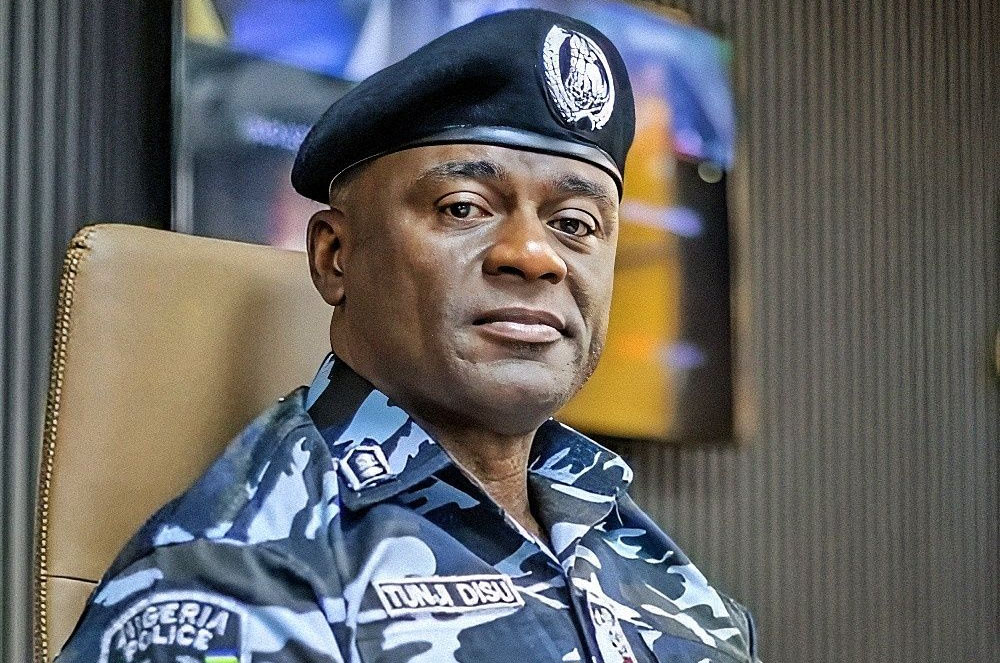
Following the attack, Inspector-General of Police, Olatunji Rilwan Disu, visited the affected communities in Oriire Local Government Area and met with the Commissioner of Police of the Oyo State Command, Abimbola Ayodeji Olugbenga, alongside other security stakeholders. The IGP received detailed operational briefings on ongoing rescue efforts and assured residents that the Nigeria Police Force, in collaboration with other security agencies, has intensified a well-coordinated search-and-rescue operation involving additional tactical and intelligence assets. Accompanying the IGP were the Commissioner of Police, Kwara State Command, Ojo Adekimi, due to the strategic proximity of the Oriire axis to border communities in Kwara State, as well as the Commissioner of Police, Schools Protection Squad, Abayomi Shogunle. The IGP’s visit was seen as a significant show of force and commitment, but questions remain about the operational capacity to conduct a successful rescue in such challenging terrain.
Chronicle NG reports that the Muslim community in Oyo State has condemned the Sharia-related demands reportedly made by terrorists holding teachers and pupils abducted from schools in the Oriire Local Government Area, declaring that the criminals do not represent Islam or Muslims. The position came as public and private schools across Oyo State’s 33 local government areas shut down in solidarity with the abducted victims. The National Association of Proprietors of Private Schools (NAPPS) directed all member schools in Ibadan District to close on Friday, June 5, 2026, “as a mark of solidarity and for prayers for the victims’ safe release and the protection of all schools.” In a statement issued on Friday and jointly signed by its chairman, Alhaji Ishaq Sanvni, and secretary-general, Alhaji Murisiku Siyanbade, the Muslim community in Oyo State described the terrorists’ action as criminal and a negation of Islamic teachings. The group stated that attempts by the abductors to justify their actions through religious rhetoric amounted to a distortion of Islam. “Islam forbids kidnapping, terrorism and the extortion of innocent citizens. Legitimate Sharia promotes justice, peace and the sanctity of human life, values that stand in direct opposition to the activities of criminal groups,” the statement partly read. Quoting Chapter 5, Verse 32 of the Holy Qur’an, which states that “whosoever kills a soul… it is as if he had slain mankind entirely,” the community stressed that Islam places a high premium on the protection of human life and urged security agencies to intensify efforts to rescue those in captivity. The Muslim community, under the aegis of the Chief Imam of Ibadanland and Grand Chief Imam of Oyo State, Sheikh Al-Imam Abdul-Ganiyy Abubakar Agbotomokekere, also announced a special prayer for the speedy and safe return of abductees, scheduled for Sunday at Yidi Agodi Praying Ground, Ibadan. Thousands of Muslims are expected to gather to pray for the safe release of the captives.
READ ALSO:
- Nigerian Priest Sentenced to Life in Prison for Sexually Assaulting Women in Texas
- Bandits Collect N3m, Smartphone, Clothes Before Announcing Zamfara Teacher’s Death
- How Online Pharmaceutical Ads Endanger Lives, Fuel Self-Medication
A traditional ruler in one of the affected communities, the Eleshi of Esiele, Oba Tajudeen Abioye, appealed to both the Federal and Oyo State governments to do everything possible to secure the release of the abducted teachers and pupils. According to the monarch, the communities are aware that the abductors have made demands, but they lack the capacity to handle the situation on their own. “We are ordinary villagers. We do not have the resources or the firepower to confront these heavily armed men,” the Oba was quoted as saying. He urged the government not to relent until every captive is rescued safely, warning that failure to act decisively could lead to more attacks on schools in the region. The traditional ruler also called on the government to deploy more security personnel to the border communities between Oyo and Kwara states, which he described as porous and vulnerable to terrorist infiltration.
According to a full list of victims published by local media, the 46 abducted individuals include seven teachers and 39 students and pupils drawn from the three affected schools. The victims range in age from young children in primary school to teenagers in secondary school. The names of the victims have been withheld by authorities to protect their privacy and avoid jeopardizing ongoing rescue efforts. The abducted teacher, Mr. Michael Oyedokun, who was beheaded by the terrorists, was a beloved educator described by colleagues as dedicated, patient, and deeply committed to his students. His death has cast a pall over the entire community, with residents describing the killing as senseless and barbaric. The attack has also had a significant economic impact on the Oriire LGA, with many businesses closed and parents too afraid to send their children to school. The state government has deployed trauma counselors to the affected communities to provide psychological support to families and survivors.
The United Nations Resident and Humanitarian Coordinator in Nigeria, Mohamed Malick Fall, has called for the immediate and safe release of the schoolchildren and teachers, describing the incidents as a grave threat to education and child protection. “The UN Resident Coordinator is deeply saddened that these school children and their teachers are still being held by armed groups. Schools must remain safe havens for learning and not places of fear. Children should never be a target,” Fall said in a statement. The United Nations Children’s Fund (UNICEF) also condemned the abductions, calling them a violation of international law and a direct attack on the right to education. The international community has offered support to Nigerian security agencies, though the nature and extent of that support remain unclear.
As of the latest reports, the case remains unresolved. The government is in a holding pattern, unwilling to negotiate yet equally hesitant to mount an assault that could lead to casualties among the children. The terrorists are reportedly using the growing public outcry and protests to pressure the government into conceding to their demands. The Federal Government has authorized the recruitment of 1,000 forest guards to strengthen security presence across vulnerable communities and forests within Oyo State, but this is a medium-term solution at best. For the families of the 46 captives, every hour feels like an eternity, and only time will tell whether the government can secure their release without compromising national security. Special prayers are scheduled for Sunday at Yidi Agodi Praying Ground, Ibadan, where thousands of Muslims will gather to pray for the safe return of the abductees. People of other faiths have also been urged to pray and offer support to the affected families.
For readers seeking a quick summary of the key details, the following information has been confirmed. The attack occurred on May 15, 2026, in Oriire LGA, Oyo State, targeting three schools in the Esinele, Yawota, and Alawusa communities. A total of 46 people — seven teachers and 39 students and pupils — were abducted. One teacher, Mr. Michael Oyedokun, was beheaded by the abductors. The kidnappers are demanding the release of Ansaru commanders Mahmud Usman and Mahmud al-Nigeri, along with a ransom payment, two Hilux vehicles, and the enforcement of Sharia law in Oyo State. The Muslim community in Oyo State has rejected the Sharia demand, declaring that the terrorists do not represent Islam. The IGP has visited the affected communities and intensified rescue operations. A special prayer for the captives is scheduled for Sunday at Yidi Agodi Praying Ground, Ibadan. The United Nations has called for the safe release of the hostages.
Oyo Kidnappers Demand Release of Ansaru Terrorist Commanders in Exchange for Schoolchildren









News
Delta Mourns as Former Governor Uduaghan Dies After Brief Illness
Delta Mourns as Former Governor Uduaghan Dies After Brief Illness
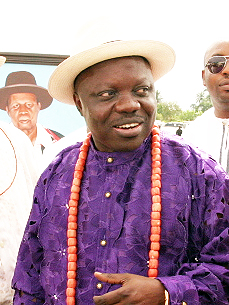
A former Governor of Delta State, Dr Emmanuel Eweta Uduaghan, has died at the age of 71 after a brief illness, his family announced on Monday.
Uduaghan, who governed Delta State for eight years between 2007 and 2015, died on the morning of October 19, 2026, according to a statement issued by the family and signed by Toju Andre Uduaghan.
The family described his death as a devastating loss, saying his life and years of public service touched many people across Delta State and Nigeria.
The statement, titled “Announcement of the Passing of His Excellency, Dr Chief Emmanuel Eweta Uduaghan,” read in part, “It is with hearts weighed down by immeasurable grief and profound sorrow that we announce the passing to glory of our beloved Father, Brother, Uncle, and Patriarch.”
The family said Uduaghan was a source of strength and a respected elder whose contributions to public service and family life would remain indelible.
“He served as Commissioner for Health from 1999 to 2003, Secretary to the Delta State Government from 2003 to 2007, and Governor of Delta State from 2007 to 2015,” the statement said.
It added that throughout his years in public service, the former governor demonstrated a commitment to the human and infrastructural development of the state.
The family described his death as a profound loss not only to his relatives but also to the people of Delta State and the country at large.
While expressing gratitude to God for his life and legacy, the family prayed for the repose of his soul and for divine comfort for those mourning his death.
“We pray that Almighty God, in His infinite mercy, will grant his soul eternal rest and comfort our family, friends, associates, former colleagues, and all who mourn this painful loss,” the statement added.
The family said Uduaghan’s memory would remain alive through the lives he touched and the legacy he left behind.
“Rest well, our beloved Father, Brother, and Uncle. Your memory will forever remain in our hearts, and your legacy will endure in the lives of those you touched,” it said.
The statement concluded with a prayer for the peaceful repose of his soul.
News
FG Challenges World Bank’s 124% Debt-to-Revenue Warning, Cites Rising Income
FG Challenges World Bank’s 124% Debt-to-Revenue Warning, Cites Rising Income
The Federal Government has disagreed with the World Bank’s assessment that its interest payments consumed 124 per cent of revenue in the first half of 2026, describing the calculation as misleading and arguing that it fails to capture the full picture of Nigeria’s public finances.
The dispute followed the World Bank’s October 2026 Nigeria Development Update, which reported that the Federal Government spent ₦7.7 trillion on interest payments between January and June 2026, compared with revenue of ₦6.2 trillion.
The figures imply an interest-to-revenue ratio of approximately 124 per cent, meaning the government’s interest bill exceeded its reported revenue by about ₦1.5 trillion during the six-month period.
However, the Federal Ministry of Finance, in a statement issued on Sunday, October 18, argued that the comparison combined debt obligations covering different tiers of government with a revenue figure that did not include all government earnings.
The ministry said the interest-payment figure included debts serviced by the Federal Government on behalf of other tiers of government, including external loans obtained by state governments.
It argued that comparing these obligations with federal revenue alone overstated the ratio because the figures did not cover the same level of government.
The ministry also said the revenue figure excluded independent income already earned by government agencies and enterprises but not yet remitted to the Treasury.
According to the ministry, the timing of tax collections also affects first-half revenue figures, as some statutory payments are concentrated in the second half of the year. It therefore maintained that a six-month comparison should not be treated as a definitive assessment of Nigeria’s debt sustainability.
READ ALSO:
- Mbappé Runs Riot as Real Madrid Crush Sevilla 4-1 Ahead of El Clásico
- Ogun House Fire Horror: Husband Arrested After Wife Dies Following Domestic Dispute
- NLC, Falana Mobilise Nigerians Against Petrol Price Hike, Mount Pressure on Tinubu Govt
To support its position, the government highlighted an improvement in revenue collection between the first halves of 2025 and 2026.
The ministry said Federal Government revenue increased by 72 per cent, rising from ₦3.6 trillion in the first half of 2025 to ₦6.2 trillion in the corresponding period of 2026.
Interest payments, meanwhile, rose by 38 per cent, from ₦5.6 trillion to ₦7.7 trillion over the same period.
The ministry said the difference between interest payments and revenue consequently narrowed from ₦2 trillion in the first half of 2025 to ₦1.5 trillion in the first half of 2026.
It added that the interest-to-revenue ratio fell from 156 per cent to 124 per cent, a decline of 32 percentage points.
The government attributed the improvement to its economic reforms, arguing that revenue was growing faster than interest costs and that the figures did not, on their own, establish that Nigeria was facing a debt crisis.
The ministry further argued that debt sustainability should be assessed using full-year figures, rather than a six-month snapshot that may not reflect the timing of revenue collection and debt payments.
It cited the World Bank’s projection that Nigeria’s full-year 2026 debt service, covering both interest and principal repayments, would amount to 46 per cent of revenue.
The ministry described the projected full-year ratio as a more appropriate benchmark for assessing the government’s debt obligations.
It also defended the Federal Government’s borrowing programme, insisting that borrowing remained within the limits approved by the National Assembly under the 2026 Appropriation Act and the approved borrowing plan.
According to the ministry, the government’s borrowing activities comply with the Fiscal Responsibility Act 2007 and the Debt Management Office (Establishment) Act 2003, with debt information published regularly by the Debt Management Office.
Despite the government’s objections, the reported figures highlight the pressure that rising interest costs can place on public finances. When interest payments absorb a large share of government revenue, fewer resources may be available for infrastructure, healthcare, education and other public services.
The central disagreement, therefore, concerns the appropriate basis for measuring Nigeria’s debt burden. While the World Bank’s reported figures point to interest payments exceeding federal revenue in the first half of 2026, the Finance Ministry insists that differences in government coverage and revenue timing make the ratio an incomplete measure of the country’s fiscal position.
FG Challenges World Bank’s 124% Debt-to-Revenue Warning, Cites Rising Income
News
NLC, Falana Mobilise Nigerians Against Petrol Price Hike, Mount Pressure on Tinubu Govt

NLC, Falana Mobilise Nigerians Against Petrol Price Hike, Mount Pressure on Tinubu Govt
The Nigeria Labour Congress (NLC), human rights lawyer Femi Falana, and pro-democracy activists have called on Nigerians to unite against rising petrol prices and worsening economic hardship, accusing the Federal Government of pursuing policies that have placed an unbearable burden on workers and low-income households.
The labour leaders and activists made the call at a symposium in Lagos held as part of the first memorial activities in honour of late labour activist Abiodun Aremu. They demanded an immediate reduction in petrol prices, improved wages and a review of economic policies they said had eroded the purchasing power of millions of Nigerians.
NLC President, Joe Ajaero, represented by the union’s Acting General Secretary, Benson Upah, said the removal of the petrol subsidy had significantly increased the cost of living, citing rising transport fares, food prices, electricity tariffs and the depreciation of the naira.
Ajaero said workers were struggling to meet basic needs as the cost of essential goods and services continued to rise faster than their earnings.
He argued that many workers had been forced to make difficult choices between paying high transportation costs and walking long distances to their workplaces, while small businesses were also struggling with increasing operating expenses.
The labour leader further criticised the government for failing to provide sufficient relief to cushion the effects of its economic reforms, arguing that the burden of adjustment had fallen disproportionately on ordinary Nigerians.
According to him, the ₦70,000 national minimum wage has lost much of its purchasing power amid rising inflation and the soaring cost of petrol.
“When the minimum wage was set at ₦70,000 in July 2024, petrol sold for approximately ₦668.30 per litre. Today, prices in many parts of the country have exceeded ₦1,400 per litre,” the NLC said in its address.
READ ALSO:
- Buhari Feared Tinubu Presidency, Resisted Pressure to Back Him – Baba-Ahmed Claims
- NAFDAC Probes Corps Member’s Death at Enugu Camp as Fake Drug Claims Emerge
- Nigerian Universities Have Not Expired, Only Teaching Methods, Professor Tells Ojuolape
Ajaero described the situation as unacceptable, insisting that a worker earning ₦70,000 monthly could no longer cope with the rising cost of transportation, food, rent, education and healthcare.
He warned that organised labour would intensify pressure on the government if urgent measures were not taken to address the situation.
The NLC president also disclosed that the union had issued a two-week ultimatum to the Federal Government on October 9, demanding an immediate reduction in petrol prices.
He said the ultimatum was intended to compel the government to respond to workers’ concerns and address the widening gap between wages and the cost of living.
According to the union, failure to meet its demands could force organised labour to consider further action.
Beyond petrol prices, the NLC called for measures to stabilise the naira, reduce inflation, strengthen domestic refining capacity and improve workers’ earnings.
Falana, who chaired the symposium, also challenged the Federal Government’s position on petrol subsidy removal, arguing that governments in other countries continued to subsidise essential goods and services to protect citizens from economic shocks.
The Senior Advocate of Nigeria questioned why Nigeria should treat the withdrawal of petrol subsidies as the only available policy option when other countries provide support for fuel, education, healthcare and other essential services.
He argued that the government should consider alternatives capable of reducing the burden on households rather than allowing rising energy costs to deepen poverty.
Falana also criticised the government’s discussion of a possible petrol landing cost of ₦1,350 per litre, noting that transportation and distribution expenses could push the final pump price higher in different parts of the country.
He said Nigerians needed concrete measures that would make petrol more affordable and ease the pressure on households and businesses.
The lawyer also referred to political figures, including Omoyele Sowore and Donald Duke, who he said had advocated petrol prices below ₦500 per litre if given the opportunity to govern.
Meanwhile, Rashidat Adesina, representing the Joint Action Front (JAF), said the increase in petrol prices since the removal of the subsidy in 2023 had placed a disproportionate burden on workers and poor Nigerians.
Adesina recalled that petrol sold for approximately ₦165 per litre before the subsidy was removed, before rising to around ₦500 and subsequently ₦600 per litre.
She said prices had since climbed to between ₦1,350 and ₦1,400 per litre in some locations, depending on the filling station.
Using ₦1,400 per litre as an example, Adesina noted that a worker earning the national minimum wage of ₦70,000 could purchase only 50 litres of petrol with an entire month’s salary.
She argued that the calculation illustrated the pressure on workers, who must also pay for food, rent, school fees, transportation and other household necessities.
Adesina further accused the government of failing to adequately protect low-income earners from the consequences of its economic policies, calling for a change in the country’s economic priorities.
The speakers collectively demanded lower petrol prices, better wages, measures to stabilise the naira and increased investment in domestic refining as part of efforts to address the cost-of-living crisis.
The renewed calls come amid mounting pressure on the Tinubu administration over the impact of petrol subsidy removal and other economic reforms introduced since 2023.
The NLC’s ultimatum has also raised the prospect of further confrontation between organised labour and the Federal Government if an agreement is not reached within the stipulated period.
The labour movement maintains that urgent intervention is necessary to prevent further deterioration in workers’ living standards, while the activists have urged Nigerians to unite in demanding policies that prioritise economic relief and social welfare.
NLC, Falana Mobilise Nigerians Against Petrol Price Hike, Mount Pressure on Tinubu Govt
-

 metro3 days ago
FG Begins Rollout of 3,700 Telecom Towers to Connect 20m Nigerians
-

 metro3 days ago
Oyo Baby Trafficking Scandal: Mother, Doctor Arrested Over Alleged ₦2m Sale of Infant
-
 Education3 days ago
Tinubu Scraps Recruitment Waiver Requirement for Federal Universities
-
 News3 days ago
Akpabio Under Fire as Senators Move to Secure His Return as Senate President in 2027
-

 Sports3 days ago
Lamine Yamal Shines as Barcelona Thrash Real Betis 5-2
-
 metro3 days ago
Kano: Soldiers Kill Two Kidnappers, Rescue Victim, Recover ₦10m
-

 metro2 days ago
NAFDAC Probes Corps Member’s Death at Enugu Camp as Fake Drug Claims Emerge
-

 Africa3 days ago
Nairobi Mother Says Husband Abandoned Her During Childbirth, Paid Dowry for Another Woman