
Education
Parents Lament, Threaten To Withdraw Kids As Schools Hike Fees

Many private primary and secondary schools across the states have increased their fees ahead of the new academic year.
Many of the parents said they have been notified of increments in school fees, feeding, transportation and cost of uniforms.
While some parents said that it has become a norm for most private schools to increase fees at the beginning of every session, some schools said the increase was with the consent of stakeholders who also acknowledged the prevailing economic situation occasioned by rising inflation and deteriorating value of the naira.
Findings revealed that some schools have increased their fees by between 30 and 50 per cent.
It’s unbearable – Parents
Many parents in Abuja, Kano, Lagos, Port Harcourt, and other states lamented the increase in school fees of their children in private schools.
Some of them said if public schools were functioning well, they would have no reason to take their children to private schools.
Abdullahi Usman, whose two children attend a private primary school around Life Camp in Abuja, said, “The increment is appalling. We used to pay N200, 000 per child per term in primary school but it is now N280, 000. This excludes uniforms and books.”
READ ALSO:
- Britain sends underwater drones to clear Ukrainian grain exports of mines
- Terrorists invade Kaduna farm, kill soldier, abduct two
- 2023 presidency: APC chairman goes spiritual over Tinubu’s victory
Jeniffer Samuel said the fees for her four-year-old granddaughter who is going to nursery one is N170,000.
“Her father would also have to buy uniforms and books from the school…It is sad because they don’t allow parents to go to the market and buy the uniforms. They make a lot of fortune from it.”
Asked why she will not take the girl to a public school, which is free, Jenifer said, “We all attended public schools during our days but the dynamics are different now. This is the truth; if you want your children to excel, you have to pay heavily for their education,” she said.
Another parent, Mr Kelvin Oji said her children’s school increased fees by 25 per cent for the new session.
“I didn’t even go through the paper to know why they are charging because it has become a norm, they always increase fees.
“The last two sessions recorded 10 and 15 per cent increment, but now they have raised it by 25 per cent,” he said.
Abdulkadir Abubakar, a trader in Kano and father of three, said that the increment was meant to exploit parents.
“I don’t see any reason why the schools are increasing their fees; there is nothing new about their service to our children to warrant any review. The state government or the school regulatory agency should come to our aid.”
For Malam Aminu Ibrahim, a civil servant, private schools were becoming business ventures that the owners use to exploit parents.
Alhaji Ado Sale, a businessman, said that he was considering enrolling his children in public schools because of the arbitrary increase in fees in private schools.
Malama Hadiza Ali, a widow who has four children in private schools, said: “Apart from school fees, I have so much on my neck, like feeding, rent and so on. I am thinking of enrolling them into a public school instead.”
In Lagos, a banker, Mr Lawrence Olu, lamented that school fees take the highest portion of parents’ annual income, it had reduced the standard of living for households.
“My son’s school has increased the fee by over 15 per cent. I have decided to withdraw my son from the school because I cannot cope.”
Another resident of Lagos, Uncle Sam said the economic situation of the country is making life difficult for him, despite being a salary earner.
“Sincerely, this is not going to be easy for parents because even the summer lessons fees were increased above 50 per cent compared to what we paid last time. We understand the situation of the economy but most of these schools are taking advantage of the situation to exploit parents,” he said.
A Vulcaniser in Ikeja, Mr Waheed Shamsudeen said he will withdraw his four kids from a private school they are attending because of increased fees.
“Though I promised my wife before she died that I was going to do all I can to give the kids a good education, at this point, I can no longer cope with high school fees.”
A parent in Port Harcourt, Onyeka Imeadi said, “We used to pay N30, 000 but the management of the school wrote to inform us that the school fees will be increased to N50,000 from the next academic session.”
‘No salary increase for teachers’
Checks by our correspondents showed that most of the schools have no plan to increase the salaries of their staff members.
A teacher in a private school in Oyigbo, Lagos said the management of the school is using the economic situation in the country as an excuse to hike the school fees.
“Some schools are hiking the school fees, but they are being selfish because the increase has not in any way extended to us the teachers.
“They have increased fees in the school. I teach in, using the economic situation as an excuse but I want to let you know that my salary has remained the same without any increase,” he said.
Khamis Aliyu, who teaches in a private school in Jos, Plateau State said he is looking for another job.
“I am a graduate but I get N25,000 as salary in the private school I teach. This is not enough to buy grains for my family for one month.
“We are humans, we deserve empathy. We pay for food items, electricity, transportation, house rent and school fees for our children, among others.
READ ALSO:
- ASUU holds crucial NEC meeting today
- Alex Iwobi: Everton can compete with the best
- London meeting: No deal with Atiku — Obi/Datti Campaign
- CBN leading economic diversification – Emefiele
“Private school proprietors are greedy. Our counterparts in public schools earn more but ironically, parents take their children to private schools,” he said.
Sadiya Musa, a 300-level student of Ahmadu Bello University (ABU), Zaria, said she is paid N9, 000 in the private school she is teaching in.
“I have been teaching since after I finished my diploma. I continued to teach even after I got admission for my degree programme but the take-home pay is not really encouraging,” she said.
Inflation behind increase – Proprietors
The Chairman of Voyage International School, Abuja, Yussuff Oriyomi said they did not increase school fees but slightly reviewed the cost of feeding, transportation and uniforms.
He said the increase is by about 20 per cent for obvious reasons, as costs of food commodities keep increasing weekly.
“We import the uniforms from the UK and we all know what the exchange rate is today; so we have to adjust our charges.”
A proprietor of a private school in Rivers State, Lotanna Agbai said given the economic situation in the country they have to increase the school fees.
“If you look at the present economic situation in the country, you will find out that things are getting out of hand. We have to make little adjustments to see how we can take care of the cost of running the school. We have staff wages to take care of and we also have utility bills to pay. These are the factors we put into consideration before we come out with the little adjustment we made in our fees,” he said.
A school proprietor in Kano, who doesn’t want his name to be mentioned, said the issue of high fees in private schools was not new.
“Any parent who sends his children to private school should know that he/ she would have to pay more. So it is voluntary. That is why the schools are called private schools, private arrangements. When you say private school, you expect all facilities to be up to date, functioning with experienced staff.”
Another school proprietor, Hajiya Aisha Ahmad of AlHidayah Academy, said that the fees were increased due to the inflation in the country as private schools were involved in running so many things which needed money.
Many of the proprietors, however, said the increment in tuition fees might not necessarily translate to an increase in the salary of teachers.
They said the increase was meant to cater for the day-to-day running of the schools.
Daily Trust







Education
JAMB Urges Candidates, Parents to Protest Admission Bias as CAPS Ensures Transparency
JAMB Urges Candidates, Parents to Protest Admission Bias as CAPS Ensures Transparency
The Joint Admissions and Matriculation Board (JAMB) has urged candidates and parents to speak up against admission bias if they are confident in their UTME scores but are denied admission into their preferred institutions.
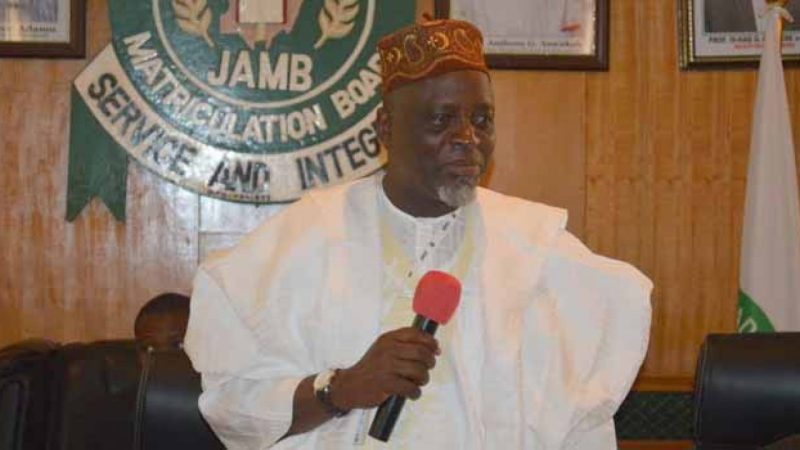
JAMB Registrar, Ishaq Oloyede, made this known during an interview on Good Morning Nigeria, a programme aired by the Nigerian Television Authority (NTA).
He stressed that the current admission system, powered by the Central Admission Processing System (CAPS), is designed to ensure transparency, fairness, and accountability across Nigeria’s tertiary institutions.
According to Oloyede, many parents still resort to illegal means because they believe admission cannot be secured without influence. He described this mindset as having “climbed the ladder to illegality,” warning that such actions are no longer necessary under the present system.
He explained that candidates who meet the required cut-off marks and admission criteria but are unfairly denied admission should formally protest through JAMB, as CAPS allows full visibility into the admission process.
READ ALSO:
- EFCC Arrests Maiduguri Woman for Cleaning Nose With N500 Note
- Court Stops ADC Congress, Orders Status Quo in Leadership Row
- US Evacuates Embassy Staff in Nigeria, Lists 23 States as ‘Do Not Travel’
The registrar highlighted that CAPS enables candidates to track their admission status in real time, accept or reject offers, and ensures institutions follow approved guidelines. He added that the platform prevents schools from secretly manipulating admission lists or replacing qualified candidates.
Oloyede further revealed that since the introduction of CAPS in 2017, cases of admission irregularities have significantly declined, with no major systemic failure recorded.
Addressing concerns about Direct Entry admissions, he noted that JAMB has strengthened its verification process to curb fraud. This includes stricter checks on qualifications such as JUPEB and IJMB certificates, making it increasingly difficult to forge results.
He disclosed that the board now verifies academic credentials directly with awarding institutions, including foreign universities. According to him, recent checks uncovered several fake degrees, with some foreign institutions confirming that such certificates were not issued by them.
The registrar added that JAMB has intensified collaboration with universities and other regulatory bodies to ensure proper screening of A-level results and early detection of fraudulent applications.
He emphasized that with improved digital tracking and verification systems, any attempt to bypass the admission process will be detected, urging candidates to rely on merit rather than shortcuts.
Ultimately, JAMB reiterated that qualified candidates must defend their rights through official channels, as the system now supports fairness and equal opportunity for all.
JAMB Urges Candidates, Parents to Protest Admission Bias as CAPS Ensures Transparency
Education
Jigawa Arrests Seven Teachers for Cheating During Competency Test

Jigawa Arrests Seven Teachers for Cheating During Competency Test
The Jigawa State Government has arrested seven teachers for allegedly engaging in examination malpractice during a large-scale teacher competency assessment involving over 8,400 educators. The arrests are part of the state’s ongoing efforts to improve accountability, professionalism, and learning outcomes in public schools.
The assessment, conducted by the Jigawa State Universal Basic Education Board (SUBEB), is described as a Teacher Training Needs Assessment, aimed at identifying gaps in teachers’ knowledge and skills to inform targeted training programs.
Chairman of SUBEB, Haruna Musa, confirmed that the affected teachers have been handed over to the police for investigation, emphasizing that the exercise is more than a routine test. “This assessment is not just about testing knowledge; it is about restoring integrity and professionalism in our schools,” he said.
READ ALSO:
- US-Iran Conflict: MAN Outlines Urgent Steps to Shield Nigerian Manufacturers
- Bandits Kill Two Abducted Women in Kaduna After Ransom Payment
- 2027: Atiku Signs $1.2m US Lobbying Deal to Engage Trump
Musa noted that examination malpractice, whether by teachers or students, undermines the credibility of the education sector and would not be tolerated. He also warned against absenteeism and involvement in partisan politics during school hours.
According to officials, the arrests are intended to serve as a deterrent to others and reinforce the government’s commitment to enforcing discipline and ethical conduct in schools. The arrested teachers are currently in police custody, and investigations are ongoing to determine whether additional personnel were involved.
Education experts have described the crackdown as a critical step toward safeguarding learning standards, emphasizing that teacher integrity directly impacts student achievement and the overall quality of education.
The Jigawa competency test reflects the state government’s determination to ensure that only qualified and competent personnel remain in the public education system, highlighting broader efforts to improve educational outcomes and accountability across Nigeria.
Jigawa Arrests Seven Teachers for Cheating During Competency Test
Education
JAMB Debunks 2026 UTME Postponement Rumour, Issues Fraud Warning
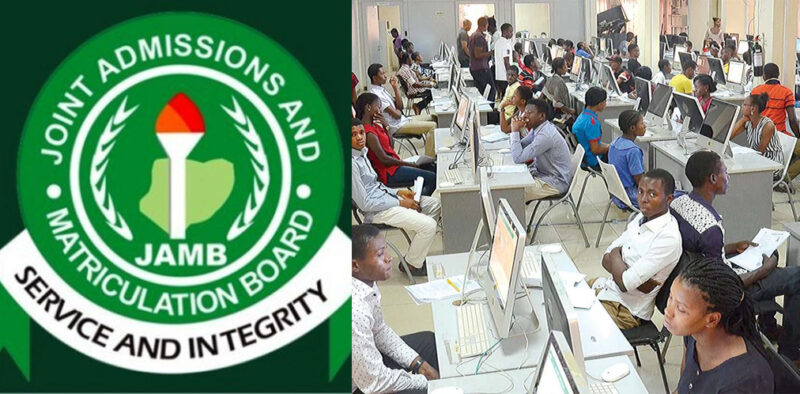
JAMB Debunks 2026 UTME Postponement Rumour, Issues Fraud Warning
The Joint Admissions and Matriculation Board (JAMB) has dismissed reports claiming that the 2026 Unified Tertiary Matriculation Examination (UTME) has been postponed, describing the circulating notice as fake, malicious, and misleading.
In a statement released on Saturday, the board urged candidates to disregard the false information, stressing that it did not originate from JAMB and should not be taken seriously.
“Our attention has been drawn to the malicious press release stating that the 2026 UTME has been postponed. The general public, particularly candidates, are hereby informed that the press release is fake and did not emanate from us. Kindly disregard it. All activities on the 2026 UTME continue as scheduled,” the board stated.
READ ALSO:
- Gunmen Kill Three in Jos Community Hours After Tinubu Visit
- Amnesty International Condemns Wike Over ‘Violent Remark’ Against Journalist
- Pastor Found Dead in Guest House After Night Out With Married Female Church Member
JAMB reaffirmed that the 2026 UTME exam dates remain unchanged, with the nationwide examination set to hold from April 16 to April 25, 2026 at accredited Computer-Based Test (CBT) centres.
The clarification comes after the 2026 UTME mock examination held on March 28 experienced technical issues in several CBT centres, which led to confusion and speculation about a possible postponement. According to JAMB, 224,597 candidates registered for the mock exam, while 152,586 successfully sat for the test across 989 CBT centres nationwide. The board disclosed that over 20 CBT centres have been delisted due to technical failures, as part of efforts to ensure a smooth and credible main examination. JAMB assured candidates that lessons from the mock exercise would be used to improve system performance and prevent disruptions during the main UTME.
The board also raised concerns over fraudulent messages circulating online, especially on WhatsApp, where individuals falsely claim they can boost or manipulate UTME scores. JAMB warned that such claims are criminal and deceptive, stressing that any candidate found engaging in such activities risks disqualification, cancellation of registration, or withholding of results.
JAMB advised candidates to rely only on official updates from the board and avoid spreading or believing unverified information that could cause panic. The examination body reiterated its commitment to delivering a credible, transparent, and technology-driven UTME, urging candidates to remain focused as the examination approaches.
JAMB Debunks 2026 UTME Postponement Rumour, Issues Fraud Warning

-
 metro3 days ago
FG Deports US Missionary Alex Barbir Over Alleged Role in Nigeria Insecurity
-

 Entertainment3 days ago
Veteran Nollywood Actor Davis Ofor ‘Clarus’ of New Masquerade Dies at 85
-

 metro2 days ago
2026 NYSC Batch A Stream II: Registration, Swearing-In Dates Announced
-
 Africa18 hours ago
ECOWAS Recruitment 2026: Over 30 Job Vacancies Open for Nigerians (How to Apply)
-
 metro3 days ago
Lagos Announces Partial Road Closures for Project Commissioning
-

 Entertainment2 days ago
Saheed Osupa Defends Juju Use Amid Backlash From Islamic Clerics
-

 Politics23 hours ago
Court Stops ADC Congress, Orders Status Quo in Leadership Row
-
 News3 days ago
Iran Lists Tough Conditions for Peace Talks with US