

Politics
Peter Obi Poised to Dump Labour Party as Leadership Crisis Worsens
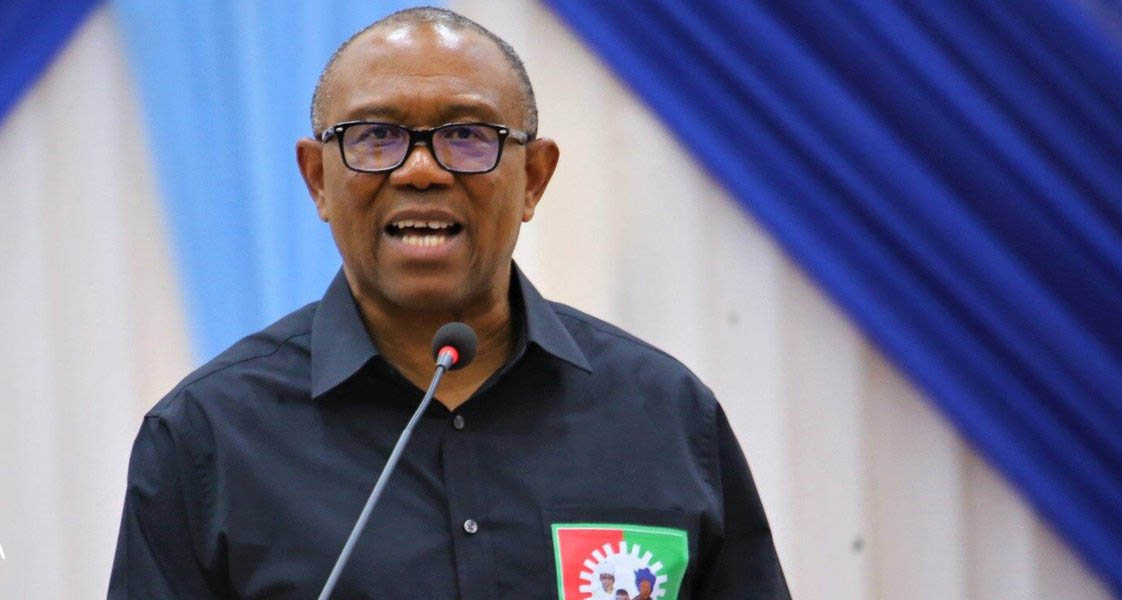
Peter Obi Poised to Dump Labour Party as Leadership Crisis Worsens
Former Labour Party presidential candidate and ex-Anambra State governor, Peter Obi, is expected to formally exit the party this week amid prolonged leadership crises, deep internal divisions and unresolved court disputes that have persisted since the 2023 general elections.
Multiple sources confirmed that Obi’s anticipated departure is tied to the Labour Party’s continued instability, marked by factional leadership, parallel executives and prolonged legal battles that have crippled internal cohesion and decision-making.
Investigations by POLITICS NIGERIA reveal that while several opposition parties have opened discussions with Obi, no final decision has been reached on his next political platform. Consultations, insiders say, remain fluid and ongoing.
Speculation has intensified over a possible move to the African Democratic Congress (ADC). However, indications suggest the ADC may not be Obi’s immediate destination due to unresolved structural issues and internal arrangements within the party. Sources familiar with the talks said Obi has raised concerns over internal democracy, leadership clarity and long-term direction—factors believed to have slowed any agreement.
READ ALSO:
- Ashimolowo Casts Doubt on Obi’s Northern Support as Opposition Coalition Wobbles
- Detained NAF aircraft, 11 soldiers not released yet – Foreign Minister
- Setback for Adeleke second term bid, Accord Party faction names Bamigbola 2026 gov candidate
Emerging alignments within the ADC are also said to be influencing Obi’s calculations, with some developments pointing to a different 2027 presidential election option within the party, a situation that could complicate Obi’s ambition.
Against this backdrop, Obi is reportedly weighing the option of joining an entirely new political platform. Insiders say he is cautious about entering parties with entrenched interests and prior agreements, as he seeks political space to operate independently.
The crisis rocking the Labour Party is rooted in leadership disputes that escalated after the 2023 elections, particularly the controversy surrounding the tenure of former National Chairman Julius Abure. Obi and several party stakeholders have argued that a Supreme Court ruling effectively ended Abure’s leadership, but the continued recognition of his faction by the Independent National Electoral Commission (INEC) has prolonged the impasse.
As a result, the party has operated with rival factions, weakening discipline, stalling reforms and undermining efforts to reposition the party nationally. Those close to Obi believe his continued presence has worsened the crisis, as his popularity has been leveraged by competing camps to legitimise their claims.
READ ALSO:
- Political Ambition, Prophecy and Public Morality: Questions Raised Over Adelabu–Ayodele Controversy
- Bauchi Gov Approves 100% Salary Increase for Doctors, Health Workers
- Nigerian Troops Repel ISWAP Attack on Borno FOB, Kill Terrorists
Obi’s candidacy transformed the Labour Party into a major political force during the 2023 presidential race, galvanising youths, urban voters and first-time participants under the popular “Obidient” movement. However, that momentum has since declined, with several elected officials defecting over confusion and lack of direction.
Sources say Obi is increasingly concerned that remaining in a party mired in endless disputes could damage his reformist image and weaken his support base ahead of future elections.
Although Obi has yet to officially announce his next move, insiders say he is inclined towards a platform that guarantees leadership clarity, internal democracy and minimal legal distractions.
His expected exit is likely to trigger fresh realignments within the opposition space, as parties position themselves to attract Obi’s supporters.
When contacted, ADC spokesman Bolaji Abdullahi said he could not confirm whether Obi was set to join the party, noting that the ADC would be open to welcoming him if he decides to come on board. Efforts to obtain an official response from the Labour Party were unsuccessful at the time of filing this report.
Peter Obi Poised to Dump Labour Party as Leadership Crisis Worsens





Politics
2027: NDC Predicts Wider Obi Victory Over Tinubu in Lagos
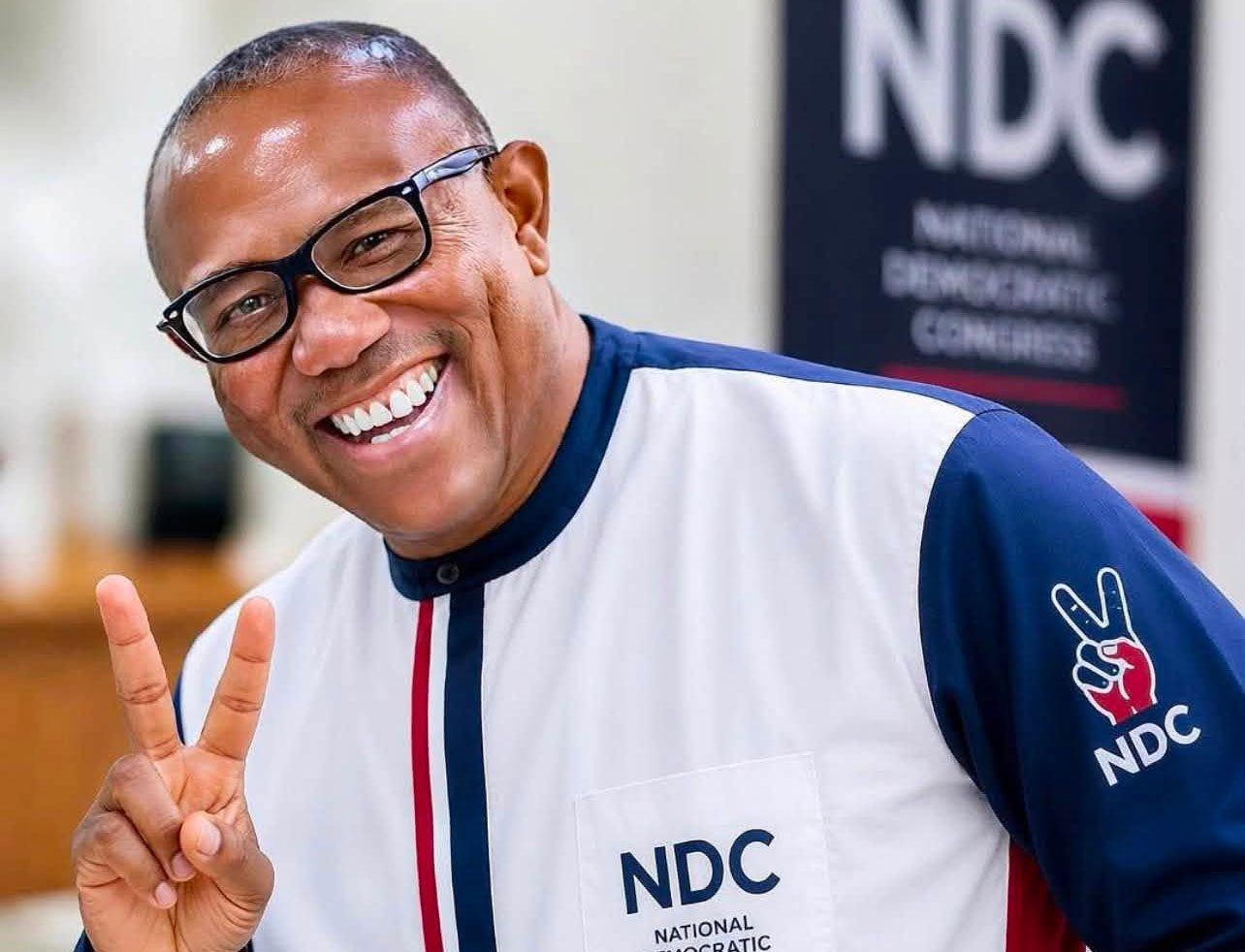
2027: NDC Predicts Wider Obi Victory Over Tinubu in Lagos
The Nigeria Democratic Congress (NDC) has expressed confidence that its presidential candidate, Peter Obi, will defeat President Bola Ahmed Tinubu in Lagos State in the 2027 presidential election, predicting that the former Anambra State governor will win by a wider margin than he did in 2023.
The party’s National Publicity Secretary, Osa Director, said Obi’s victory over Tinubu in Lagos during the 2023 presidential election was not accidental, describing it as a reflection of the political mood in the state.
Director said the NDC expected Obi to build on his previous performance if the 2027 election was conducted under conditions the party considers free and fair.
He also challenged the All Progressives Congress (APC) and its supporters to allow voters to determine the outcome of the election without intimidation, violence, inducement or other forms of electoral malpractice.
According to him, the NDC has studied the lessons of the 2023 election and is preparing to strengthen its structures and protect its votes across the country.
Director said the party was prepared to confront any challenges that could arise during the election, including alleged attempts to intimidate voters or disrupt the electoral process.
Another NDC candidate in Lagos, Ladipo Johnson, also expressed confidence in Obi’s prospects in the state, attributing the expected improvement to what he described as dissatisfaction with the Tinubu administration.
Johnson said Obi would win Lagos again and by a wider margin, adding that the NDC had become stronger following the realignment of opposition politicians and political groups ahead of the 2027 election.
READ ALSO:
- Olawepo-Hashim: My Political Ideology Differs From Obi, Atiku
- Ortom and His 23 Cars’ ‘Bonus’, by Dele Sobowale
- Abuja Demand Rises as Jetour Brings X70 Plus Experience to FCT
He also raised concerns about possible voter intimidation, harassment and vote buying, urging Nigerians to protect their votes and ensure that electoral choices are respected.
However, the claims by Director and Johnson about Obi’s expected performance in Lagos are political predictions by NDC officials and do not constitute an established election outcome.
The 2023 presidential election remains the latest completed presidential contest in Lagos. Obi won the state with 582,454 votes, narrowly ahead of Tinubu, who polled 572,606 votes, according to results declared by the Independent National Electoral Commission (INEC).
Obi won nine of Lagos State’s 20 local government areas, including Ajeromi-Ifelodun, Amuwo-Odofin, Eti-Osa, Ikeja, Kosofe, Oshodi-Isolo, Somolu, Ojo and Alimosho.
Tinubu won the remaining 11 local government areas: Agege, Apapa, Badagry, Epe, Ibeju-Lekki, Ifako-Ijaiye, Ikorodu, Lagos Island, Lagos Mainland, Mushin and Surulere.
The result made Lagos one of the closely watched states in the 2023 presidential contest, particularly because Tinubu had previously served as governor of the state and maintained a significant political structure there.
The political landscape has since changed considerably ahead of the 2027 election.
INEC has published its final list of presidential candidates, with 18 candidates cleared to contest the January 16, 2027 presidential election.
Tinubu is listed as the APC presidential candidate, while former Vice President Atiku Abubakar is contesting under the African Democratic Congress (ADC). Obi is listed as the presidential candidate of the NDC, with former Kano State Governor Rabiu Musa Kwankwaso as his running mate.
The changes mean that the party alignments and political structures involved in the 2027 contest are different from those that shaped the 2023 election.
Obi’s move from the Labour Party to the NDC has also changed the political platform through which he is seeking the presidency, while Kwankwaso’s emergence as his running mate has brought another major political bloc into the NDC structure.
For the NDC, Lagos remains an important target as it seeks to expand Obi’s support beyond the areas where he performed strongly in 2023.
The party’s argument is based partly on the margin by which Obi won Lagos in 2023 and its assessment of the current political environment in the state.
The APC, meanwhile, remains a major political force in Lagos, where it has maintained a strong organisational structure over several election cycles.
The 2027 contest will therefore take place against a different political backdrop, with new party alliances, candidates and campaign structures competing for the support of Lagos voters.
Beyond Lagos, the NDC is seeking to build a nationwide campaign around Obi’s candidacy, while the APC and other parties are also working to consolidate their respective support bases.
Issues likely to shape the campaign include the economy, cost of living, security, employment, governance, electoral credibility and the performance of the federal government.
The NDC has continued to emphasise the need for a credible electoral process, with its officials urging security agencies, electoral authorities and political parties to ensure that voters can cast their ballots without intimidation.
For now, the prediction that Obi will defeat Tinubu by a wider margin in Lagos remains the stated expectation of the NDC and its candidates.
The actual result will depend on the votes cast and officially declared in the 2027 presidential election.
2027: NDC Predicts Wider Obi Victory Over Tinubu in Lagos
Politics
Olawepo-Hashim: My Political Ideology Differs From Obi, Atiku

Olawepo-Hashim: My Political Ideology Differs From Obi, Atiku
Accord Party presidential candidate Gbenga Olawepo-Hashim has sought to distinguish his political philosophy from those of former Anambra State Governor Peter Obi and former Vice President Atiku Abubakar, saying the three politicians do not share the same political ideology.
Olawepo-Hashim’s position comes as political parties and opposition figures continue to realign ahead of the 2027 presidential election, with competing platforms emerging from the broader opposition movement.
The former presidential aspirant has repeatedly argued that Nigerian politics should be driven by clearly defined policies and ideology rather than alliances formed principally around personalities or the immediate objective of winning elections.
His comments also reflect his longstanding emphasis on economic policy, federalism, electoral reform, institutional governance and political restructuring.
Olawepo-Hashim has particularly used the issue of fuel subsidy removal to highlight differences between his position and that of Atiku.
He has criticised Atiku’s past position on petroleum subsidy and questioned subsequent calls for a targeted subsidy, arguing that politicians who change their positions on major economic policies should explain the reasons for such changes to Nigerians.
The Accord candidate has maintained that he opposed the removal of petroleum subsidy and believes government policy should take into account its effect on households, businesses and the productive economy.
Beyond subsidy policy, Olawepo-Hashim has argued that Nigeria’s political challenges cannot be resolved simply by changing the occupants of political offices.
READ ALSO:
- Ortom and His 23 Cars’ ‘Bonus’, by Dele Sobowale
- Abuja Demand Rises as Jetour Brings X70 Plus Experience to FCT
- Enough Is Enough: Muslim Supporters Demand New Man United Owners
He has advocated stronger institutions and a more decentralised political system, while distinguishing federalism from the practice of rotating political offices among geopolitical zones.
His position on political restructuring has been a recurring feature of his public interventions, including his criticism of the country’s electoral system and the role of institutions in guaranteeing credible elections.
The politician has also become embroiled in a legal dispute over his status as the Accord Party presidential candidate for the 2027 election.
Following the publication of the final list of candidates, Olawepo-Hashim’s name was omitted. He subsequently maintained that he remained the party’s duly nominated candidate and that the dispute was before the courts.
He said he emerged from an Accord presidential primary held on May 30, 2026, which he said was monitored by electoral officials, and argued that an administrative decision could not finally determine a candidate’s eligibility where a court case was pending.
The development has added another dimension to the political contest involving Olawepo-Hashim and Accord as parties prepare for the 2027 election.
Meanwhile, the opposition landscape has continued to change following the formation of a coalition involving Atiku, Obi and other political figures.
Obi is now the presidential candidate of the Nigeria Democratic Congress (NDC), while Atiku is the presidential candidate of the African Democratic Congress (ADC). The earlier coalition that brought the two politicians and other opposition leaders together has since developed into separate political platforms.
Olawepo-Hashim has therefore positioned his campaign separately from both politicians, stressing what he describes as differences in political philosophy and policy priorities.
His comments come against the backdrop of renewed efforts by opposition groups to build alliances ahead of the 2027 poll. However, disagreements over presidential candidates, party structures, zoning and policy positions have continued to shape the opposition landscape.
For Olawepo-Hashim, the distinction between his political approach and those of Obi and Atiku goes beyond party affiliation.
He has argued that Nigerians should assess political leaders based on their policy programmes, ideological positions, institutional reform proposals and approach to governance, rather than simply on the strength of political alliances.
His campaign has continued to focus on issues including economic restructuring, democratic reform, electoral credibility, federalism and strengthening institutions.
The differences he has highlighted between himself, Obi and Atiku are therefore part of his broader effort to establish a distinct political identity ahead of the 2027 Nigeria presidential election.
As the election approaches, the competing positions of opposition politicians are likely to remain a major feature of the political debate, particularly as parties continue negotiations and legal disputes over candidates and alliances.
Olawepo-Hashim: My Political Ideology Differs From Obi, Atiku
Politics
Ogun 2027: APC Highlights Adeola’s Projects, Challenges Adebutu
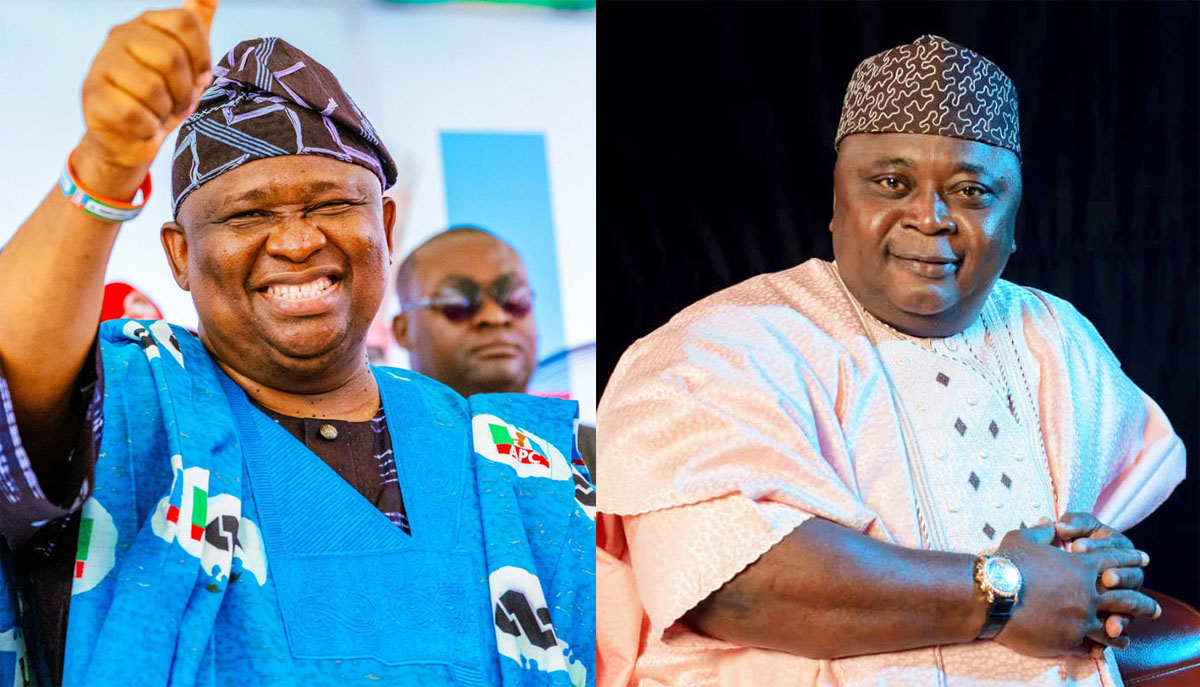
Ogun 2027: APC Highlights Adeola’s Projects, Challenges Adebutu
The All Progressives Congress (APC) Student Affairs Committee of the Ogun State 2027 Campaign Council has challenged the Peoples Democratic Party (PDP) governorship candidate, Ladi Adebutu, to present his personal record of public service and verifiable achievements ahead of the 2027 Ogun State governorship election.
The committee said the forthcoming Ogun 2027 governorship election should be centred on ideas, policies, measurable achievements and the capacity of the candidates to address the needs of residents rather than political rhetoric, personal attacks or distractions.
The challenge was contained in a statement issued on Saturday by the committee’s chairman, Comrade Samson Ajasa Adeyemi.
Adeyemi urged Adebutu to bring his record to the table and allow voters to assess what he has personally contributed to the development of Ogun State, particularly in areas affecting students, teachers, young people, artisans, traders and other residents.
According to the APC committee, the election should provide an opportunity for the candidates to explain their previous public service records, policy proposals and plans for the state.
The committee specifically highlighted the activities and interventions of the APC governorship candidate, Senator Solomon Olamilekan Adeola, popularly known as Yayi, as examples of what it described as measurable constituency and community interventions.
It claimed that 5,513 Ogun students benefited from the third edition of Adeola’s scholarship and bursary programme in July 2026.
READ ALSO:
- Akpabio Links Okowa’s APC Defection to EFCC Investigation
- Barau Sacks Aide Over ‘Abba Must Go’ Social Media Posts
- Niger Miners’ Deaths: FG Suspends 21 NSCDC Officers, Releases Names
The committee also cited what it said were 53 constituency projects covering areas including roads, education, healthcare, security and commerce during the third anniversary of Adeola’s tenure.
It further claimed that the Oloja Yayi Market Support Fund provided ₦750 million in direct grants to 10,000 traders across Ogun State’s three senatorial districts.
The APC group said such interventions should be subjected to public scrutiny and compared with the records and programmes of other candidates in the 2027 Ogun governorship race.
Adeyemi challenged Adebutu to similarly identify projects, programmes or other measurable interventions he had personally undertaken or facilitated for the people of Ogun State.
He said the committee was not interested in achievements associated with family background or inherited business interests, but wanted the PDP candidate to present his own record of public service and contributions.
The chairman said the challenge was particularly important because students and other young people needed to understand what each candidate had done previously and what they intended to do if elected governor.
The APC committee also called for a campaign focused on issues affecting education, human capital development, infrastructure, economic empowerment and employment opportunities.
The latest exchange is part of the emerging political contest ahead of the 2027 Ogun State governorship election, with Adeola representing the APC and Adebutu representing the PDP.
Questions surrounding political experience, development records, policy proposals and campaign messaging are expected to feature prominently as the election approaches.
The debate has also included arguments over the relevance of ancestry and political identity in the governorship contest. In a separate intervention, APC chieftain Kayode Oladele had urged political parties to focus their campaigns on candidates’ records, policies and programmes rather than ancestry.
Oladele argued that the constitutional qualifications for a governorship candidate do not include belonging to a particular ancestral group or part of a state, while urging political parties to present alternative policies and programmes for voters to assess.
The APC Student Affairs Committee similarly said Ogun residents should be presented with sufficient information to compare the candidates’ records, programmes and development proposals.
The committee’s position, however, represents the campaign council’s political assessment and claims, which remain subject to verification and comparison with the records and policy positions presented by other candidates and political parties.
With the Ogun 2027 election still ahead, the emerging campaign rhetoric is increasingly shifting towards questions of experience, previous performance, development interventions and the policy direction each candidate intends to pursue if elected.
Ogun 2027: APC Highlights Adeola’s Projects, Challenges Adebutu
-
 News2 days ago
ECOWAS Biometric Card Expands as Seven Countries Begin Rollout
-

 Sports2 days ago
Ballon d’Or 2026: Mbappe Responds to Yamal’s Bold Claim
-
 metro2 days ago
FG Suspends Niger NSCDC Commandant As 37 Suspected Illegal Miners Die In Custody
-
 International2 days ago
Ninth Body Discovered in South Africa: Nigeria Issues Urgent Safety Alert to Nationals
-

 Politics2 days ago
Toyin Abraham Rejects Lagos APC Campaign Council Inclusion
-

 Entertainment3 days ago
Adunni Ade Reveals Christian Fans Unfollowed Her After Publicly Identifying as Muslim
-

 Politics2 days ago
2027: Sowore Says He’d Rather Die Than Travel Abroad For Medical Treatment
-
 Politics2 days ago
2027: Tinubu May Mediate Wike-APC Governors Rift In France