

metro
PFIPC Scandal: Adeyemi Reveals How ₦1.3 Billion Made It Into 2026 Budget
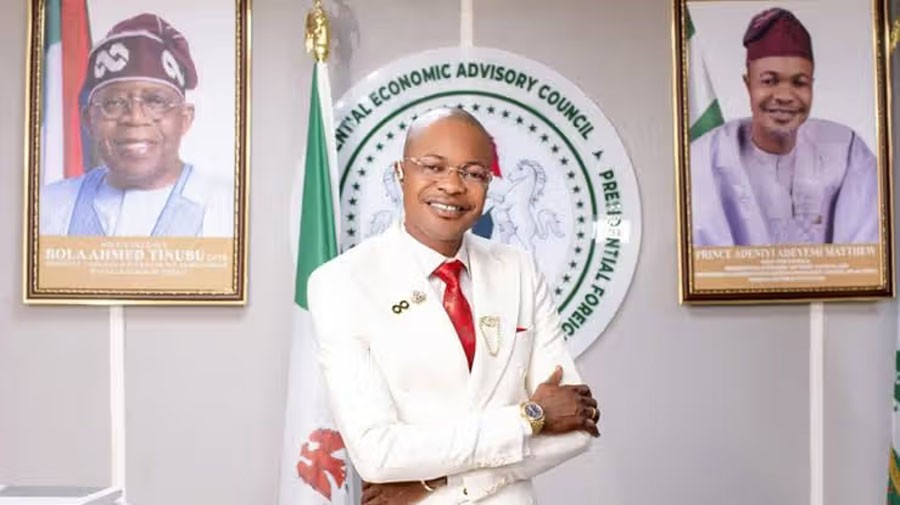
PFIPC Scandal: Adeyemi Reveals How ₦1.3 Billion Made It Into 2026 Budget
- Self-styled DG says he lobbied Budget Office officials but denies paying bribes; Reps begin probe as Head of Service, CBN disown agency
LAGOS, Nigeria – The self-styled Director-General of the alleged Presidential Foreign Intervention Promotion Council (PFIPC), Prince Adeniyi Matthew Adeyemi, has explained how the agency was captured in the Federal Government’s 2026 budget, despite his arrest before the appropriation process was concluded.
Adeyemi made the claims in an interview with social media influencer Martins Vincent Otse, popularly known as VeryDarkMan, in a recording released shortly after his arrest. He said the Chief of Staff to the President, Mr Femi Gbajabiamila, had no hand in the N1.3 billion budgetary allocation, adding that he personally approached top Budget Office officials for the agency’s inclusion. He noted that the process was not completed before his arrest, saying he was surprised to later discover that the proposed agency had appeared in the budget.
The PFIPC scandal has drawn nationwide attention after it emerged that about ₦1.3 billion was allocated to the agency under Budget Code 0111062001 in the 2026 Appropriation Act, despite the Presidency disowning the council as fictitious and without legal backing. The allocation comprised ₦802.98 million for personnel costs, ₦200 million for overheads, and ₦300 million for capital projects.
Adeyemi said he visited the Budget Office in December 2024 to seek inclusion of the agency in the 2025 Appropriation Bill but was informed that the budget process had already closed. “I went to that Budget Office for the 2025 budget. I submitted the letter and everything that I wanted, but I was told it was already late. When the 2025 budget came out and I didn’t see it, they told me it would now be for the 2026 budget. We kept in touch because they said it would be considered later,” he said.
He alleged that a female official helped him gain access to the office of the Director-General of Budget Office before he was referred to another director. “She helped me to see the oga. Oga now said, ‘Where is my shini?’ I said I don’t have any shini. He later asked me to meet one director,” he said. The director informed him that the proposal could no longer be accommodated in the 2025 budget but assured him that efforts would continue towards the 2026 appropriation. “They were trying for me that maybe they would include it, but unfortunately they said it could not be included in the 2025 budget. They said it would be for 2026,” he stated.
READ ALSO:
- Petrol Tanker Rams into Vehicles Near UniAbuja Gate, Many Feared Dead
- 2027: We Have Written Agreement Obi Will Serve Only One Term — Kwankwaso
- Court Upholds FCCPC’s Powers to Regulate Nigeria’s N400 Billion Digital Lending Market
Asked whether he paid any Budget Office official, Adeyemi said he only promised officials some favours on execution of the deal. “Honestly, I did not pay any money. I didn’t pay anybody. The only thing I promised was that if I started employing people, I could help them with employment opportunities,” he said. He admitted promising future favours to some officials but insisted no cash exchanged hands during his interactions at the Budget Office. “That was the favour I promised them. I did not give anybody money. It was just a promise that if they had people, I could employ them later,” he said.
According to Adeyemi, the process ended immediately after his arrest because his legal troubles overtook every other plan. He said: “Immediately there was a problem, everything stopped. Even the woman that wanted to help was calling but she couldn’t reach me. I told her to let everything stop. I didn’t even know until they said it was inside the budget. I had already left the office. Where would I still pursue the budget when I was already facing the court?” When the interviewer suggested officials might have inserted the agency into the budget after his arrest, Adeniyi said he could not explain how it happened. “I don’t know because once that problem started, everything stopped. Why would I still pursue the budget when I was already in trouble?” he said.
On allegations that he paid N400 million to facilitate his appointment, Adeniyi claimed the money was delivered in United States dollars through his late associate, Dolapo Tanimola, and that he was not sure if it was delivered to Gbajabiamila. Asked the denomination of the money, he replied, “Dollars.” Asked who received it, he answered, “Dolapo.” Adeyemi also denied ever meeting the President’s Chief of Staff, Femi Gbajabiamila, despite alleging that money was sent through Tanimola. Speaking further during the interview released on Tuesday, Adeyemi declared that he never met Gbajabiamila physically before or after his appointment. He said Tanimola acted as the intermediary throughout the process and facilitated the alleged N400 million payment made in dollars. “I never met Gbajabiamila physically before and after he was appointed. Dolapo Tanimola handled everything for me,” Adeniyi said.
Meanwhile, the House of Representatives Ad-hoc Committee investigating the PFIPC, on Tuesday heard testimonies from the Office of the Head of the Civil Service of the Federation (OHCSF) and the Central Bank of Nigeria (CBN), with both institutions distancing themselves from creation and operation of the council. The Head of the Civil Service of the Federation, Mrs. Didi Esther Walson-Jack, told the committee that her office had no constitutional responsibility to establish government agencies. “The approval and establishment of agencies is not within the purview of the Office of the Head of the Civil Service of the Federation. However, the OHCSF is responsible for approving the administrative structure of federal government agencies,” she said.
The Presidency had said the PFIPC is not a recognised government agency and that Adeyemi forged documents to present himself as an appointee and head of the agency. The Presidential Economic Advisory Council (PEAC) was established by former President Muhammadu Buhari and included prominent Nigerian economists, but the council has ceased to exist since President Bola Tinubu assumed office. Reports from the National Assembly suggest that PFIPC officials never appeared before the Senate Committee on Establishment and Public Service Matters, the body ordinarily responsible for vetting agencies before their budgets are approved. The allocation is said to have entered through a backdoor arrangement without budget defence.
The Senate has resolved to await the outcome of an investigation by the Independent Corrupt Practices and Other Related Offences Commission (ICPC) before taking action on the controversy. President Bola Tinubu has directed the ICPC to investigate the entire scandal and report back within 30 days. The House of Representatives has also launched its own investigations into the matter.
PFIPC Scandal: Adeyemi Reveals How ₦1.3 Billion Made It Into 2026 Budget






metro
Former Delta Governor Emmanuel Uduaghan Dies at 71, Three Days to 72nd Birthday
Former Delta Governor Emmanuel Uduaghan Dies at 71, Three Days to 72nd Birthday
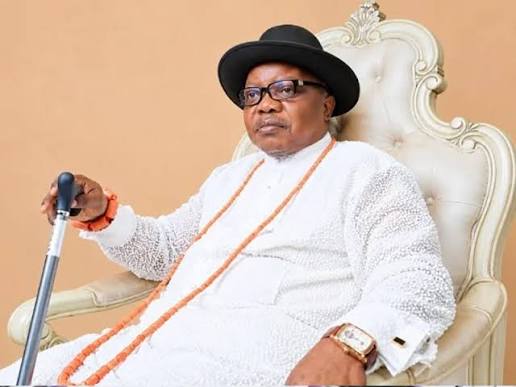
ASABA — The political landscape of Delta State and Nigeria at large was thrown into mourning on Monday following the demise of former Governor, Dr. Emmanuel Eweta Uduaghan, who passed away at the age of 71.
According to a statement released by his family, the former two-term governor died in the early hours of Monday, October 19, 2026, following a brief illness. His passing comes just three days shy of his 72nd birthday, as he was born on October 22, 1954.
The family’s statement, signed by Toju Anire Uduaghan, described the death as an “immeasurable loss.” They remembered the late politician as a “source of strength, a father figure, a beloved brother and uncle, and a respected elder” whose life and service touched countless people across Delta State and the nation.
A Legacy of Service
Dr. Uduaghan leaves behind a robust political legacy that spanned over a decade and a half in the public service of Delta State.
He began his political career as the Commissioner for Health between 1999 and 2003 under the administration of Governor James Ibori. His administrative acumen saw him elevated to the position of Secretary to the State Government (SSG) from 2003 to 2007, a role in which he played a pivotal part in the state’s governance structure.
In 2007, he successfully contested and won the governorship seat, succeeding his mentor, Ibori. He was re-elected for a second term, governing the oil-rich state until 2015. During his tenure, Uduaghan was widely known for his “Delta Beyond Oil” economic diversification agenda, an initiative aimed at shifting the state’s economic dependence from crude oil to agriculture, infrastructure, and human capital development. He was also fondly referred to as the “Talk and Do” governor due to his penchant for completing projects.
Outpouring of Grief
Following the announcement, tributes have begun to pour in from across the country. Political associates, friends, and constituents have taken to social media and traditional media to express their shock and sorrow at the passing of the former governor.
Many recall his time in office as a period of relative peace and infrastructural growth in Delta State. His family has requested privacy during this difficult time as they mourn the loss of their patriarch.
Funeral arrangements are expected to be announced by the family in the coming days.
Former Delta Governor Emmanuel Uduaghan Dies at 71, Three Days to 72nd Birthday
metro
Farmers-Herders Clash in Abuja Leaves Three Dead as Houses, Shops Burn
Farmers-Herders Clash in Abuja Leaves Three Dead as Houses, Shops Burn
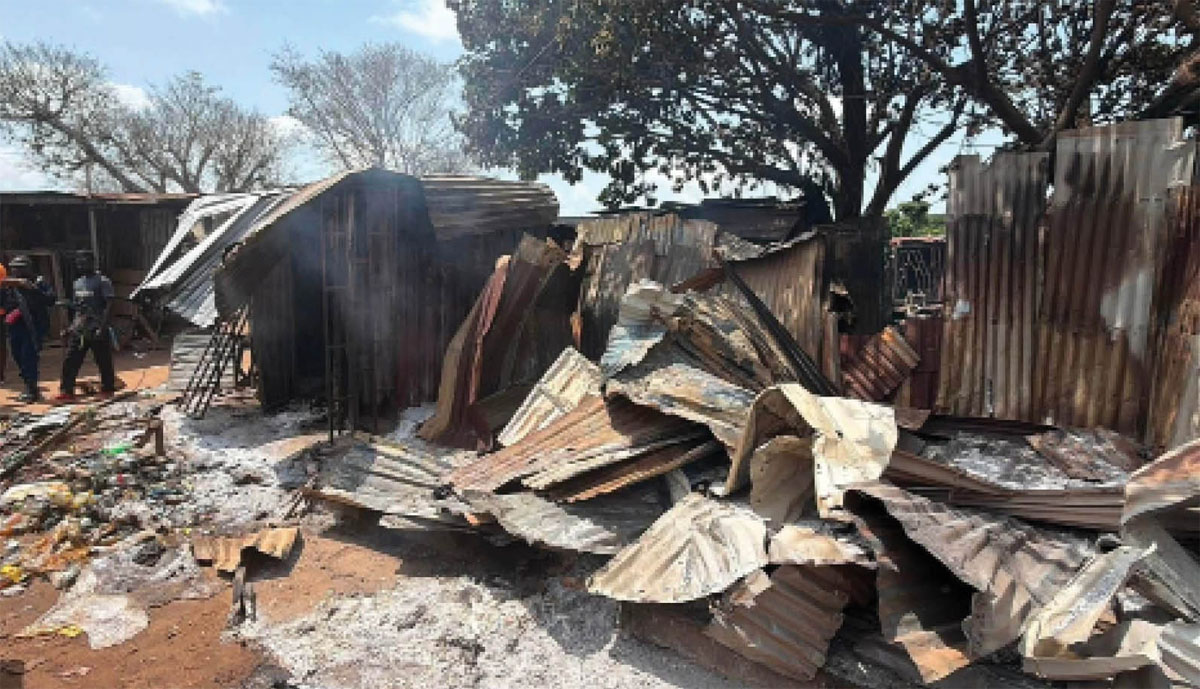
At least three people have reportedly been killed in a renewed farmers-herders clash in Paikon-Kore community, Gwagwalada Area Council of the Federal Capital Territory (FCT), with several others injured and properties destroyed.
The violence, which reportedly began on Saturday afternoon and continued until Sunday morning, October 18, left houses, shops and a motorcycle burnt, while goods in the affected shops were destroyed.
However, another report put the death toll at five, with eyewitnesses saying both farmers and herders were among those killed. The exact number of casualties had yet to be officially confirmed as of the time of reporting.
A resident, Danlami Ibrahim, said the latest confrontation began after cattle allegedly entered a groundnut farm containing crops that were yet to be harvested.
According to him, the farm owner confronted the herders, leading to an argument that escalated into violence. One of the herders allegedly attacked a farmer with a cutlass, severing one of his hands.
The incident reportedly triggered anger among residents and led to retaliatory attacks in which three herders were said to have been killed. Several other people sustained injuries and were taken to hospitals in Gwagwalada for treatment.
READ ALSO:
- Nollywood Mourns as Actress, Beauty Queen Tenia Abraham Dies at 32
- FG Challenges World Bank’s 124% Debt-to-Revenue Warning, Cites Rising Income
- Mbappé Runs Riot as Real Madrid Crush Sevilla 4-1 Ahead of El Clásico
The Secretary of the Miyetti Allah Cattle Breeders Association of Nigeria (MACBAN), Gwagwalada Area Council chapter, Mohammed Usman, confirmed that three herders had died, although he said he was still gathering information about the number of injured people.
Usman said he had informed the Gwagwalada Area Council chairman, Kasim Mohammed Ikwa, about the incident.
Ikwa visited the affected community on Sunday alongside the Divisional Police Officer, SP Aaron H. Kaura, and other security personnel. He condemned the violence and called on residents to remain calm.
The council chairman said a stakeholders’ meeting would be convened to address the crisis and identify ways to prevent further clashes. He urged farmers, herders, youths and community leaders to embrace dialogue and avoid retaliatory attacks.
Ikwa also advised farmers whose crops were damaged by cattle to report such incidents to security agencies rather than resort to self-help. He urged residents to cooperate with security personnel deployed to restore peace.
The FCT Police Command spokesperson, SP Josephine Adeh, had yet to publicly respond to enquiries about the incident as of the time of the report.
The latest violence follows previous confrontations in Paikon-Kore and neighbouring communities, including a clash in August that reportedly left a farmer with a severed hand and three other people with machete injuries.
Recurring disputes over cattle grazing, destruction of crops, access to farmland and grazing routes have fuelled tensions between farming and herding communities across parts of the FCT.
Herders have also complained about the encroachment of designated grazing areas by farms, housing estates and other developments, while farmers have repeatedly raised concerns about livestock entering their fields and destroying crops.
The Federal Government has identified the FCT as one of the priority areas for efforts to address farmers-herders conflicts. The Ministry of Livestock Development has also announced plans to work with the FCT Administration and pastoralist groups to rehabilitate grazing reserves and improve livestock management.
Security analysts have called for stronger early-warning systems, impartial law enforcement, compensation for damaged crops and effective mediation to prevent local disputes from escalating into deadly violence.
The latest clash has renewed concerns about the safety of rural communities around Abuja and the need for a lasting solution to recurring disputes between farmers and herders.
Farmers-Herders Clash in Abuja Leaves Three Dead as Houses, Shops Burn
metro
Ogun House Fire Horror: Husband Arrested After Wife Dies Following Domestic Dispute
Ogun House Fire Horror: Husband Arrested After Wife Dies Following Domestic Dispute
Police in Ogun State have arrested a 56-year-old man, Madarikan Emehinola, following the death of his 40-year-old wife, Igbagbo Erobe, in a house fire in Igbo-Edu, Ogun Waterside Local Government Area.
The incident, suspected to be a case of arson, reportedly occurred at about 8:30pm following a domestic dispute, according to an eyewitness quoted by PUNCH Metro.
The Ogun State Police Command said the incident was reported at the Abigi Divisional Police Headquarters on Sunday, October 18, 2026, after information was received that a residential building had been set ablaze, resulting in the woman’s death.
The suspect was subsequently arrested as investigators began efforts to establish the circumstances surrounding the tragedy.
The eyewitness account suggests that the fire occurred after a disagreement between the couple. However, the precise sequence of events leading to the fire, the cause of the blaze and whether it was deliberately set have yet to be conclusively established by the police.
The deceased’s body has been deposited at a mortuary for a post-mortem examination to help determine the cause of death and provide further evidence for the investigation.
READ ALSO:
- NLC, Falana Mobilise Nigerians Against Petrol Price Hike, Mount Pressure on Tinubu Govt
- Buhari Feared Tinubu Presidency, Resisted Pressure to Back Him – Baba-Ahmed Claims
- NAFDAC Probes Corps Member’s Death at Enugu Camp as Fake Drug Claims Emerge
The police said the case was being processed for transfer to the State Criminal Investigation Department (SCID), Eleweran, Abeokuta, for a more detailed investigation.
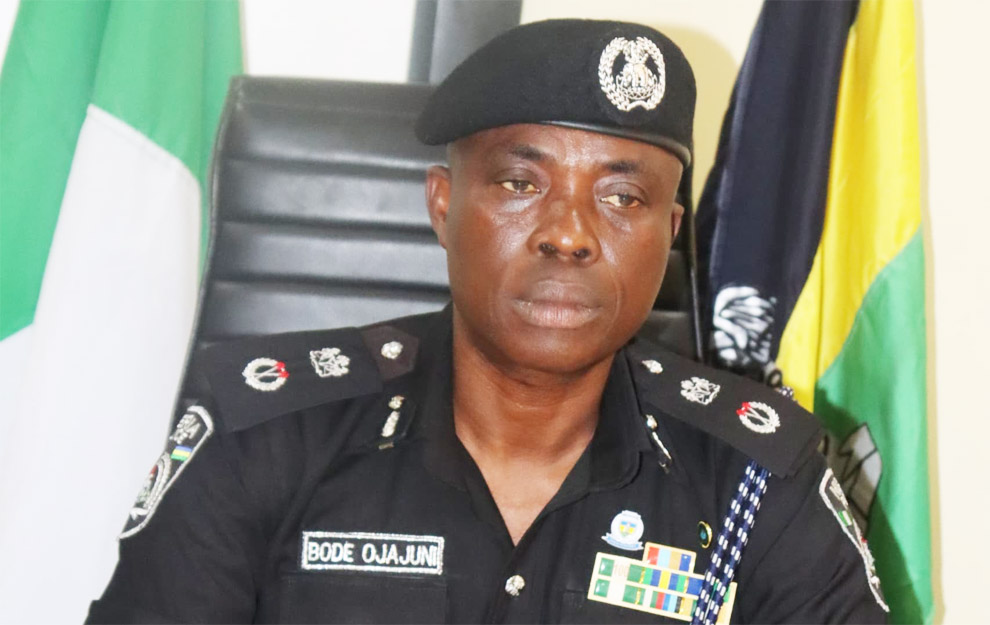
The Commissioner of Police in Ogun State, Bode Ojajuni, assured residents that the matter would be investigated thoroughly and professionally in accordance with the law.
He reiterated the command’s commitment to protecting lives and property and ensuring that allegations involving serious crimes receive appropriate investigative attention.
The police also urged members of the public to report suspicious activities and provide credible information that could assist investigators in establishing what happened.
Although the incident is being investigated as suspected arson, the available information has not conclusively established how the fire started or the motive behind it. The eyewitness account of a domestic dispute is an allegation that investigators will need to examine alongside other evidence.
The outcome of the post-mortem examination and further police inquiries is expected to provide additional information about the woman’s death.
The suspect’s arrest does not establish guilt. He remains entitled to due process as investigators work to determine the circumstances surrounding the fatal fire.
Ogun House Fire Horror: Husband Arrested After Wife Dies Following Domestic Dispute
-
 metro3 days ago
Suspended Archbishop Ibezim Drags Anglican Primate to Court, Challenges Six-Month Leave
-

 metro3 days ago
Imodi-Ijebu Muslim Community Bets on 20 Chiefs to Drive Education, Economic Growth
-
 metro3 days ago
NAPTIP Raises Alarm as Parents Allegedly Trade Children for Sex, Arrests Woman in Abuja
-
 News3 days ago
FG Draws Red Line on Fuel Subsidy, Warns of Naira Crisis if Reforms Are Reversed
-
 News3 days ago
Tinubu Reappoints INEC Commissioner, Nominates Six Others Ahead of 2027 Elections
-

 Auto3 days ago
Tesla’s Flying Roadster Rekindles Race to Put Cars in the Sky
-
 metro3 days ago
DSS Arrests Maina’s Fugitive Son in Abuja After Six Years on the Run
-

 metro2 days ago
FG Begins Rollout of 3,700 Telecom Towers to Connect 20m Nigerians