
Business
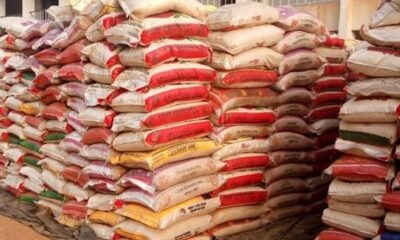
Prices of rice, eggs, others rise – NBS report

Prices of rice, eggs, others rise – NBS report
The National Bureau of Statistics has said food prices have risen going by the outcome of its survey for September 2020.
It stated this in its ‘Selected food price watch data’ for the September 2020 period.
The report showed that the average price of one dozen of agric eggs medium-size increased year-on-year by 5.24 per cent and month-on-month by 0.37 per cent to N480.76 in September 2020 from N478.97 in August 2020.
It stated that the average price of agric eggs medium size (price of one) increased year-on-year by 3.87 per cent and month-on-month by 0.28 per cent to N42.90 in September from N42.78 in August.
The average price of 1kg of rice (imported high quality sold loose) increased year-on-year by 39.07 per cent and month-on-month by 2.87 per cent to N516.13 in September 2020 from N501.71 in August.
The average price of 1kg of tomato increased year-on-year by 26.12 per cent and decreased month-on-month by -1.01 per cent to N286.92 in September from N289.86 in August.
Similarly, it added that the average price of 1kg of yam tuber increased year-on-year by 29.11 per cent and decreased month on month by -4.08 per cent to N245.62 in September 2020 from N256.06 in August 2020.








Business
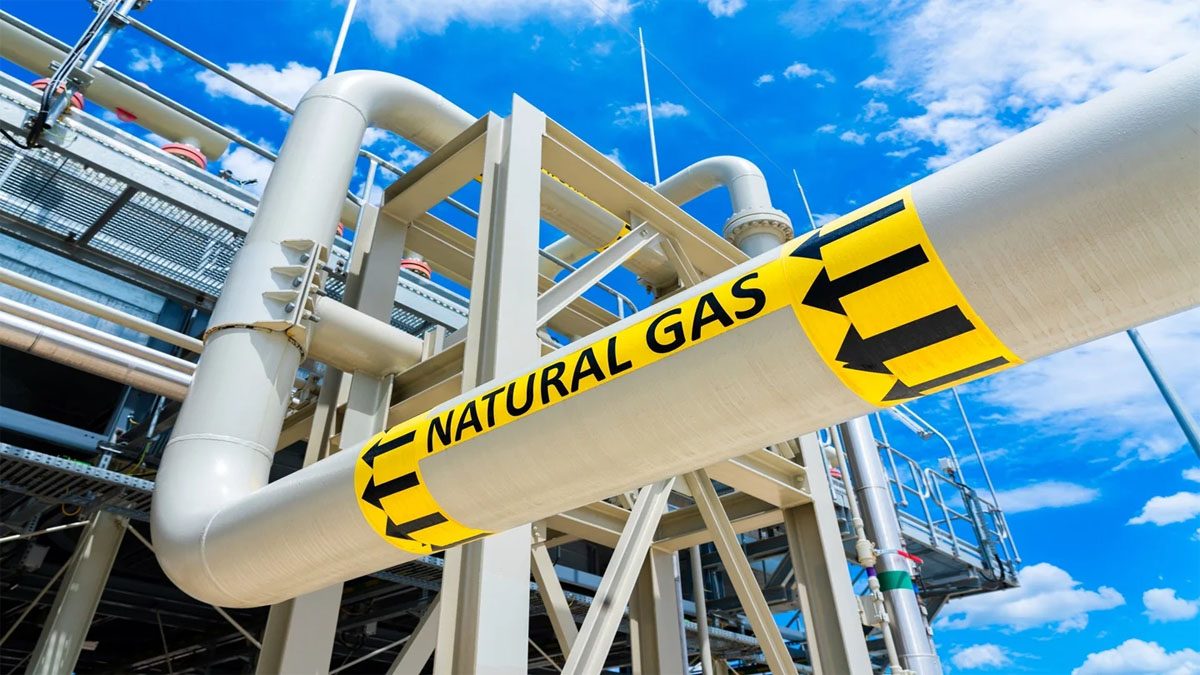
FG Raises Gas Price to $2.18/MMBtu, Signals Fresh Economic Pressure for Nigerians
FG Raises Gas Price to $2.18/MMBtu, Signals Fresh Economic Pressure for Nigerians
Nigerians may face renewed economic strain following a fresh increase in domestic gas prices, a move expected to impact electricity tariffs, manufacturing costs, and the overall cost of living.
The Nigerian Midstream and Downstream Petroleum Regulatory Authority (NMDPRA) on Tuesday announced that the Domestic Base Price of natural gas has been raised to $2.18 per MMBtu, effective April 1, 2026, up from $2.13/MMBtu in 2025.
Although the increase represents a modest rise of about 2.35 per cent, experts warn that even slight adjustments in gas pricing often trigger wider economic consequences across key sectors.
The regulator said the review aligns with provisions of the Petroleum Industry Act, existing gas pricing frameworks, and prevailing market realities, including rising production costs and the need to sustain investment in the gas sector.
Gas remains the backbone of Nigeria’s power generation, accounting for over 70 per cent of electricity supply. As a result, the price hike is expected to increase the cost of power generation, which may ultimately be passed on to consumers through higher electricity tariffs.
For households already grappling with rising utility bills, the development signals the likelihood of increased financial pressure in the months ahead.
READ ALSO:
- Court Orders Final Forfeiture of Jeremiah Useni’s UK Property to FG
- Senate approves Tinubu’s $6bn loan request
- US Warns Iran Against Closing Strait of Hormuz, Cites “Severe Consequences”
Beyond the power sector, industries heavily dependent on gas—including manufacturing, cement production, and food processing—are also expected to experience higher operating costs. Analysts say this could lead to further increases in the prices of goods and services, worsening inflationary trends.
In addition, the NMDPRA announced an upward review of gas prices for commercial users, now set at $2.68/MMBtu, up from $2.63/MMBtu in 2025. This adjustment is expected to directly impact businesses, many of which may transfer the added costs to consumers.
According to the regulator, the new pricing structure is necessary to ensure sustainable gas supply, attract investment, and support infrastructure development in Nigeria’s gas value chain.
However, stakeholders have raised concerns about the timing, noting that the increase comes amid persistent inflation, high energy costs, and declining purchasing power.
The Domestic Base Price serves as a benchmark for gas pricing across Nigeria’s domestic market, influencing contracts between gas producers, power generation companies, and industrial users.
The latest adjustment also reflects broader global energy trends, where gas prices have remained volatile due to supply constraints, geopolitical tensions, and fluctuating crude oil prices.
In recent months, Nigeria has implemented a series of economic reforms aimed at stabilising the economy and attracting foreign investment. These include adjustments in fuel pricing, electricity tariffs, and foreign exchange policies.
While the government maintains that such reforms are necessary for long-term economic stability, many Nigerians continue to feel the immediate impact through higher living costs and reduced purchasing power.
For households and small businesses, the gas price hike reinforces concerns that while reforms may yield future benefits, the short-term burden remains significant and widespread.
FG Raises Gas Price to $2.18/MMBtu, Signals Fresh Economic Pressure for Nigerians
Business
Bottles of Death: SWAN rallies media to combat ₦472bn illicit alcohol crisis

Bottles of Death: SWAN rallies media to combat ₦472bn illicit alcohol crisis
The fight against Nigeria’s surging illicit alcohol trade took centre stage recently as Mr. Tony Okwoju, Director-General of the Spirits and Wine Association of Nigeria (SWAN), called on the media to help dismantle a criminal industry that is quite literally killing its customers.
Speaking at a Brand Journalists Association of Nigeria (BJAN) roundtable, Okwoju highlighted a grim reality: counterfeiters are no longer just cutting corners on quality; they are substituting ethanol with methanol—a toxic industrial chemical that causes permanent blindness, organ failure, and death.
The economic toll is equally devastating. Citing data from a Deloitte report, Okwoju revealed that Nigeria hemorrhages an estimated ₦472 billion annually to illicit trade.
This underground economy now commands a staggering 40% of the total market share, effectively starving the government of tax revenue and threatening billions of naira in legitimate private sector investments.
The SWAN boss described this as a “tripartite threat” that undermines public health, national security, and economic stability all at once.
One of the most insidious tactics used by these criminal syndicates, according to him, involves scavenging high-end bars and dumpsters for empty, branded glass bottles.
These authentic containers are then refilled with cheap, poisonous mixtures and resealed to look like the real thing.
To combat this, Okwoju noted that major manufacturers have been forced to adopt expensive countermeasures, including deploying specialized teams to nightclubs to retrieve and crush their own empty bottles.
By destroying the packaging, the industry hopes to starve counterfeiters of the primary tools they need to deceive the public.
Looking ahead, SWAN is preparing for a high-stakes stakeholder workshop scheduled for April 22, 2026.
The forum is designed to bring enforcement agencies and government regulators under one roof to forge a unified front against the counterfeiters.
Okwoju emphasized that without more stringent enforcement and a massive boost in public awareness, these dangerous commercial hubs will continue to thrive at the expense of Nigerian lives.
Supporting the call for action, BJAN Chairman Daniel Obi emphasized the media’s commitment to promoting responsibility within the beverage industry.
He noted that through collaborative storytelling and accurate reporting, journalists can amplify the dangers of illicit consumption and help protect consumers.
As the April stakeholder forum approaches, the message from the industry is clear: the era of silence regarding counterfeit spirits is over, as the cost of the trade is now being measured in both lost billions and lost lives.
Auto
Lagos NURTW Chairman Sego Distributes Exotic Cars, Luxury Items to Cabinet Members (Video)

Lagos NURTW Chairman Sego Distributes Exotic Cars, Luxury Items to Cabinet Members (Video)
The Chairman of the Lagos State chapter of the National Union of Road Transport Workers (NURTW), popularly known as Sego, has distributed exotic cars, luxury items, and other valuables to members of his cabinet.
The development, which took place on Tuesday, drew attention across Lagos as beneficiaries reportedly received high-end vehicles and other expensive gifts as part of what insiders described as a reward and appreciation gesture.
READ ALSO:
- Canada Raises Permanent Residence, Citizenship Fees for Nigerians, Others
- Plateau Palm Sunday Massacre: US Lawmaker Warns Nigeria
- Cars Torched as South Africans Protest Alleged Nigerian ‘Igbo King’ Coronation
Sources within the union disclosed that the items shared included luxury cars, household equipment, and other high-value materials, aimed at boosting morale among cabinet members and strengthening loyalty within the leadership structure of the union.
Observers say the move highlights the growing influence and financial strength of transport unions in Lagos, particularly the NURTW, which plays a key role in the state’s transport sector.
While supporters of the chairman have praised the gesture as a sign of generosity and leadership, critics argue that such displays of wealth raise questions about transparency and accountability within union operations.
As of the time of filing this report, there has been no official statement from Sego addressing the distribution, but the development has continued to generate reactions among stakeholders in the transport industry and the wider public.
The Chairman of the Lagos State chapter of the National Union of Road Transport Workers (NURTW), popularly known as Sego, has distributed exotic cars, luxury items, and other valuables to members of his cabinet
Tonto Dike | Blessing CEO | Kaduna | Pastors and Imams | Jerry Eze pic.twitter.com/YWGLjMiJyZ
— Newstrends.Ng (@Newstrends_ng) March 31, 2026
Lagos NURTW Chairman Sego Distributes Exotic Cars, Luxury Items to Cabinet Members (Video)

-

 Entertainment1 day ago
Funke Akindele, Toyin Abraham Spark Reactions Over Alleged Snub at Iyabo Ojo’s Premiere
-
 metro1 day ago
Jos Attack: Plateau Govt Declares 48-Hour Curfew After Deadly Assault
-

 Entertainment3 days ago
Streamer Peller Escorted Out of Alake of Egbaland’s Palace in Abeokuta
-

 Education10 hours ago
WAEC Releases 2026 WASSCE Timetable for School Candidates
-

 Auto6 hours ago
Lagos NURTW Chairman Sego Distributes Exotic Cars, Luxury Items to Cabinet Members (Video)
-

 News1 day ago
UK Raises Visa Costs, Tightens Immigration Rules From April 8
-
 International2 days ago
Iran Threatens US-Linked Universities in Middle East Amid Escalating Tensions
-

 metro2 days ago
From Royal Wedding to Courtroom War: Gana’s Son, Wife in Explosive Split
You must be logged in to post a comment Login