

International
Putin Discusses Iran Uranium Storage Plan With Xi in Beijing
Putin Discusses Iran Uranium Storage Plan With Xi in Beijing
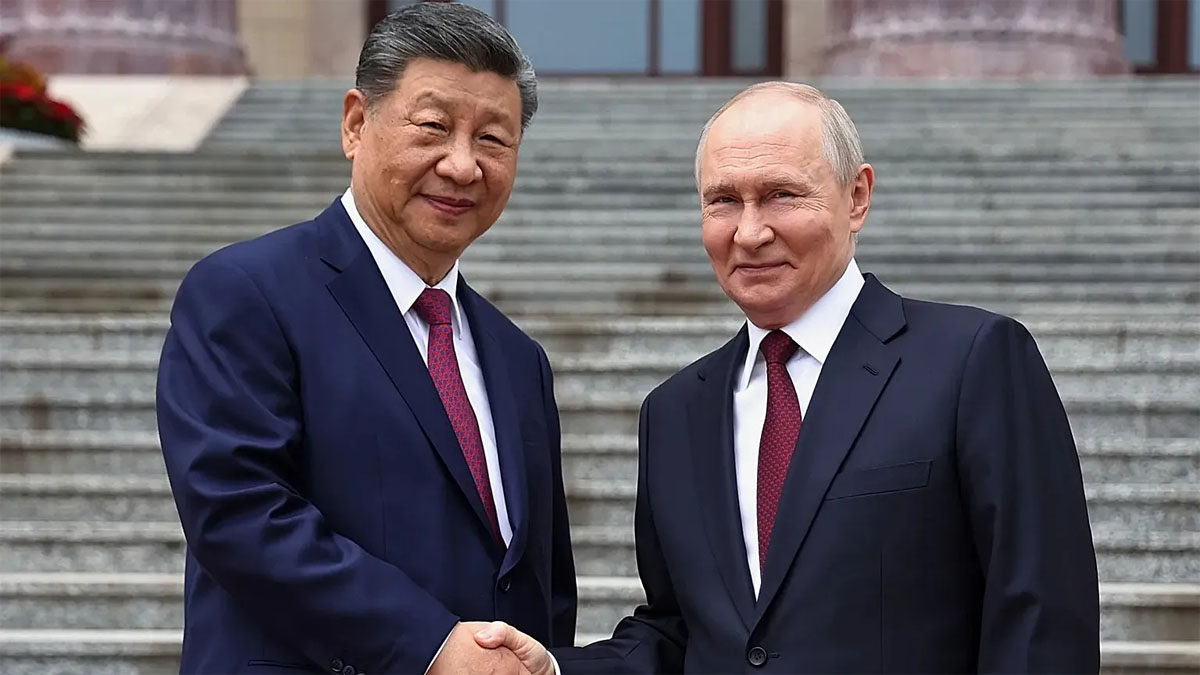
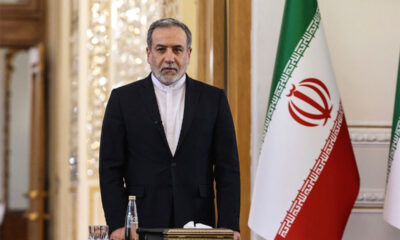
Russian President Vladimir Putin has discussed with Chinese President Xi Jinping the possibility of transporting and storing Iran’s enriched uranium in Russia, the Kremlin confirmed on Thursday following the conclusion of bilateral talks in Beijing.
Kremlin spokesman Dmitry Peskov said Putin raised the proposal during closed-door discussions with Xi on Wednesday as Moscow and Beijing reviewed growing tensions surrounding Iran’s nuclear programme and broader Middle East security concerns.
According to Peskov, Russia remains willing to assist in diplomatic efforts aimed at reducing confrontation between Iran and Western powers by offering to temporarily store Tehran’s enriched uranium stockpile on Russian territory.
Russia first floated the proposal in June 2025 and has repeatedly promoted it as a practical confidence-building measure that could help revive stalled nuclear negotiations and reduce fears over Iran’s uranium enrichment activities.
Moscow previously handled the transfer and storage of Iran’s low-enriched uranium under the 2015 Joint Comprehensive Plan of Action (JCPOA), the international nuclear agreement reached between Iran and world powers.
READ ALSO:
- Court Convicts Two Ex-Bank Staff Over ₦7.8m Financial Fraud
- BREAKING: JAMB Releases 279 Withheld UTME Results After Malpractice Review
- BREAKING: Rivers Governorship Race Takes New Turn As Fubara Emerges Under NDC
Putin has cited that arrangement as evidence that Russia possesses both the technical infrastructure and diplomatic experience needed to manage such a process again if all parties agree.
Peskov said Moscow continues to maintain communication with “all interested parties” and is prepared to continue mediation efforts aimed at de-escalating tensions around Iran’s nuclear activities.
However, the United States has publicly rejected the idea of transferring Iran’s enriched uranium to Russia as part of any future nuclear framework.
Washington has instead continued to push for the full dismantlement or severe restriction of Iran’s nuclear programme under any renewed agreement, arguing that Tehran’s current enrichment levels pose serious proliferation risks.
According to estimates by international nuclear monitoring agencies, Iran currently possesses roughly 450 kilograms of uranium enriched to 60 percent purity — a level significantly above the limits set under the 2015 nuclear deal and technically close to weapons-grade material if further enriched.
The International Atomic Energy Agency (IAEA) has repeatedly expressed concern over Iran’s growing stockpile and the pace of its enrichment activities since Tehran gradually reduced compliance with the JCPOA following the United States’ withdrawal from the deal in 2018.
China has generally supported diplomatic engagement with Iran and backed efforts to revive negotiations, although Beijing had not publicly commented on Putin’s latest proposal as of Thursday evening.
Iranian officials also did not immediately respond to the Kremlin’s remarks, though Tehran has consistently maintained that its nuclear programme is intended strictly for peaceful civilian purposes, including energy generation and medical research.
The renewed Russian proposal comes amid heightened geopolitical tensions in the Middle East and growing international concern over the future of Iran’s nuclear programme as negotiations between Tehran and Western powers remain deadlocked.
Putin Discusses Iran Uranium Storage Plan With Xi in Beijing







International
Trump launches ‘Super Intelligence Force’ to keep US ahead in AI race
Trump launches ‘Super Intelligence Force’ to keep US ahead in AI race
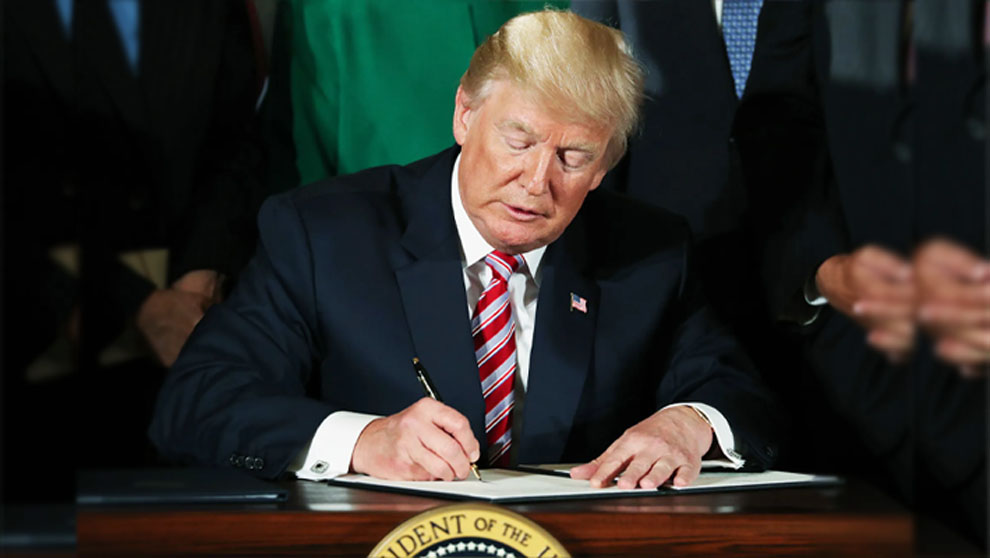
US President Donald Trump has announced the creation of a new Super Intelligence Force (SIF) to coordinate the federal government’s efforts to strengthen the country’s position in the global artificial intelligence (AI) race.
Trump appointed Director of National Intelligence Jay Clayton to lead the new force, making him the administration’s central figure for coordinating its AI strategy and efforts to maintain US technological leadership.
The announcement followed a meeting between Trump and executives from some of the world’s leading technology companies as his administration seeks to accelerate the development of advanced AI while addressing growing concerns about its potential risks.
The Super Intelligence Force will bring together senior government officials and engage AI companies, consumers, public-interest groups, religious organisations and critical-infrastructure providers as the United States develops its approach to increasingly powerful AI systems.
Other senior officials named in connection with the initiative include Federal Trade Commission Chairman Andrew Ferguson, Pentagon Chief Technology Officer Emil Michael and Office of Personnel Management Director Scott Kupor.
READ ALSO:
- Madonna University expels final-year nursing student, suspends 14 over dance video
- JUST IN: WAEC appoints Suleiman Kum as new Nigeria National Office head
- Ojudu Reveals How Tinubu, He Narrowly Escaped Death In Third Mainland Bridge Crash
The force will report to President Trump and White House Chief of Staff Susie Wiles.
One of its immediate tasks will be to assess the risks and opportunities associated with advanced AI, including the role the federal government should play in the sector. The group is expected to submit a comprehensive report to the president within 120 days.
The review is also expected to examine the US government’s ability to respond to potential AI security breaches and other threats linked to rapidly advancing technology, as well as identify areas where federal capabilities may need to be strengthened.
Trump’s latest initiative comes shortly after he signed an executive order directing federal agencies, where legally permissible, to use “Super Intelligence” and “SI” instead of “Artificial Intelligence” and “AI” in official communications, websites, reports and policy documents.
The September 29 executive order also directed the administration to develop a proposed federal definition of Super Intelligence within 60 days and consider changes that could establish the terminology in federal law.
The administration has increasingly presented advanced AI as a strategic issue involving national security, economic competitiveness and technological leadership, particularly as the US competes with China for dominance in the sector.
Trump has repeatedly warned against excessive regulation of AI, arguing that burdensome rules could slow American innovation and give rival countries an advantage.
At the same time, concerns about the technology’s potential impact have intensified, including risks involving cybersecurity, privacy, employment, misinformation, misuse and AI safety.
The White House has therefore sought greater cooperation with the technology industry. Major AI companies recently agreed to voluntary safety measures following discussions with the administration, reflecting Trump’s preference for industry-led safeguards alongside government coordination.
The new Super Intelligence Force is a federal task force and does not represent the creation of a new military branch. It also differs from an earlier proposal by Trump for an “AI Force” modelled on the US Space Force.
With Clayton at its helm, the initiative places AI development, national security and US technological competitiveness at the centre of Trump’s latest technology policy push.
Its 120-day review could provide the administration with a framework for determining how Washington will manage the opportunities and risks created by increasingly advanced AI while seeking to keep the United States ahead in the global technology race.
Trump launches ‘Super Intelligence Force’ to keep US ahead in AI race
International
US Marine arrested in Japan over suspected murder of woman in Okinawa

US Marine arrested in Japan over suspected murder of woman in Okinawa
A 20-year-old US Marine has been arrested in Japan on suspicion of murdering and robbing a 39-year-old Japanese woman at a hotel in Okinawa, in a case that has prompted a strong protest from the Japanese government.
The suspect, identified as Lance Corporal Devin Jacob Ballard, is stationed at Marine Corps Air Station Futenma in Okinawa. Japanese police allege that Ballard killed Anna Yagi, 39, at a hotel in Naha and took some of her belongings.
Police said Yagi entered the hotel with Ballard in the early hours of Saturday. She was later found unresponsive in the room after hotel staff became concerned. She was pronounced dead at the scene.
Japanese investigators believe the woman was killed, with reports indicating that she appeared to have been strangled. The precise cause and circumstances of her death remain under investigation.
Police reportedly reviewed security-camera footage from the hotel, which showed a man believed to be Ballard entering the building with Yagi and later leaving alone with her belongings.
Investigators subsequently located Ballard in Naha and arrested him on suspicion of murder and robbery.
READ ALSO:
- JUST IN: WAEC appoints Suleiman Kum as new Nigeria National Office head
- Ojudu Reveals How Tinubu, He Narrowly Escaped Death In Third Mainland Bridge Crash
- ‘I Thought I Was Dead’ — Hairstylist’s Daring Escape From Kidnappers After Benin-Ore Ambush
Ballard has denied the allegations, according to Japanese authorities, and reportedly told investigators that he did not know anything about the incident.
The case has triggered a diplomatic response because of the longstanding sensitivity surrounding the large US military presence in Okinawa.
Japanese Prime Minister Sanae Takaichi described the alleged incident as extremely serious and said Tokyo had lodged a strong protest with Washington.
She called for full US cooperation with the Japanese investigation and urged measures to prevent similar incidents involving US military personnel from happening again.
Foreign Minister Toshimitsu Motegi also summoned US Ambassador to Japan George Glass and expressed Japan’s strong concern over the case. Japanese officials have demanded that the United States cooperate fully with the investigation.
Japan’s Defence Minister Shinjiro Koizumi and Okinawa Governor Genta Koja also expressed concern over the incident.
The US Marine Corps said it was cooperating with Japanese authorities. The US Embassy in Tokyo also expressed condolences to the victim’s family and said American officials were working with Japanese and local authorities as the investigation continues.
The arrest is likely to renew concerns among residents about the impact of the US military bases in Okinawa, where a large concentration of American military personnel and facilities is located.
Okinawa has for decades been at the centre of debate over the US military presence in Japan, with residents raising concerns about crime, noise, accidents and other incidents involving service members.
The latest case comes against the backdrop of the close security relationship between Japan and the United States, with Okinawa playing a major strategic role in the two countries’ defence arrangements.
Japanese authorities are continuing to investigate the circumstances surrounding Yagi’s death and the alleged robbery.
Ballard remains presumed innocent unless proven guilty in court.
US Marine arrested in Japan over suspected murder of woman in Okinawa
International
Flydubai Co-Pilot Attacked Captain With Axe in Attempted Terrorist Act, UAE Says
Flydubai Co-Pilot Attacked Captain With Axe in Attempted Terrorist Act, UAE Says
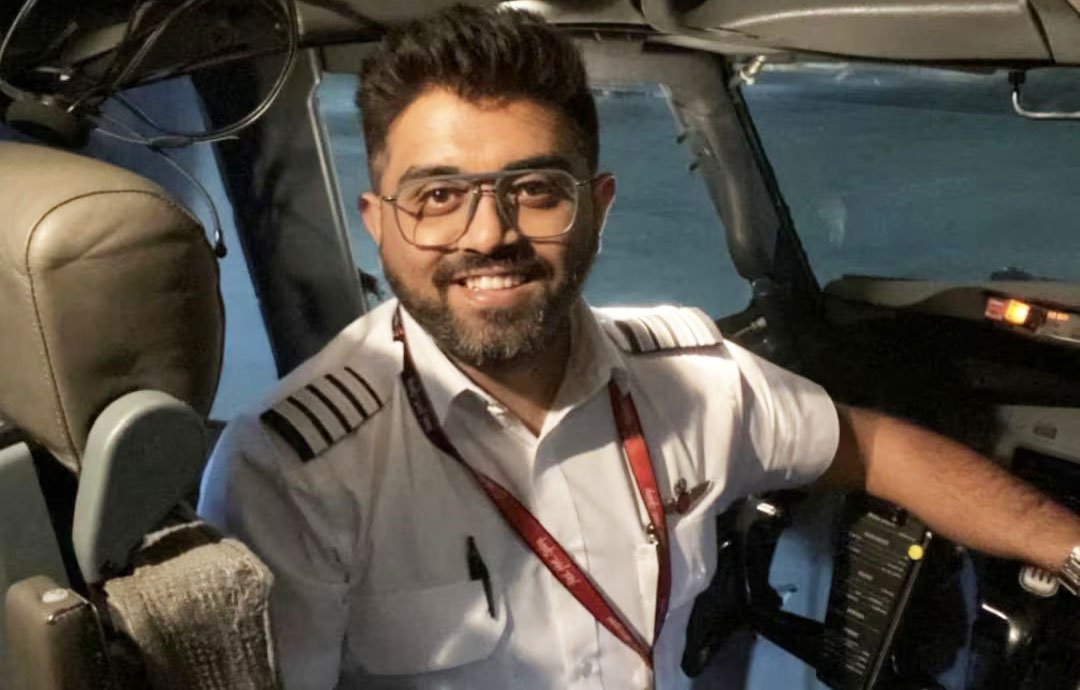
The United Arab Emirates has said the co-pilot of a Flydubai passenger aircraft attacked the captain with a cockpit crash axe and attempted to take control of the plane in what investigators have described as an attempted terrorist act.
The incident occurred aboard Flydubai Flight FZ1073, which was travelling from Dubai to Tel Aviv on September 30 when the aircraft was forced to make an emergency diversion to Saudi Arabia.
According to the UAE Attorney General, Hamad Saif Al Shamsi, an investigation into the incident established that the co-pilot attacked the captain inside the flight deck with a crash axe before attempting to seize control of the aircraft.
The Boeing 737 reportedly plunged thousands of feet during the struggle, creating a potentially catastrophic situation for the 172 passengers and crew members on board.
The injured captain, identified as Smit Machchhar, managed to open the cockpit door and call for assistance despite sustaining injuries in the attack. Passengers and crew members then intervened, helping to overpower the co-pilot.
A reserve pilot who was travelling on the aircraft also assisted in stabilising the plane before it was diverted to Tabuk Airport in northwestern Saudi Arabia, where it landed safely.
READ ALSO:
- Nigerian-Born Ex-Professor Jailed 78 Months Over $1.3m US Student Aid Fraud
- Police Arrest Man Caught Sexually Assaulting 12-Year-Old Girl in Car
- Wike to Amaechi: What Did You Bring to Rivers After 24 Years in Power?
The captain was subsequently taken to hospital in the UAE for treatment. His condition has been described as stable and improving.
The UAE Attorney General said investigators were continuing to establish the full circumstances surrounding the incident, including the motive, possible links and whether there were other people involved. Authorities are also examining physical and digital evidence as part of the investigation.
The co-pilot has been identified by international media as Hammam al-Hammami, an Omani national, although UAE authorities have not officially confirmed all details concerning his identity.
Earlier reports had raised questions about his aviation background and alleged previous concerns over extremist views. However, investigators have not publicly established the full circumstances behind those reports or confirmed any wider organisational link.
The incident has also prompted renewed scrutiny of pilot recruitment, aviation security and background checks, particularly after reports emerged about the co-pilot’s previous aviation history.
Flydubai has said a full official investigation is under way and that it is cooperating with the relevant authorities.
The airline’s chief executive, Ghaith Al Ghaith, praised the crew and passengers for their actions during the emergency and thanked Saudi authorities for their response after the aircraft diverted to Tabuk.
The UAE authorities have urged caution over unverified reports while the investigation continues, saying the final findings will be announced after the necessary procedures and examinations are completed.
The incident has been formally described by the UAE as an attempted terrorist act, but investigators are still working to establish the motive and whether the co-pilot acted alone or had any external connections. (The National)
Flydubai Co-Pilot Attacked Captain With Axe in Attempted Terrorist Act, UAE Says
-

 Entertainment3 days ago
Phyna Knocks Out Nkechi Blessing in Fourth Round, Wins ₦50m, New Car
-

 metro3 days ago
2027 Hajj: Nigeria Secures 10,000 Extra Slots, Allocation Hits 60,000
-

 metro2 days ago
NYSC Kidnap: Abductors Demand N950m for 19 Prospective Corps Members in Imo
-

 Entertainment2 days ago
Olu Jacobs Laid to Rest in Lagos as Dignitaries, Nollywood Stars Honour Screen Icon
-
 International3 days ago
Trump Threatens Iran With ‘Very Hard’ Response Over Flydubai Attack
-

 Politics2 days ago
2027: Oshiomhole Dares Opposition Over ₦500 Petrol Promise, Says APC Will Take Argument to Nigerians
-

 metro3 days ago
Nigeria Launches 11-Character Digital Postcode System for Every Addressable Building
-
 metro2 days ago
Amaechi: Tinubu’s Policies Made My Mother’s Drugs Unaffordable