

Politics
BREAKING: Rivers Governorship Race Takes New Turn As Fubara Emerges Under NDC

BREAKING: Rivers Governorship Race Takes New Turn As Fubara Emerges Under NDC
Fresh political drama has erupted in Rivers State after another politician bearing the Fubara name officially entered the 2027 governorship race under the platform of the Nigeria Democratic Congress (NDC).
The development comes barely hours after reports emerged that Rivers State Governor, Siminalayi Fubara, had withdrawn from the race for the 2027 Rivers governorship election, intensifying political tension ahead of the next electoral cycle.
The new entrant, Blessing Fubara Snr., obtained the NDC governorship nomination and expression of interest forms at the party’s national headquarters in Abuja on Wednesday, immediately sparking fresh conversations across Rivers political circles.
Although Blessing Fubara and Governor Siminalayi Fubara are both from Opobo/Nkoro Local Government Area of Rivers State, it has not been officially confirmed whether they are directly related.
Confirming the development, Rivers State Chairman of the NDC, Hon. Success Jack, said Blessing Fubara is among the party’s governorship aspirants.
“Yes, he obtained his expression of interest form in Abuja, and we are prepared and still preparing to win not only the governorship election but all elections in Rivers State come 2027,” he said.
READ ALSO:
- VIDEO: Fact-checkers knock down claim Soyinka rode okada over N1,500 fuel
- VIDEO: “I’ll Kill Anyone Who Films Me on duty”: Police Officer Issues Death Threat
- 7 Key Facts About Professor Segun Aina, Tinubu’s New JAMB Registrar
The move has further heightened political calculations in Rivers State, especially amid the lingering power struggle involving Governor Fubara and the Minister of the Federal Capital Territory, Nyesom Wike.
Blessing Fubara reportedly defected from the All Progressives Congress (APC) to the NDC about two weeks ago alongside some political associates.
During his reception in Abuja by party stakeholders led by former Bayelsa State Governor and NDC national leader, Senator Seriake Dickson, he reportedly described the NDC as “a moving train.”
According to him, his decision to join the party was driven by the interest of Rivers people and the need for political redirection in the state.
“The soul of Rivers State is at stake,” he reportedly declared during the defection event.
Political observers believe the development signals fresh political realignments ahead of the 2027 Rivers election.
Blessing Fubara Snr. is said to hold a Bachelor of Science degree in Community Development and Adult Education.
He currently serves as the Managing Director and Chief Executive Officer of D’Consiglories LLC and is also described as a grassroots mobiliser, development strategist and urban renewal consultant.
Reports indicate that he previously worked with youth empowerment and employment-generation initiatives linked to the Rivers State Government and the Niger Delta Development Commission (NDDC).
The political crisis between Governor Siminalayi Fubara and his predecessor, Nyesom Wike, has continued to dominate Rivers politics since 2023.
The prolonged rift has triggered repeated clashes involving lawmakers loyal to Wike, disputes over budgets and appointments, impeachment threats, and several failed reconciliation efforts.
Despite interventions reportedly initiated by President Bola Ahmed Tinubu and the federal government, tensions have persisted within the state’s political structure.
Analysts believe Wike still maintains enormous influence across both the APC and the Peoples Democratic Party (PDP) structures in Rivers State ahead of the 2027 elections.
Governor Fubara’s reported withdrawal from the governorship race has already generated mixed reactions, with many political watchers now questioning the next phase of Rivers politics.
The emergence of Blessing Fubara under the NDC is expected to further reshape calculations among major political blocs in the state.
BREAKING: Rivers Governorship Race Takes New Turn As Fubara Emerges Under NDC






Politics
2027: Atiku, Amaechi Reiterate Plan to Cut Petrol Prices
2027: Atiku, Amaechi Reiterate Plan to Cut Petrol Prices
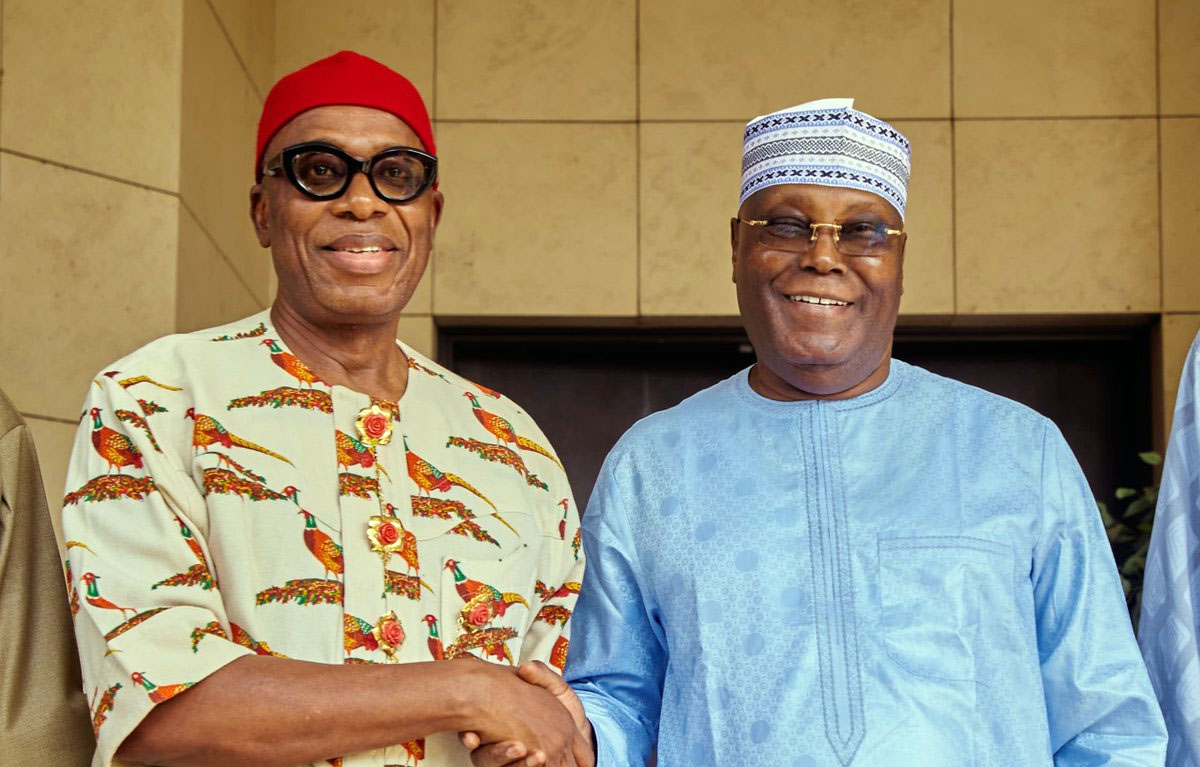
The African Democratic Congress (ADC) presidential candidate, Atiku Abubakar, and his running mate, Rotimi Amaechi, have reiterated their plan to reduce the cost of petrol if elected in the 2027 presidential election.
The pair made the remarks during a brief stop at an NNPC filling station in Guzape, Abuja, on Saturday, October 3, 2026, where they were approached by members of the public.
Amaechi was driving the vehicle with Atiku seated beside him when they stopped at the filling station. The encounter attracted a small crowd, with the politicians responding to questions about fuel prices and their proposed policy.
Amaechi said an Atiku-led government would reduce the cost of petrol through what the ADC ticket describes as a production subsidy, rather than simply returning to the previous system of subsidising imported petrol.
Atiku also addressed the crowd briefly in Hausa, saying, “Zan dawo da tallafi insha Allahu,” which translates to, “I will bring back the subsidy, by God’s grace.”
READ ALSO:
- 2027: Tompolo Mobilises Taraba for Tinubu, Donates 25 Campaign Vehicles
- Osun Iyaloja-General Row: Ataoja Explains Asindemade’s Reinstatement
- Ogun 2027: YPP, BOOT Reject Suit Withdrawal Against Adeola
The encounter came a day after Amaechi challenged President Bola Ahmed Tinubu to reduce petrol to ₦600 per litre.
Amaechi said he would withdraw from Atiku’s presidential ticket and campaign for Tinubu if petrol was brought down to that price. He made the statement during an appearance on Channels Television’s Politics Today.
The former Rivers State governor has continued to criticise the impact of the petrol subsidy removal on households, particularly the effect of higher fuel prices on transportation and the cost of goods.
Atiku has separately outlined a proposed domestic production subsidy under which government support would be directed at locally refined petroleum products.
The proposal is intended to reduce production costs for domestic refineries and, according to Atiku, allow the savings to be reflected in lower petrol prices for consumers.
The former vice president has argued that the intervention would be structured, capped and subject to public disclosure and independent auditing. Imported petrol would not qualify under the proposed arrangement.
The fuel subsidy debate has remained a major issue in Nigeria ahead of the 2027 presidential election, following the removal of the petrol subsidy by the Tinubu administration in May 2023.
The Federal Government has defended the removal, arguing that the former subsidy regime imposed a significant burden on public finances. Opposition figures, including Atiku, have instead linked the policy to higher living costs and have proposed alternative measures to reduce the impact on consumers.
The Abuja filling-station encounter therefore provided Atiku and Amaechi another opportunity to restate their position on petrol prices, fuel subsidy and the cost of living as political parties and candidates intensify preparations for the 2027 election.
2027: Atiku, Amaechi Reiterate Plan to Cut Petrol Prices
Politics
2027: Tompolo Mobilises Taraba for Tinubu, Donates 25 Campaign Vehicles
2027: Tompolo Mobilises Taraba for Tinubu, Donates 25 Campaign Vehicles
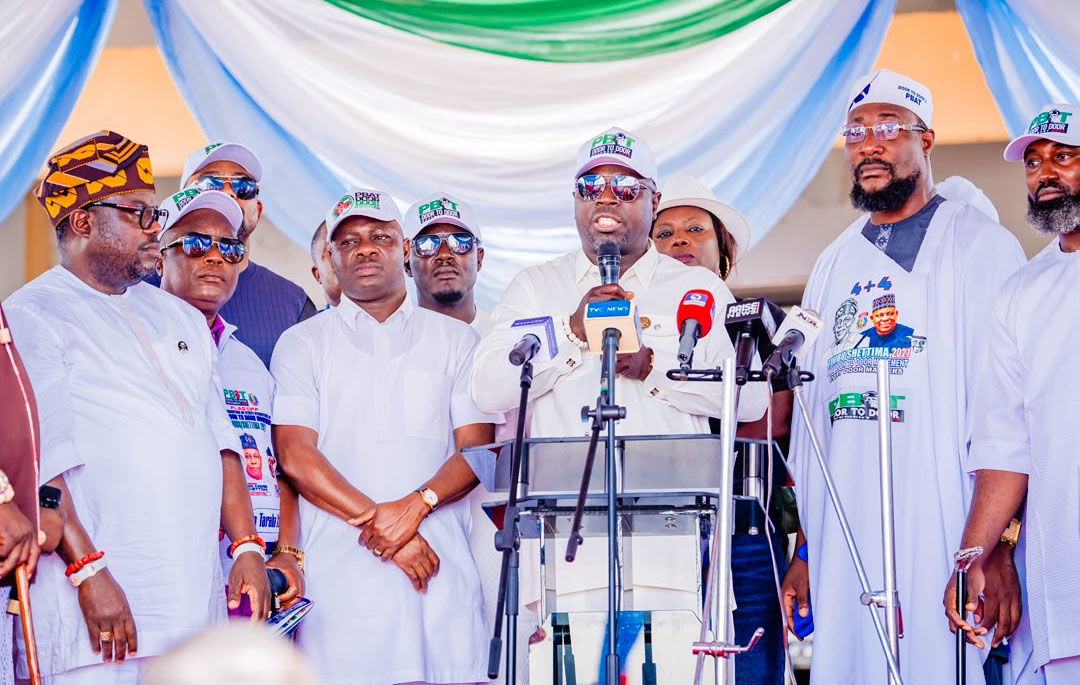
The PBAT Door-to-Door Movement, led by High Chief Government Ekpemupolo, popularly known as Tompolo, has launched its grassroots mobilisation campaign in Taraba State ahead of the 2027 presidential election, calling for support for President Bola Ahmed Tinubu’s re-election bid.
The campaign was launched in Jalingo, the Taraba State capital, with Tompolo represented by High Chief Kestin Pondi.
Tompolo, who is the Grand Patron of the movement, said the Tinubu administration’s reforms required more time to consolidate and deliver further benefits to Nigerians.
He said Taraba State was benefiting from federal government policies and argued that continuity would help sustain the gains recorded so far.
According to him, the challenges associated with economic reforms were expected but should not prevent the government from completing and consolidating its programmes.
The movement urged its supporters to take the 2027 campaign to homes, religious centres, wards, local government areas and polling units across the state.
The event also featured the donation of 25 campaign vehicles, generators and electronic speakers to strengthen the movement’s grassroots mobilisation activities in Taraba.
Speaking at the event, Taraba State Governor Agbu Kefas said residents were already witnessing the impact of the Tinubu administration through federal projects being implemented in the state.
READ ALSO:
- Osun Iyaloja-General Row: Ataoja Explains Asindemade’s Reinstatement
- Ogun 2027: YPP, BOOT Reject Suit Withdrawal Against Adeola
- “Sometimes, I Wonder Why I Married My Husband” — Omotola
Kefas reaffirmed his administration’s commitment to the Renewed Hope Agenda and said the state would continue to work with the Federal Government on development projects.
The governor also declared his support for Tinubu’s 2027 presidential campaign, saying his administration would mobilise support for the President across the state.
Kefas said Taraba was ready to support Tinubu, while urging residents to assess the projects and programmes being implemented by the Federal Government.
The National Coordinator of the PBAT Door-to-Door Movement, Sunday Asuku, said the group was in Taraba to expand its grassroots mobilisation for Tinubu and Kefas.
Asuku urged Nigerians to maintain the current political direction, arguing that abandoning the Tinubu administration’s reforms would be counterproductive.
He also praised the Taraba government for what he described as achievements recorded over the past three years and said the movement would strengthen its structures across wards and polling units ahead of the 2027 general elections.
The Taraba mobilisation is part of a wider campaign by the PBAT Door-to-Door Movement to establish grassroots structures ahead of the 2027 elections.
The movement has been taking its campaign to different states while calling for support for Tinubu and other candidates it backs in the forthcoming elections.
The latest mobilisation in Taraba comes as political parties and support groups intensify preparations for the 2027 presidential election, with grassroots structures becoming a major focus of campaign activities.
2027: Tompolo Mobilises Taraba for Tinubu, Donates 25 Campaign Vehicles
Politics
Ogun 2027: YPP, BOOT Reject Suit Withdrawal Against Adeola

Ogun 2027: YPP, BOOT Reject Suit Withdrawal Against Adeola
The Young Progressives Party (YPP) and BOOT Party in Ogun State have rejected claims that they withdrew their respective legal challenges against the All Progressives Congress (APC) governorship candidate, Senator Solomon Olamilekan Adeola, popularly known as Yayi.
The parties said their court actions challenging aspects of Adeola’s eligibility to contest the 2027 Ogun State governorship election remain valid and that neither party authorised any withdrawal.
The controversy followed the decision by New Nigeria Peoples Party (NNPP) governorship candidate Akinbola Rotham to withdraw a separate suit he filed against Adeola.
Rotham withdrew Suit No. FHC/AB/CS/135/2026, which was filed at the Federal High Court in Abeokuta, saying his decision was motivated by the broader interest of Ogun West and the longstanding aspiration of the senatorial district to produce the next governor of the state.
Rotham and Adeola are both from Ogun West Senatorial District, which has never produced a governor of the state since its creation.
The NNPP candidate said the Ogun West agenda should take precedence over individual political interests and that withdrawing his case would contribute to unity within the district.
However, the YPP and BOOT Party said Rotham’s decision should not be interpreted as a withdrawal of their own cases.
READ ALSO:
- “Sometimes, I Wonder Why I Married My Husband” — Omotola
- State Police Bill Faces Hurdle as Only Four States Approve
- Benue Boat Accident: One Dead, Eight Missing as Mourners’ Boat Capsizes
The parties’ state chairmen, Adeyemi Solomon Oluwaseyunmi of YPP and Akerele Abiodun John of BOOT, said they did not authorise or sign any document discontinuing their legal actions.
They also rejected suggestions that they had been consulted over any purported withdrawal.
The parties were reacting to claims attributed to Kayode Odunaro, media adviser to Adeola, that major court cases challenging the APC candidate’s 2027 governorship bid had been discontinued by the litigants.
YPP and BOOT described the claim as misleading and maintained that their positions on the legal proceedings remain unchanged.
The opposition parties said their actions were aimed at allowing the courts to determine questions surrounding Adeola’s eligibility, constitutional requirements and state-of-origin claims.
The legal controversy includes questions about Adeola’s claim of being an indigene of Pahayi in Ilaro, Yewa South Local Government Area of Ogun State.
Adeola, who currently represents Ogun West Senatorial District in the National Assembly, emerged as the APC candidate for the 2027 governorship election after winning the party’s nomination process.
The senator has maintained his eligibility and right to contest the election.
Rotham’s withdrawal of his individual suit does not automatically terminate other cases filed by separate political parties or individuals, meaning the legal questions raised by YPP and BOOT remain subject to the decisions of the courts.
The opposition parties have therefore urged political actors to rely on official court records rather than public statements when determining the status of the various cases.
The development comes as political activities intensify ahead of the 2027 Ogun governorship election, with the issue of an Ogun West governor becoming a major theme in the emerging campaign.
While Rotham has opted to withdraw his case in support of a broader Ogun West political agenda, YPP and BOOT insist that their own legal challenges should proceed independently.
The conflicting positions mean that the withdrawal of one suit has not brought an end to the wider legal controversy surrounding Adeola’s 2027 governorship candidacy.
Ogun 2027: YPP, BOOT Reject Suit Withdrawal Against Adeola
-
 Entertainment3 days ago
Phyna Knocks Out Nkechi Blessing in Fourth Round, Wins ₦50m, New Car
-
 metro3 days ago
2027 Hajj: Nigeria Secures 10,000 Extra Slots, Allocation Hits 60,000
-

 metro2 days ago
NYSC Kidnap: Abductors Demand N950m for 19 Prospective Corps Members in Imo
-

 Entertainment2 days ago
Olu Jacobs Laid to Rest in Lagos as Dignitaries, Nollywood Stars Honour Screen Icon
-

 International3 days ago
Trump Threatens Iran With ‘Very Hard’ Response Over Flydubai Attack
-

 Politics2 days ago
2027: Oshiomhole Dares Opposition Over ₦500 Petrol Promise, Says APC Will Take Argument to Nigerians
-

 metro3 days ago
Nigeria Launches 11-Character Digital Postcode System for Every Addressable Building
-
 metro2 days ago
Amaechi: Tinubu’s Policies Made My Mother’s Drugs Unaffordable