Atiku Vows to Restore Fuel Subsidy If Elected in 2027 - Newstrends
Connect with us

Politics

Atiku Vows to Restore Fuel Subsidy If Elected in 2027

Published

on

Atiku Vows to Restore Fuel Subsidy If Elected in 2027Atiku Vows to Restore Fuel Subsidy If Elected in 2027
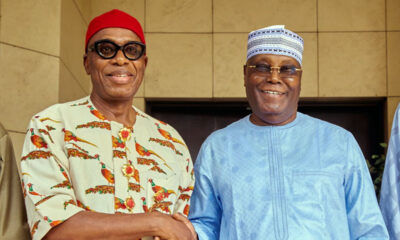
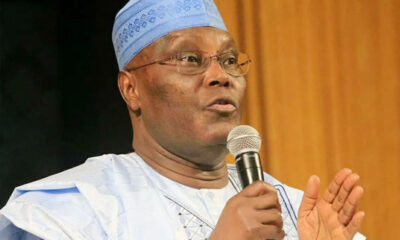
Former Vice-President Atiku Abubakar

Atiku Vows to Restore Fuel Subsidy If Elected in 2027

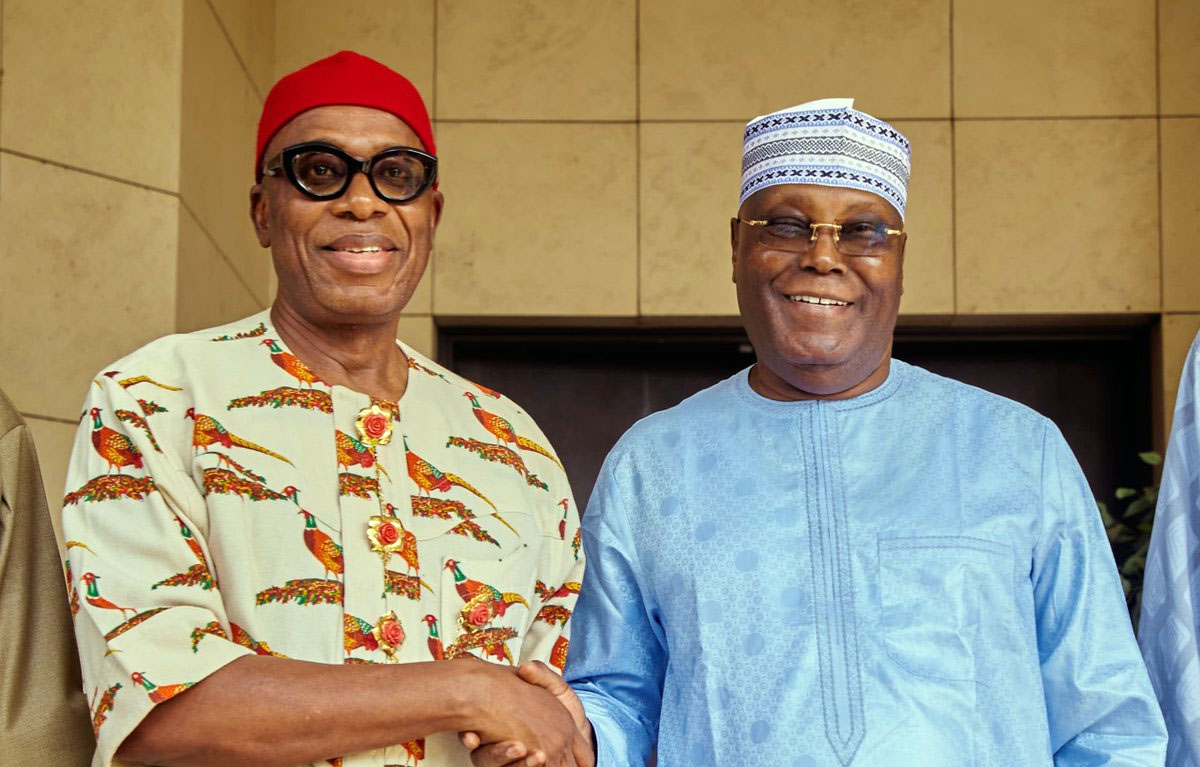
Former Vice-President Atiku Abubakar has pledged to restore the fuel subsidy regime if elected president in the 2027 general elections, arguing that the funds saved from its removal have not been used to improve the lives of Nigerians. The promise places the subsidy question firmly at the centre of the upcoming political contest as opposition candidates increasingly present alternative approaches to the economic reforms introduced under President Bola Tinubu. Atiku, who is the presidential candidate of the African Democratic Congress (ADC), made the pledge while speaking with journalists on Wednesday, where he accused the Federal Government of failing to channel proceeds from the subsidy removal into critical sectors such as education, security and poverty reduction. According to the former vice-president, he was not opposed to the removal of fuel subsidy in principle, but questioned how the savings from the policy had been utilised.

“I didn’t oppose the removal of subsidy. But where is the money? The money gotten should have been used to tackle poverty, out-of-school children and other things,” Atiku said. He maintained that the decision to remove the subsidy was expected to free up resources for development but alleged that the expected benefits had not reached ordinary Nigerians. “Where is the money? They stole it. I will return fuel subsidy. The big thing was that they removed the subsidy, but where is the money? Even if I removed the subsidy, I would still work,” he said. The former vice-president also claimed that some former leaders of the Nigerian National Petroleum Company Limited (NNPCL) had recently approached him and admitted that they now agreed with his earlier position on the subsidy issue. According to him, five past leaders of the NNPC contacted him last week to express a change of position. “Something happened last week. Five past leaders of NNPC called me and said, ‘We didn’t agree when you sketched your plan, but now we agree.’ They said they made a mistake, not me. Until you have power, those things cannot be done,” Atiku said.

READ ALSO:

The Federal Government has responded to criticisms by providing a detailed breakdown of the economic reforms. The Minister of Finance and Coordinating Minister of the Economy, Taiwo Oyedele, disclosed on Wednesday that the removal of the petrol subsidy and the unification of the foreign exchange market generated approximately ₦15.8 trillion in savings for the federation between June 2023 and December 2025. He presented these figures at the government’s “Nigeria’s Reform Scorecard” briefing in Abuja. Oyedele explained that the savings were shared among the three tiers of government: the Federal Government received ₦5.43 trillion, state governments received ₦6.52 trillion, and local government councils received ₦3.88 trillion. However, he stressed that the reforms did not leave the government with a large pool of cash, as commonly believed. Rather, the savings primarily eased fiscal pressure and reduced the amount the government would otherwise have needed to borrow. “The figures tell a financing story, not simply a savings story,” Oyedele said. The minister highlighted that the Federal Government spent ₦9.39 trillion on wage adjustments, minimum wage increases and allowances for public servants during the period, which exceeded its share of the subsidy savings. An additional ₦9.37 trillion was spent on servicing external debt, reflecting the higher naira cost of meeting foreign currency obligations following exchange rate depreciation, while ₦6.47 trillion was invested in strategic infrastructure and ₦3.14 trillion was spent on electricity subsidy to cushion consumers from higher tariffs.

Oyedele also argued that the removal of the petrol subsidy was necessary to create a viable market for private refining investment, specifically linking the survival of the Dangote Refinery to the policy change. He stated that the plant could not have been commercially viable if petrol had remained at the heavily subsidised price of less than N200 per litre. “Remember, we’re importing refined products. That is to say the Dangote refinery wouldn’t have been able to start because you can’t sell at N200 per litre and queue up for the government to pay the balance of over N1,000 per litre,” Oyedele explained. The minister further argued that without the reforms, petrol would have been officially priced at N185 per litre but would likely have been unavailable at that price, forcing consumers to buy from the black market at approximately N3,000 per litre. The Dangote Refinery commenced petrol sales in September 2024 when petrol was trading around N500 per litre, and as the refinery started production, the government removed the implicit subsidy, raising pump prices above N1,000.

The Minister of Information and National Orientation, Mohammed Idris, also addressed the reforms, stating that savings from the removal of the petrol subsidy are being redirected towards economic renewal, infrastructure development and improved public welfare. He acknowledged that the subsidy removal had imposed significant sacrifices on Nigerians but stressed that citizens deserved to know how resources freed by the reform were being utilised. “This is fundamentally about transparency and accountability. The conversation around subsidy removal should not end with the policy decision. Nigerians deserve to know what the reform has achieved, the resources that have accrued from it and how those resources are supporting economic renewal, infrastructure development and public welfare,” Idris said. Oyedele further noted that the reforms had helped stabilise the fiscal space, enabling states to meet their salary obligations, whereas 27 states were unable to reliably pay salaries in May 2023. He also highlighted that headline inflation fell to 15.91 per cent in June 2026 from 22.41 per cent in May 2023, while food inflation dropped from 24.82 per cent to 17.52 per cent. Gross foreign reserves rose to $52.5 billion** from approximately **$35 billion at the start of the reform period.

The removal of the petrol subsidy has had profound effects on ordinary Nigerians. Since the policy took effect in May 2023, fuel prices increased from around ₦190 to over ₦950 per litre, causing long queues and more than doubling transport costs in many states. With transportation costs soaring, the prices of basic goods have followed suit, pushing more Nigerians below the poverty line and eroding the middle class. Small businesses have been particularly hard hit, with many reporting a sharp decline in customers as transport fares surged and disposable income shrank. In Kano, plastic manufacturer Muhammad Khamis Umar told Reuters that more than 80% of his customers had stopped coming since the subsidy removal. Daily sales fell from a high of 1 million naira to 50,000 naira, and he has cut production to 40% capacity. Hair stylist Tina Doofan Orji in Abuja raised her prices by more than half to cover higher petrol costs for her generator, but customers refused to pay, telling her they were prioritising food and school fees.

Atiku’s latest promise represents a significant reversal from his position during the 2023 presidential campaign, when he indicated support for subsidy removal. The former vice-president has now stated that developments since then had changed his position. “I initially did not oppose the removal of the fuel subsidy. But now that it has been removed, where is the money? Where has the subsidy money gone? Has it been used to improve healthcare, education or security?” he asked. The presidency could not immediately be reached for comment on Atiku’s allegation that funds saved from the removal of fuel subsidy had been stolen. President Bola Tinubu announced the removal of the petrol subsidy shortly after assuming office in May 2023, a decision that triggered a sharp increase in fuel prices and the cost of living across the country. The policy has remained one of the most debated economic decisions of his administration, and Atiku’s pledge places the subsidy question firmly at the centre of the 2027 political contest. The gap between government economic arguments and household realities could become one of the defining issues of the election. As one analyst noted, “People don’t vote for GDP growth; they vote based on what they can feel in their own lives.” For many Nigerians, the economic pain has been tangible, and the debate over whether subsidy savings have translated into tangible benefits is likely to dominate the campaign trail.

Atiku Vows to Restore Fuel Subsidy If Elected in 2027
Loading

Politics

Hold Oborevwori Responsible If I’m Attacked, Killed During Campaigns, Omo-Agege Says

Published

on

Hold Oborevwori Responsible If I'm Attacked, Killed During Campaigns, Omo-Agege Says
Former Deputy Senate President Ovie Omo-Agege

Hold Oborevwori Responsible If I’m Attacked, Killed During Campaigns, Omo-Agege Says

Former Deputy Senate President Ovie Omo-Agege has raised alarm over alleged threats to his life and family members emanating from the Delta State Government House, calling on the public and security agencies to hold Governor Sheriff Oborevwori responsible if any harm comes to him, as he made the declaration on Thursday while flagging off his senatorial campaigns in Uvwie Local Government Area, seeking to return to the Senate on the platform of the National Democratic Congress (NDC). The former senator called on the Nigerian public, the international community, civil society organisations, the media and security agencies to take formal note of the alleged threats, stating with grave concern that he notes the disturbing and increasingly credible threats to his life and his family members in Delta State emanating from the Delta State Government House, Asaba, and declaring that should anything untoward happen to him or members of his family, the Nigerian people and more particularly the Urhobo people of Delta Central senatorial district should hold the Governor of Delta State Elder Sheriff Oborevwori responsible and accountable.

Omo-Agege and Governor Oborevwori have been political rivals since the 2023 Delta State governorship election, with Omo-Agege serving as the governorship candidate of the All Progressives Congress (APC) during that election, while Oborevwori contested on the platform of the Peoples Democratic Party (PDP) with the backing of then Governor Ifeanyi Okowa. Oborevwori won the election with 360,234 votes against Omo-Agege’s 240,229 votes, securing victory in 21 of Delta State’s 25 local government areas, and the Supreme Court later affirmed his election, after which Omo-Agege accepted the judgment and congratulated the governor, though both politicians have remained at odds over political leadership and influence in Delta State since then.

READ ALSO:

The rivalry has intensified following Governor Oborevwori’s defection from the PDP to the APC on April 23, 2025, a move that dramatically altered the balance of political forces in Delta State, with Omo-Agege, who remained in the APC after Oborevwori’s defection, eventually leaving the party for the NDC, citing alienation and what he described as the Oborevwori-aligned camp wiping out the party’s legacy structure. Omo-Agege has claimed that Oborevwori defected to the APC out of fear of his political influence, citing his 2023 electoral performance in Delta Central where he polled 115,245 votes against the governor’s 100,089 votes, and queried that if Sheriff believed he was not a threat, why didn’t he stay back in PDP and take him on in 2027, while also accusing the governor’s camp of flouting a directive by President Bola Tinubu that old APC members and new entrants should be integrated through a 60-40 sharing arrangement following the governor’s defection.

Omo-Agege’s latest warning follows a violent incident in July 2026, when Simon Mudi, a protocol aide to Governor Oborevwori, was chased and repeatedly struck with bottles and chairs during an APC Delta Central leaders and stakeholders’ meeting in Effurun, with a video shared on Facebook by Omo-Agege showing participants fleeing in panic as several men pursued Mudi, striking him on the head with bottles and throwing chairs at him while he attempted to escape, and Omo-Agege described the assault as political thuggery, plain and simple, alleging without presenting evidence that the attackers were sponsored. Omo-Agege has called on the Inspector-General of Police, the Commissioner of Police in Delta, and the State Security Service to investigate the alleged threats, prosecute those responsible, and ensure a peaceful political environment before the 2027 general elections, further urging relevant authorities and other stakeholders to take formal notice of his concerns, while Governor Oborevwori had not responded to the allegations as of the time of reporting.

Hold Oborevwori Responsible If I’m Attacked, Killed During Campaigns, Omo-Agege Says

Loading

Continue Reading

Politics

Atiku Dismisses Obasanjo’s Political Clout, Says Ex-President Has ‘No Electoral Value’

Published

on

Atiku Dismisses Obasanjo's Political Clout, Says Ex-President Has 'No Electoral Value'

Atiku Dismisses Obasanjo’s Political Clout, Says Ex-President Has ‘No Electoral Value’

The ADC presidential candidate dismisses his former boss’s political influence, claiming the ex-president lacks the electoral clout to shape the 2027 election as he unveils a youth-focused campaign strategy. Former Vice President and African Democratic Congress (ADC) presidential candidate, Atiku Abubakar, has launched a blistering attack on former President Olusegun Obasanjo, declaring that the ex-leader possesses no electoral value and lacks the political influence to determine the outcome of the 2027 presidential election. Speaking with journalists on Wednesday, Atiku responded to reports that Obasanjo had declined to endorse his presidential ambition, making pointed remarks about how his former boss ascended to power and dismissing any suggestion that the ex-president’s endorsement carries political weight. Atiku stated bluntly that he was not concerned about whether Obasanjo endorsed him, recalling the role the northern electorate played in Obasanjo’s emergence as president in 1999, and declared firmly that Obasanjo could not even win his own state or the Southwest, insisting that it was Arewa that made him President and that he possesses no electoral value.

Atiku and Obasanjo have maintained a fractured relationship since leaving office in 2007 after completing their eight-year tenure as President and Vice President respectively, with the political rift between the two former leaders having deep roots that continue to shape Nigerian political discourse. Atiku has previously stated that he opposed Obasanjo’s controversial third-term bid because he believed it was necessary to defend Nigeria’s Constitution and democracy, maintaining that the resistance to the third-term proposal was never a personal battle but a collective effort to safeguard Nigeria’s democratic institutions. The ADC presidential candidate has insisted that he has no regrets for standing against what he described as an attempt to subvert Nigeria’s constitutional democracy, proudly declaring that he stood by the Constitution of the Federal Republic of Nigeria and has no apology whatsoever for frustrating every attempt to subvert democracy for personal ambition. Atiku added that if Obasanjo’s resentment was rooted in his opposition to the constitutional amendment, he regarded it as a badge of honour, emphasizing that no individual, regardless of status or accomplishments, is bigger than the Federal Republic of Nigeria, and that the Constitution is supreme. He also recounted his role in Obasanjo’s political journey, claiming he stood by the former president during his imprisonment, supported his family, worked for his release, and assisted him after he regained his freedom, while also mobilising political structures and making significant personal and political sacrifices that contributed to Obasanjo’s emergence as Nigeria’s president in 1999.

READ ALSO:

Speaking on his plans for the 2027 general elections, Atiku highlighted his record of providing opportunities for young Nigerians during his tenure as Vice President, noting that some of those who benefited from such opportunities had gone on to become governors, ministers, directors, and holders of other public offices, and promised that if elected president in 2027, he would continue to create opportunities for young Nigerians to serve and take up leadership positions. The ADC presidential candidate has been actively courting the youth vote ahead of 2027, urging young Nigerians to transform their frustration into political power and stop merely complaining about poor governance while preparing to replace ineffective leaders. At a recent ADC National Youth Leadership Summit in Abuja, he told young Nigerians that their time is not tomorrow but now, and that they must prepare themselves to replace those who are failing them. Atiku has pledged that his political platform would create greater opportunities for young Nigerians, promising that at least 30 per cent of legislative candidates would be below 40, with a significant number under 30, and he urged youths to move beyond social media activism and become organised participants in the political process, warning that hashtags do not count votes.

Atiku recently inaugurated state coordinators of the RiseUpNaija Movement (RUN), unveiling an ambitious grassroots mobilisation drive aimed at delivering 20 million votes for the ADC in the 2027 presidential election, bringing together young Nigerians drawn from different political backgrounds under a common platform focused on democratic participation and national renewal. Addressing the leadership retreat in Abuja, Atiku urged young Nigerians to reject vote-buying and defend the electoral process, saying his presidential ambition was driven not by the privileges of office but by a desire to build a nation where leadership is accountable, institutions are strong, and opportunities are available to all, warning that a vote is far more valuable than any amount of money a politician can offer and that citizens should not exchange four years of their future for one afternoon of inducement. The RUN Convener, Kashim Ibrahim-Imam, tasked the newly inaugurated coordinators with building a nationwide grassroots network capable of delivering victory for the ADC in 2027, declaring that the target is to have 20 million active voters to deliver their candidate in 2027, with the movement aiming to establish a presence in every polling unit across Nigeria and a target of at least 100 members per polling unit.

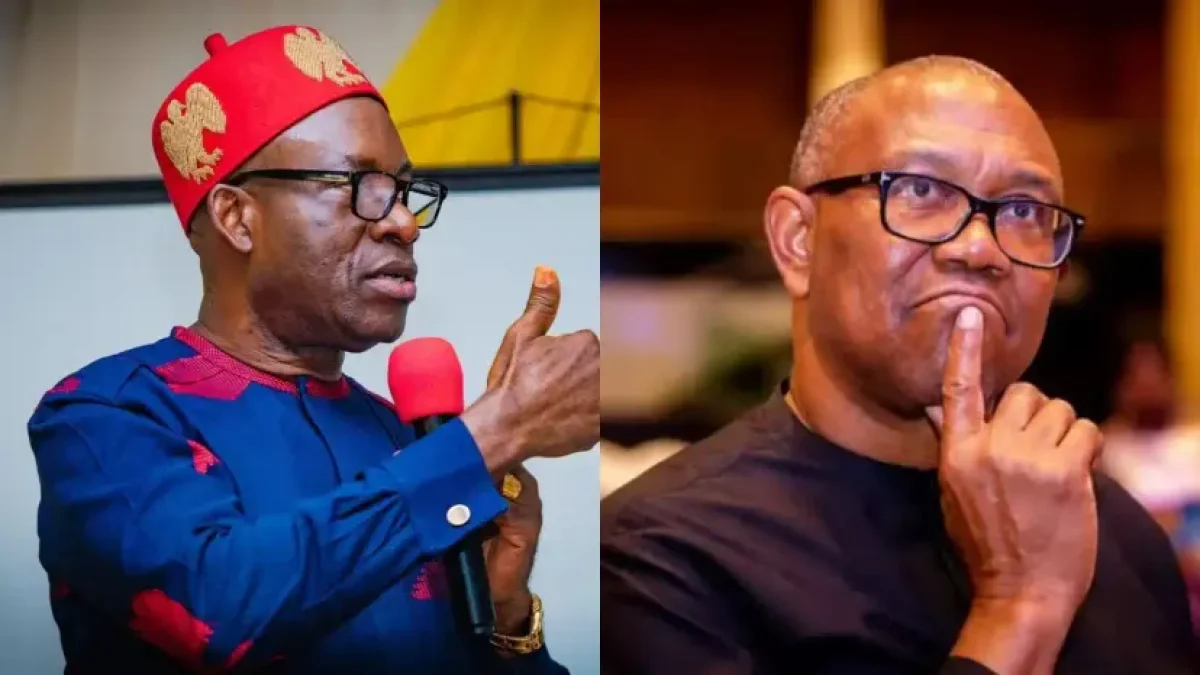
Not everyone is convinced of Atiku’s chances, as former Ekiti State Governor Ayo Fayose has described Atiku, Peter Obi, and President Bola Tinubu as too old to contest the 2027 election, likening Atiku to former US President Joe Biden, while also saying that Atiku’s running mate, Rotimi Amaechi, faces challenges in the South-South due to his lack of political influence. Despite the opposition, Atiku remains committed to his presidential ambition, reflecting on his political journey and stating that the fire that inspired him as a young student activist still burns today because every day he sees millions of young Nigerians denied opportunities that should have been theirs, underscoring his determination to continue fighting for a better Nigeria.

Atiku Dismisses Obasanjo’s Political Clout, Says Ex-President Has ‘No Electoral Value’

Loading

Continue Reading

Politics

2027: Peter Obi lost his chance when he left ADC for NDC – Fayose

Published

on

2027: Peter Obi lost his chance when he left ADC for NDC – Fayose
Former Ekiti State Governor Ayodele Fayose

2027: Peter Obi lost his chance when he left ADC for NDC – Fayose

Former Ekiti State Governor Ayodele Fayose has said Peter Obi suffered a major political setback in his bid for the 2027 presidency after leaving the African Democratic Congress (ADC) for the Nigeria Democratic Congress (NDC).

Fayose made the comment during an interview on TVC News’ Politics Tonight, where he assessed the chances of the opposition parties against the ruling All Progressives Congress (APC) ahead of the 2027 general election.

According to Fayose, the opposition had a stronger opportunity to mount a serious challenge against President Bola Tinubu when prominent opposition figures were united under the ADC.

He said Obi’s decision to leave the coalition weakened the opposition’s chances and effectively ended the former Anambra State governor’s advantage within the opposition camp.

“When they were all together in ADC, I would tell anybody that they will make an impact. The day Obi left ADC for NDC, that day Obi lost,” Fayose said.

Despite his criticism of Obi’s political decision, Fayose spoke positively about the former Anambra governor’s record and political profile.

He described Obi as “a fantastic Nigerian” who had made his mark and demonstrated that positive change was possible.

However, Fayose argued that personal popularity would not be enough to secure victory in a presidential election without a strong political structure and a united opposition.

“But when opposition, when they don’t come together, they will continue to lose,” he said.

Fayose’s comments come amid continuing political realignments ahead of the 2027 Nigerian presidential election, with major opposition figures pursuing different platforms after an earlier attempt to consolidate them under the ADC.

Obi’s departure from the ADC has been particularly significant because he had initially been viewed by some opposition figures as one of the coalition’s strongest potential presidential contenders. His subsequent move to the NDC has altered the opposition landscape and created separate political camps ahead of the election.

READ ALSO:

In a July 2026 interview with Channels Television, Obi confirmed his status as the NDC presidential candidate for 2027 and defended his political strategy, saying his decision to contest was driven by his belief that he could fix Nigeria’s major challenges and unite the country. (Cockatoo)

Fayose, however, maintained that the fragmentation of the opposition has created an advantage for the APC.

He said the political process had advanced to a stage where it would be difficult for opposition politicians to reverse their decisions and return to a single platform.

“It’s too late now,” Fayose said. “INEC has accredited everybody. Even if you say you are not doing again, you’re on your own.”

“You have put your feet in the water. You can’t get out. You have gotten wet already,” he added.

Fayose also predicted that President Tinubu would perform strongly in the South-West during the 2027 presidential election.

According to him, the President could secure close to four million votes in the region, based on the voting pattern recorded during the 2023 presidential election.

“In the West alone, Tinubu will get close to about four million votes,” Fayose said.

“When you look at the pattern of the last election, Tinubu will win this election close to about 65 per cent.”

The projection comes as political parties intensify their efforts to consolidate support across Nigeria’s six geopolitical zones. Tinubu secured substantial support in parts of the South-West during the 2023 presidential election, although the region did not vote uniformly, with different candidates winning different states.

Fayose also commented on the recently concluded Osun State governorship election, rejecting claims that vote-buying was associated with only one political camp.

He said supporters of the APC, Peoples Democratic Party (PDP) and Accord were all involved in alleged vote-buying activities observed during the election.

“It’s mere desperation. Mere desperation,” Fayose said.

He added that reports of arrests over alleged vote-buying involved people linked to different political camps.

“The two sides clearly, going by what we saw on the television on Saturday, police arrested the two sides sharing money. So don’t come and tell me they are saints both ways,” he said.

The former governor said the problem of electoral malpractice in Nigeria should not be reduced to accusations against one party because it was a broader challenge affecting the electoral system.

“We have a lot to put right,” Fayose said.

“It’s the system. It’s systemic. It is a problem that has to be addressed.”

His comments highlight the wider political battle expected ahead of the 2027 general election, as the APC seeks to retain the presidency while opposition parties attempt to build competitive structures capable of challenging Tinubu.

For Obi, the immediate challenge is to translate his personal political following into a strong nationwide structure under the NDC. His supporters will also have to demonstrate that his decision to pursue an independent opposition platform can overcome the disadvantages created by the fragmentation of the earlier ADC coalition.

Fayose’s assessment, however, remains a political prediction rather than an electoral outcome. The 2027 presidential election has not yet been held, and the eventual result will depend on the candidates, campaigns, party structures, voter turnout and the choices Nigerians make at the polls.

2027: Peter Obi lost his chance when he left ADC for NDC – Fayose

Loading

Continue Reading

Trending