

Africa
M23 Rebels Impose Ebola Movement Restrictions as DRC Conflict Complicates Outbreak Response

M23 Rebels Impose Ebola Movement Restrictions as DRC Conflict Complicates Outbreak Response
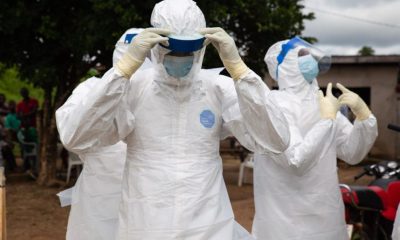
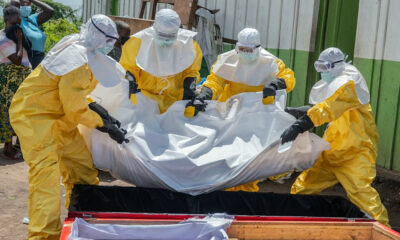
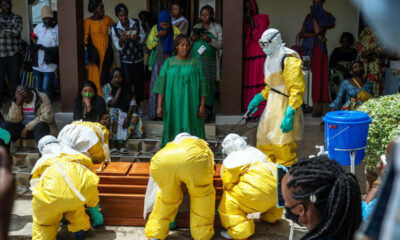
The AFC/M23 rebel alliance in eastern Democratic Republic of Congo has announced a one-month suspension of shared taxis and passenger boats on key routes linking rebel-held areas to government-controlled zones, following the detection of two Ebola cases in travelers from government territory. The restrictions, set to take effect Saturday, reflect the growing challenge of containing what health officials describe as the fastest-spreading Ebola outbreak on record in a region already devastated by armed conflict, mass displacement, and acute hunger. The Bundibugyo strain of Ebola, which has no approved vaccine or specific treatment, has now infected over 5,000 people in Congo, according to government data released this week.
Under the new measures announced Wednesday by rebel authorities, shared taxis operating on the Goma-Kirumba road will be suspended for one month, and passenger pirogue boats on certain routes across Lake Edward will also be halted. However, taxi-buses will continue operating subject to health and safety controls, and goods trucks will remain permitted to transport cargo. The decision came after two travelers from Lubero, a government-held town, tested positive for Ebola upon arriving in a village under M23 control, according to a member of the rebel authorities’ response team.
The Ebola outbreak, declared on May 15, has unfolded in one of the world’s most volatile regions. The Bundibugyo virus, first identified in Uganda in 2007, has an estimated fatality rate of 30% to 50%. By June, confirmed cases had reached 1,003 in Congo and 19 in neighboring Uganda. WHO Director-General Tedros Adhanom Ghebreyesus has warned that eastern DRC faces a “catastrophic collision of disease and conflict,” with insecurity, attacks on health facilities, and population movements making it “nearly impossible” to trace contacts and isolate cases. “We cannot build community trust or isolate the sick while bombs are falling,” Tedros said.
READ ALSO:
- ‘Show Me the Law’: Lawyer Questions FG’s Reluctance to Defend Kanu’s Conviction
- Hold Oborevwori Responsible If I’m Attacked, Killed During Campaigns, Omo-Agege Says
- Ecuador Intelligence Chief, 5 Americans Killed in Kenya Helicopter Crash
Health experts identify three major obstacles to controlling the outbreak in eastern DRC. First, neighboring countries have pursued unilateral responses, including border and airport closures, which go against WHO recommendations and encourage informal crossings that spread the virus. Cross-border communities link the DRC to Uganda, Rwanda, and Burundi through a web of formal and informal crossing points, making monitoring and regulating movement extremely difficult. Second, misinformation and beliefs that Ebola was introduced for financial gain have fueled attacks on health facilities and resistance to response teams, with isolation wards burned and medical workers violently attacked in some cases. This distrust is rooted in a history of violence and government absence; a priest in Ituri told AFP that “there is no trust between the people and the army,” as the government is largely absent from rural areas. In 2025 alone, at least 309 incidents of violence against or obstruction of health care were documented in eastern DRC. Third, active fighting involving the Congolese army, M23, and various militias has created multiple frontlines and areas of contested control, severely constraining humanitarian access as armed actors restrict the movement of civilians and aid workers. The humanitarian crisis compounds the health emergency, with nearly 10 million people across Ituri, North Kivu, South Kivu, and Tanganyika facing acute hunger, and people weakened by hunger are far more vulnerable to infections.
The M23 has used the Ebola outbreak to demonstrate its capacity to govern in the large territories it controls, including the cities of Goma and Bukavu. The group has set up an Ebola task force, established treatment centers, and produced public awareness campaigns. The rebels declared their territory Ebola-free in late June after a 21-day monitoring period without new cases, having recorded only four cases in rebel-held areas—one in Goma and three near Bukavu—which analysts say provided a limited test of their capabilities. “AFC/M23 is keen to demonstrate its capacity to function as a state and manage a public health crisis better than the Congolese government,” said Reagan Miviri of the Kinshasa-based Ebuteli research institute. “But with only four cases recorded, it has been a limited test so far.” The rebels’ response has been coordinated through health administrations operating separately from the central government, with support from Rwanda, which has supplied medicine, specialists, and materials, though the United Nations and Western governments accuse Rwanda of backing the M23, a claim Kigali denies.
For civilians caught in the crossfire, the crisis has created a nightmare of overlapping threats. More than 70,000 people now live virtually under siege in the Plaine Savo displacement camp in Ituri, where Doctors Without Borders treats around 60 cases of sexual violence each week. Women like Antoinette, a mother of eight, told AFP she no longer dares to collect water or firewood outside the camp, fearing rape or death from militiamen or Congolese soldiers. Health services are stretched to breaking point; “We don’t have an ambulance, we don’t have transport, not even a bike,” said Aime Lojunga, a doctor whose clinic was displaced with the population to Plaine Savo.
WHO has appealed for an immediate ceasefire to allow humanitarian and medical teams safe access to affected communities. “Stopping this Ebola transmission depends entirely on humanitarian access,” Tedros said. The Africa Centres for Disease Control and Prevention has declared the outbreak an African public health emergency, and WHO has designated it a Public Health Emergency of International Concern. Congolese health officials have limited visibility into what is happening in rebel territory beyond basic infection numbers that cannot be independently verified. Dieudonné Kazadi, director of Congo’s National Institute of Public Health, told The New York Times, “I can’t give you the situation in the territories occupied by M23 because I don’t have access.”
M23 Rebels Impose Ebola Movement Restrictions as DRC Conflict Complicates Outbreak Response






Africa
Zimbabwe Tycoon Wicknell Chivayo, Wife Among Six Killed in Helicopter Crash
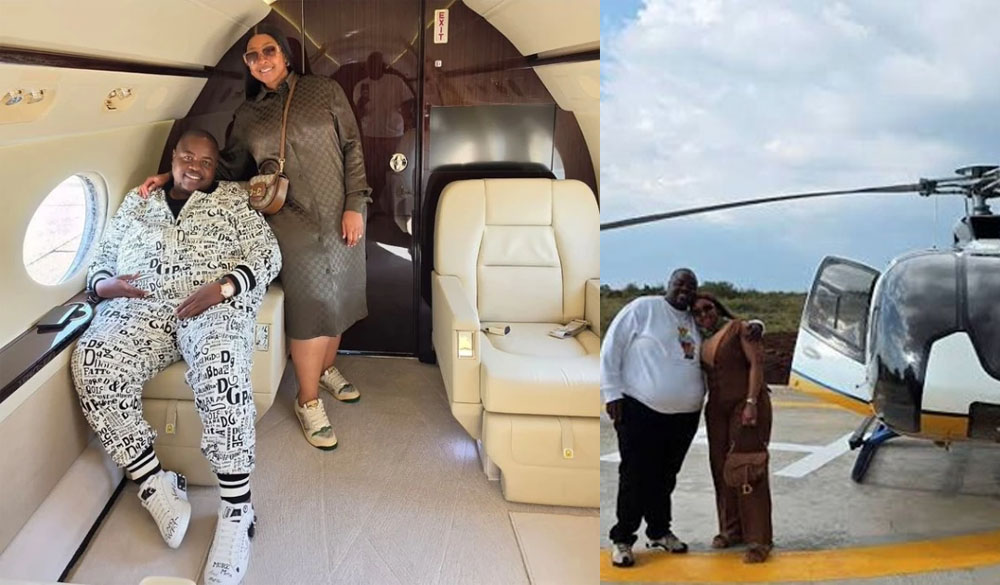
Zimbabwe Tycoon Wicknell Chivayo, Wife Among Six Killed in Helicopter Crash
Zimbabwean businessman Wicknell Chivayo and his wife, Lucy Muteke, have been killed in a helicopter crash that claimed six lives in Marondera Rural, east of the Zimbabwean capital, Harare.
The crash occurred at about 5pm local time on Wednesday, September 30, 2026, with the helicopter carrying six people, including Chivayo, his wife and two pilots.
Family spokesperson Herbert Chivayo confirmed the deaths, while Zimbabwean authorities said there were no survivors.
The aircraft came down in the Marondera area, about 72 kilometres east of Harare, before catching fire. Emergency responders and investigators were deployed to the scene after the crash.
Zimbabwean aviation authorities said preliminary information indicated that fuel spilled after the impact before a fire broke out. However, officials stressed that the information did not establish what caused the helicopter to crash.
READ ALSO:
- Tinubu Returns After 30 Days in Europe, Says ‘I’m Healthy and Ready to Work’
- NMDPRA Moves Against Fuel Pump Fraud, Threatens Licence Revocation
- $2.1m Land Suit: Court Orders Wike’s Son to Produce American Passport
The cause of the crash remains under investigation, with aviation officials and other investigators examining the wreckage and circumstances surrounding the incident.
Police said the bodies were badly burned in the post-crash fire, making formal identification necessary. Forensic specialists were subsequently involved in the identification and investigation process.
Chivayo, 43, was one of Zimbabwe’s most prominent and publicly visible businessmen. He was known for his high-profile lifestyle, philanthropy and extensive social-media presence, where he frequently displayed luxury cars, properties and other expensive possessions.
He also maintained close links with senior political figures in Zimbabwe, including President Emmerson Mnangagwa.
READ ALSO:
- Tinubu Returns After 30 Days in Europe, Says ‘I’m Healthy and Ready to Work’
- NMDPRA Moves Against Fuel Pump Fraud, Threatens Licence Revocation
- $2.1m Land Suit: Court Orders Wike’s Son to Produce American Passport
His business activities and political connections had previously attracted public scrutiny, including allegations relating to government contracts and political financing. Chivayo denied wrongdoing in connection with such allegations.
News of his death triggered reactions across the region, with political and business figures expressing condolences to his family.
Kenyan President William Ruto was among those who mourned Chivayo, describing the Zimbabwean businessman as a friend.
The crash has generated significant attention in Zimbabwe because of Chivayo’s prominence and his public profile, but authorities have not attributed the accident to any specific mechanical, weather or human factor.
Investigators are expected to examine the aircraft, flight circumstances, weather conditions, pilot actions and other available evidence as they work to determine what caused the fatal helicopter crash.
Authorities have not announced a final finding on the cause of the accident.
Zimbabwe Tycoon Wicknell Chivayo, Wife Among Six Killed in Helicopter Crash
Africa
South Africa: 27 Killed, 26 Injured in Separate Mass Shootings
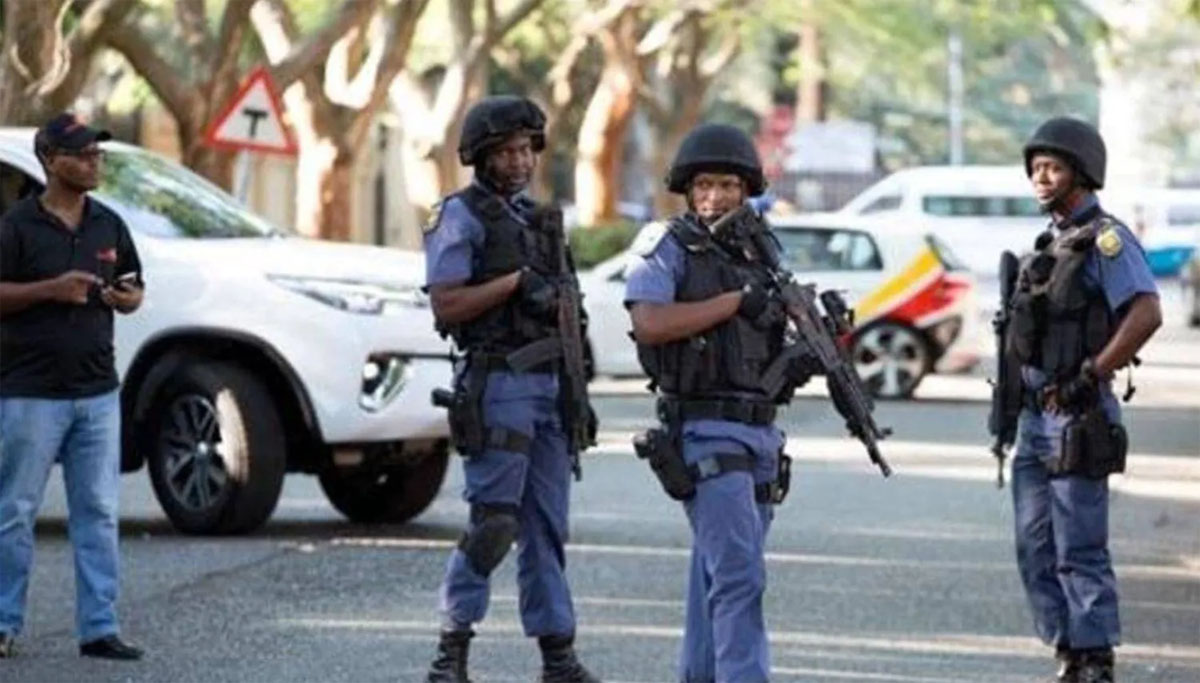
South Africa: 27 Killed, 26 Injured in Separate Mass Shootings
At least 27 people have been killed and 26 others injured in two separate mass shootings in South Africa, with police launching investigations and manhunts for the attackers.
The shootings occurred within hours of each other in Gauteng and Western Cape provinces, with the first attack reported at a tavern in Wedela, southwest of Johannesburg, on Saturday night, followed by another shooting at an entertainment venue in Lwandle, near Cape Town, in the early hours of Sunday.
In Wedela, police said gunmen opened fire on patrons at a tavern at about 9:30 p.m. on Saturday.
The South African Police Service (SAPS) said 17 people were killed in the attack, comprising 13 men and four women.
At least 15 people were also injured and taken to medical facilities for treatment.
According to the police, the attackers were armed with AK-47 rifles and pistols. They allegedly opened fire on people outside the tavern before entering the premises and continuing the shooting.
READ ALSO:
- Abuja Police Arrest Woman, Two Hotel Workers Over Man’s Body Dumped Under Bridge
- Bauchi Police Arrest 26-Year-Old Man Over Rape Of 50-Year-Old Woman
- 2027: Lawal Challenges Wike To Clarify Allegiance Over Rainbow Coalition
The gunmen also reportedly searched some patrons and took their mobile phones before escaping in two unidentified vehicles.
Police have launched a manhunt for the suspects, while investigations are ongoing to establish the motive for the attack and identify those responsible.
A few hours later, another shooting occurred at an entertainment venue in Lwandle, a township near Cape Town.
Police said gunmen entered the venue, which also operates as a shisanyama, a popular South African establishment serving grilled meat, at about 1:46 a.m. on Sunday and opened fire on people inside.
The attack left 10 people dead and 11 others injured.
Five victims reportedly died at the scene, while five others later died after being taken to medical facilities.
Western Cape police commissioner Lieutenant General Sizakhele Dyantyi established a multidisciplinary investigative team led by serious violent crime detectives to investigate the attack and pursue the perpetrators.
No arrests had been announced in connection with either shooting at the time of the latest police updates.
The two incidents came days after another deadly shooting in KwaMakhutha, south of Durban, where 11 people were killed and three others injured at a house party.
The KwaZulu-Natal attack occurred on Tuesday night, September 22, according to police.
Authorities said some of the victims were known to Crime Intelligence in connection with alleged illegal activities, although investigators had not established a definitive motive. Police said a possible conflict between rival groups was among the lines of inquiry.
The three shootings have renewed concerns over gun violence in South Africa, particularly deadly attacks involving groups of armed suspects.
However, authorities have not established any connection between the shootings in Wedela, Lwandle and KwaMakhutha. Investigations into the individual incidents remain ongoing.
South Africa: 27 Killed, 26 Injured in Separate Mass Shootings
Africa
South Africa: Two Women Arrested Over Alleged Rape, Kidnap of E-Hailing Driver
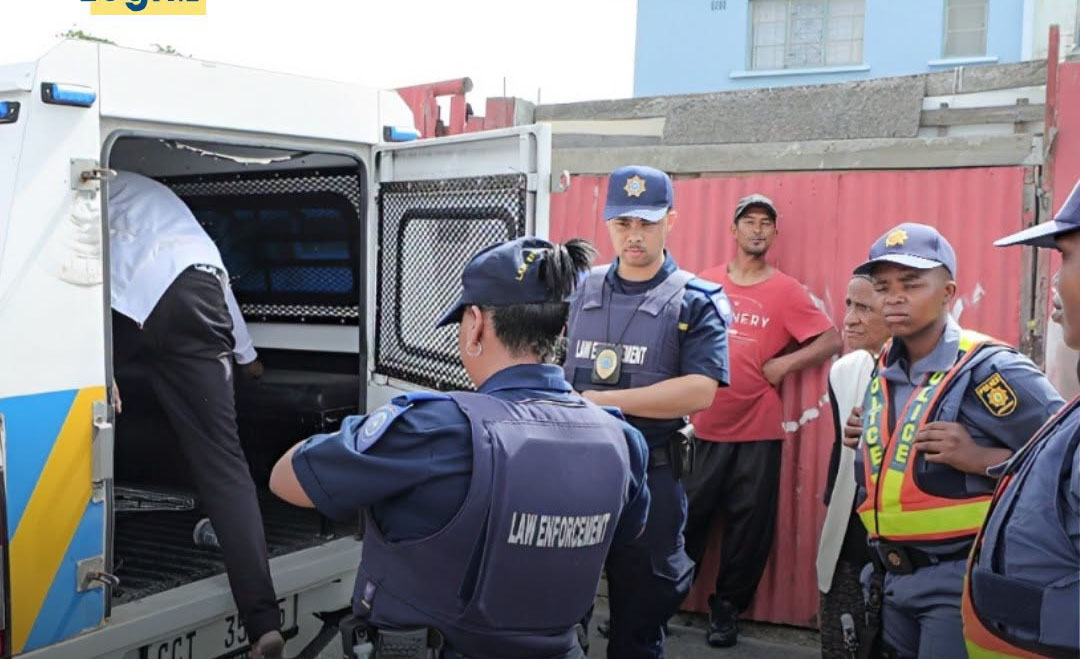
South Africa: Two Women Arrested Over Alleged Rape, Kidnap of E-Hailing Driver
South African police have arrested five suspects, including two women and a teenager, after a 25-year-old e-hailing driver was allegedly kidnapped, sexually assaulted and held for ransom in Cape Town.
The incident occurred in the Steenberg area of Cape Town on Saturday, September 12, 2026, after the driver reportedly went to meet a woman he had previously connected with through his e-hailing business.
Police said the driver’s brother alerted authorities after the suspects allegedly contacted him and demanded R4,000 in cash for the driver’s release.
Following the report, Steenberg police launched an investigation and used a vehicle tracking device to establish the driver’s location.
The tracking information led officers to Southampton Road in Heathfield, where they found and rescued the 25-year-old driver.
According to police, the victim had met one of the female suspects about a week before the incident through his e-hailing business.
The two reportedly exchanged telephone numbers and remained in contact for several days before arranging to meet.
Police allege that when the driver went to meet the woman on Saturday, he was instead kidnapped by the group and taken to another location.
The two female suspects allegedly sexually assaulted the driver while the other suspects were involved in holding him captive.
The five suspects arrested comprise two women aged 23 and 34, two men aged 42 and 48, and a 16-year-old boy.
The teenager is the youngest of the suspects arrested in connection with the case.
The arrests followed the alleged ransom demand made to the victim’s brother. After receiving the report, police acted on information from the vehicle tracking system and were able to locate the driver and bring him to safety.
READ ALSO:
- Four-Storey Building Collapses in Enugu, Workers Trapped Inside
- 27-Year Wait Ends as Construction Begins on New Dutse Emir’s Palace
- Mother ‘sold daughter’s abuse videos for $300’: Nigeria child pornography case shocks nation
The suspects are expected to appear before the Wynberg Magistrate’s Court on Monday, September 14, 2026, where they are expected to face charges relating to the alleged kidnapping and rape.
The case has drawn attention to the safety challenges confronting e-hailing drivers, who regularly meet passengers, customers and other contacts at different locations, sometimes without knowing the people they are meeting.
The incident also highlights the fact that men can be victims of rape and sexual violence. Sexual assault can affect people of any gender, and the circumstances of an alleged attack should be treated with the same seriousness regardless of whether the victim is male or female.
However, the suspects have not been convicted of any offence. The allegations against them will be tested before the court, and they remain entitled to due process under South African law.
Police have not disclosed further details about the alleged sexual assault or indicated whether additional arrests are expected.
Investigations are continuing as authorities work to establish the full circumstances surrounding the alleged kidnapping, sexual assault and ransom demand.
The incident comes amid broader concerns about the safety of e-hailing operators in Cape Town and other parts of South Africa, with driver associations and operators repeatedly calling for stronger measures to protect drivers from attacks and criminal activities while carrying out their work.
South Africa: Two Women Arrested Over Alleged Rape, Kidnap of E-Hailing Driver
-
 metro2 days ago
‘I Thought I Was Dead’ — Hairstylist’s Daring Escape From Kidnappers After Benin-Ore Ambush
-

 metro1 day ago
Tragedy Strikes FMC: Medical Director Loses Two Daughters—A Doctor and a Pharmacist—Within 48 Hours
-

 metro3 days ago
Tension as Kidnappers Threaten to Kill Abducted Oyo Corps Members
-
 metro1 day ago
Transporters Urge IGP Disu to Arrest Illegal Highway Tax Collectors
-

 metro2 days ago
Court Restricts Osun Accounts Over $13.9m Arbitration Award
-

 Politics1 day ago
2027: Soludo Govt Accuses Peter Obi Of Plot To Destroy APGA
-
 metro1 day ago
Army, DSS, Amotekun Kill ISWAP Commander Planning Attacks in Southern Nigeria
-

 Entertainment2 days ago
“Sometimes, I Wonder Why I Married My Husband” — Omotola