

Education
WAEC 2026 results: Schools raise alarm over alleged grading anomalies

WAEC 2026 results: Schools raise alarm over alleged grading anomalies
The West African Examinations Council (WAEC) is facing growing scrutiny over the 2026 WASSCE results, following complaints from some school administrators and education stakeholders over what they describe as unexpected grades, possible grading discrepancies and technical challenges linked to the expanded Computer-Based Testing (CBT) system.
The concerns emerged after WAEC released the 2026 West African Senior School Certificate Examination results for school candidates, with some schools questioning the grades awarded to students they considered high performers based on their academic records and performance in other standardised examinations.
While the allegations have not been independently established as evidence of a widespread grading problem, affected schools are calling for greater transparency and a review of disputed results.
One of the schools raising concerns is Impact House Model Schools, Mowe, Ogun State.
The school’s Director of Impact, Sam Abdulazeez, said the institution had noticed a decline in its students’ WASSCE performance in 2025 and 2026 despite maintaining its teaching staff, improving its facilities and intensifying preparations for external examinations.
Abdulazeez said the school had presented candidates for WASSCE since 2017 and had consistently recorded strong performances, particularly in Mathematics and English Language.
He recalled that all 45 candidates presented by the school for Mathematics in 2024 obtained A1.
However, he said the pattern changed in subsequent years following the introduction of paper serialisation and the expansion of computer-based examinations.
Abdulazeez said the school’s performance in the 2026 UTME had given it confidence that its students were adequately prepared for computer-based examinations.
READ ALSO:
- Trump Threatens to Bomb Oman Over Strait of Hormuz as US-Iran Deadline Expires
- Osun guber: APC rejects Adeleke’s victory, begins audit of INEC results
- Court Freezes 71 Banks’ Accounts Over N1.34bn Access Bank Cyber Fraud
“This year, out of the 69 children we presented for JAMB, over 30 of them had more than 300 in JAMB. And you know that JAMB is completely CBT,” he said.
He added that none of the school’s candidates scored below 200 in the UTME, while the institution had conducted 22 mock examinations to familiarise students with computer-based testing.
According to him, the disparity became apparent when the 2026 WAEC results were released.
“In Mathematics, we had children who had up to 98 in Mathematics during UTME. Now, the As we had in Mathematics, maybe about three or four out of 69. This is a school that we usually have almost everybody having A1 in Math,” Abdulazeez said.
He also questioned the school’s English Language results, saying some students who had performed strongly in the UTME did not obtain the WASSCE grades the school expected.
“We only had B and maybe a few Cs. Out of the 69, I think we have three credits, and all others are B2, B3,” he said.
Abdulazeez maintained that the school’s academic standards had remained strong, noting that it had retained its teaching workforce and continued to invest in its facilities.
He said the school had also spent heavily on computer infrastructure after WAEC announced plans to expand the use of CBT in WASSCE.
However, he alleged that the school encountered technical difficulties when WAEC officials attempted to conduct a mock computer-based examination there before the 2026 examination.
“They did it the first day; the systems could not connect to their own server. They came the second day; they did it, but it was not successful,” he said.
According to Abdulazeez, the school subsequently contacted WAEC officials in Ogun and Lagos states, expressing concern about allowing its candidates to sit an examination through a system the school considered unreliable.
He said WAEC eventually approved the school to use the paper-based examination format despite the institution initially being listed for CBT.
READ ALSO:
- Customs Intercepts Over $73,000, £15,957, 827,800 Saudi Riyals Hidden in Shoes at Kano Airport
- Customs Names Importers of 399 Pump-Action Rifles, Hands Over Weapons to NSA Office
- TCN Injects 220MVA Into Lagos Grid, Boosts Power Supply to 134,000 Residents
The school director also alleged that it experienced concerns with its 2025 WASSCE results, claiming that some grades appeared to change after the initial release.
“Last year, we had this same problem with WAEC. Some of my children who were expecting A1, they dropped to B. Those who were expecting B dropped to C,” he said.
He alleged that some grades were subsequently adjusted on the result portal.
“When we checked the result back again, we saw that those who they gave B had moved to A1. Those who they gave C moved to B last year,” he said.
Abdulazeez said the experience influenced the school’s decision to wait before publishing its 2026 results in case similar adjustments occurred. He said no such adjustment was observed before the school eventually released the results.
He also questioned whether paper serialisation could have contributed to some of the discrepancies reported by schools.
“For me, because I did not do CBT in our school, I don’t know how they go about their serialisation. I think it has to be, because we saw it in the subjects that have serialisation, like Mathematics, like English, Economics, and Biology,” he said.
He argued that students should not bear the consequences of any problem arising from the examination system.
“If the schools and the examining bodies cannot conduct the exam properly, it should not affect these children and their future,” he said.
Abdulazeez also rejected suggestions that the weaker results could simply be attributed to poor preparation by students because of the shift to computer-based examinations.
He noted that his students had already demonstrated their ability to perform under CBT through the UTME.
Another school administrator, who requested anonymity, alleged that some students with strong UTME scores and established academic records received D7, E8 and F9 grades in core WASSCE subjects.
The administrator claimed that two students who had secured admission to the University of Ibadan were recorded as failing Mathematics and English Language in their newly released WAEC results.
The claims could not independently be verified, and the result records of the students were not made available for independent examination.
Educationist Fola Adekeye called on WAEC to ensure that its examination and result-processing systems meet the highest standards of transparency and credibility.
He said examination bodies should proactively investigate credible complaints rather than wait for public pressure before reviewing disputed results.
“Those who are managing destinies — exams, exams are destiny issues. Children want to make their results; they want to be doctors, they want to be lawyers, they want to be astronauts. Those managing those checkpoints should do better,” Adekeye said.
“The public outcry shouldn’t become the determinant of most of these things. They should do the right thing.”
The complaints come as WAEC reports a decline in the overall performance of candidates in the 2026 WASSCE.
WAEC said 1,200,514 candidates, representing 61.54 per cent of the 1,950,726 candidates who sat the examination, obtained credits and above in at least five subjects, including English Language and Mathematics.
The figure represents a 1.42 percentage-point decline from the corresponding performance recorded in 2025.
WAEC also said it withheld the results of 167,486 candidates, representing 8.59 per cent of those who sat the examination, over suspected cases of examination malpractice.
The council said the figure was lower than the 9.7 per cent recorded in the previous year’s examination.
The 2026 examination was also significant because of the expanded deployment of computer-based testing, part of WAEC’s gradual transition towards digital examinations.
The Federal Government said ahead of the examination that preparations had been made to support the CBT rollout, including monitoring of centres and alternative power arrangements.
However, WAEC acknowledged that some operational difficulties occurred during the examination period, including delays affecting some papers at certain centres.
The council attributed the disruptions to a combination of logistical, security and operational challenges.
WAEC also maintained that there was no question-paper leakage despite the difficulties recorded during the examination.
The current controversy has been further heightened by a technical problem acknowledged by the Federal Ministry of Education in connection with the 2025 WASSCE results.
The ministry had confirmed that a technical issue affected the processing of some 2025 results, particularly in subjects where paper serialisation had been introduced, and said the problem was subsequently resolved.
That previous incident has increased the sensitivity surrounding fresh allegations involving the 2026 results, although it does not by itself establish that the same problem occurred this year.
WAEC has established procedures for candidates and schools that believe results may require review. School candidates can request a review of their scripts through their school authorities within the prescribed period and subject to the applicable fee.
The examination body also provides channels for schools and institutions to submit enquiries relating to examination results and other services.
For now, there is no independently verified evidence of a systemic grading error affecting the 2026 WAEC results.
The allegations raised by school administrators and education advocates therefore remain claims that require further investigation.
However, given the importance of WAEC results to university admission and other forms of academic progression, stakeholders are calling for credible complaints to be investigated promptly.
A transparent review of disputed results could help determine whether the reported cases represent isolated discrepancies, differences arising from examination standards or evidence of wider technical or grading problems.
The controversy has also placed renewed attention on WAEC’s transition to computer-based examinations, with schools and parents seeking assurances that the new system can accurately assess candidates without disadvantaging students.
As candidates begin using their results for admission and other academic purposes, the pressure will remain on WAEC to demonstrate that the 2026 WASSCE results were processed accurately, fairly and transparently.
WAEC 2026 results: Schools raise alarm over alleged grading anomalies







Education
FG Orders National Ranking of Nigerian Tertiary Institutions on 22 Indicators
FG Orders National Ranking of Nigerian Tertiary Institutions on 22 Indicators
The Federal Government has commenced a 2026 national ranking of Nigerian tertiary institutions, with Education Minister Tunji Alausa directing the Nigerian Tertiary Education Ranking Advisory Committee (NiTERAC), chaired by Professor Peter Okebukola, to assess universities, polytechnics and colleges of education across the country.
Okebukola disclosed the development in a presentation on Nigeria’s performance in the 2027 Times Higher Education World University Rankings, saying the three subsector rankings are expected to be completed by December 15, 2026.
Under the framework, Nigerian universities will be assessed using 22 indicators, with the weightings agreed with the League of Directors of Academic Planning.
The exercise is intended to establish a national benchmark for measuring institutional performance, identifying areas that need improvement and encouraging healthy competition among public and private tertiary institutions.
According to Okebukola, the initiative is also aimed at positioning Nigeria’s tertiary education system for stronger performance in international rankings.
The expansion of the exercise beyond universities means that polytechnics and colleges of education will also be covered under the 2026 assessment. This will provide a broader national picture of performance across the major categories of tertiary education.
READ ALSO:
- Edo Police Arrest 37-Year-Old Man Over Alleged Rape of 70-Year-Old Woman
- Why Ronaldo Left Portugal Camp Ahead of Denmark Clash
- 2027: Amaechi Vows to Resign If Nigeria Fails to Change Within One Year
The development comes against the backdrop of Nigeria’s improved representation in the latest Times Higher Education World University Rankings.
A total of 29 Nigerian universities featured in the 2027 global ranking, compared with 24 in the previous edition, giving Nigeria the highest number of ranked institutions in sub-Saharan Africa.
The University of Ibadan, University of Lagos and Covenant University were placed in the global 801–1,000 band, while Ahmadu Bello University, Bayero University, Landmark University and the University of Ilorin were placed in the 1,001–1,200 category.
Another 32 Nigerian universities were listed in the Reporter category. Reporter status applies to institutions that submitted data but did not meet one or more requirements for inclusion in the ranked tables.
Okebukola’s assessment noted that only 29 of the 328 universities listed by the National Universities Commission (NUC) appeared in the ranked category.
It also identified areas including research funding, publication output, institutional data management and international collaboration as requiring sustained attention across the sector. Differences in teaching, research quality, industry engagement and international outlook were also highlighted.
The national ranking is expected to give institutions a domestic framework for assessing their performance and identifying gaps, while providing policymakers with data that can support decisions on tertiary education development.
The committee is expected to undertake data collection and validation before finalising the rankings for the three subsectors ahead of the December 15 deadline.
The outcome will provide a new national reference point for assessing Nigerian universities, polytechnics and colleges of education and tracking their performance over time.
FG Orders National Ranking of Nigerian Tertiary Institutions on 22 Indicators
Education
FG Releases 2026–2028 Approved Textbooks, Introduces QR Codes for Tracking
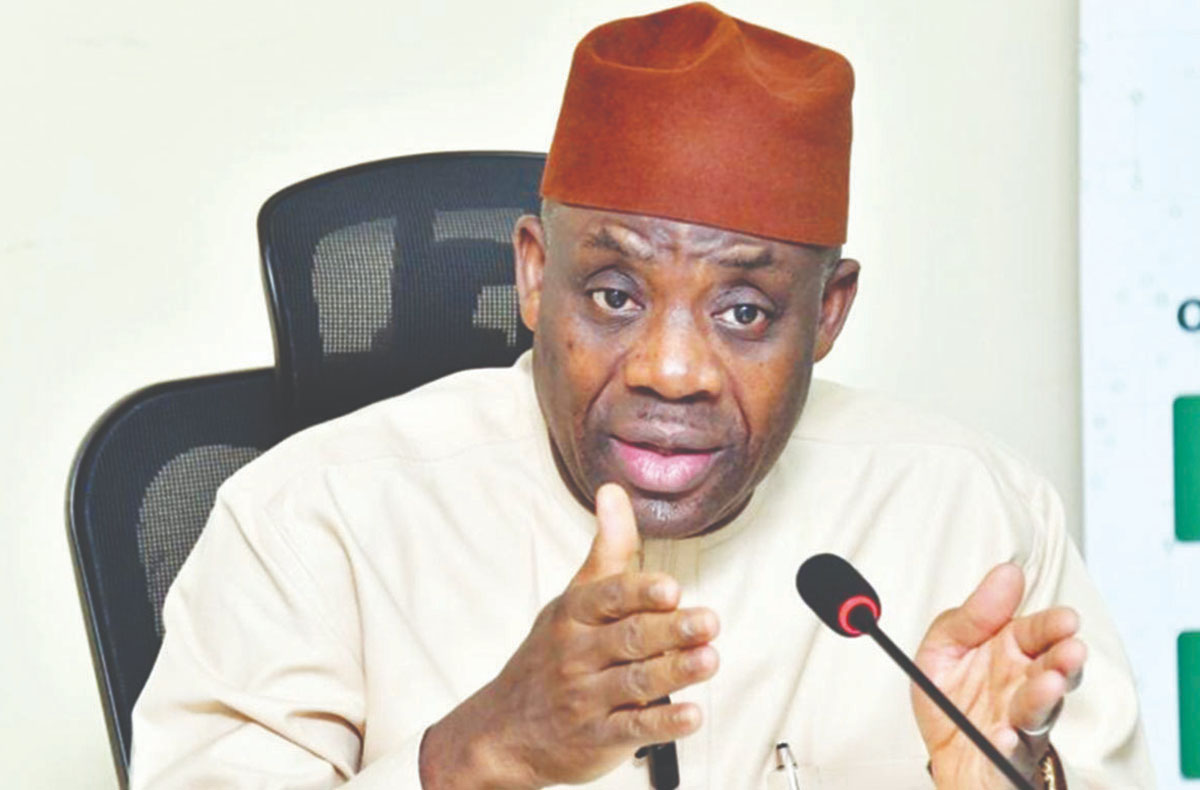
FG Releases 2026–2028 Approved Textbooks, Introduces QR Codes for Tracking
The Federal Government has released the final list of approved and ranked textbooks for use in Nigerian schools from 2026 to 2028, covering selected classes in primary and secondary education.
The Federal Ministry of Education said the release followed the completion of the first phase of the National Textbook Ranking System, a new framework designed to improve the quality, relevance, transparency and accountability of instructional materials used in schools.
The first phase covers Primary 1, Primary 4, Junior Secondary School 1 (JSS 1) and Senior Secondary School 1 (SS 1).
The ministry said every textbook on the approved list has been assigned a unique Ranking/QR Tracking Code, alongside details such as the book title, author, publisher and year of publication.
The QR-based system is intended to make it easier for education authorities and other stakeholders to identify approved textbooks and monitor their use, while helping to curb the circulation of materials that have not passed the required assessment and ranking processes.
The exercise was carried out under the supervision of the Minister of Education, Maruf Tunji Alausa, and the Minister of State for Education, Suwaiba Sa’id Ahmad.
The government said the new system represents a shift from the previous approach, which focused primarily on textbook approval, to a process that also ranks books according to established quality and curriculum standards.
Under the new arrangement, only nationally ranked and approved textbooks are to be used in public schools for the affected classes.
The Federal Government has also indicated that the number of titles approved for individual subjects will be controlled, generally ranging from six to 10 textbooks, depending on curriculum requirements.
The policy is intended to reduce the proliferation of textbooks of varying quality and give schools a more manageable pool of materials from which to select.
READ ALSO:
- 24 Hours in Darkness: Iju Ishaga Residents, Businesses Count Losses as Ikeja Electric Fails to Restore Power
- TCAN Honours Dangote Cement Transport for Safety, Logistics Excellence
- Osogbo Food Bonanza Turns Nightmare as Discount Vendor Vanishes With Customers’ Millions
The government has further stated that ranked textbooks are expected to remain valid for at least three years, providing greater stability for schools, parents and learners and reducing the frequency with which families may be required to purchase new textbooks.
The Nigerian Educational Research and Development Council (NERDC) is responsible for the assessment and ranking process.
NERDC had earlier explained that textbooks submitted for the affected classes would undergo assessment against prescribed standards. Previously assessed textbooks were also required to be resubmitted because the new process incorporates ranking in addition to approval.
The 2026 textbook ranking exercise is being implemented in three phases. While the first phase covers Primary 1, Primary 4, JSS 1 and SS 1, the second phase will cover Primary 2, Primary 5, JSS 2 and SS 2.
The third phase will cover Primary 3, Primary 6, JSS 3 and SS 3, completing the ranking process across the major class levels.
The government has also announced measures aimed at reducing the cost of participation for publishers. The textbook assessment fee was reduced from ₦2,000 to ₦1,500 per page, while the ranking fee was reduced from ₦1 million to ₦750,000 per title.
The textbook reforms are also linked to a broader government policy encouraging the production of more durable instructional materials.
The Federal Ministry of Education has promoted textbooks that can be reused over several academic sessions and discouraged the practice of bundling disposable workbooks with textbooks where this would increase costs for families.
The ministry has said the durability policy is aimed at making educational materials more affordable and sustainable, particularly for households with children in multiple school classes.
The introduction of QR tracking codes is also expected to improve traceability and accountability within the textbook supply chain.
The Universal Basic Education Commission (UBEC), through the HOPE-EDU programme, is separately implementing a book supply-chain Track ‘N’ Trace system designed to improve monitoring of the distribution of learning materials from procurement to schools and learners.
The Federal Government has urged publishers, schools, education authorities and procurement agencies to consult the official 2026–2028 approved textbook list before selecting or purchasing books for the affected classes.
The ministry said the overall objective is to ensure that learners and teachers have access to quality, curriculum-aligned and properly assessed textbooks, while improving transparency in textbook selection, procurement and distribution across Nigeria’s education system.
FG Releases 2026–2028 Approved Textbooks, Introduces QR Codes for Tracking
Education
MURIC Raises Alarm Over Alleged Hijab Ban, Forced CRK in Ekiti Schools
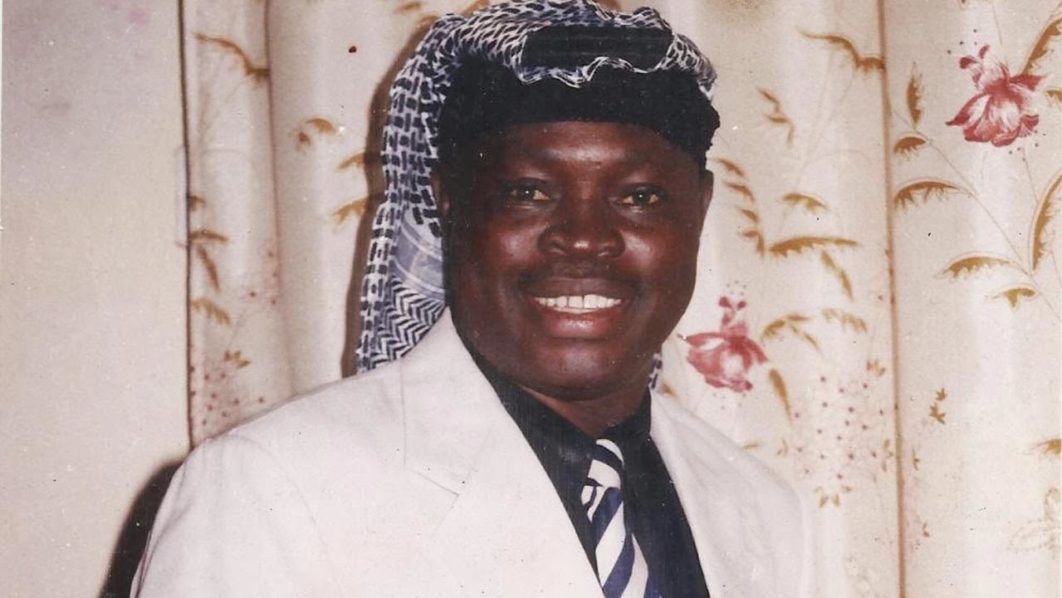
MURIC Raises Alarm Over Alleged Hijab Ban, Forced CRK in Ekiti Schools
The Muslim Rights Concern (MURIC) has called on the Ekiti State Government to investigate allegations that female Muslim students are being denied the use of hijab in public schools and that Muslim students who registered for Islamic Religious Knowledge (IRK) are being made to take Christian Religious Knowledge (CRK).
The organisation made the demand in a statement issued on Monday, September 28, 2026, by its Executive Director, Professor Ishaq Akintola, following allegations raised by the League of Imams and Alfas in Ekiti State.
The League reportedly raised the allegations at its monthly meeting held at the Central Mosque, Iyin-Ekiti, on Thursday, September 24.
MURIC described the allegations as “grave, concerning and unnerving”, arguing that, if established, the reported practices would raise serious questions about religious freedom and the rights of Muslim pupils in public schools.
Akintola said the alleged denial of hijab to Muslim female students was particularly concerning, arguing that Muslim women and girls should be able to observe their religious dress requirements.
“In the 21st century, when hijab is allowed in London, Paris and New York schools, female Muslim students are still being denied the use of hijab in public schools in Ekiti State,” he said.
He questioned the state’s record on religious tolerance, saying the allegations appeared inconsistent with claims of peaceful coexistence and mutual respect among religious communities in Yorubaland.
MURIC also expressed concern over the allegation that Muslim students who had registered for IRK were being compelled to study CRK.
The group described the alleged practice as “anachronistic, myopic and repressive”, and called on the state government to examine the conduct of education officials involved.
Akintola said MURIC was opposed to what it described as “illegal, illegitimate, unlawful and unconstitutional practices” in the state’s education sector.
He further linked the latest allegations to previous incidents involving Muslims in Ekiti, citing an alleged clash between traditionalists and Muslims at Ikun in Moba Local Government Area, during which an imam was reportedly injured and a mosque vandalised.
He also referred to a previous controversy over the proposed demolition of four mosques during the administration of former Governor Ayo Fayose, as well as the reported demolition of Sabo Central Mosque in Aramoko-Ekiti in April 2025.
According to Akintola, the incidents cited by MURIC demonstrated the need for the state government to address complaints concerning religious rights before tensions escalate.
“We therefore charge the Ekiti State Government to investigate the allegations levelled by the League of Imams against Ekiti State education officials with a view to making amends,” he said.
On the constitutional dimension, MURIC cited Section 38 of the 1999 Constitution, which guarantees freedom of thought, conscience and religion.
Akintola argued that Muslim students should not be compelled to receive religious instruction contrary to their faith, while calling on education authorities to ensure that pupils are allowed to practise their religion without discrimination.
He said the allegations, if established, would amount to violations of the rights of Muslim children and urged the Ekiti Government to take corrective measures.
MURIC’s statement, however, characterised the alleged actions in stronger terms, accusing those responsible of religious intolerance and persecution of Muslims.
The organisation consequently urged the state government to investigate the claims made by the League of Imams and ensure that religious freedom and the rights of students are protected in public schools across Ekiti State.
MURIC Raises Alarm Over Alleged Hijab Ban, Forced CRK in Ekiti Schools
-

 metro2 days ago
$2.1m Land Suit: Court Orders Wike’s Son to Produce American Passport
-

 metro3 days ago
Hamzat Clarifies Lagos Traffic ‘Lifestyle’ Remark After Backlash
-

 metro2 days ago
Osogbo Food Bonanza: Angry Customers Loot Warehouse After Operators Vanish
-

 metro3 days ago
Chimamanda Adichie: Hospital Seeks to Stop Inquest Into Son’s Death
-

 Sports3 days ago
Nigeria XI vs Guinea-Bissau: Awoniyi, Lookman, Adams Lead Super Eagles Attack
-
 Business1 day ago
Dangote Sets 40-Month Deadline for $16bn East Africa Refinery in Kenya
-
 News2 days ago
Tinubu Returns After 30 Days in Europe, Says ‘I’m Healthy and Ready to Work’
-
 Politics1 day ago
2027: Amaechi Recalls How APC Defeated PDP, Orders ADC Mobilisation