
News
Rebuild Lagos collapsed mosque in six months, MURIC tells govt, visits site
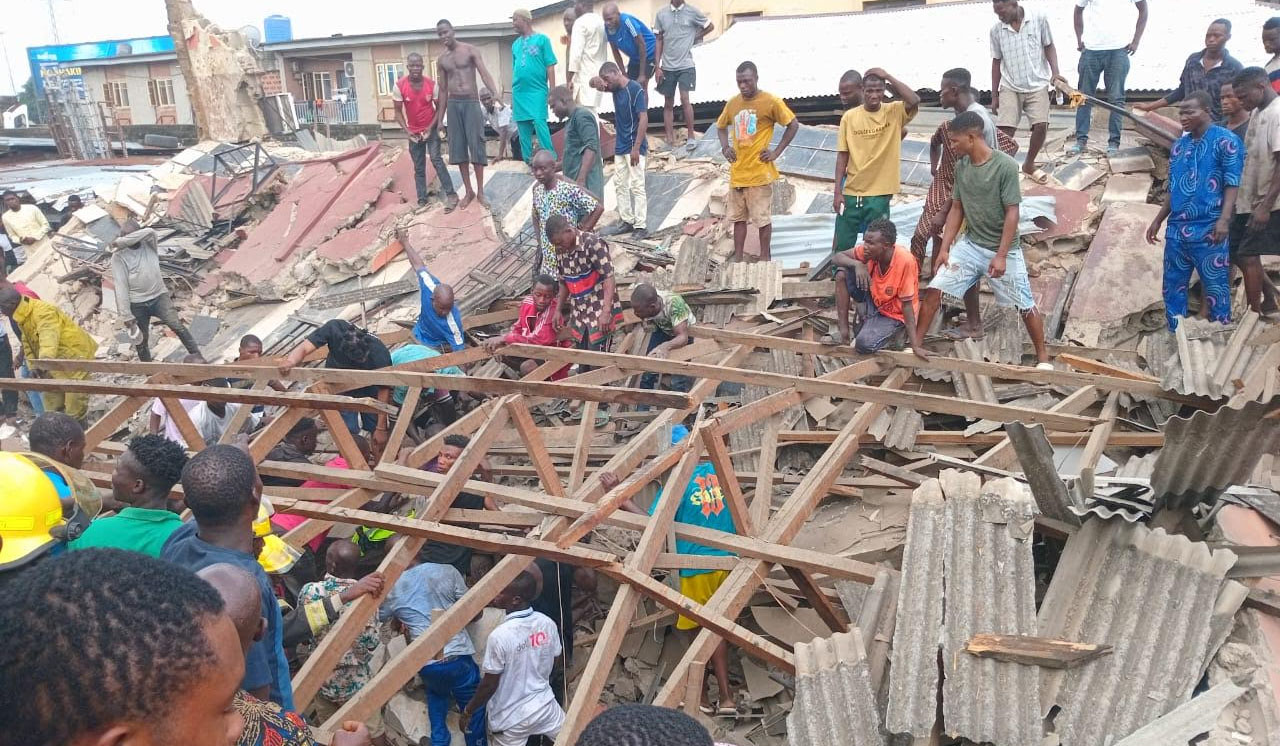
Rebuild Lagos collapsed mosque in six months, MURIC tells govt, visits site
– ‘Dead victim, 11, lost her father 5 years ago’
The Muslim Rights Concern (MURIC) has demanded that the Lagos State Government should rebuild a mosque which collapsed on Sunday at Papa Ajao, Mushin, Lagos, within six months.
This was one of the five demands made by the Islamic organisation on Tuesday when its team visited the site of the collapse.
The group also sent a delegation to the home of the bereaved family and asked for compensation for parents of the victim.
The residents of the area had blamed the collapse on excavator operator who reportedly hit the one-storey building while digging up sand and working on a street drain reconstruction.
The demands by MURIC were made public in a statement issued on Tuesday, May 28 by its Executive Director, Prof. Ishaq Akintola.
Part of the statement read, “Following the tragic accident in which the Al-Mutmahinat Central Mosque, situated at Yusuf Street, Papa Ajao, Mushin, Lagos State on Sunday, 26th May, 2024, MURIC sent a powerful delegation which visited the site the next day, Monday, 27th May, 2024.
“Our team interacted with the Imam of the mosque and visited the home of the deceased victim to offer condolences.
“MURIC’s 3-man delegation was led by the chairman of MURIC in LAGOS State, Dr. Busari Jamiu Muhammad. They met the Imam of the mosque, Alhaji Lukman Qasim Olokuta.
“They also visited the house of the victim and commiserated with the bereaved parents.
READ ALSO:
- I didn’t get memo on naira redesign, ex-CBN director tells court
- Mother, son remanded over N122m property theft
- Oyetola boasts Tinubu govt raised marine revenue by 92% in one year
“Contrary to the common belief that three people died as a result of the accident, our delegation found out that only one person died.
“The victim was Anifat Yusuf, eleven, who was one of the students of the Arabic school in the mosque who were billed to graduate (walimah) in August this year.
“The late Anifat Yusuf was also a JSS 2 student of The Ultimate Secondary School, a private School at Ashofihan Street, Olorunshogo, Mushin. She had entered the mosque briefly to observe Zuhr, the first afternoon salat but, unfortunately, she never came out alive.
“Of course we also fell victim of the bloated number but we have to correct the figure now as a disciplined organization, particularly after our fact-finding mission came back to tell us that only one person died.
“Although we forwarded about three demands in our first statement on the tragedy, these have since been harmonized with suggestions from concerned Muslims. In view of the fact that the excavator which caused the calamity was working on the road expansion project embarked upon on that street by LASG, we now review our demands as follows:
“That LASG should:
Rebuild the mosque within six months without reducing its original size and without compromising its standard;
Pay adequate compensation for families left behind by the bread winners killed in the accident;
Pay the hospital bills of the injured;
Refund burial expenses of the eleven year-old girl who died and
Arrange for the welfare of the Imam of the mosque and his family until the mosque has been rebuilt, handed over to the community and become functional.
“MURIC is (and will continue to be) in constant consultation with the mosque’s Imam to ensure that these demands are met. The right to life is an Allah-given fundamental human right which has been vicariously denied this little girl, late Anifat Yusuf, by an agent of LASG.
READ ALSO:
- Nigerians appalled over EFCC’s inability to arrest Yahaya Bello
- FG rolls out free one million gas cylinders
- Tinubu’s one-year govt worse than civil war – PDP
“Anifat’s father died five years ago and her mother, a widow of five years, has now lost the daughter whom she was hoping would one day be her bread winner, her succour and her companion. She is now alone facing not only the excruciating pains of a mother who lost a mature daughter but also the harsh realities of Nigeria’s galloping inflation.
“This widow’s home at 25, Bello Street, Papa Ajao, which used to be filled with laughter, is now the abode of sorrow, tears, desolation and misery. LASG must take responsibility. Anifat must not die in vain.
“Besides, a whole Muslim community whose only Central Mosque has been pulled down by an erratic excavator driver is now rendered mosqueless. They have become spiritual Internally Displaced Persons (IDPs) or, more correctly, Internally Displaced Worshippers (IDWs).
“Only Allah knows how they have been managing to observe the daily prayers since the tragedy three days ago but, more importantly, they must start looking around from today to find the nearest mosque where they will observe the next Jumuah prayer.
“LASG must therefore move quickly to rebuild the mosque. Our mosque is of great significance to us.
“It is not just where we worship Allah and listen to sermons, it is the house of Allah. It is our brotherhood shelter, our common room, information dissemination centre, counselling centre, education centre, consolation point, our strong room, our engine room and even more.
“The mosque is the Muslim centre of gravity. We cannot afford to have it missing for long. Internal agitation may soon grow into external anxieties and there is a limit to the influence which the mosque management and local Muslim leaders can exert on the restless Muslim youths in the area who have started asking questions.
“We can expect prolonged patience in any other area or areas of Lagos, but not in Mushin. This is the hotbed of activism in Lagos State.
“LASG must therefore ensure that this mosque is ready in six months. November 2024 is the deal. Let’s hear the response of LASG loud and clear.”
Rebuild Lagos collapsed mosque in six months, MURIC tells govt, visits site






News
World Bank Deletes Nigeria Development Update Report Days After Release
World Bank Deletes Nigeria Development Update Report Days After Release
The World Bank has removed its latest Nigeria Development Update (NDU) report from its official website, just three days after its publication, raising concerns over the reasons behind the sudden action.
The report, titled “Nigeria’s Tomorrow Must Start Today: The Case for Early Childhood Development,” was released on April 7, 2026, but the document link is no longer accessible, returning a “page not found” error when users attempt to download it.
Despite the removal, the accompanying press statement remains available, outlining key findings on Nigeria’s economic performance and policy outlook.
In the now-withdrawn report, the World Bank said Nigeria’s economy recorded 4 percent growth in 2025, with inflation dropping significantly to 15.1 percent in February 2026 from 26.3 percent recorded in the same period a year earlier. The improvement was attributed to tighter monetary policies and better food supply conditions.
The report also highlighted that Nigeria’s macroeconomic environment has strengthened following recent stabilisation reforms, noting improvements in key indicators and steady expansion across major sectors of the economy.
READ ALSO:
- US Revokes Green Cards of Iranian Family
- 16-Year-Old Alleges Repeated Rape by Pastor During ‘Deliverance’ in Anambra
- Zulum Donates N50m to Family of Slain Army Officer in Borno Attack
Early data for 2026, according to the report, suggested that growth momentum had been sustained, although global tensions posed a mild drag on economic activity.
A major focus of the publication was early childhood development, which the World Bank described as critical to Nigeria’s long-term growth. It stressed that stronger investment in human capital is essential for translating macroeconomic gains into job creation, poverty reduction, and improved living standards.
The report painted a worrying picture of child welfare in the country, revealing that more than 110 out of every 1,000 children die before the age of five, while many others fail to meet basic developmental milestones due to poor nutrition, limited access to healthcare, and inadequate early education.
It warned that without urgent intervention, Nigeria risks missing out on the demographic dividend expected from its young population.
In addition, the report reportedly addressed ongoing structural reforms, including exchange rate unification, fiscal adjustments, and subsidy removals, noting that while these measures have helped stabilise the economy, their full benefits will depend on sustained implementation and targeted social support for vulnerable households.
However, parts of the report—particularly policy recommendations around the downstream petroleum sector—have drawn attention. The World Bank was said to have advised that Nigeria may need to continue importing petrol (PMS) in the short term to ensure supply stability while transitioning to a fully liberalised and competitive market.
The recommendation comes amid ongoing reforms in Nigeria’s oil and gas sector and has been viewed by some analysts as sensitive, given the country’s push for domestic refining capacity.
In a subsequent clarification following reactions, the World Bank emphasised that its recommendations should be seen within the broader context of energy security, market stability, and global supply uncertainties, rather than as a fixed policy directive.
The NDU is a bi-annual flagship report that evaluates Nigeria’s economic and social developments and provides policy guidance for sustainable growth.
As of the time of filing this report, the World Bank has not issued an official explanation for the removal of the April 2026 edition, fuelling speculation that the document may be undergoing revisions or internal review.
Economists say the development highlights the sensitivity of reform-related recommendations in Nigeria’s current economic climate, particularly those touching on fuel policy and social welfare, as the country navigates a delicate recovery path.
World Bank Deletes Nigeria Development Update Report Days After Release
News
Tinubu Promises Stable Electricity as Bayelsa Unveils 60MW Power Project
Tinubu Promises Stable Electricity as Bayelsa Unveils 60MW Power Project
President Bola Ahmed Tinubu has reaffirmed his administration’s commitment to delivering stable electricity capable of driving economic growth, industrialisation, and national development, saying ongoing reforms in the power sector will soon yield tangible results.
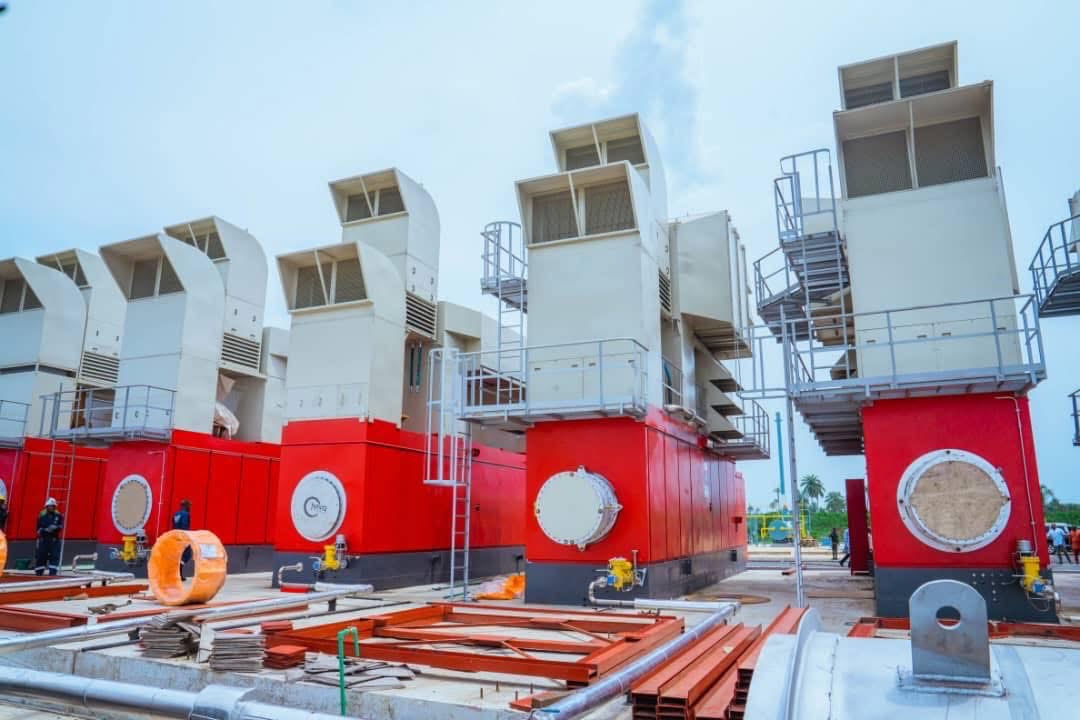
Tinubu made the remarks in Bayelsa State during the commissioning of major infrastructure projects executed by the state government, including a 60-megawatt Independent Power Project (IPP) located at Elebele in Ogbia Local Government Area.
He described the power project as a “significant step” toward strengthening energy security and subnational electricity generation, noting that no meaningful industrialisation or job creation can happen without reliable power supply.
“There can be no industrialisation, skill development and empowerment without power. I assure Nigerians that we will have electricity to power our growth,” the President said.
The IPP, powered by gas turbines, is expected to supply electricity to Yenagoa and surrounding communities, reducing dependence on the national grid and improving power reliability for households and businesses.
Alongside the power project, Tinubu also commissioned several key infrastructure projects, including the 27-kilometre dualised New Yenagoa City Road 1, the 630-metre Angiama–Oporoma Bridge, and the Sagbama/Ekeremor Road, all aimed at improving connectivity and boosting economic activity across Bayelsa State.
READ ALSO:
US Commences Visa Ban on Nigerians Linked to Alleged Religious Freedom Violations
Did Faleke Just Reveal Lagos’ Next Governor? Party Moves Begin
Jigawa Ward Head Denies Viral Wedding Cancellation Over Tinubu Support
He praised the state government led by Governor Douye Diri for what he described as “purposeful and progressive leadership,” adding that collaboration between federal and state governments remains essential for sustainable development.
“Development advances further and faster when the federal and state governments work in partnership toward a shared purpose,” Tinubu said.
The President also used the occasion to observe a minute’s silence in honour of soldiers killed in a recent terrorist attack on a military base in Borno State, reaffirming his administration’s commitment to defeating terrorism and banditry across the country.
“We will continue to equip and train our armed forces. We will defeat terrorism and banditry, regardless of their shenanigans,” he assured.
Tinubu further acknowledged the economic challenges facing Nigerians, including rising living costs linked to global energy disruptions, but insisted that government interventions are being implemented to ease hardship and support vulnerable citizens.
“We will continue to find ways to ameliorate the suffering of the vulnerable. This is a government that cares,” he said.
At the event, Tinubu also commended former President Goodluck Jonathan, describing him as “one of the most humble and reliable democrats on the continent,” while praising ongoing development efforts in Bayelsa State.
Governor Diri, in his remarks, appealed for federal refunds on projects executed on federal roads by the state government and highlighted ongoing infrastructure efforts under his “Assured Prosperity” agenda, including roads, bridges, civic buildings, and sports facilities.
He described the newly commissioned Yenagoa–Oporoma–Ukubie road as a transformative project that has ended years of isolation for several riverine communities in Southern Ijaw.
The Bayelsa IPP is expected to enhance power supply stability, attract investment, support SMEs, and stimulate economic diversification in the oil-rich state.
The commissioning ceremony was attended by several top political figures, including Senate President Godswill Akpabio, governors from multiple states, senior federal officials, and traditional leaders, reflecting the national significance of the projects.
Residents reportedly thronged the project sites in celebration, cheering and dancing as the President arrived at the Bayelsa International Airport aboard the presidential jet.
Tinubu concluded by expressing optimism about Nigeria’s future, saying: “Nigeria will be great, and we will succeed.”
Tinubu Promises Stable Electricity as Bayelsa Unveils 60MW Power Project
News
US Embassy Suspends Abuja Visa Appointments Over Security Concerns

US Embassy Suspends Abuja Visa Appointments Over Security Concerns
The United States Embassy in Nigeria has suspended visa appointments in Abuja following heightened security concerns, a move that has disrupted travel plans for hundreds of applicants in Abuja.
In an official notice released via its communication channels, the embassy confirmed that all visa interviews in Abuja have been cancelled until further notice, urging affected applicants to check their emails for updates on rescheduled appointments.
“U.S. Embassy Abuja is closed for visa appointments. Applicants should check their email for details on rescheduled appointments,” the statement read. It added that visa services in Lagos remain operational at the United States Consulate General Lagos, providing an alternative for applicants who can access the facility.
The embassy further clarified that American citizen services in Abuja will continue only in emergency situations and strictly by appointment, indicating a temporary scale-down of operations in the capital.
READ ALSO:
- ADC Crisis: Mark-Led Faction Sues INEC Over Party Leadership Removal
- Dangote Sugar Warns Staff Over Chewing Sugarcane, Threatens Arrest
- Jetour set to ignite Lagos with four-day automotive experience
The suspension follows a recent directive by the United States Department of State authorising the departure of non-essential staff and their families from Abuja, citing a deteriorating security situation in Nigeria.
An updated U.S. travel advisory has also placed Nigeria under a “Level 3: Reconsider Travel” status, warning of persistent threats including terrorism, kidnapping, crime, and civil unrest. Several states have been categorised under the stricter “Level 4: Do Not Travel” advisory due to high-risk security conditions.
States listed include Borno State, Yobe State, Taraba State, Niger State, Plateau State, and parts of Adamawa State, where threats linked to terrorism and kidnapping remain high. Other states such as Kaduna State, Katsina State, Zamfara State, and Sokoto State were also flagged over insecurity concerns.
The advisory has triggered reactions from the Federal Government of Nigeria, which described the assessment as “unbalanced” and not fully reflective of ongoing efforts to address insecurity nationwide. Authorities warned that such reports could negatively impact Nigeria’s global image and economic activities.
Despite the disruption in Abuja, visa processing and consular services continue in Lagos, offering a temporary alternative for applicants. However, the development is expected to cause delays in visa processing, particularly for students, business travellers, and individuals with urgent travel needs.
The US Embassy visa suspension in Abuja highlights the broader impact of security challenges on diplomatic operations and international travel, as uncertainty remains over when normal services will resume in the capital.
US Embassy Suspends Abuja Visa Appointments Over Security Concerns

-
 metro2 days ago
JUST IN: FG Publishes List of 48 Individuals, Groups Linked to Terrorism Financing in Nigeria
-
 metro2 days ago
42-Year-Old Married Woman Declared Missing Found in Hotel with Man
-

 metro11 hours ago
BREAKING: Troops Arrest 15-Year-Old Linked to Killing of Gen Braimah in Borno
-
 Politics2 days ago
Did Faleke Just Reveal Lagos’ Next Governor? Party Moves Begin
-

 Education3 days ago
Germany Opens Fully Funded Scholarships for Nigerians, Africans
-
 Politics2 days ago
2027: Oyo APC Governorship Aspirant Saheed Oladele Resigns From Party
-
 metro2 days ago
ADC Threatens Civil Disobedience To Force INEC Chairman To Resign
-

 metro12 hours ago
Fayose Warns Makinde May Query Olubadan Over Absence at Ibadan Coronation Event