

International
‘Rich Dad Poor Dad’ Author Robert Kiyosaki Reveals He Is $1.2 Billion in Debt
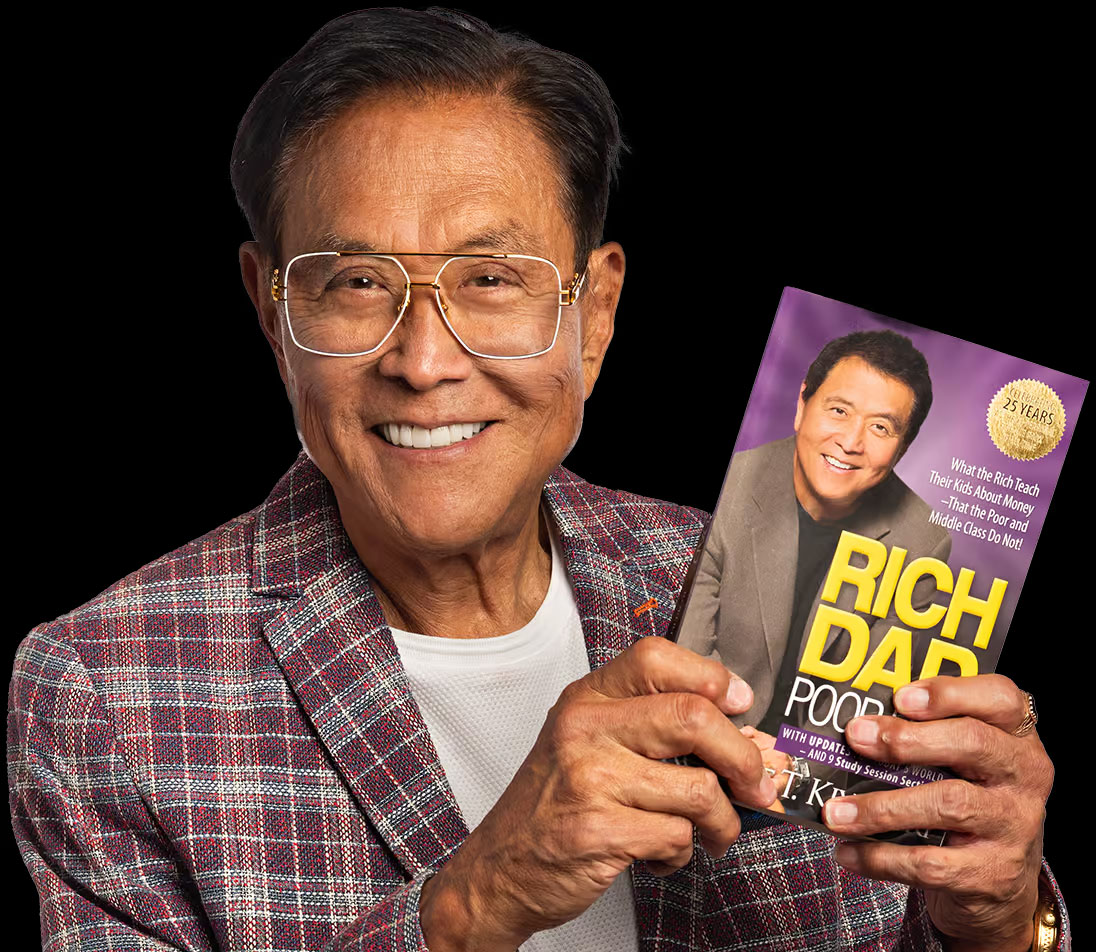
‘Rich Dad Poor Dad’ Author Robert Kiyosaki Reveals He Is $1.2 Billion in Debt
The 79-year-old financial guru says he carries over a billion dollars in debt tied to real estate investments, but his ex-wife clarifies it is not personal liability and forms part of a deliberate wealth-building strategy.
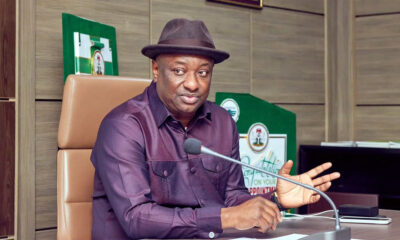
Robert Kiyosaki, the author of one of the best-selling personal finance books of all time, has revealed that he is carrying a staggering $1.2 billion in debt tied to his real estate investments. The 79-year-old “Rich Dad Poor Dad” author disclosed the figure during a summer appearance on the “Get Rich Education” podcast, stating plainly, “So, I’m a billion two in debt.” He added that people “should not do what I do, right?” but noted that he has studied debt since 1974 and that using it as a wealth-building tool requires proper knowledge.
While the eye-popping number has generated headlines worldwide, Kiyosaki’s ex-wife and long-time business partner, Kim Kiyosaki, has clarified that the figure does not represent money the author personally owes. She explained that the couple’s real estate portfolio includes approximately 1,500 apartment units held with partners, and the borrowing is attached to the properties themselves rather than to Kiyosaki personally. Her estimate for his personal share is far smaller—Vanity Fair calculated it could be between $30 million and $60 million, working backward from his claim of earning roughly $3 million a year.
READ ALSO:
- Lagos Cleric, 74, Remanded Over Alleged Defilement of 9-Year-Old Granddaughter
- 2027: Atiku vows to review NELFUND, forgive qualifying student loans
- Nollywood Actress Atinuke Kareem Dies After Brave Battle with Breast Cancer
The massive debt pile is a product of Kiyosaki’s intentional investment strategy rather than financial distress. As his properties rise in value, he borrows additional money against the increased equity and treats the loan proceeds as tax-free income, since loans are not taxed the way earnings are. He also places individual investments into separate limited liability companies, insulating them from one another if one runs into trouble—a structure he calls “firewalls.” “If it all comes to hell, you can talk to my attorney,” Kiyosaki told Vanity Fair. “Firewalls—that’s the way the rich play the game.”
Kim Kiyosaki suggested her former husband deliberately uses the billion-dollar figure to grab attention before explaining his position on investment debt. “He loves to say things that shock,” she told Vanity Fair, referring to his effort to explain “why investment debt is good.”
Financial experts are divided on the merits of Kiyosaki’s approach. David A. Perez, a multifamily real estate investor and founder of Tax Maverick AI, called it “a great strategy” and said carrying large amounts of property-backed debt is “actually very normal.” Perez noted that borrowing against property equity generally produces a tax-free loan because the property has not been sold, while warning that additional borrowing can increase mortgage payments and interest costs and reduce cash flow. However, John Poole, founder of Scottsdale-based consultancy JPTD Partners, offered a more cautious assessment. “I think there’s good debt and there’s bad debt, and then there’s $1.2 billion of debt, which you better know exactly what in the world you’re doing,” he told The Post. “Leverage works beautifully on the way up, and if it’s not continuing on that way up, then it’s like a chainsaw financially coming down.” Poole warned that the strategy cannot continue indefinitely, adding, “Kiyosaki may call this the ‘Rich Dad debt,’ but for the average investor, it could turn out to be ‘Poor Dad bankruptcy’ really quickly.”
The revelation has also brought attention to the gap between Kiyosaki’s public advocacy for Bitcoin and gold and his portfolio’s dependence on available credit. The loans tied to his $1.2 billion debt are secured by real estate, not by his crypto or metal holdings. This leaves an odd tension: he warns that cheap credit will wreck the economy while his own portfolio depends on that same credit staying available. History has shown the risks—one of his companies, Rich Global LLC, filed for Chapter 7 bankruptcy in 2012 following a $24 million judgment against it. Kiyosaki built his financial education empire around “Rich Dad Poor Dad,” first self-published in 1997 and sold over 44 million copies. The book contrasts the financial lessons he learned from his biological father, whom he calls the “Poor Dad,” with those he says he learned from the father of his childhood best friend, the “Rich Dad.”
‘Rich Dad Poor Dad’ Author Robert Kiyosaki Reveals He Is $1.2 Billion in Debt






International
Trump Makes Stunning Admission: ‘I Will Always Hate Some of My Enemies’
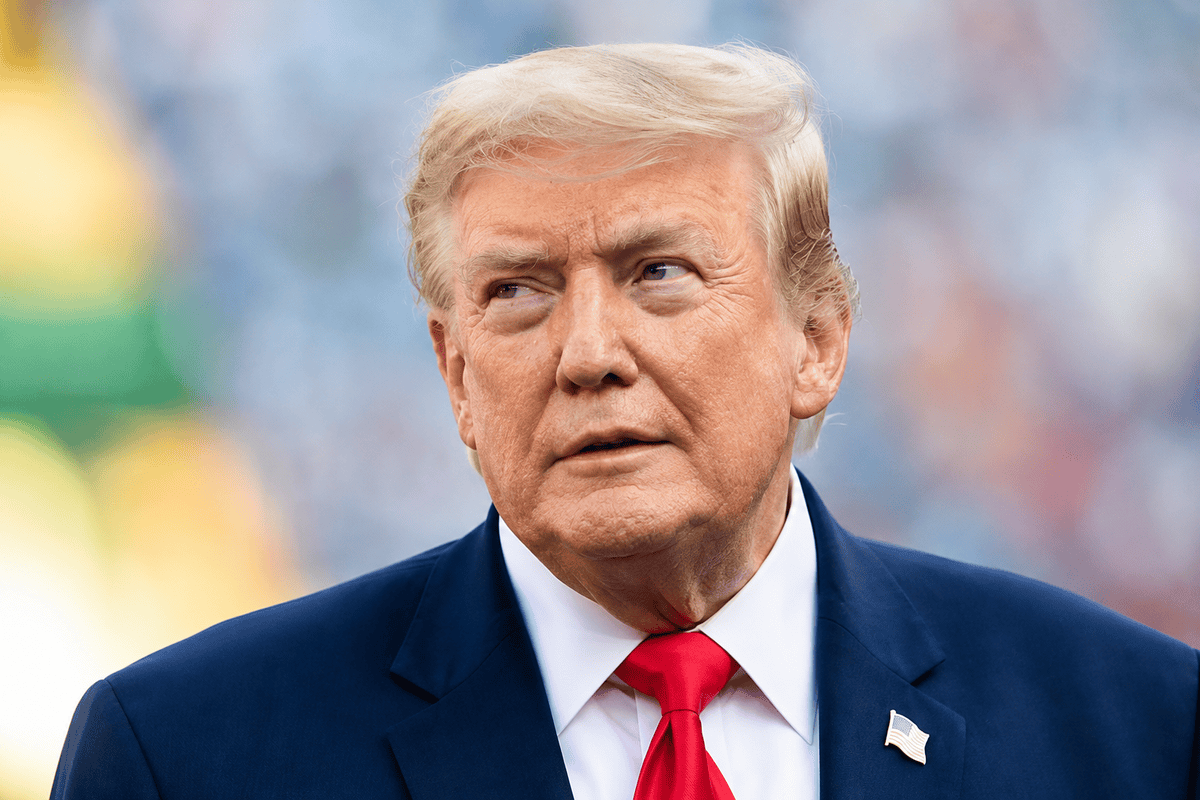
US President Donald Trump has declared that he cannot forgive some of his political enemies, even if doing so were necessary to enter heaven, insisting that he would rather be honest about his feelings than pretend to forgive them.
Trump made the remarks during an interview with CBS News’ 60 Minutes, aired on Sunday, November 8, 2026, while discussing his religious beliefs, death and political grievances.
CBS correspondent Ross Douthat asked Trump whether he would forgive political opponents, including former FBI Director James Comey and former House Speaker Nancy Pelosi, if forgiveness were a condition for entering paradise.
Trump questioned whether pretending to forgive people he disliked would amount to being dishonest.
“Well, then I wouldn’t be real, would I?” he asked.
Pressed for a direct answer, the president replied: “The answer is no. I want to be honest, no.”
He linked his resentment towards some political opponents to what he described as their treatment of him, including his criminal indictments and two impeachments.
READ ALSO:
- Fayose Petitions IGP, Threatens Lawsuit Over Rape, Torture Allegations
- INEC Flags 268 Voter Records Over AI-Generated Photos, Begins Cleanup Ahead of 2027 Elections
- Tension in Delta as Task Force Members Protest Over Colleague’s Killing at NDC Rally
“I do hate some of my enemies. I think they’ve been terrible. Look what they’ve put me through, the weaponisation. I got indicted, I got impeached,” he said.
When Douthat asked whether his achievements and extraordinary life could help him find it in his heart to forgive his opponents, Trump maintained that he probably could not.
“I probably cannot do that, no, because I do hate some of my enemies, and I always will,” he added.
The conversation also turned to religion and life after death, with Douthat asking Trump where he believed he would go when he died.
Describing himself as a religious person, Trump said he hoped to enter heaven.
“I’m a religious person, so in theory, I go to heaven,” he said.
Douthat also referred to Trump’s remarks at the memorial service of conservative activist Charlie Kirk, where Kirk’s widow, Erika Kirk, spoke about the importance of Christian forgiveness.
The exchange prompted questions about whether the president could reconcile his religious beliefs with his refusal to forgive some political opponents.
Towards the end of the interview, Douthat asked how Trump wanted his presidency to be remembered 100 years from now.
Trump said he wanted to be remembered as the president who “made America great again”, a reference to his long-standing political slogan.
His comments have attracted attention because of the contrast between the Christian message of forgiveness raised during the interview and his admission that he remains unwilling to forgive some political opponents.
Trump Makes Stunning Admission: ‘I Will Always Hate Some of My Enemies’
International
Job Seeker Steals Bugatti CEO’s £2m Car After Finding Keys Inside
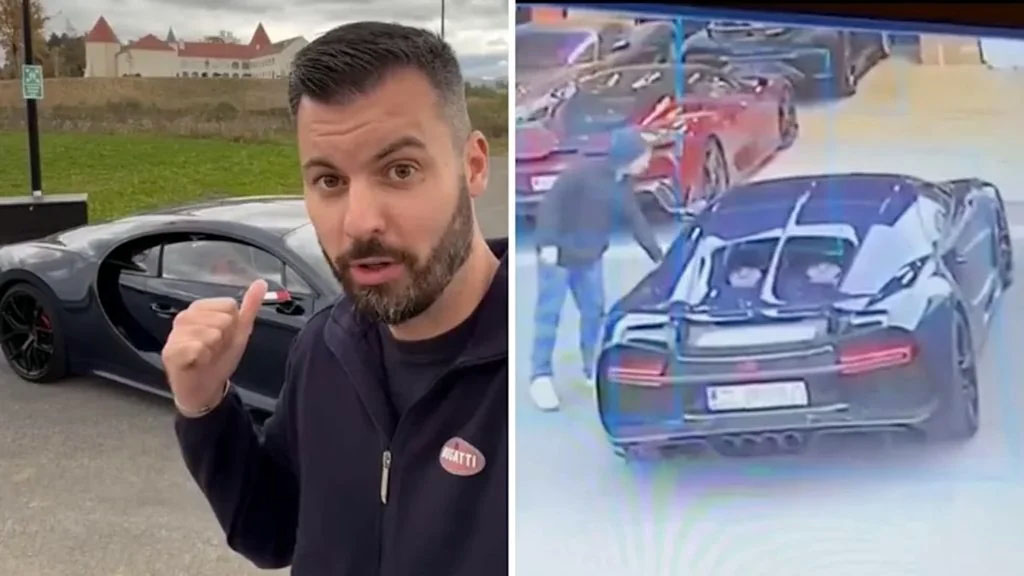
A man who reportedly visited the headquarters of luxury car manufacturer Bugatti in search of employment allegedly drove away in the company chief executive’s £2 million sports car after discovering that its keys had been left inside.
The incident involved Mate Rimac, the Croatian businessman and chief executive of Bugatti, whose personal Bugatti Chiron was stolen from the company’s production and technology campus near Zagreb, Croatia.
The suspect, a Croatian man in his mid-30s, reportedly entered the facility looking for a job before spotting the high-performance vehicle with its keys inside and driving away.
Rimac disclosed the incident in a series of posts on Instagram, explaining that he had routinely left the keys inside his vehicles because he considered Croatia a safe place.
He admitted that the habit had continued for years without any incident until the Chiron disappeared.
The theft was discovered after an employee alerted colleagues that an unfamiliar person had driven away in the expensive vehicle.
Rimac immediately contacted the police and used the car’s built-in tracking and telemetry system to monitor its movements.
The tracking technology provided information about the vehicle’s location, speed and fuel level, allowing the Bugatti team to follow its journey and share updates with law enforcement officers.
READ ALSO:
- Netanyahu Faces Political Setback as Israeli President Picks Rival to Form Government
- 2027: Tinubu Challenges Atiku to Explain How He Financed University
- Afenifere Crisis: ‘There Is Only One Afenifere’, Secretary Insists Amid Breakup Allegations
After discovering that the stolen vehicle was heading towards Slovenia, Rimac jumped into a Porsche 911 and pursued it.
The pursuit continued across borders, with the Chiron eventually reaching Austria. Rimac and his team maintained communication with the police through a group chat, providing updates that helped Austrian officers locate and intercept the vehicle.
The suspect was subsequently arrested in Austria, where Rimac later met him at a police station.
According to the Bugatti boss, the man explained that he had initially visited the company’s premises to seek employment but decided to take the car after noticing that its keys were inside.
Rimac said he was not planning to press charges against the suspect. However, he acknowledged that the man could still face prosecution because of the high value of the stolen vehicle.
The CEO also revealed that he had considered giving the suspect a lift home to his family but police officers did not allow him to do so.
The recovered Chiron sustained some damage during the incident, although Rimac said it could be repaired.
The businessman thanked the Austrian police for their intervention, saying he was relieved that nobody was injured during the incident.
He also admitted that the experience had taught him an expensive lesson, promising never again to leave the keys inside his vehicles.
The Bugatti Chiron, unveiled in 2016, is one of the world’s most powerful luxury hypercars. The model has a starting price of about €2.4 million, equivalent to approximately £2 million, and a manufacturer-limited top speed of 420 kilometres per hour.
Bugatti operates under Bugatti Rimac, a joint venture in which Rimac Group holds a majority stake.
The unusual theft has attracted international attention because of the vehicle’s value, the suspect’s reported reason for visiting the facility and the extraordinary cross-border pursuit involving the Bugatti chief executive.
Job Seeker Steals Bugatti CEO’s £2m Car After Finding Keys Inside
International
Netanyahu Faces Political Setback as Israeli President Picks Rival to Form Government
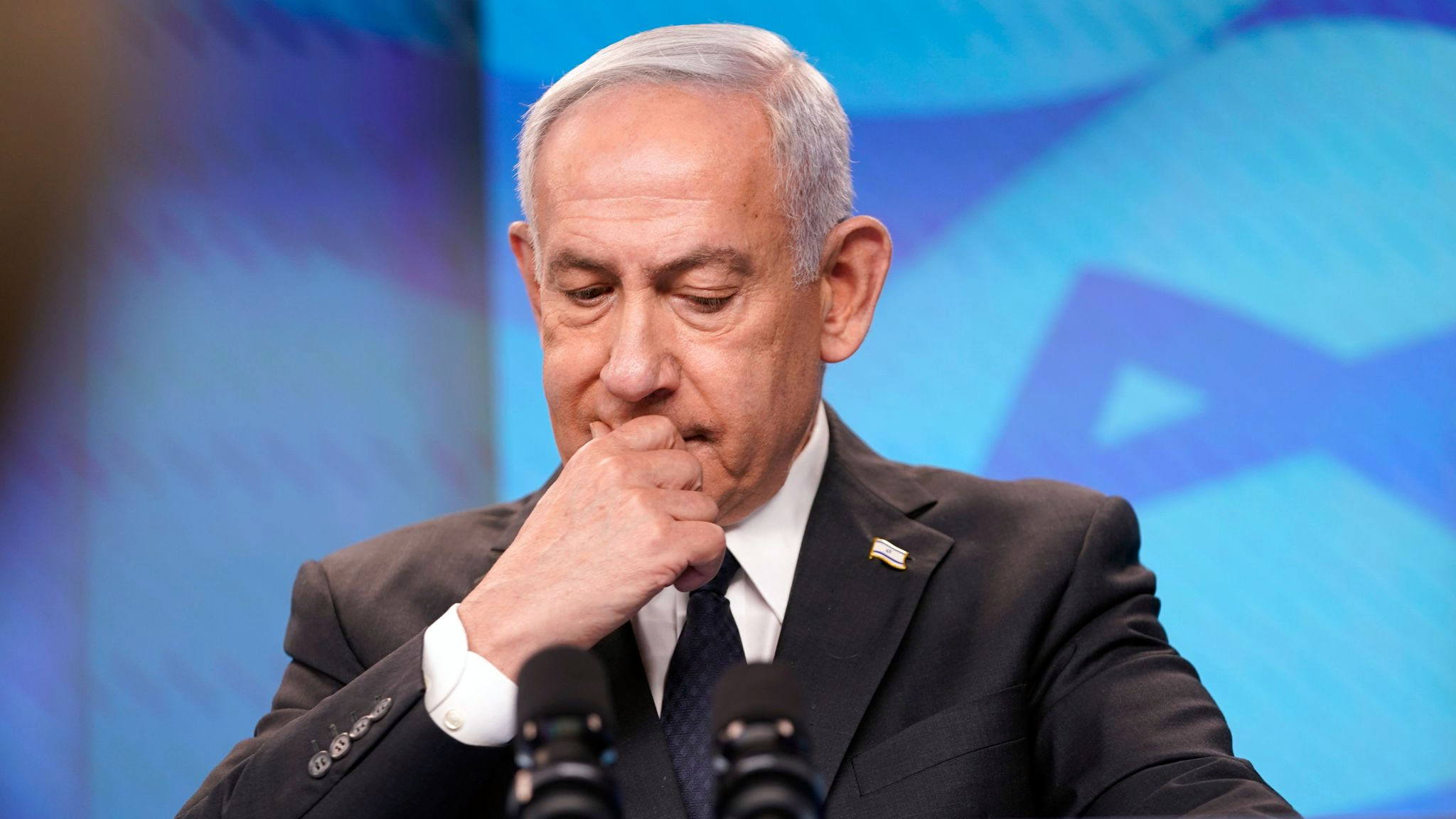
Netanyahu Faces Political Setback as Israeli President Picks Rival to Form Government
Israeli President Isaac Herzog has given opposition leader and former military chief Gadi Eisenkot the first opportunity to form the country’s next government, dealing Prime Minister Benjamin Netanyahu a major political setback after a closely contested general election.
Herzog announced his decision on Saturday, November 7, 2026, following consultations with political parties elected to the 26th Knesset, Israel’s parliament.
Eisenkot, leader of the Yashar party, emerged with the highest number of recommendations from lawmakers, receiving the backing of representatives from factions controlling 67 seats, compared with 46 seats for Netanyahu. Representatives of another faction controlling seven seats did not recommend either candidate.
The decision followed the October 27 general election, which left neither Netanyahu’s governing bloc nor the opposition grouping with the 61 seats required for a parliamentary majority in the 120-member Knesset.
Netanyahu’s religious-nationalist coalition secured 53 seats, while the four-party opposition alliance led by Eisenkot won 48. The two Arab-led parties made significant gains, securing a combined 19 seats, placing them in a potentially decisive position in negotiations over the next government.
Eisenkot is expected to receive the formal mandate from Herzog at a ceremony at the President’s Residence in Jerusalem on Sunday, November 8.
READ ALSO:
- 2027: Tinubu Challenges Atiku to Explain How He Financed University
- Afenifere Crisis: ‘There Is Only One Afenifere’, Secretary Insists Amid Breakup Allegations
- Illicit Donations: Adeboye Orders RCCG to Refund Billions Traced to Church Projects
Under the Israeli government-formation process, he will have 28 days to negotiate a coalition, with the possibility of a further 14-day extension.
The former military chief will face difficult negotiations because his opposition alliance does not have enough seats to govern independently. Although the Arab-led parties have endorsed him, Eisenkot has previously expressed reservations about forming a coalition with them.
One possible route is to establish a minority government with support from Arab-led lawmakers on confidence votes and key legislation. Another option would involve reaching an agreement with ultra-Orthodox parties that have traditionally aligned with Netanyahu.
However, both options could create tensions within Eisenkot’s own political alliance, particularly among members who oppose relying on Arab parties or making concessions to religious parties.
A broader national unity government involving Netanyahu’s Likud party is another possibility, although the two leaders have significant disagreements over key political and security issues.
Eisenkot has previously ruled out serving in a government alongside Netanyahu, while criticising the prime minister’s handling of the war in Gaza and his reliance on far-right political partners.
Netanyahu, Israel’s longest-serving prime minister, had sought to prevent an opposition-led government from emerging with the support of Arab-led parties.
Shortly before Herzog announced his decision, Netanyahu called for a national unity government and warned against the formation of an administration dependent on what he described as supporters of terrorism, referring to the Arab-led parties.
His comments drew criticism from Eisenkot’s political camp, which accused the prime minister of using divisive language to undermine the opposition’s efforts to form a government.
The Arab-led parties, which represent a significant section of Israel’s Palestinian citizens, have indicated their willingness to support efforts to end Netanyahu’s long tenure in office.
Their combined 19 seats could provide Eisenkot with the parliamentary backing needed to overcome the deadlock, although securing a workable arrangement remains uncertain.
Eisenkot, 66, served as chief of staff of the Israel Defence Forces from 2015 to 2019 before entering politics in 2022. He later served as an observer in Netanyahu’s wartime cabinet following the Hamas-led attacks on Israel on October 7, 2023.
He subsequently became one of Netanyahu’s most prominent critics, particularly over the conduct of the war in Gaza, the government’s security decisions and the influence of far-right politicians.
If Eisenkot fails to form a government within the stipulated period, Herzog may give another candidate the opportunity to try. If the process remains unsuccessful, Israel could be forced into another general election.
Netanyahu will remain prime minister in a caretaker capacity until a new government is sworn in.
Herzog’s decision therefore represents an important development in Israel’s political transition, but the final outcome will depend on whether Eisenkot can overcome divisions among opposition parties and secure sufficient parliamentary support.
Netanyahu Faces Political Setback as Israeli President Picks Rival to Form Government
-

 Sports3 days ago
BREAKING: Flamingos Make History, Defeat Japan 2–1 to Win First FIFA U-17 Women’s World Cup
-
 News3 days ago
Power Outage: Tegbe Gives Nigerians 72-Hour Timeline as FG Moves to Restore Electricity
-

 News2 days ago
One Killed, Five Injured as Violence Disrupts Obi-Kwankwaso Rally in Delta
-

 Sports2 days ago
Messi Breaks MLS Record, Becomes First Player To Win Back-to-Back Golden Boots
-
 Politics2 days ago
‘My History Is Traceable’: Atiku Fires Back at Tinubu Over University Funding
-

 metro2 days ago
[ICYMI] Lagos Summons DisCos, Regulators Over Persistent Power Outages, Seeks 24-Hour Electricity
-
 metro2 days ago
Zamfara: Bandits Allegedly Burn 13 Family Members Alive After Locking Them Inside Room
-

 Auto1 day ago
Four-day Abuja International Motor Fair begins tomorrow Nov 10