

International
Russian attacks continue in wake of Putin arrest warrant
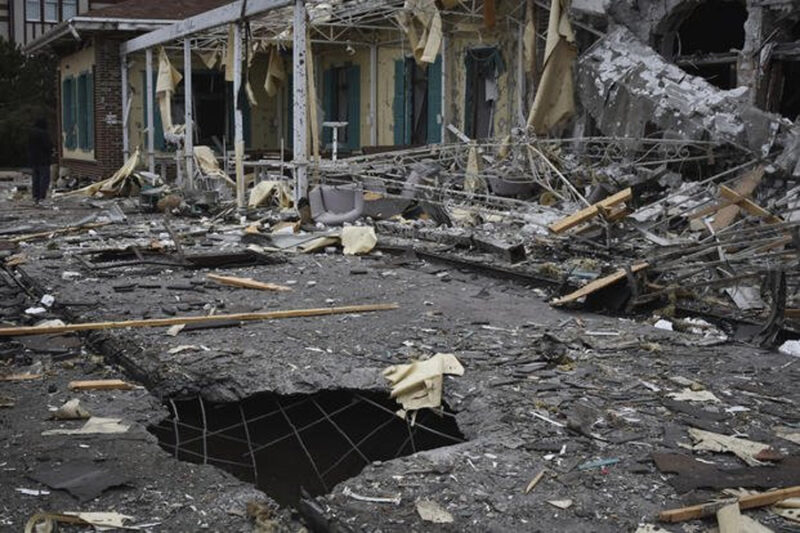
Widespread Russian attacks continued in Ukraine following the International Criminal Court’s decision to issue an arrest warrant for Russian President Vladimir Putin and Russia’s commissioner for children’s rights.
Ukraine was attacked by 16 Russian drones on Friday night, the Ukrainian Air Force said in the early hours of Saturday. Writing on Telegram, the air force command said that 11 out of 16 drones were shot down “in the central, western and eastern regions.” Among areas targeted were the capital, Kyiv, and the western Lviv province
The head of the Kyiv city administration, Serhii Popko, said Ukrainian air defenses shot down all drones heading for the Ukrainian capital, while Lviv regional Gov. Maksym Kozytskyi said Saturday that three of six drones were shot down, with the other three hitting a district bordering Poland. According to the Ukrainian Air Force, the attacks were carried out from the eastern coast of the Sea of Azov and Russia’s Bryansk province, which borders Ukraine.
READ ALSO:
- Osun PDP agent pays voters via PoS (VIDEO)
- APC in Rivers contested against INEC not PDP – Amaechi
- Gov/Assembly Polls: EFCC arrests ‘over 65 persons’ for voter inducement across 28 states
The Ukrainian military additionally said in its regular update Saturday morning that Russian forces over the previous 24 hours launched 34 airstrikes, one missile strike and 57 rounds of anti-aircraft fire. The Facebook update said that falling debris hit the southern Kherson province, damaging seven houses and a kindergarten.
According to the Ukrainian statement, Russia is continuing to concentrate its efforts on offensive operations in Ukraine’s industrial east, focusing attacks on Lyman, Bakhmut, Avdiivka, Marinka and Shakhtarsk in Ukraine’s eastern Donetsk province. Pavlo Kyrylenko, regional Gov. of the Donetsk province, said one person was killed and three wounded when 11 towns and villages in the province were shelled on Friday.
Further west, Russian rockets hit a residential area overnight Friday in the city of Zaporizhzhia, the regional capital of the partially occupied province of the same name. No casualties were reported, but houses were damaged and a catering establishment destroyed, Anatoliy Kurtev of the Zaporizhzhia City Council said.








International
Court Throws Out Trump-Era Case Accusing Harvard of Failing Jewish Students

Court Throws Out Trump-Era Case Accusing Harvard of Failing Jewish Students
A US federal judge has dismissed a lawsuit filed by President Donald Trump’s administration that accused Harvard University of failing to protect Jewish and Israeli students from harassment on campus. Boston-based US District Judge Richard Stearns – a Clinton appointee – ruled on Thursday that the government had not presented enough evidence to prove that Harvard was currently violating federal civil rights law. He granted the university’s motion to dismiss for failure to state a claim, dealing a fresh blow to the administration’s broader campaign against elite universities.
The US Department of Justice filed the lawsuit in March 2025, claiming that Harvard’s response to antisemitic incidents following the 7 October 2023 Hamas-led attack on Israel was woefully inadequate. Prosecutors argued that the university had shown “deliberate indifference” to the safety of Jewish and Israeli students, allowing anti-Israel protesters to breach campus rules “with impunity”. The administration sought to withhold federal funding and compel Harvard to overhaul its policies on discrimination, free speech, and diversity initiatives.
In his 30-page ruling, Judge Stearns found that the government’s amended complaint relied heavily on incidents from the 2023–2024 academic year – a period marked by intense campus protests over the Gaza war. By contrast, the complaint cited only three incidents from March 2025, which the judge described as “singly and collectively” too isolated and episodic to support a finding of systemic non-compliance. Crucially, Stearns noted that the government did not formally notify Harvard of its alleged Title VI violations until 30 June 2025. Under the Civil Rights Act of 1964, Title VI prohibits discrimination based on race, colour, or national origin in programmes receiving federal financial assistance. The judge wrote that the amended complaint “is devoid of any factual allegations plausibly establishing that any events that might be construed as evidence of noncompliance occurred after June 30, 2025.” He also emphasised that Congress’s intent with Title VI was “not to penalise a wayward funding recipient but instead to incentivise it to bring itself into compliance” – a point that directly undermined the administration’s push to claw back billions in federal research grants.
READ ALSO:
- Osun Election Tension: Lawyer Urges Davido to Apologise to Okpebholo Over WAEC Result Troll
- Customs Busts International Lion Cub Smuggling Ring, Rescues Two Cubs at Abuja Airport
- Seven Miners Killed in Plateau Mining Pit Collapse, Renewing Urgent Calls for Safety Reform
Harvard had consistently rejected the administration’s allegations, arguing that the lawsuit relied on outdated incidents and ignored the concrete steps the university had already taken to address antisemitism on campus. These included strengthening discrimination reporting systems, expanding educational programmes, and revising student conduct policies. In a statement following the ruling, Harvard called the lawsuit “yet another pretextual and retaliatory action by the administration for refusing to turn over control of Harvard to the federal government.” The university reiterated its commitment to protecting all students – Jewish, Israeli, Palestinian, Muslim, and others – from harassment and discrimination, while defending its academic independence and institutional autonomy.
Thursday’s dismissal is the latest setback in a series of confrontations between the Trump administration and Ivy League institutions. Before filing the lawsuit, the government had already frozen $2.2 billion** in multi-year research grants and **$60 million in contract funding to Harvard in April 2025, demanding that the university eliminate antisemitism and roll back certain diversity, equity, and inclusion (DEI) programmes. In a separate but related case last year, another federal judge ordered the administration to reverse more than $2.6 billion in funding cuts to Harvard, finding that the White House had used antisemitism as a “smokescreen for a targeted, ideologically-motivated assault” on universities. Assistant Attorney General Harmeet Dhillon responded to the dismissal by saying the administration “disagree[s] with the ruling and [is] assessing next steps” – suggesting a possible appeal.
While the dismissal does not minimise the real and ongoing concerns about antisemitism on US college campuses, it sends a clear legal signal: federal courts are reluctant to intervene without clear, current, and concrete evidence of institutional civil rights violations. The ruling also reinforces the principle that universities – even those receiving substantial federal funding – retain broad discretion over campus discipline, speech policies, and educational mission, provided they act reasonably and in good faith. For students, faculty, and advocates on all sides of the debate, the decision underscores the importance of evidence-based reporting, timely government action, and balanced approaches to protecting religious identity, national origin, and political expression within higher education.
Court Throws Out Trump-Era Case Accusing Harvard of Failing Jewish Students
International
Iran Had Detailed Intel on Trump’s Location Before Secret Turkey Escape
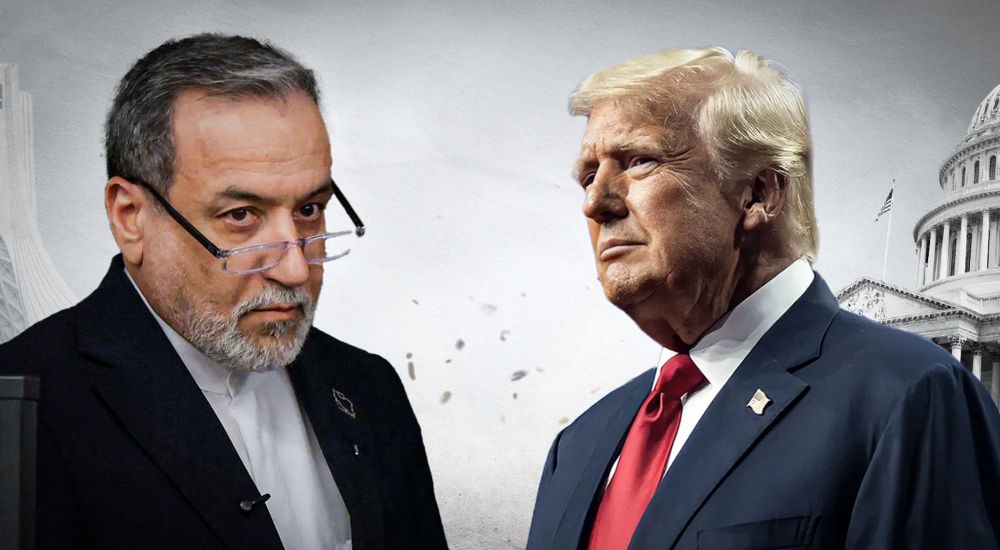
Iran Had Detailed Intel on Trump’s Location Before Secret Turkey Escape
United States President Donald Trump was secretly moved from the aircraft publicly believed to be carrying him out of Turkey after American intelligence agencies detected a credible threat against him, according to reports.
The dramatic security operation reportedly followed intelligence suggesting that Iranian operatives had obtained detailed information about Trump’s whereabouts in Ankara, including the floor of the hotel where he was staying.
The development came amid heightened tensions between Washington and Tehran and concerns over possible Iranian retaliation against Trump following US military action against Iran.
According to reports, the threat was considered serious enough for the United States Secret Service to activate an elaborate deception operation during Trump’s departure from Ankara.
Rather than allowing the President to leave on the aircraft normally identified as Air Force One, security officials reportedly moved him secretly to a smaller Boeing C-32A military aircraft.
READ ALSO:
- INEC reprints Osun ballot papers, result sheets, includes SDP candidate
- FG to Attach 300 NYSC Corps Members to CNG Workshops for Skills Training
- WAFCON: Chawinga sisters fire Malawi into historic final
Trump was said to have been transferred from the presidential aircraft using an airport catering vehicle, while the larger aircraft subsequently departed as a decoy.
The operation was reportedly designed to make it difficult for anyone monitoring the President’s movements to determine which aircraft was actually carrying him.
The C-32A carrying Trump reportedly flew to Britain, while the larger aircraft, carrying members of the travelling press corps and senior officials, followed shortly afterwards.
The secrecy surrounding the operation was so extensive that some people aboard the decoy aircraft were reportedly unaware that Trump was no longer on board.
The Associated Press reported that Secretary of State Marco Rubio was aware of the security operation and remained aboard the decoy aircraft. It was unclear whether Treasury Secretary Scott Bessent had been fully informed of the change in plans.
Reports said the security concern was linked to intelligence indicating a possible missile threat. A person near the NATO summit was also reportedly observed with what appeared to be a shoulder-fired missile.
However, officials reportedly found no evidence of a fully developed attack plan against Trump.
The reported intelligence about Iran’s knowledge of Trump’s location has nevertheless raised serious questions about the extent to which Iranian intelligence was able to monitor the movements of the US President while he was in Turkey.
The precise source of the intelligence remains classified, and there has been no public release of the underlying US intelligence assessment.
Trump has reportedly defended the decision to change his travel arrangements, saying he followed instructions from his security detail.
The incident highlights the increasingly complex security challenges surrounding the movement of the US President, particularly amid escalating tensions with countries regarded by Washington as potential threats.
The use of a decoy presidential aircraft, combined with the secret transfer of Trump to a less conspicuous military jet, represents an unusually elaborate presidential security operation.
While officials have not publicly established that Iran was preparing an attack against Trump, the reported intelligence about his location was considered sufficiently concerning to prompt one of the most extraordinary presidential travel security measures in recent times.
Iran Had Detailed Intel on Trump’s Location Before Secret Turkey Escape
International
Pentagon Confirms 153 Civilians Killed in US Military Operations in 2025
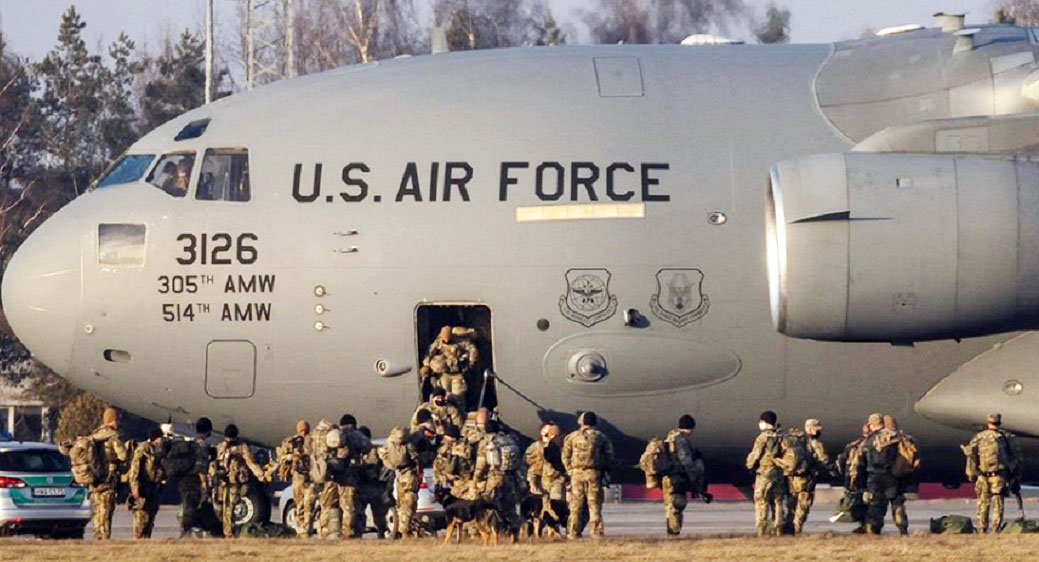
Pentagon Confirms 153 Civilians Killed in US Military Operations in 2025
A Pentagon assessment submitted to Congress has formally acknowledged that US military operations killed 153 civilians and wounded 243 others in 2025, a sharp increase from the previous year. All documented casualties were linked to three strikes in Yemen during Operation Rough Rider, the US campaign against Iran-backed Houthi rebels.
The Pentagon has formally acknowledged that US military operations in 2025 killed 153 civilians and wounded 243 others, according to a report submitted to Congress on August 10, 2026. The figures represent a dramatic increase from 2024, when the Pentagon assessed that two civilians were killed and two were injured by US military operations. The report was submitted to the Senate Armed Services Committee as required by Section 1057 of the 2018 National Defense Authorization Act.
The report found that all civilian deaths and injuries recorded in 2025 resulted from three US strikes in Yemen in April 2025. The US Central Command assessed that the three strikes “more likely than not” resulted in civilian harm. The strikes were part of Operation Rough Rider, the US military campaign against Yemen’s Iran-backed Houthi militia group, aimed at preventing attacks on commercial shipping in the Red Sea.
READ ALSO:
- Osun guber: Adeyanju petitions US, UK, Canada to sanction Fadahunsi over ‘kill accord’ comment
- Troops Neutralize Suspected Armed Herder, Recover AK-47 in Benue Community Attack
- Sowore Vows to Restore Petrol Subsidy If Elected President in 2027
According to the Pentagon assessment, the three deadly strikes occurred at specific locations across Yemen in April 2025. On April 6, a US strike hit a residence near the Yemeni capital, Sanaa, killing five civilians and injuring 25. The April 17 attack targeted Ras Isa Port, where the Pentagon assessed that 80 civilians were killed and 171 injured. Human Rights Watch had separately reported a comparable death toll and raised concerns about the attack’s potential violation of international humanitarian law, noting that port workers were among those killed. A third strike near Saada on April 28 killed between 47 and 68 civilians and injured 68, according to the assessment. Amnesty International’s investigation into the migrant detention centre said the attack killed and injured “dozens” of African migrants and should be probed as a war crime.
The military relied on US intelligence, imagery, and public reporting rather than conducting site visits or interviews to make the assessment. As of February 2026, the US Central Command was still assessing 15 other incidents in Yemen following reports received through non-governmental organisations.
The Pentagon assessment stands in contrast to significantly higher estimates from independent monitoring groups. Airwars, an organisation tracking civilian harm in conflicts, reported that at least 258 civilians may have been killed in Operation Rough Rider. The Yemen Data Project documented at least 238 civilian deaths, including 24 children, and 467 injuries across 339 strikes during the campaign. Officials who spoke to The Intercept on condition of anonymity described the 153 figure as “lowball numbers,” with one calling the report “a fucking joke” and a “total whitewash”.
The report notably does not include casualties from US strikes on vessels in the Caribbean Sea and Eastern Pacific Ocean, which the Trump administration has carried out against what it describes as “narco-terrorists”. As of February 1, 2026, the US Southern Command assessed that “there were no incidents in which civilian casualties more likely than not resulted from US military operations in the USSOUTHCOM area of responsibility in 2025”. However, independent tallies indicate US military strikes on such vessels have killed more than 200 people since September 2025. Human Rights Watch and Amnesty International consider such strikes unlawful extrajudicial killings, and the American Civil Liberties Union has cast the administration’s assertions against those targeted as “unsubstantiated, fear-mongering claims”.
The disclosure comes as the Pentagon prosecutes a broader military operation against Iran that began in February 2026, and follows significant cuts to civilian harm mitigation programmes. Defence Secretary Pete Hegseth reportedly overruled top military officials, including then-Central Command chief Erik Kurilla and Joint Chiefs Chair Gen. C.Q. Brown, who pushed against slashing the Civilian Protection Center of Excellence and similar initiatives. Hegseth instead reduced personnel working on civilian harm issues from approximately 200 to fewer than 40, with Central Command’s civilian harm team slashed from 10 personnel to just one. The administration’s 2026 budget proposed the “disestablishment” of the Civilian Protection Center of Excellence, reducing personnel funding by over $2 million and mission support funding by more than $9.5 million, amounting to roughly a 90 per cent reduction in personnel since March 2025. Congress has since launched investigations into the cuts, with lawmakers accusing the Pentagon of gutting a congressionally mandated effort to reduce civilian harm despite a legal requirement to maintain it. A May 2026 Inspector General report found that the Department of Defense may have violated federal law by defunding and blocking civilian protection efforts.
Pentagon Confirms 153 Civilians Killed in US Military Operations in 2025
-

 Education2 days ago
Nigerian Young Academy, LASU to Host 16th International Conference on Convergent Research
-
 News2 days ago
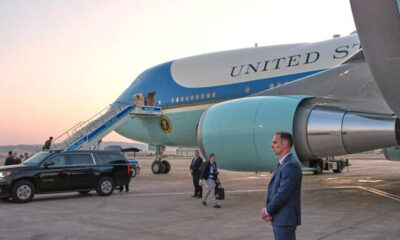
Trump smuggled out of Turkey in catering truck over Iran threat
-

 Politics3 days ago
Keep Religion Out of Nigeria’s ‘Dirty Politics,’ Gumi Tells Jingir
-

 metro3 days ago
Ex-Aiye Confraternity Leader Arrested in Lagos, Confesses to Multiple Killings in Mushin
-

 metro3 days ago
‘I Acted Out of Patriotism’ — Army Colonel Ma’aji Breaks Silence, Explains Why He Plotted Coup Against Tinubu
-
 News3 days ago
South Africa Visa Applications Double From Nigerians Despite Xenophobia Concerns – Envoy
-

 News2 days ago
Tinubu Vows to Secure Nigeria, Declares Unity Non-Negotiable Amid Worsening Insecurity
-

 metro3 days ago
How Enugu Abduction Led to Recovery of 4 AK-47 Rifles, 133 Ammunition – Army