
News
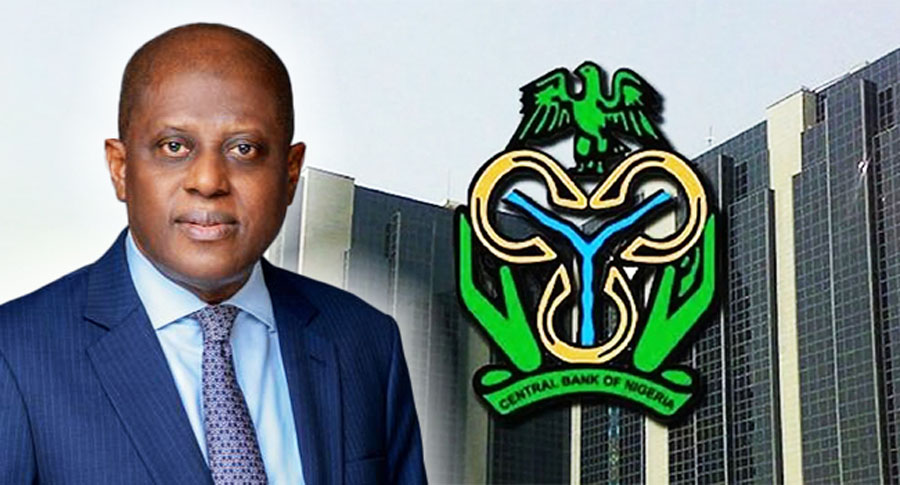
Sacked CBN workers seek reinstatement
Sacked CBN workers seek reinstatement
Former employees of the Central Bank of Nigeria are grappling with the shock of their sudden dismissal, accusing the management of maltreatment and injustice.
They claimed that many were not paid their entitlements before their sacking, a move they argued violates the bank’s human resource rules and policy.
In a statement issued on Sunday in Jos, Plateau State capital, the North Central Coordinator of the Conference of Autochthonous Ethnic Communities Development Association Youth Wing, Paul Dekete, called for the immediate reinstatement of the sacked workers.
The statement read, “The purge wasn’t limited to high-level executives. It extended far beyond directors, impacting Deputy Directors and Assistant Directors who formed the backbone of departmental operations. These were not junior staff; they were seasoned professionals with deep institutional knowledge.
“For example, the Director of Information Technology was overseeing crucial projects on the very day they were terminated, including efforts to secure international information security certifications for the bank.
“In a particularly egregious case, a Director on special assignment, tasked with leading the bank’s efforts to secure an ISO certification for information security, was sacked on the very day the bank successfully achieved this crucial milestone.
“Central banking relies heavily on robust cybersecurity measures, and this certification is a testament to the Director’s competence and the bank’s commitment to financial security. This abrupt dismissal, on the day of a major accomplishment, raises serious questions about the planning and rationale behind the mass layoffs.”
The statement further said, “The mass sack violated the bank’s own HR policy, which mandates board approval for executive terminations.
READ ALSO:
- NDLEA seizes another 175,000 bottles of codeine from India
- Aisha Yesufu demands scrapping of Senate to reduce governance cost
- Katsina govt explains N45,000 Sallah package to civil servants
“This blatant disregard for due process has raised serious questions about transparency. The CBN, a federal institution, must adhere to public service rules. This dismissal exercise, carried out without board approval, lacks a solid legal foundation.
“Making matters worse, the bank offered no clear criteria for the mass sacking. This is a stark departure from their established culture of clear communication with staff during downsizing exercises.”
Dekete, on behalf of the sacked CBN workers further said, “Loyal employees, some with over 30 years of dedicated service, were cast aside with a cold, impersonal letter stating “your services are no longer required.” This callous act extended to a Deputy Director who was let go even though she had already completed all the necessary paperwork and her retirement letter was ready to be issued.
“The human cost of this heartless exercise is staggering. Many staff members had used their salaries as collateral for loans tied to their remaining years of service at the CBN. With their abrupt termination, these loans were immediately deducted from their final paychecks, leaving some with nothing and others still indebted to the bank. The impact on these individuals and their families is devastating, with their dreams and financial security shattered in an instant.
“The CBN’s purge extended beyond individual hardship, raising serious concerns about ethnic bias. Reports indicate that some states saw over 80% of their executive staff removed, with North Central and South Eastern regions disproportionately affected. This blatant disregard for the principle of federal character raises troubling questions about the bank’s commitment to national unity.
“Staff morale has plummeted, with a pervasive sense of fear and uncertainty gripping the institution. Every Friday is met with dread, as rumours swirl of another list of targeted employees. The reported use of an external consultant, seemingly unfamiliar with the bank’s HR policies and civil service regulations, only exacerbates the lack of trust and transparency.”
The CBN’s mass dismissal included the entire Economic Intelligence Unit (EIU), a Unit in the bank tasked with the critical function of identifying and monitoring illegal financial activities within Nigeria. Established in 2018, the EIU was meticulously built by cherry-picking the bank’s brightest minds across various departments.
According to Dekete, the loss of these highly trained professionals represents a significant blow to the bank’s institutional knowledge and capacity to combat money laundering and other illicit financial activities.
He noted that the nature of the sack shows an attempt to cripple the Middle-belt region of the state as Gombe, Plateau and Benue are affected most.
Sacked CBN workers seek reinstatement








News
FG Allocates ₦5.6bn for New Carter Bridge as Old Structure Fails Safety Test
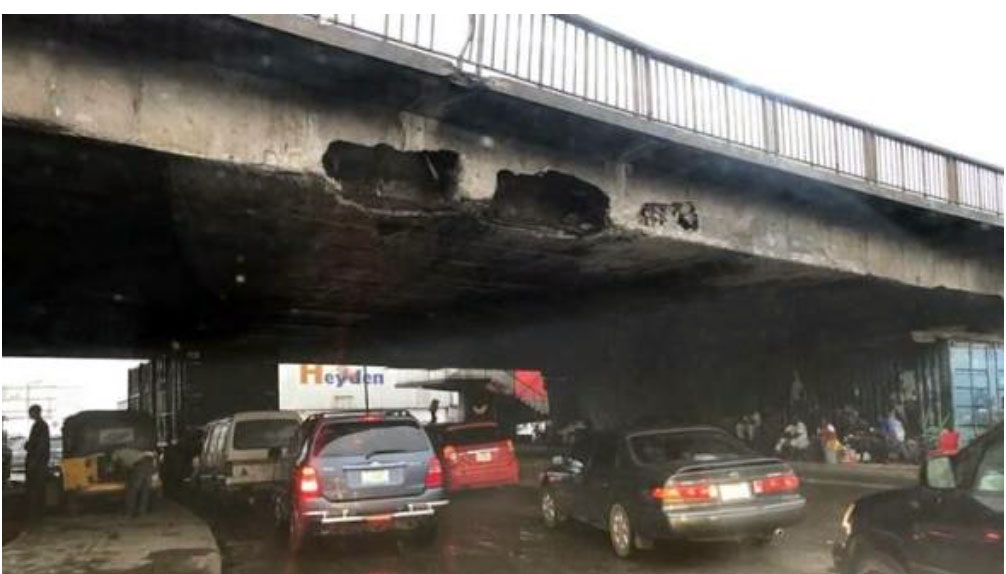
FG Allocates ₦5.6bn for New Carter Bridge as Old Structure Fails Safety Test
The Federal Executive Council (FEC) has approved the demolition and complete reconstruction of Carter Bridge in Lagos, declaring the ageing structure beyond rehabilitation. The decision aims to ensure road safety, reduce congestion, and modernize one of Nigeria’s most critical transport arteries.
Minister of Works, David Umahi, disclosed after the council meeting chaired by President Bola Tinubu that ₦5.6 billion has been allocated to hire advanced engineering consultants for the design and cost assessment of the new bridge. Umahi explained that extensive technical assessments and consultations revealed that the current bridge could no longer safely serve traffic.
“The total recommendation was that Carter Bridge can no longer be rehabilitated; it should be demolished and a new bridge constructed,” Umahi said.
Carter Bridge connects Lagos Island to the mainland and is a vital corridor for commuters, cargo vehicles, and commercial traffic. Its reconstruction is expected to ease traffic congestion, improve transportation safety, and support economic activity in Nigeria’s largest commercial hub.
READ ALSO:
- Iran Launches Missiles at Israel as Middle East War Enters Sixth Day
- US Submarine Sinks Iranian Warship in Indian Ocean as Conflict Escalates
- Court Orders INEC Chairman to Appear Over Alleged Contempt of Court
Part of a Nationwide Infrastructure Upgrade
The Carter Bridge project forms part of a broader federal infrastructure program. FEC also approved several major road projects across the country, including:
- Reconstruction of the Ibadan–Ife–Ilesa Road in the Southwest
- Redesign of the Kano–Kongolam Road in Northern Nigeria
- Rehabilitation of the Keffi–Nasarawa–Abaji Road in the North-Central region
- Completion of the Suleja–Minna Road
- Reconstruction of the Abuja–Lokoja Road
Umahi emphasized that these are strategic, long-term infrastructure projects, not temporary fixes, and the government aims to deliver at least four completed projects per region for presidential commissioning by May 15.
“These are not palliative works; they are major infrastructure projects for national development,” the minister added.
Modernization and Economic Impact
The new Carter Bridge will incorporate contemporary engineering standards, enhanced durability, and increased capacity for vehicles and pedestrians. Officials say the project will also attract private sector participation, create skilled jobs, and strengthen Lagos’ transport network.
By replacing the ageing structure, the federal government intends to ensure that major transport routes across Nigeria meet modern safety and operational standards, while supporting economic growth and improving daily mobility for millions of Lagos residents.
FG Allocates ₦5.6bn for New Carter Bridge as Old Structure Fails Safety Test
News
ICPC, NRC Forge Anti-Graft Alliance to Safeguard Rail Assets
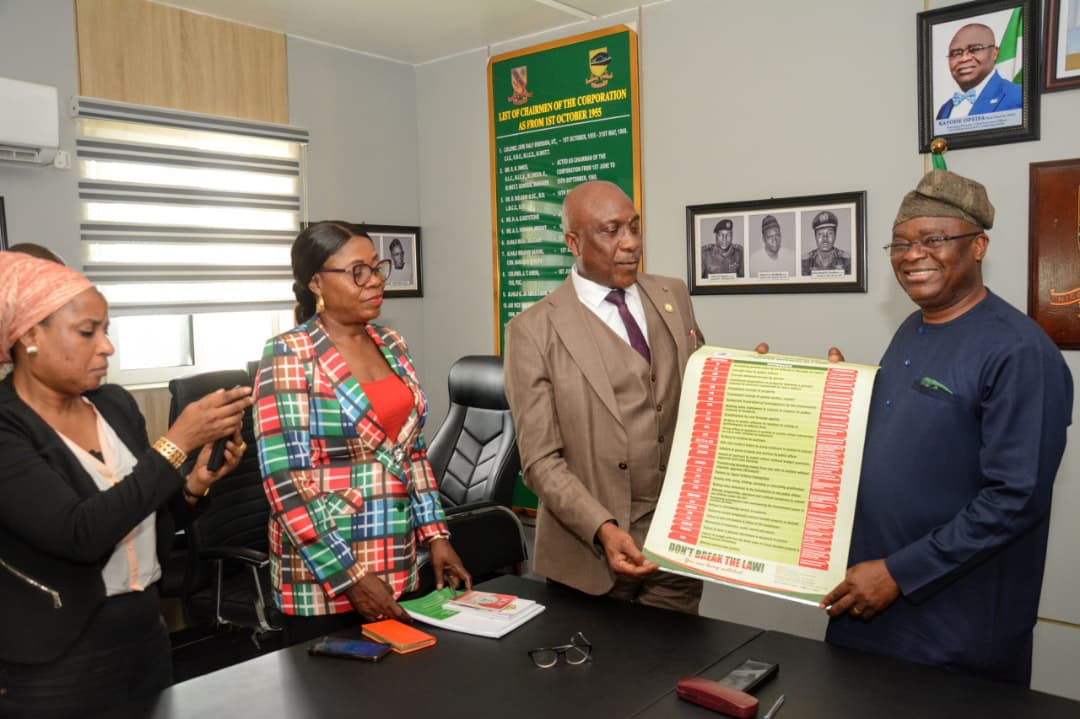
ICPC, NRC Forge Anti-Graft Alliance to Safeguard Rail Assets
The Independent Corrupt Practices and Other Related Offences Commission has pledged closer collaboration with the Nigerian Railway Corporation to strengthen transparency and accountability in the country’s rail sector.
The Resident Anti-Corruption Commissioner (RAAC), Lagos Office, Mr. Alexander Chukwumah, gave the assurance during a courtesy visit to the NRC Managing Director, Dr. Kayode Opeifa, at the corporation’s headquarters.
Chukwumah said the commission was prepared to support the NRC through targeted training programmes aimed at equipping staff with the knowledge to identify and avoid actions that could expose them to corruption-related offences.
He explained that the initiative aligns with the ICPC’s public education mandate to promote integrity across public institutions.
He urged the management of the corporation to work closely with its Anti-Corruption and Transparency Unit, noting that members of the unit had been trained to detect early warning signs and red flags capable of preventing minor lapses from escalating into major institutional crises.
According to him, the visit was also to reinforce the cordial relationship between both agencies and reciprocate the goodwill earlier extended by the railway corporation.
“ICPC is committed to ensuring that NRC workers stay out of trouble. There are ways we can guide you and your team to avoid actions that could expose them to corruption risks,” Chukwumah said.
In his response, Opeifa welcomed the partnership and expressed readiness to deepen collaboration with the anti-graft agency to entrench transparency within the corporation.
The NRC boss observed that the railway system could have achieved greater milestones over the years but for corruption-related setbacks that slowed its growth.
He requested the commission to organise a capacity-building programme for heads of departments and senior management staff to sharpen their understanding of compliance standards and ethical decision-making.
Opeifa identified vandalism of railway infrastructure as a major operational challenge, stressing that the destruction of critical assets continues to strain service delivery.
As part of efforts to curb the menace, he presented anti-vandalism sweatshirts to the ICPC delegation bearing the inscription: “Rails and railway assets are critical national treasures and not scraps.”
He maintained that the corporation operates a strict disciplinary regime, warning that any staff found culpable of collusion or sabotage faces immediate dismissal.
He also commended NRC engineers and other personnel for sustaining operations despite logistical and infrastructural challenges.
On the corporation’s long-term direction, Opeifa reiterated the NRC’s Vision 2-5-10-20 development framework aimed at modernising and expanding the rail network.
He said the first phase prioritises optimising legacy lines and reviving abandoned corridors that once served as economic lifelines, including the Kaduna–Nguru–Kaura Namoda route, with plans to restore services to Zamfara State within the year.
He added that the corporation is advancing a freight-by-rail drive under its “Railing with the States” initiative to enable sub-national governments leverage rail infrastructure for economic growth and enhance connectivity to the nation’s seaports.
Opeifa further disclosed that the NRC plans to gradually transition from diesel-powered locomotives to cleaner energy sources such as gas within the next five years, subject to funding, while working towards doubling Nigeria’s rail assets by 2035.
News
Tinubu swears in Disu as substantive IGP, chief inaugurates up state police committee
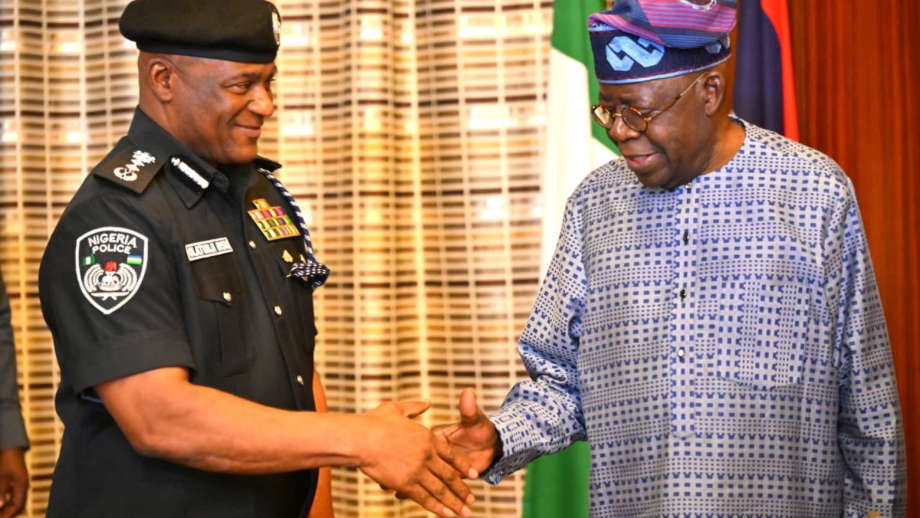
Tinubu swears in Disu as substantive IGP, chief inaugurates up state police committee
President Bola Tinubu on Wednesday swore in Olatunji Disu as the substantive Inspector-General of Police at the Council Chambers of the State House, Abuja, as the new police chief immediately inaugurated a committee to drive the implementation of state policing.
Disu took the oath of office at 2:53pm after his citation was read by the State House Director of Information and Public Relations, Mr Abiodun Oladunjoye.
The brief ceremony, witnessed by Vice President Kashim Shettima, members of the Federal Executive Council and other top government officials, preceded the FEC meeting, which commenced at 3:01pm.
Among dignitaries present were the Secretary to the Government of the Federation, George Akume; National Security Adviser, Nuhu Ribadu; Chief of Staff to the President, Femi Gbajabiamila; Minister of Police Affairs, Ibrahim Gaidam; FCT Minister, Nyesom Wike; and Head of Service, Mrs Esther Walson-Jack.
The President also swore in newly appointed commissioners of the Revenue Mobilisation Allocation and Fiscal Commission and the Federal Civil Service Commission.
Disu’s confirmation followed his unanimous endorsement by the Nigeria Police Council on Monday, barely a week after Tinubu appointed him acting IGP in the wake of the resignation of his predecessor, Kayode Egbetokun, on February 23, 2026.
At Monday’s Police Council meeting, Lagos State Governor, Babajide Sanwo-Olu, reportedly commended Disu’s track record, particularly his tenure as Commander of the Rapid Response Squad in Lagos between 2015 and 2021.
Nasarawa State Governor, Abdullahi Sule, also described the appointment as merit-based, while Enugu State Governor, Peter Mbah, seconded the motion endorsing him.
Disu, 59, joined the Nigeria Police Force as a Cadet Assistant Superintendent of Police on May 18, 1992. Before his elevation, he served as Assistant Inspector-General of Police in charge of the Special Protection Unit and the Force Criminal Investigation Department Annex in Lagos. He previously held key roles in Lagos and Rivers states.
Hours after his inauguration, the new IGP held his first formal engagement with senior officers, during which he announced the constitution of an eight-member committee to oversee the implementation of state policing.
Professor Olu Ogunsakin was named chairman of the committee.
Addressing the force hierarchy, Disu said leadership was “not about position but responsibility,” stressing that professionalism, discipline and accountability must guide policing nationwide.
He underscored the need for restraint in the exercise of authority and respect for human rights, insisting that all Nigerians must be treated with dignity and fairness irrespective of status.
The IGP also pledged to strengthen internal oversight mechanisms, directing that the Public Complaint Unit and the X-Squad be empowered to operate independently.
On decentralisation, Disu said state policing would enable different tiers of government to play more active roles in addressing security challenges across the country.

-

 International3 days ago
Several U.S. Warplanes Crash in Kuwait Amid Ongoing Iranian Strikes
-
 Politics3 days ago
Wike Blasts Kingibe Over FCT Council Election Remarks
-

 International3 days ago
Israeli Airstrikes Kill 31 in Lebanon as Hezbollah Loses Senior Figures
-

 Health3 days ago
Nigeria to Receive Breakthrough HIV Prevention Drug This Month – NACA
-
 News2 days ago
Relief Radiant Hearts Foundation Launched in Iwo, Promises Hope for the Vulnerable
-
 metro2 days ago
DSS Busts Alleged Arms Trafficking Network in Gombe, Seizes RPGs
-
 Politics2 days ago
Atiku’s Son Resigns as Adamawa Commissioner Following Fintiri’s APC Defection
-
 International20 hours ago
Mystery as Iranian Warship Sinks off Sri Lanka, Over 100 Feared Missing