
Opinion
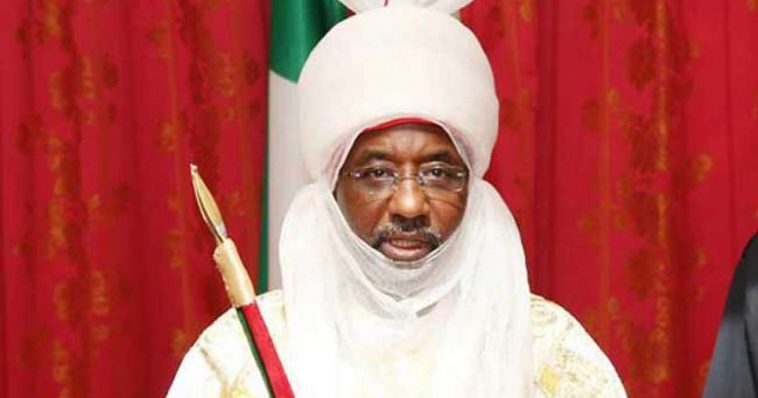
Sanusi Lamido and Kano’s royal ding-dong – Farooq Kperogi
Sanusi Lamido and Kano’s royal ding-dong – Farooq Kperogi
Kano’s Muhammad Sanusi II has been rethroned the exact way he was initially enthroned and dethroned: in the melting pot of the politics of vengeance and recrimination.
And he just might be dethroned yet again by this, or another subsequent partisan government, given Sanusi’s infamous incapacity to rein in his tongue and to understand the wisdom in restraint and tact, which his position requires of him—and, of course, the juddering, hypocritical contradictions between what he says and what he does.
Recall that when he worked at the UBA, Sanusi had derided then Governor Rabiu Musa Kwankwaso as a scorn-worthy “rural aristocrat” who “surrounds himself with provincials and places key posts in the hands of rural elite.” He characterized the Kwankwaso administration as “the classic comedy of the Village Headmaster in a village council.”
Kwankwaso was so incensed by Sanusi’s boorishness and Kano urban condescension that he threatened to pull out the Kano State Government’s money in UBA if Sanusi wasn’t fired from his job. Yet it was the same Kwankwaso who, for partisan, anti-Goodluck Jonathan political considerations, enthroned Sanusi as the emir of Kano even when he wasn’t the choice of the kingmakers.
And let’s not forget that Sanusi is a vicious, unashamed enemy of common people. His entire economic philosophy revolves around sheepishly advancing the annihilating policies of the IMF/World Bank, such as removal of every kind of subsidy for the poor while leaving intact the subsidies that sustain the sybaritic extravagance of indolent but overprotected elites like him.
Well, after destroying properties worth billions of naira and restoring Sanusi as emir all in the bid to get even with Ganduje, I hope the government will now get down to actually governing and improving the lives of the people who elected it.
The sense I get from people in Kano (many of whom are supporters of the government) is that governance has been on hold in Kano in the last one year in the service of retaliation.
There is also no doubt that Sanusi’s unrelenting public censures of the rotten, if time-honored, cultural quiddities of the Muslim North discomfited many people who are invested in the status quo, and this became one of the convenient bases for his ouster.
READ ALSO:
- Man lands in jail after spraying naira notes in Benin
- Landslide kills many in Papau New Guinea
- Judge trying to stop Sanusi’s reinstatement currently in America, says Gov Yusuf
But Sanusi isn’t nearly the victim he has been cracked up to be by his admirers and defenders. First, he rode to the Kano emirship in 2014 on the crest of a wave of emotions stirred by partisan politics and came down from it the same way.
Even though he wasn’t initially on the shortlist of Kano’s kingmakers, APC’s Governor Rabiu Kwankwaso (who is now in PDP) made Sanusi emir in 2014 to spite PDP’s President Goodluck Jonathan and shield Sanusi from the consequences of his [false] unmasking of multi-billion-dollar corruption at the NNPC. Apart from his unceremonious removal as CBN governor for his [false] whistle blowing, he was going to face other untoward retributions from the Jonathan administration, but his appointment as emir put paid to it.
Now, Sanusi lost his emirship to the same partisan politics that got it for him in the first place. In an ironic twist, he was made emir by an APC government for making privileged [if false] revelations that disadvantaged a PDP government and was removed as an emir by an APC government for his overt and covert acts that could have benefited the PDP in 2019.
In other words, Sanusi’s emirship was molded in the crucible of partisan politics and was dissolved in it.
Nonetheless, Sanusi, given his intellectual sophistication and pretenses to being an advocate of egalitarianism, had no business being an emir. Monarchy is way past its sell-by date not just in Nigeria but everywhere. It’s an anachronistic, vestigial remnant of a primitive past that invests authority on people by mere accident of heredity. Any authority that is inherited and not earned, in my opinion, is beneath contempt.
Emirship isn’t only a primeval anomaly in a modern world, it is, in fact, un-Islamic. In Islam, leadership is derived from knowledge and the consensus of consultative assemblies of communities called the Shura, not from heredity.
Monarchies in the Muslim North, which have constituted themselves into parasitic, decadent drains on society, but which pretend to be Islamic, are grotesque perversions of the religion they purport to represent. Anyone, not least one who makes pious noises about equality, that is denied the unfair privileges of monarchy is no victim.
Most importantly, though, Sanusi embodies a jarring disconnect between high-minded ideals and lived reality. He rails against child marriage in public but married a teenager upon becoming an emir. When the late Pius Adesanmi called him out, he told him to “grow a brain.” He suddenly became the patron saint of conservative Muslim cultural values.
He expended considerable intellectual energies critiquing polygamy among poor Muslim men, but he is married to four wives. His defense, of course, would be that he can afford it, and poor Muslim men can’t. Fair enough. But transaction-oriented reformists lead by example.
Fidel Castro, for example, stopped smoking when he campaigned against it. It would be nice to say to poor, polygamous Muslim men, “Why are you, a poor man, married to four wives when Sanusi, a wealthy man and an emir, is married to just one wife?”
READ ALSO:
- 50-year-old man opts for prison than refund client’s N15m
- Troops kill 253 terrorists, arrest 172 in one week
- Protest in Abuja over new Emir of Kano
That would have had a much higher impact than his preachments. In spite of their moral failings, Buhari, Abba Kyari, and Mamman Daura would be much more effective campaigners against disabling polygamy by poor Muslim men than Sanusi can ever be because they are monogamists even when they can afford to marry four wives.
This is a legitimate critique since Sanusi has a choice to not call out poor Muslim men who marry more wives than they can afford since polygamy is animated by libidinal greed, which is insensitive to financial means.
Sanusi habitually fulminates against the enormous and inexorably escalating poverty in the north, but even though he is an immensely affluent person, he has not instituted any systematic mechanism to tackle the scourge of poverty in the region in his own little way.
Instead, he spends hundreds of billions of naira to decorate the emir’s palace, buy exotic horses, and luxuriate in opulent sartorial regality.
And, although, he exposed [what he thought was] humongous corruption during Goodluck Jonathan’s administration and dollar racketeering during Buhari’s regime, he is himself an indefensibly corrupt and profligate person. In two well-researched investigative pieces in 2017, Daily Nigeria’s Jaafar Jaafar chronicled Sanusi’s mind-boggling corruption as emir of Kano, which apparently didn’t abate until he was dethroned.
Sanusi was ostensibly a Marxist when he studied economics at ABU, which explains why he exhibits flashes of radicalism in his public oratory, but he is, in reality, an out-of-touch, unfeeling, feudal, neoliberal elitist who is contemptuous, and insensitive to the suffering, of poor people.
He supported Jonathan’s petrol price hike in 2012 and even wondered why poor people were protesting since they had no cars, and generators, according to him, were powered by diesel, not petrol!
When his attention was brought to the fact that only “subsidized” and privileged “big men” like him use diesel-powered generators, he backed down and apologized. But I found it remarkably telling that until 2012 Sanusi had no clue that the majority of Nigerians used petrol-powered generators to get electricity.
In a September 1, 2012, column titled, “Sanusi Lamido Sanusi’s Unwanted 5000 Naira Notes,” I noted that Sanusi was “one of the most insensitive, out-of-touch bureaucrats to ever walk Nigeria’s corridors of power.”
Again, in my December 10, 2016, article titled, “Dangerous Fine Print in Emir Sanusi’s Prescription for Buhari,” I wrote: “If you are a poor or economically insecure middle-class person who is writhing in pain amid this economic downturn, don’t be deceived into thinking that Emir Sanusi is on your side. He is not. His disagreements with Buhari have nothing to do with you or your plight. If he has his way, you would be dead by now because the IMF/World Bank neoliberal theology he evangelizes has no care for poor, vulnerable people.”
Sanusi Lamido and Kano’s royal ding-dong – Farooq Kperogi
Farooq Kperogi is a renowned Nigerian newspaper columnist and United States-based Professor of Journalism.







Opinion
How opposition Tinubu would treat President Tinubu, By Farooq Kperogi

How opposition Tinubu would treat President Tinubu, By Farooq Kperogi
How opposition Tinubu would treat President Tinubu, By Farooq Kperogi
Opinion
Adelabu’s Power Lines as Laundry Lines
Adelabu’s Power Lines as Laundry Lines
Azu Ishiekwene
In many parts of the country, the rains poured down earlier in the week, bringing much physical and psychological relief from the searing heat.
The absence of electricity from public supply channels made it worse. Average daytime temperatures throughout March ranged from 33 degrees to 38 degrees centigrade in Lagos and Abuja, respectively.
Nigeria’s public electricity grid must rank among the most intractable problems any developing country could face. There is hardly anything more constant than the announcement of grid collapse, which leaves businesses and homes seeking alternatives and incurring unplanned expenses while paying for electricity not supplied.
What Candidate Tinubu promised
During his 2023 campaign, President Bola Ahmed Tinubu said that if he didn’t fix the problem, he shouldn’t be voted in for a second term. He must be regretting that statement now. Since the beginning of his administration in May 2023, there have been multiple grid collapses, with the highest number recorded in 2024 at 12. Even when incidents were fewer, sporadic outages have continued. The failure, on face value, is attributed to a mix of technical, structural and administrative weaknesses in the system. But there is more to it in the sense in which it is said: “The more you see, the less you understand.”
So unreliable is the public electricity supply that the Presidential villa appropriated N10 billion in 2025, and an additional N7 billion in 2026 for the installation of a solar mini grid that will effectively disconnect Nigeria’s seat of power from the national grid, bedevilled by ageing transmission lines which collapse repeatedly from sabotage, poor maintenance, and frequency imbalances.
The joke is on us
Nigerians, ever ready to make a jest of their tragic maladies and long suffering, are beaten when it comes to power outages. They are shocked beyond humour. If the high-tension cables were not too high overhead, people in communities through which they run would not hesitate to hang their laundry on them – knowing from experience that the lines are just part of the landscape and are very likely to be without electricity.
READ ALSO:
- Ondo PDP Rejects Wike Faction, Affirms Loyalty to Turaki‑Led NWC
- Bandits Abduct Seven Family Members, Three Neighbors in Kaduna
- Festus Keyamo Urges ADC to Thank INEC Over Derecognition of Rival Factions
I have seen a video of a masquerade performing on a streetlight pole. Of course, the crowd applauded its invincibility; yet, both the crowd and the masquerade knew better. The lines had not been electrified for months and were unlikely to be for the spell of the circus.
Hope was rekindled at the beginning of the Tinubu administration when news filtered through that the currently embattled former governor of Kaduna State, Nasir El-Rufai, had not only produced a blueprint, but was going to be given the assignment of sorting out Nigeria’s notorious electricity sector. I learnt reliably that, as part of his plan, El-Rufai was discussing a $10 billion investment agreement with the Saudis before he ran into rough weather.
The coming of Adebayo
That was how Adebayo Adelabu took the job – a job at which he has performed so disastrously, saying he failed would be an honour. But it’s not his fault – it’s the fault of the President who appointed him and the Senate that cleared him for a job that he was clearly incompetent to perform, either based on his record or based on any hope of redemption. He is brilliant, but the power sector is littered with the remains of brilliant people, among whom he is now a fossil.
His better years were when he worked as an auditor at PWC. He was also the Executive Director/CFO at First Bank, and later a deputy governor at the Central Bank. He may not have been directly responsible for the misfortunes of these institutions at the time, but he doesn’t exactly smell of roses.
In the normal course of things, his banking career should have been a yellow flag. Still, Nigeria being Nigeria, the quota system and political connections ensured that he defied gravity.
Then, in 2023, Tinubu offered him the position of Minister of Power, after his failed attempt to become governor of Oyo State on the platform of the Accord Party. That only worsened our misery. Adelabu will be best remembered for splitting electricity consumers into parallel payment bands that do not necessarily reflect improved services.
The thing is not that Adelabu failed at his job. It’s the lack of evidence that he tried. Mr Dan Kunle, an energy expert familiar with the history of that sector, told me that, “No one is saying a power minister should provide the resources to fix the sector from thin air. It’s for him to provide a solid framework that would create the right environment and attract sovereign intervention.”
Adelabu, like many of his predecessors, is running the power ministry in 2026 with the 1950 operational manual of the Electricity Corporation of Nigeria (ECN). Yet, even then, when the country had a population of about 50 million, the British knew that electricity was an economic good. To provide meaningful and sustainable service, they had to prioritise not just the key administrative centres but also areas that could pay. That was why, for example, coal was shipped from Enugu to the Ijora Power Station in Lagos.
No roadmap
Adelabu has no roadmap, or if he has one for a population four times what it was under ECN, it’s a roadmap to nowhere. The same old problems persist: gas shortages, moribund plants, infrastructure deficits, massive debts, and frequent grid collapses, limiting supply to about 4,000 MW despite a capacity of 13,000 MW.
READ ALSO:
- INEC Warns ADC Against Holding Convention Without Supervision
- APC Rejects ADC Claims, Says Tinubu Not Responsible for Party’s Legal Troubles
- Fani‑Kayode Fires Back at Peter Obi, Defends NADECO’s Legacy
While Adelabu may wring his hands alongside Nigerians when the lights trip off, the sector has been drowning under the yoke of N6 trillion in debt as of late 2025, fuelled by non-cost-reflective tariffs and unpaid bills to both generating and distribution companies. Some of the problems predate Adelabu, but his incompetence has worsened them.
Yet, he still has ambition. Not to redeem himself after his disastrous three years as minister, but to become the governor of Oyo State. Obviously, he believes the reward for poor performance is a higher office. He is so shameless, it means nothing to him that he holds the Olympic record for national grid collapse. It means nothing to him that Nigerian businesses are powered by Indian generators and their homes by Chinese solar panels.
Examples from Africa
Egypt, with a population of 110 million, has 100 percent universal electricity access, supported by a heavy reliance on gas (81 percent) and growing low-carbon sources like hydropower. This ensures a stable supply amid population pressures.
South Africa serves 85-90 percent of its 62 million residents but faces severe shortages. Frequent load shedding persists due to Eskom’s debt, ageing infrastructure, and maintenance issues, despite high per-capita generation.
Ghana reaches 88-89 percent coverage for 34 million people, with hydro and thermal power dominating. Urban areas enjoy near-99 percent access, while rural areas still have gaps and occasional outages.
Kenya hits 76 percent for 56 million, excelling in urban (97 percent) and geothermal power. Rural expansion lags, though targets aim for full access by 2030.
Compared to the countries above, only 57 percent of Nigerians are grid-connected, with outages occurring 85 percent of the time, and poor metering and corruption that sustain estimated billing and inefficiencies.
After watching Adelabu perform so poorly over the last two years on the national stage, I was hoping he would go away quietly, under the shadow of the darkness he has fostered. But since he insists that he won’t leave quietly – or appears determined to stay on – I’m considering a self-appointed mission to drag him to Oyo State to see how he will turn their night into day.
Adelabu’s Power Lines as Laundry Lines
Ishiekwene is the Editor-In-Chief of LEADERSHIP and author of the book, Writing for Media and Monetising It.
Opinion
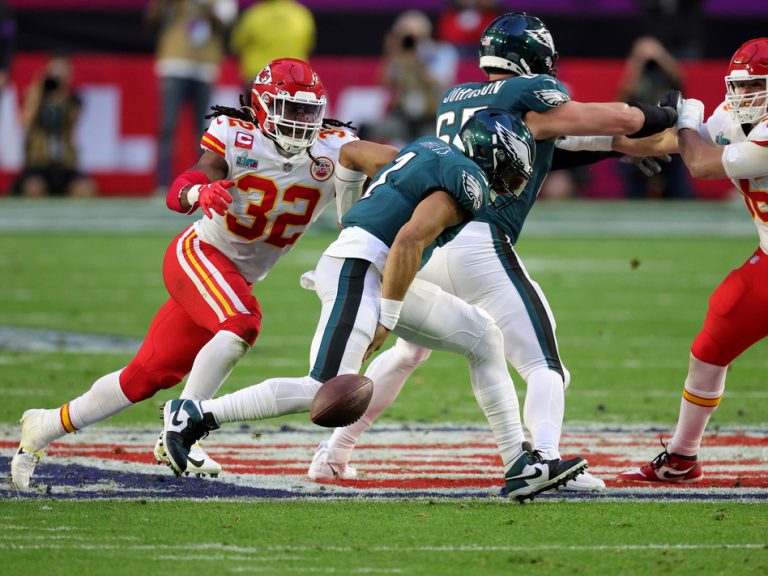
Super Bowl: Can Africa Spring Up anew?
Super Bowl: Can Africa Spring Up anew?
With a landmass of approximately 9.83 million km² and a population of 334–336 million as of 2025—making it the third-largest country in the world—the United States is massive. It is four times the size of Algeria, Africa’s largest country, and dwarfs Nigeria, the continent’s most populous nation.
The United States is a titan among nations. Who knows—perhaps neologists will coin a new term if the U.S. eventually purchases or forcefully takes Greenland from Denmark, further surging its landmass and population. When this massive scale fuses with unparalleled infrastructure, world-class venues, and a vast market, the USA becomes an ideal host for international sporting events with strong returns on investment.
Between 1904 and 2025, the USA hosted one FIFA World Cup (with another to be co-hosted in 2026 with Mexico and Canada), four Summer Olympics, four Winter Olympics, and one FIBA Basketball World Cup. Unlike soccer, which is still finding its footing in the United States—even with Major League Soccer (MLS) having existed for 30 years—American football is the undisputed number-one sport. The Super Bowl—born from Lamar Hunt’s “light-bulb moment”—is the crown jewel. The Super Bowl has become what sociologists call a secular ritual, binding the social fabric of Americans together.
Beyond the Vince Lombardi Trophy, the Super Bowl has evolved into a global marketing masterpiece. From the famous 1984 Apple commercial introducing the Macintosh, which is studied in MBA classes worldwide, to the 1979 Mean Joe Greene Coca-Cola commercial that showed genteel human warmth winning over fearsomeness, the intentionality of brands going head-to-head with rivals has been a recurring feature of every Super Bowl.
While the USA is always attractive for hosting events, the Super Bowl’s success pivots on intellection that results in ingenious marketing. For the recent Super Bowl LX on February 8, 2026, two brands mirrored David Ben-Gurion’s principle of “taking the fight to the enemy.” Pepsi and Anthropic’s Claude entered with an offensive strategy: Claude’s AI ad—“Ads are coming to AI. But not to Claude.”—was a calculated strike in the competitive AI market, while Pepsi’s polar bear blind test revived the sulphurous rivalry with Coca-Cola. Many companies use their ad slots to build brand identity and equity or announce arrival in the business world.
Where does Africa stand in this Super Bowl business and sports calculus? While developed nations are making groundbreaking launches with chutzpah and creativity from creative shops—all resulting in a participatory economy—Africa’s involvement is largely an on-the-field display of Négritude spirit and ravenous passion.
For Africa, the Super Bowl has become a “badge of honor” through representation. Mohammed Elewonibi, a Nigerian raised in Canada, was the first player of African origin to win a Super Bowl (XXVI, 1992, with the Washington Redskins). Since then, nearly 41 players of Nigerian origin or heritage have won—the most of any African country—including six who tasted victory with the recent Seattle Seahawks: Uchenna Nwosu, Nick Emmanwori, Boye Mafe, Jaxon Smith-Njigba (of Nigerian and Sierra Leonean roots), Jalen Milroe, and Olu Oluwatimi.
Yet, as impressive as African athletes are in making the continent proud, we have blatantly failed to translate that audience engagement into commercial windfalls like the Super Bowl on home soil. It is appalling that most of Africa’s sporting events—the Durban July Handicap, Senegalese wrestling (Laamb), or the Safari Rally—have not fully harnessed the intersection of sports and marketing. Even the Africa Cup of Nations (AFCON), despite its 3.45 billion cumulative viewers (far surpassing the Super Bowl’s ~125–127 million), lacks comparable marketing prestige. Why are there no global product launches during our matches? Why aren’t AI giants capitalizing on Africa’s tech startup boom?
Africa is being fed celery when it deserves the whole salad. This asymmetry stems from structural economic factors, but the genie is out of the bottle—we must be forward-looking. To turn African sporting events into “goldmines,” we must reinvent the industry, much as Cirque du Soleil did for the circus. Facing declining audiences, rising costs, and fierce competition, it lost its grip on the circus business. Cirque, however, escaped the dying circus business by reinventing it.
By viewing competition through a new lens, Africa can transform massive viewership into unparalleled economic advantage and value. Just as Cirque du Soleil created uncontested market space, African sports must adopt what W. Chan Kim and Renée Mauborgne called a “Blue Ocean Strategy”—creating uncontested market space and making competition irrelevant. Much as we can not compete toe to toe with advanced economies , we should not follow them like zombies.
In their book Blue Ocean Strategy: How to Create Uncontested Market Space and Make the Competition Irrelevant, the authors highlight how companies in “red oceans” fight for shrinking profits in crowded, defined markets. African sports events currently sit in those crowded red oceans. To elevate them, we need disruptive leaders willing to venture into untapped markets, create new demand, and unlock unlimited growth opportunities.
Joseph Pine and James Gilmore, in their book The Experience Economy, wrote about the need to transform commodities into experiences. As Africans, we have been able to move our sporting events from the commodity stage to the third stage—service delivery—but the experience stage is the North Star we should aspire to reach.
Our cultures, as varied as they are, define us. Despite dilution by Western civilization, our culture stands uneroded, like the mountains that litter our landscape and serve as a canopy to preserve our common heritage. This means our forefathers took culture into the realm of experience—something we are still grappling with in our sporting spectacles today. For us to make headway, our cultures—already bubbling with experience—must mix seamlessly with our sporting spectacles.
Now is the time to merge cultural events like the Eyo Festival, Argungu Festival, Gnaoua World Music Festival, Osun Osogbo Festival, Meskel Festival, and others with our sporting spectacles—that is the Blue Ocean Strategy. This can only be achieved through close collaboration between leaders in sports administration and marketing professionals selling experiences, and the time is now. As this is done, a line from David Diop’s poem Africa—“That is your Africa springing up anew”—would fill our lips.
The experience stage is the nirvana!
Toluwalope Shodunke
Can be reached via tolushodunke@yahoo.com
Super Bowl: Can Africa Spring Up anew?

-
 Africa1 day ago
ECOWAS Recruitment 2026: Over 30 Job Vacancies Open for Nigerians (How to Apply)
-

 metro2 days ago
2026 NYSC Batch A Stream II: Registration, Swearing-In Dates Announced
-
 Entertainment2 days ago
Saheed Osupa Defends Juju Use Amid Backlash From Islamic Clerics
-

 Politics1 day ago
Court Stops ADC Congress, Orders Status Quo in Leadership Row
-
 metro1 day ago
Boko Haram Attack in Borno: Brigadier-General, Soldiers Killed as ISWAP Overruns Military Base
-

 Health1 day ago
Sleeping Positions: How They Affect Your Health and Which Ones to Avoid
-
 metro1 day ago
US Evacuates Embassy Staff in Nigeria, Lists 23 States as ‘Do Not Travel’
-
 Entertainment2 days ago
Peller Sued for ₦400 Million by Former Tour Bouncer