
Business
Sanwo-Olu, Tinubu unveil 1.4km Pen Cinema flyover
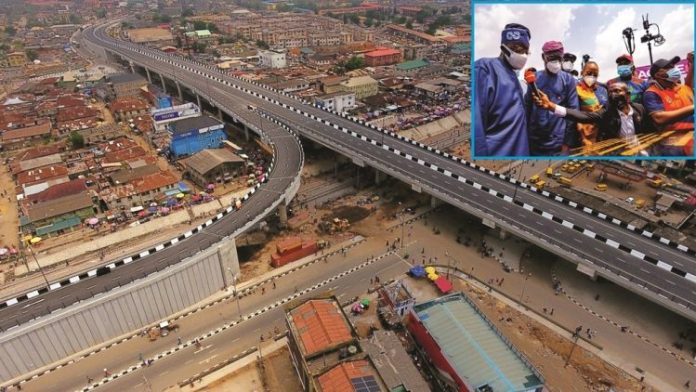
Lagos State Governor, Babajide Sanwo-Olu and the National leader, All Progressives Congress, APC, Asiwaju Bola Tinubu on Friday unveiled a 1.4km Pen Cinema flyover in Agege, Lagos State.
The massive project was started during the administration of Akinwunmi Ambode.
Sanwo-Olu said, “One of the most critical challenges being experienced on a daily basis by residents/road users along Agege Pen Cinema axis over the years was the heavy traffic volume occasioned by the geometric increase in traffic volume.
“Residents and road users along this axis have clamoured for a solution to the suffocating nature of the perennial traffic gridlock occasioned by the huge human and vehicular traffic, flowing through this intersection.
“To address the challenge of this huge traffic burden, our administration decided to continue with construction of a precast and pre-stressed reinforced concrete dual-carriage flyover and ramp, with road works, across the Agege Pen Cinema intersection which was then at about 20 per cent completion.”
He said this was in line with the first pillar of the THEMES Agenda which targeted the provision of roads as a critical infrastructure that would support economic activities, enable commercial interactions and ensure ease of commuting from one part of the state to another through elimination of traffic gridlocks.
Sanwo-Olu added that prior to the construction of this flyover, the increase in traffic volume across the critical business hub and the resultant congestion was a serious challenge to commuters who thronged the axis for businesses and the residents.
“As part of efforts to eliminate gridlocks on major roads around the axis, we identified for reconstruction some major arterial roads with good connectivity to adjoining roads that could serve as alternative bypasses to other arterial roads, especially during heavy/peak traffic periods, thus helping to free up more traffic
“The bridge alignment is along Agunbiade Street (along Oke-Koto junction) and spans across the intersections of Old Abeokuta Road, Railway Corridor and Iju-Isaga Road and terminates near the entrance gate of Ijaiye Low Cost Housing Estate along Oba-Ogunji Road.
“The bridge is also design to convey traffic from Oba-Ogunji Road into Old Abeokuta towards Abule Egba through ramp across railway corridor. This ramp will greatly enhance vehicular movement towards Abule Egba, Fagba and its environs just as it would reduce incessant traffic gridlocks being experience over the years in the area.
“To provide some context, the 1.4km Flyover Bridge has a dual carriageway with 2 lanes of 3.65m width each includes the improvement of road surface around the Agege Pen Cinema axis. It also consisted of dualization, expansion, construction and rehabilitation of 5 Network of Roads and Junctions with turning radius improvement.
“Provision of new drainage system; re-routing some roads and traffic signalisation are some of the innovative solutions that were carefully designed to ease the daily gridlock being experienced by commuters in this area.” he stated.
Sanwo-Olu said through the delivery of the Pen Cinema Bridge which was conceived to transmit vehicular traffic across the intersections at Agege, his administration would be resolving the perennial traffic gridlocks arising from the huge human and vehicular traffic, flowing through the Agege Pen Cinema Intersection.
He added that in the days ahead, commuters would bear witness to the improved vehicular movement and traffic flow with the attendant positive impact on businesses and living in the area.
The governor stated that a key outcome emanating from the strategic execution of the Pen Cinema flyover project was that his administration had again demonstrated the priority it accorded the welfare and well-being of the people.
Speaking at the event, Tinubu commended Sanwo-Olu for steering the ship of the state to safety.



Business
Nigeria Fuel Prices May Rise as Middle East Crisis Deepens

Nigeria Fuel Prices May Rise as Middle East Crisis Deepens
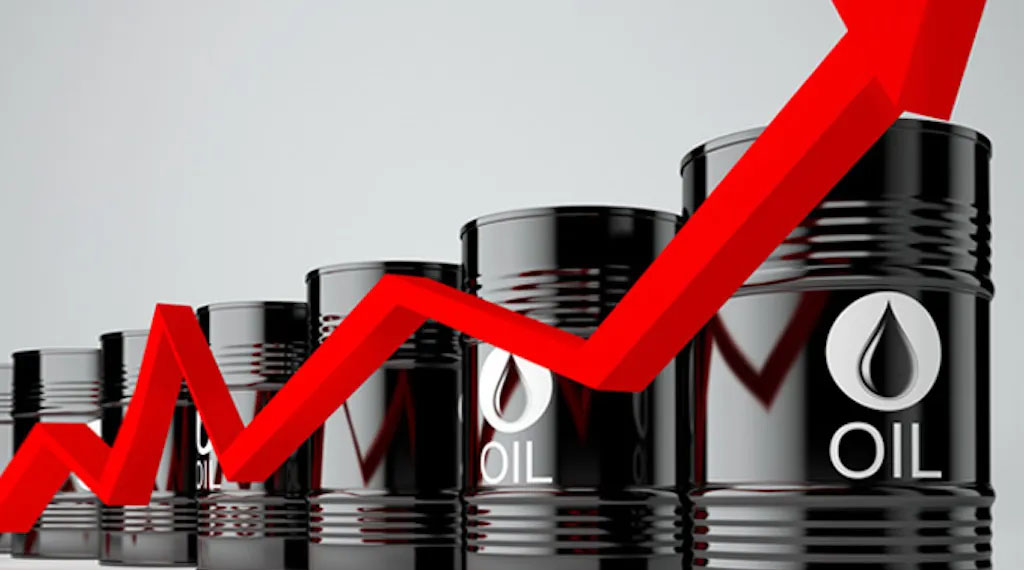
Growing Middle East tensions triggered by ongoing military actions involving the United States and Israel against Iran may soon lead to higher fuel prices in Nigeria, following a surge in global crude oil prices to $72.87 per barrel.
The escalation followed a coordinated strike across multiple locations in Iran, including Tehran, significantly heightening geopolitical instability and fuelling fears of supply disruptions in global oil markets.
For Nigeria—where crude oil accounts for over 85 percent of export earnings and nearly half of government revenue—the implications are far-reaching. While higher oil prices could boost government income, analysts warn that Nigerians may soon face increased petrol (PMS) prices, especially in the current post-subsidy era.
Energy experts say the oil price surge presents a mixed outlook. Oil and gas analyst Ayodele Oni explained that while Nigeria could benefit from increased foreign exchange inflows, higher crude prices typically lead to higher landing costs for petrol, which are eventually passed on to consumers.
Similarly, energy expert Kelvin Emmanuel noted that Nigeria’s 2026 budget benchmark of $64.85 per barrel means the government stands to earn more revenue from rising oil prices. However, he warned that refineries will be forced to adjust fuel prices in line with market realities.
This includes domestic refiners such as the Dangote Refinery, which operates in a deregulated downstream environment where petrol prices are tied to crude oil costs, exchange rates, and operational expenses.
READ ALSO:
- ICPC Says It Found Wiretapping Devices in El-Rufai’s Abuja Residence
- Lagos Announces Traffic Diversions for Ogunnusi Road Reconstruction in Ikeja
- Global Crude Hits $73 as Middle East Tensions Escalate
Economic analyst Dr. Muda Yusuf, Chief Executive Officer of the Centre for the Promotion of Private Enterprise (CPPE), said geopolitical conflicts in the Middle East often trigger oil price spikes due to fears of supply disruptions—particularly around key shipping routes such as the Strait of Hormuz.
According to Yusuf, Nigeria could benefit from:
- Higher crude export earnings
- Improved foreign exchange inflows
- Stronger external reserves
- Increased FAAC allocations
However, he cautioned that Nigeria’s current oil production level of about 1.4–1.6 million barrels per day remains below capacity and is constrained by oil theft, pipeline vandalism, underinvestment, and infrastructure challenges. Without resolving these issues, the country may fail to fully capitalise on higher oil prices.
Yusuf also warned of inflationary pressures, noting that rising fuel costs could increase transport fares, food prices, manufacturing costs, and logistics expenses, worsening the cost-of-living crisis for Nigerian households.
Offering a more cautious outlook, energy economist Professor Wumi Iledare said the current oil rally may be temporary, explaining that modern oil markets operate on real-time data and rational expectations. He noted that unless the Middle East crisis leads to a sustained disruption in oil supply, prices may stabilise.
Energy law expert Professor Dayo Ayoade echoed this view, stating that many countries maintain strategic crude oil reserves, which could limit extreme price spikes. He added that even if prices approach $80 per barrel, Nigeria must remain cautious due to its debt obligations and oil-backed loans.
Ademola Henry Adigun, Chief Executive Officer of AHA Consultancies, said the crisis could further destabilise global energy markets, simultaneously boosting government revenue while raising petroleum product prices domestically.
Analysts stressed that to maximise potential benefits and minimise economic pain, Nigeria must:
- Strengthen anti-oil theft and pipeline protection measures
- Boost upstream oil production and investment
- Expand domestic refining capacity
- Save excess oil revenue during price surges
- Protect vulnerable households from inflation shocks
- Accelerate economic diversification beyond oil
Ultimately, experts describe the deepening Middle East crisis as a double-edged sword for Nigeria—offering short-term fiscal gains while posing serious risks of fuel price hikes, inflation, and economic hardship if not carefully managed.
Nigeria Fuel Prices May Rise as Middle East Crisis Deepens
Business
Global Crude Hits $73 as Middle East Tensions Escalate
Global Crude Hits $73 as Middle East Tensions Escalate
Global oil prices jumped to around $73 per barrel following fresh U.S. military strikes on Iran, heightening fears of supply disruptions in the Middle East and sparking volatility in global energy markets. The increase reflects growing geopolitical risks in a region that accounts for a significant portion of the world’s crude exports.
The surge affected major crude benchmarks. Nigeria’s Bonny Light crude rose to about $72.90 per barrel from $70.80, while Brent crude increased to $72.87 per barrel from $71.10. Murban crude, widely used as a benchmark for Middle East oil, climbed to $74.24 per barrel from $71.50, highlighting market sensitivity to regional tensions.
Geopolitical Concerns Drive Price Spike
Analysts attributed the surge to fears that ongoing conflict could affect production facilities, export terminals, and key maritime routes such as the Strait of Hormuz, a crucial corridor for global oil shipments. The potential for disruption in these areas has intensified market anxiety, pushing prices higher.
READ ALSO:
- Four Die in Katsina Stampede During Ramadan Alms Distribution
- ISWAP Fighter’s Female Relative Surrenders to Troops in Borno
- Gunmen Abduct Father of Former Ebonyi Deputy Governor on Way to Church
OPEC+ Announces Gradual Return of Production
Amid rising prices, OPEC+ members reaffirmed their commitment to stabilizing markets. In a virtual meeting on March 1, 2026, eight countries — Saudi Arabia, Russia, Iraq, United Arab Emirates, Kuwait, Kazakhstan, Algeria, and Oman — reviewed market conditions and announced a plan to gradually return 1.65 million barrels per day (bpd) of voluntary production cuts previously implemented in 2023.
Under the latest agreement, 206,000 bpd will be added back to the market in April 2026, with the remainder phased in gradually based on evolving market conditions. The alliance emphasized continued monitoring of market fundamentals, including global demand, oil inventories, and geopolitical developments, to ensure a balanced and stable market.
The countries also reiterated compliance with the Declaration of Cooperation, ensuring any excess production would be accounted for and corrected through future adjustments. Monthly meetings will continue to assess market trends, with the next session scheduled for April 5, 2026.
Market Outlook and Analyst Predictions
Analysts warned that the combination of geopolitical tensions and the gradual return of OPEC+ supply could result in volatile crude prices in the coming weeks. Traders are balancing potential risks to supply against incremental increases in production, creating uncertainty in both crude and refined fuel markets.
Some experts indicated that if the conflict escalates or disrupts key oil transit points, prices could surge further, potentially exceeding $75 per barrel in the short term. The recent uptick has already sparked expectations of higher gasoline prices at the pump in major consumer markets.
The energy market continues to closely monitor developments in the Middle East, OPEC+ output decisions, and global demand patterns as key indicators for near-term price movements.
Global Crude Hits $73 as Middle East Tensions Escalate
Auto
Ex-CIG Motors GM Jubril of Lagos floats Hybrid Motors Nigeria

Ex-CIG Motors GM Jubril of Lagos floats Hybrid Motors Nigeria

A former General Manager of CIG Motors, Jubril Arogundade, popularly known as “Jubril of Lagos,” has unveiled a new automotive venture, Hybrid Motors Nigeria, with a bold ambition to reshape access to hybrid, compressed natural gas (CNG), and electric vehicles across the country.
Arogundade announced the launch on his birthday, Saturday, February 28, describing the company as a response to Nigeria’s growing appetite for cleaner and more flexible mobility options. He said Hybrid Motors Nigeria aims to build “a unicorn brand in the automobile industry” within five years by bridging gaps in vehicle availability, service capacity, and supporting infrastructure.
According to him, the company’s strategy will rest on seven core pillars: local assembly of hybrid and electric vehicles; nationwide distribution of petrol, hybrid and EV models; establishment of aftersales service and training centres; spare parts supply and distribution; deployment of EV charging systems and stations with what he described as “energy intelligence”; auto asset financing; and vehicle leasing services.
He disclosed that the company’s physical rollout would be phased, with an official showroom scheduled to open in June, while plans are underway to commence factory operations next year. Although he alluded to strategic partnerships that would accelerate market entry and industry transformation, he did not name the partners.
The launch comes at a time when hybrid and alternative-fuel vehicles are attracting increasing interest in Nigeria, driven by rising fuel costs, demand for lower operating expenses, and a broader shift towards cleaner transportation. Fleet operators and private motorists alike are exploring options that offer fuel flexibility and more predictable maintenance.
Hybrid Motors Nigeria said its model goes beyond vehicle sales, combining product supply with service readiness through technical training, parts availability, and charging infrastructure to prevent post-purchase support gaps that often slow adoption.
Further details on the company’s initial vehicle lineup, partnership framework, and rollout timeline are expected ahead of the showroom inauguration.
Arogundade’s announcement follows his recent exit from CIG Motors.
While the company’s Chairman, Diana Chen, had announced the termination of his appointment after an investigation reportedly indicated alleged financial misappropriation and abuse of office, Arogundade has maintained that he voluntarily resigned on December 2, 2025, in line with his contractual and internal corporate obligations.

-

 International2 days ago
Ayatollah Ali Khamenei, Iran’s Supreme Leader, Dies After U.S.–Israeli Strikes
-
 International3 days ago
BREAKING: Israel Launches Pre‑emptive Strike on Iran, Explosions Reported Across Tehran
-
 International2 days ago
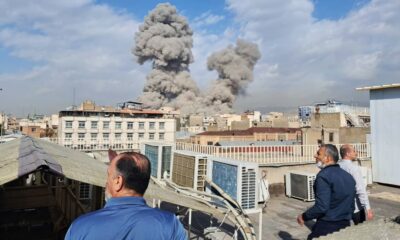
Iran: US, Israel launch another strikes, Commander, Defence leader, five other top officials killed
-

 International2 days ago
Middle East on Edge as Iran Retaliates Against Israel, U.S Bases
-

 International3 days ago
Trump Urges Iranians to Overthrow Government Amid US-Israeli Attacks
-

 International2 days ago
Kamala Harris Slams Trump for Dragging U.S. Into ‘Unwanted War’ in Iran Conflict
-
 International3 days ago
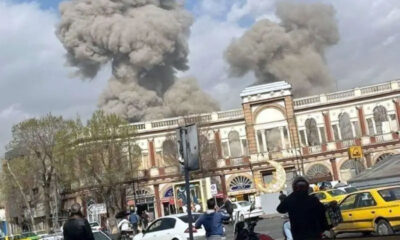
Reports: US Forces Join Israeli Offensive Against Iran
-

 Opinion3 days ago
Our children must be kept away from Obi’s mob
You must be logged in to post a comment Login