

Business
Scaling skills to shape Africa’s AI future

Scaling skills to shape Africa’s AI future
By Nonye Ujam
The most consequential AI story of the decade could belong to Africa.
Artificial intelligence could boost the continent’s economic growth by 10 to 15 percent, creating hundreds of millions of jobs by 2030.
Powered by the youngest population in the world, Africa could emerge as a digital powerhouse.
Yet, the reality today tells a different story. Immense promise aside, the continent’s AI sector remains underfunded and underdeveloped. Annual AI investments stand at just $2 to 3 billion—barely 1 percent of global spending.
Without strategic investment in essential infrastructure and skills, Africa risks consuming AI rather than creating it.
Addressing this challenge requires infrastructure and solutions specifically designed for Africa’s diverse linguistic, cultural, and socioeconomic landscapes, including advanced language models that reflect local realities.
However, true progress demands more than just technology; it requires talent. Developing a comprehensive ecosystem for skill-building is crucial, one that brings together government and industry under a unified vision.
This approach should go beyond isolated projects, establishing scalable frameworks that empower everyone, from policymakers and educators to developers and job seekers.
The good news is that there are already roadmaps emerging. Nigeria’s national digital skilling efforts, including the recent phase 2 launch of the AI Skills Initiative (AINSI), provide valuable guidance for expanding AI-related skills across economies.
AI leadership: The catalyst for change
No AI strategy succeeds without strong leadership at its core. Government leaders, in particular, hold a unique mandate to set clear priorities, regulate responsibly, and ensure equitable access to infrastructure and data.
Nigeria offers a compelling example of how to cultivate AI leadership through targeted skills development. Through AINSI, the country has begun embedding ethical and inclusive AI leadership within its public sector.
Over the past year, collaborations with government and Lagos Business School have equipped nearly 100 senior leaders, including Members of the National Assembly and representatives from 58 ministries, with practical strategies for AI-powered governance and sector-specific roadmaps.
Beyond executive training, specialised programmes have strengthened resilience in areas like cybersecurity and responsible AI use. For instance, the Nigeria Data Protection Commission received tailored sessions focused on AI, safeguarding data and reinforcing principles of ethical technology deployment.
Leadership, however, is not only about knowledge, but also about creating systems that work. Harmonising credentials and qualifications across regions are essential to ensure skilling translates into real employment opportunities. Leaders across both public and private sectors play a pivotal role in setting standards that validate competencies and align with industry needs.
Developers: Driving AI from theory to reality
For AI to accelerate national progress, it must move beyond theory and into everyday business. That transformation depends on developers, the architects who translate abstract models into reliable solutions that solve real-world problems.
Nigeria’s recent skilling initiatives show how strategic investment in developer talent can create ripple effects across the economy. Programmes such as Developers in Government (DevsInGov) and the 3 Million Technical Talent initiative (3MTT) are building a robust pipeline of technical expertise across sectors. These efforts have already equipped around 250 participants with practical skills in Power BI and AI integration, while another 1,000 developers advanced into specialised areas like DevOps, machine learning, and data science.
This momentum matters. Local developers are enablers of innovation, ensuring AI solutions are secure, scalable, and contextually relevant.
Education: The bedrock of AI readiness
Education is the backbone of any sustainable AI strategy, and Nigeria’s transformation efforts reflect this. Strategic partnerships are bringing AI into classrooms and lecture halls, spanning higher education, technical training, and basic education.
It starts with teachers. National digital upskilling programmes are equipping educators with the competencies to integrate AI into curricula. Hundreds of teachers have already completed training in the pilot phase, signalling a shift toward classrooms where AI concepts become part of everyday learning.
Universities are also stepping up, enhancing digital and entrepreneurial skills among students to ensure graduates are ready for the global digital economy.
Embedding AI in education requires more than isolated programmes—it calls for curriculum redesign that weaves AI concepts across subjects, continuous professional development for educators, and robust infrastructure that makes AI learning accessible.
AI for all: Scaling skills for inclusive growth
For countries to remain competitive in the digital economy, AI cannot be the preserve of specialists, it must become foundational knowledge for every tech user. From students and job seekers to entrepreneurs and more broadly citizens, widespread AI literacy is key to unlocking productivity and innovation at scale.
The Digital Skills Nigeria initiative illustrates what’s possible. Launched in collaboration with the Federal Government, it has already trained over 100,000 individuals, significantly improving digital literacy and employability. This kind of reach doesn’t just prepare individuals, it strengthens the entire economy.
Micro, small, and medium enterprises (MSMEs) are another critical piece of the puzzle. With over 44 million businesses across sub-Saharan Africa, MSMEs could have a transformative impact on AI talent development. That’s the promise behind projects like the FGN-ALAT Skillnovation Programme, which aims to train one million MSMEs, equipping them with the tools to innovate and grow.
Africa’s AI opportunity is vast, but turning potential into progress demands inclusive, coordinated strategies. Nigeria’s early initiatives prove that collaboration works, training millions and embedding AI skills across leadership, education, and enterprise. The journey is just beginning, but these efforts light the path toward an AI-driven future of innovation and shared prosperity.
- Nonye Ujam is Government Affairs Director, Microsoft West Africa








Business
Sanwo-Olu Joins Dangote as Historic N2.15tn Refinery IPO Opens on Nigerian Exchange
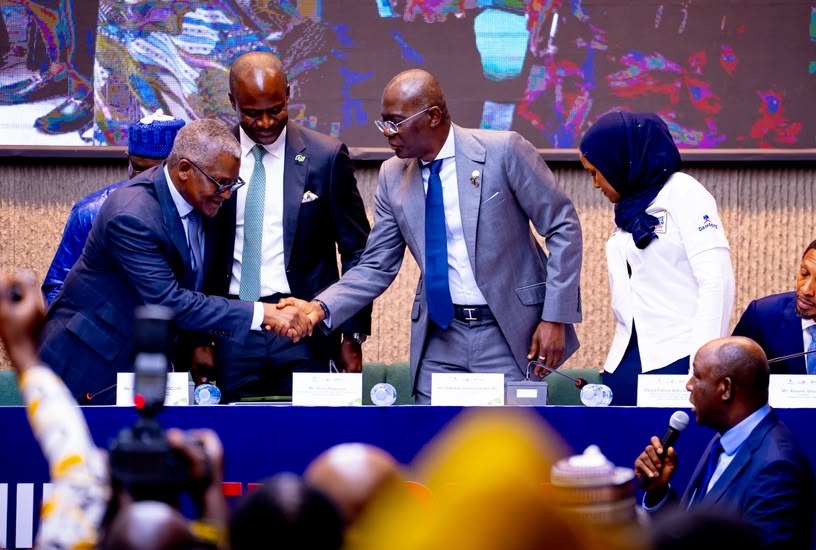
Sanwo-Olu Joins Dangote as Historic N2.15tn Refinery IPO Opens on Nigerian Exchange
Lagos State Governor, Babajide Sanwo-Olu, on Monday joined business leaders, investors and capital-market stakeholders as the Initial Public Offering of the Dangote Petroleum Refinery and Petrochemicals formally opened on the Nigerian Exchange, NGX, in Lagos.
The landmark transaction, which could raise about N2.15 trillion, marks one of the biggest capital-market transactions in Nigeria’s history and gives Nigerians and other investors an opportunity to acquire a stake in Africa’s largest oil refinery.
Sanwo-Olu attended the opening ceremony at the NGX Group building in Marina, Lagos, where Dangote Industries President and Chief Executive Officer, Aliko Dangote, sounded the gong to formally commence the public offer.
The IPO comprises 4.1 billion ordinary shares priced at N525 each, with investors allowed to subscribe for a minimum of 10 shares, valued at N5,250. The offer will remain open until October 13, 2026.
The development represents a major milestone for Nigeria’s capital market, as the Dangote Refinery becomes the first refinery to be offered for public subscription on the Nigerian stock market in the 66-year history of the NGX.
The ceremony attracted an array of prominent figures from government, business and the financial sector, including NGX Group Chairman Umaru Kwairanga, NGX Group Managing Director and Chief Executive Officer Temi Popoola, Zenith Bank founder Jim Ovia, Coronation Group Chairman Aigboje Aig-Imoukhuede and Ooni of Ife, Oba Adeyeye Ogunwusi.
Also present were senior executives of Dangote Industries and representatives of the capital-market community.
Dangote described the offer as a “people’s IPO”, stressing that its primary objective was to broaden ownership of the refinery and allow ordinary Nigerians and investors across the world to participate in the wealth created by the massive industrial project.
According to him, the public offer was not primarily about raising funds for the Dangote Group, which he said already had substantial capital available for its expansion plans, but about democratising wealth creation.
The refinery is currently designed to process 700,000 barrels of crude oil per day, while Dangote Industries plans to expand its capacity to 1.4 million barrels per day over the coming years. Proceeds from the IPO are expected to support the refinery’s expansion and strengthen its capacity for future growth.
The public offer follows a $2.5 billion private placement earlier in the year, which attracted strong institutional interest. Reuters reported that the refinery is valued at about $47.6 billion, making the IPO one of the most significant equity offerings ever undertaken in Africa.
The refinery has increasingly become a strategic component of Nigeria’s energy security drive, reducing the country’s dependence on imported refined petroleum products while positioning Nigeria as a potential major exporter of refined products.
The opening of the IPO also comes at a time when the Dangote refinery has reported a sharp improvement in its financial performance. Reuters reported that the company recorded a $1.82 billion net profit in the first half of 2026, alongside revenue of more than $13 billion.
Dangote has also sought to make the offer accessible to ordinary Nigerians, with subscriptions available through digital investment platforms and other authorised channels. The minimum subscription of 10 shares means an investor can enter the offer with N5,250.
The NGX has described the transaction as an important development for the Nigerian capital market, particularly in broadening retail participation and deepening the investment culture.
For Lagos, where the refinery is located and where the historic IPO was formally launched, the development further reinforces the state’s position as Nigeria’s dominant commercial and financial centre.
With the offer running until October 13, investors will now determine whether the historic transaction achieves its N2.15 trillion target and establishes a new benchmark for public participation in Nigeria’s industrial sector.
Auto
X90 Plus Leads Jetour’s Abuja Drive for Bigger SUV Market Share

X90 Plus Leads Jetour’s Abuja Drive for Bigger SUV Market Share
Jetour Nigeria is taking its premium SUV battle to Abuja, with the seven-seater X90 Plus set to headline the Jetour Experience Abuja from September 22 to 24, as the automaker moves to capture a larger share of Nigeria’s fast-growing high-end family SUV market.
The three-day motoring showcase will give prospective buyers, families and auto enthusiasts in the Federal Capital Territory and neighbouring states an opportunity to experience the X90 Plus and other models in the Jetour range through test drives and hands-on demonstrations.
The Abuja showcase follows the success of the brand’s earlier Jetour Experience in Lagos, where strong customer interest, inquiries and sales momentum reportedly encouraged the company to take the initiative to the Federal Capital Territory.
Jetour Nigeria said growing demand from customers in Abuja and neighbouring states was a major factor behind the decision to expand the experience to the northern market.
Positioned as a full-sized family SUV, the X90 Plus is designed for executives and families seeking a combination of space, technology, performance and comfort without the price tag associated with some luxury SUVs.
The model is offered with 1.6-litre and 2.0-litre turbocharged engines paired with a seven-speed dual-clutch transmission. The powertrain produces up to 254 horsepower and 390Nm of torque.
Inside the cabin, the X90 Plus features a 12.3-inch LCD touchscreen infotainment system, panoramic sunroof, Sony premium audio system and wireless charging.
Its safety and driver-assistance features include a 360-degree panoramic camera, Forward Collision Warning, Lane Departure Warning and electronic stability systems.
Jetour’s growing profile in Nigeria has also earned the brand recognition from the Nigeria Auto Journalists Association (NAJA), which named it Fastest Growing Auto Brand, while it was also recognised as Auto Brand of the Year at the Nigeria Transport Lecture.
To support its expanding customer base, Jetour Nigeria, the sole authorised distributor, operates through seven accredited dealer partners across the country: Elizade Nigeria Limited, Mandilas Autos, R.T. Briscoe Motors, Germaine Auto Centre, Kojo Motors, Tab Autos Limited and New Era Auto Vehicle Services Limited.
The Abuja Experience is expected to provide Jetour with another platform to engage potential customers and reinforce its position in Nigeria’s increasingly competitive SUV market.
Business
Dangote raises petrol price 6.7% to N1,350/litre
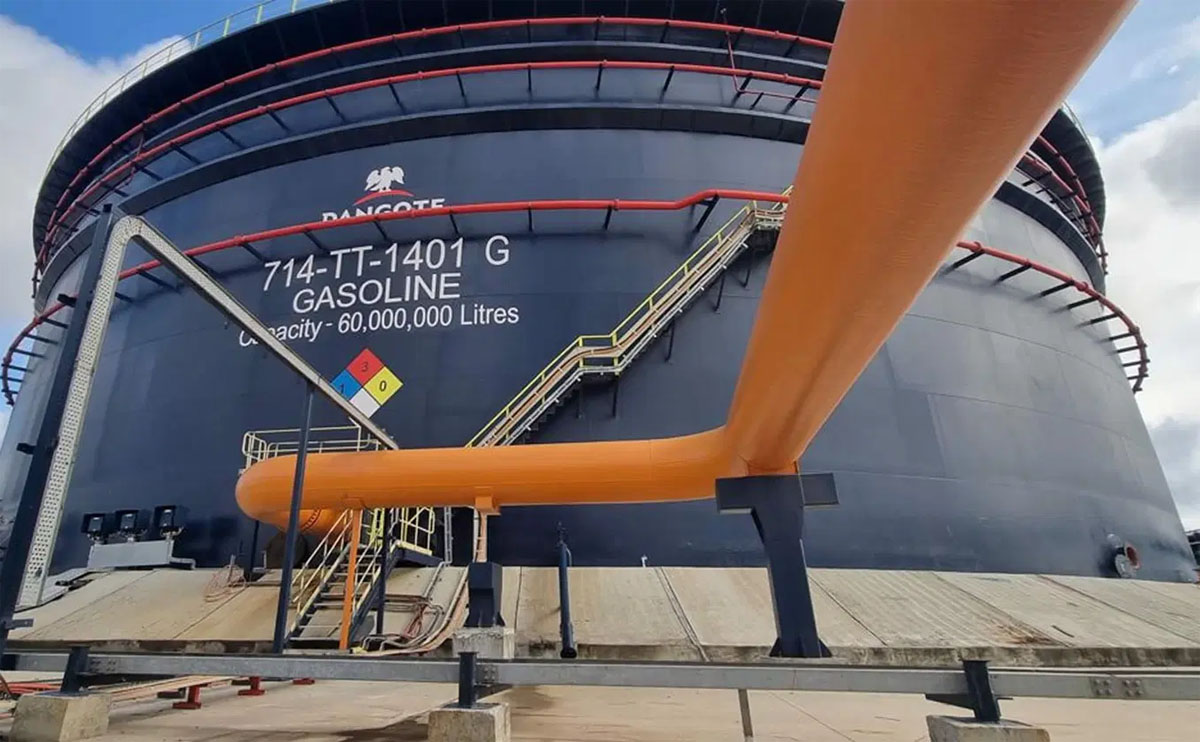
Dangote raises petrol price 6.7% to N1,350/litre
The Dangote Petroleum Refinery has increased its Premium Motor Spirit (PMS), popularly known as petrol, gantry price by 6.7 per cent, raising it from N1,265 to N1,350 per litre, with the new price taking effect from September 12, 2026.
The latest adjustment represents an N85 increase per litre and is the fourth upward review of Dangote Refinery’s petrol price since August 21, further raising concerns about the possible impact on petrol pump prices, transportation costs and the wider cost of living.
The refinery also increased its coastal price from N1,669,543 to N1,783,530 per metric tonne, representing an increase of N113,987, or about 6.8 per cent.
In a memo to customers, Dangote Petroleum Refinery announced the revised prices and directed customers with existing loading arrangements to return their Authority to Collect (ATC) documents for repricing.
The refinery said new volume contracts would subsequently be issued to allow loading to resume under the revised prices.
The latest increase means Dangote’s petrol price has risen by N185 per litre, or about 15.9 per cent, in 22 days.
The refinery had increased its gantry price from N1,165 to N1,185 per litre on August 21. It subsequently raised the price to N1,200 on August 26 and then to N1,265 on August 29, before the latest increase to N1,350.
The development comes amid renewed pressure in the international crude oil market, with Brent crude recently trading above $100 per barrel as geopolitical tensions and disruptions to oil supplies in the Middle East continue to affect global energy markets.
The pressure on global fuel markets is also being felt by refiners and petroleum traders as disruptions to Middle Eastern refining capacity and shipping routes create concerns over the availability of crude and refined petroleum products.
Dangote Refinery’s management recently said global fuel shortages could persist beyond the current Iran conflict because of damage to refining infrastructure, high refinery utilisation rates and the need to rebuild fuel inventories.
READ ALSO:
- Anambra Police Arrest Woman Over Alleged Sexual Abuse of Child, Rescue Four
- MURIC fires back at Peter Obi: Forget Sallah ceremony, free Nigerian Muslims
- Fani-Kayode Condemns Fresh Killing of Two Nigerians in South Africa
For Nigeria, the increase comes as the downstream petroleum market continues to operate under deregulation, meaning petrol prices are largely determined by market conditions rather than a fixed government-controlled price.
The Nigerian Midstream and Downstream Petroleum Regulatory Authority (NMDPRA) recently identified crude oil sourcing, refinery delivery timelines, imported cargoes, transportation, logistics and taxes among the factors influencing movements in petrol prices.
NMDPRA Head of Public Affairs George Ene-Ita said petrol prices are fully deregulated and therefore exposed to fluctuations across the supply chain.
Consequently, the new Dangote price does not necessarily mean motorists across Nigeria will immediately pay exactly N1,350 per litre at filling stations.
The price consumers pay will depend on the cost at which individual marketers obtain their supplies, transportation and distribution expenses, depot charges, operating costs, location, competition and profit margins.
However, the increase in the refinery’s gantry price is expected to put additional pressure on marketers who source petrol from Dangote Refinery, particularly as they replenish existing stocks.
Recent reports indicate that petrol prices in several parts of the country had already moved higher, with pump prices in some locations reaching the N1,310-N1,350 per litre range before the latest Dangote adjustment.
The latest price review could therefore trigger another round of adjustments by petroleum marketers, especially if the higher wholesale acquisition cost persists.
READ ALSO:
- FG Targets 2 Million Creative Jobs by 2030
- Donnarumma: Two Jailed Over Violent Paris Burglary of Man City Goalkeeper, Wife
- Police Clarify IGP Disu’s Position on Recording Officers
The development is also significant because Dangote Refinery has become an increasingly important source of locally refined petrol as Nigeria seeks to reduce its dependence on imported petroleum products.
The refinery has secured at least 16 million barrels of Nigerian crude for October delivery, equivalent to roughly 520,000 barrels per day, according to Reuters. The purchases represent a substantial portion of the refinery’s current 700,000-barrel-per-day capacity and underline its growing role in Nigeria’s domestic fuel supply.
Despite the increase in petrol prices, Dangote Refinery is pursuing plans to expand its capacity significantly. The company announced a $14.3 billion expansion programme that is expected to increase its processing capacity from about 700,000 barrels per day to 1.4 million barrels per day by 2029.
The refinery is also preparing for a major initial public offering (IPO) aimed at raising about N2.15 trillion, with the offer scheduled to run from September 14 to October 13.
For consumers and businesses, the immediate concern remains the potential effect of the latest petrol price increase on transportation, logistics and the cost of goods and services.
Petrol remains a major input for transportation and commercial activities in Nigeria. Any sustained increase in its price can raise the cost of moving people and goods and increase operating expenses for businesses that depend on petrol-powered vehicles and equipment.
The extent of the impact of the new N1,350 per litre Dangote petrol price, however, will depend on how marketers respond and whether international crude prices remain elevated.
For now, the latest adjustment establishes a higher wholesale benchmark for customers buying petrol from Dangote Refinery, while the retail market is expected to respond according to prevailing supply, distribution and competitive conditions.
Dangote raises petrol price 6.7% to N1,350/litre
-

 metro3 days ago
MURIC fires back at Peter Obi: Forget Sallah ceremony, free Nigerian Muslims
-
 News2 days ago
SERAP Threatens Legal Action Over ₦126bn INEC Electoral Funds
-
 International3 days ago
Trump Tells Supporters to ‘Cheat Like Hell’ Ahead of US Election
-
 Politics2 days ago
Five Islamic Clerics Abducted After Tinubu Re-Election Prayer At Yari’s Zamfara Residence
-

 Auto3 days ago
Jetour Takes Award-Winning Dashing, Other SUVs to Abuja
-
 Business3 days ago
Dangote raises petrol price 6.7% to N1,350/litre
-

 Opinion2 days ago
‘Tinubu Will Win Again in 2027’ — Charismatic Bishops’ Secretary
-

 News3 days ago
Police Arrest Woman Over Alleged Drug Trafficking in Delta