

Health
Scientists Identify Key Immune “Exhaustion Switch,” Opening New Path for Powerful Cancer Treatments
Scientists Identify Key Immune “Exhaustion Switch,” Opening New Path for Powerful Cancer Treatments
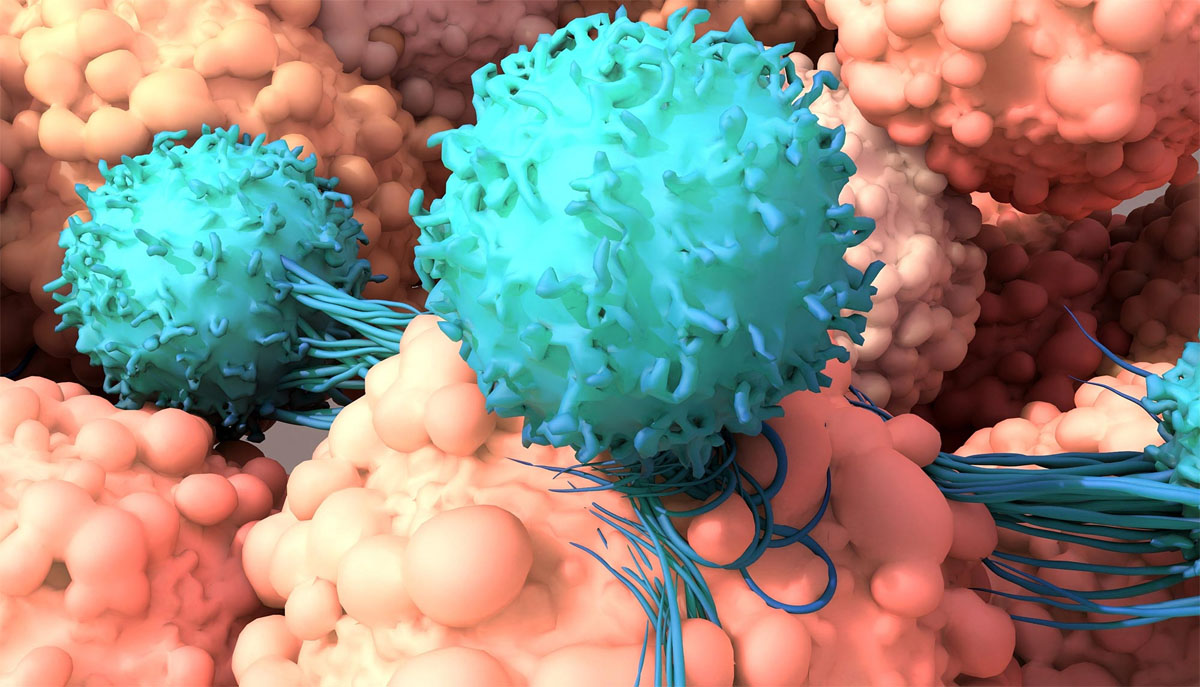
In a major scientific breakthrough that could transform cancer care, researchers at Weill Cornell Medicine have uncovered how tumours weaken the body’s immune defences—and how blocking that process can supercharge treatment. The findings, published in Nature Immunology, reveal a critical pathway that drives T cell exhaustion, a major obstacle in modern cancer immunotherapy.
According to the study, cancer cells exploit a molecular signal to drain T cells of their strength, reducing their ability to attack tumours. By blocking this signal, scientists were able to keep T cells active and dramatically enhance their tumour-fighting capacity.
“Our dream is to revive exhausted T cells so the immune system itself can defeat cancer. This discovery brings that future closer,” said co-senior author Dr. Taha Merghoub, noting that T cell exhaustion limits the long-term success of immunotherapies even in patients who initially respond well.
READ ALSO:
- Turkey Football Betting Scandal: 46 Arrested as Match-Fixing Probe Widens
- Four Teenagers Killed in Banki Explosion as Borno Police Probe Deadly IED Blast
- Osimhen Scores Brace as Galatasaray Edge Samsunspor 3-2 in Turkish Super Lig Thriller
The researchers focused on CD47, a protein known as the immune-evading “don’t eat me” signal used by cancer cells. Unexpectedly, the team discovered that T cells also produce CD47—and its levels surge when T cells become exhausted. Tests in mice revealed that animals lacking CD47 developed slower-growing tumours, showing the protein plays a powerful internal role in immune suppression.
Tumours appear to worsen this phenomenon by releasing thrombospondin-1, a protein that binds to CD47 and further weakens T cells. “Remove CD47 or thrombospondin-1, and T cells stay strong,” Merghoub said.
To counter this mechanism, researchers tested TAX2, a peptide that prevents CD47 and thrombospondin-1 from interacting. Mice treated with TAX2 displayed slower growth of melanoma and colorectal tumours, more active T cells, and stronger immune responses. TAX2 also significantly enhanced the effectiveness of PD1 immunotherapy, one of the most widely used cancer treatments.
Lead author Dr. Chien-Huan Weng described TAX2 as a “proof-of-concept,” adding that further work is underway to create safe and targeted ways to block this newly identified exhaustion pathway in human patients.
Scientists say the approach could form a powerful standalone therapy or boost existing immunotherapies, marking one of the most promising advances yet in the fight against cancer.
Scientists Identify Key Immune “Exhaustion Switch,” Opening New Path for Powerful Cancer Treatments












Community
Monarch Dies Shortly After Being Rescued From Kwara Kidnappers

The Onigbesi of Igbesi Land in Kwara State, Oba Moses Oyinloye Iwedunmoye I, has died days after he was rescued from kidnappers.
The monarch passed away in the early hours of Saturday at a hospital, according to his son, Prince Olasunkanmi, who said his father had been receiving treatment following a brief illness.
“Yes, the news is true. He died after a brief illness following his release. We took him to the hospital, hoping he would survive, but he died there very early this morning,” Olasunkanmi said.
Oba Iwedunmoye was abducted on August 22 when armed men invaded Igbesi community in Isin Local Government Area.
He regained his freedom five days later after security forces launched an operation around the Elerin/Ijomu-Oro area, where three kidnapped victims were found.
The rescue followed a report received at the Oro Police Station from a vigilante member, who alerted authorities after one of his colleagues was shot while operating in the bush.
A combined team of police officers, soldiers and vigilantes was subsequently deployed to the area.
Police said the suspected kidnappers engaged the team in a gun battle after spotting the advancing operatives. One alleged kidnapper was killed during the exchange, while others escaped into the surrounding area.
The security team continued the search and eventually located the three victims, who were evacuated for medical treatment.
News of the monarch’s death was announced by Bisi Fakayode, National President of Omo Ibile Igbomina, who mourned the traditional ruler and prayed for the repose of his soul.
The circumstances surrounding the monarch’s illness and death have not been publicly disclosed beyond his family’s account that he fell ill after his release.
Health
Ebola Crisis Deepens in DR Congo as Cases Cross 7,000

Ebola Crisis Deepens in DR Congo as Cases Cross 7,000
The Ebola outbreak in the Democratic Republic of Congo has reached more than 7,000 recorded cases, with nearly 3,400 people losing their lives in what authorities describe as the country’s worst epidemic of the disease.
Official figures show that 7,022 cases have been identified since the outbreak was detected in May. Of those affected, 3,398 have died, while 1,671 people have recovered.
The outbreak has also continued to expand geographically, with South-Ubangi becoming the seventh province where the virus has been detected. The province shares borders with both the Central African Republic and the Republic of Congo.
Health authorities are facing particular difficulties in Ituri, where most of the cases have been recorded. The province has schools where Ebola infections have been detected, raising concerns about further transmission as students return to classrooms.
Schools in affected areas have introduced additional precautions, including compulsory handwashing, limiting classroom numbers and discouraging physical contact among pupils.
READ ALSO:
- Police Arrest Woman Over Alleged Drug Trafficking in Delta
- Dangote raises petrol price 6.7% to N1,350/litre
- Anambra Police Arrest Woman Over Alleged Sexual Abuse of Child, Rescue Four
The response is being complicated by the wider conditions in eastern and northern parts of the country. Some affected communities are located in remote areas with limited healthcare facilities, while long-running armed conflicts have made access and government intervention more difficult.
Residents have expressed growing concern, particularly over the possibility of children carrying the virus between their homes and schools.
The current outbreak was first officially identified in northeastern Ituri in mid-May, although health authorities believe the virus may have been circulating for weeks before it was detected.
The strain responsible is Bundibugyo ebolavirus. There is currently no approved vaccine or treatment specifically available for the strain, although researchers are testing potential vaccines and therapies.
Ebola spreads primarily through contact with infected bodily fluids and can cause severe illness, including bleeding, organ failure and death.
The latest crisis is part of the DRC’s long history with Ebola, with the country experiencing 17 outbreaks since the virus was first identified there.
With infections continuing to appear in new areas, authorities face the challenge of containing transmission while providing treatment and protection in communities already struggling with insecurity and limited health infrastructure.
Ebola Crisis Deepens in DR Congo as Cases Cross 7,000
Health
Ahead of Dry Season Surge, NCDC Urges Proactive Measures Against Lassa Fever

Ahead of Dry Season Surge, NCDC Urges Proactive Measures Against Lassa Fever
As the dry season approaches, Nigeria’s public health authorities are sounding an urgent alarm over Lassa fever, calling on the nation to preempt a seasonal wave that historically claims dozens of lives between November and April.
Addressing journalists in Abuja, NCDC Director-General Dr. Jide Idris stressed that the country cannot afford to wait until hospitals are inundated. While the acute viral illness remains an ongoing threat, Idris pointed out that the current pre-peak window offers an invaluable opportunity to fix recurring weak links in containment and clinical management.
The impetus for the proactive campaign stems from clear post-outbreak data pointing to preventable bottlenecks. Many patients succumb to the virus because early symptoms mirror common tropical ailments, leading to days of unguided home remedies or repeated visits to local chemist shops before presenting at designated treatment centers.
The review also pointed to gaps in infection control that left medical personnel vulnerable to nosocomial exposure during peak admission cycles, compounded by domestic environments that invite multimammate rodents into direct contact with uncovered food.
READ ALSO:
- One Killed, Two Rescued as Two-Storey Building Collapses During Demolition in Lagos
- Warri Lawyer, Wife Arrested Over Sale of Baby Declared Dead at Birth
- FG Releases Eight-Month CATA Allowance to Lecturers Across Federal Tertiary Institutions
Under the newly deployed Accelerated Readiness Plan, the NCDC is mobilizing an inter-agency response that crosses traditional departmental lines. By coupling epidemiological tracking with agricultural and environmental interventions, authorities aim to concentrate resources where transmission risks run highest.
The plan places heavy emphasis on tightening laboratory networks to eliminate diagnostic delays, while training healthcare staff to isolate and report suspected infections before viral loads peak.
Health officials underscored that containment begins in individual households and neighborhoods. Families were cautioned against leaving staples like beans, garri, and grains accessible to rodents, with directives to avoid direct contact with rat fluids and maintain rigorous waste management around dwellings.
With late presentation remaining the single largest driver of Lassa fever fatalities, the agency urged individuals with unyielding fever to abandon self-medication and seek professional diagnostics immediately, reminding health workers on the frontlines that early clinical suspicion is the ultimate barrier against hospital outbreaks.
Ahead of Dry Season Surge, NCDC Urges Proactive Measures Against Lassa Fever
-

 News2 days ago
SERAP Threatens Legal Action Over ₦126bn INEC Electoral Funds
-

 metro3 days ago
MURIC fires back at Peter Obi: Forget Sallah ceremony, free Nigerian Muslims
-

 International3 days ago
Trump Tells Supporters to ‘Cheat Like Hell’ Ahead of US Election
-

 metro3 days ago
Abia Police Arrest Father, Three Others Over Alleged Attempt to Sell 16-Month-Old Daughter
-

 Politics2 days ago
Five Islamic Clerics Abducted After Tinubu Re-Election Prayer At Yari’s Zamfara Residence
-

 metro3 days ago
FG Targets 2 Million Creative Jobs by 2030
-

 Auto3 days ago
Jetour Takes Award-Winning Dashing, Other SUVs to Abuja
-

 Business3 days ago
Dangote raises petrol price 6.7% to N1,350/litre